Happy to share this collaboration with Novartis and @QinLab. A simple SN2 approach (surprisingly unprecedented) enabled scalable access to key [2]-ladderane building blocks. This provided a practical platform to install diverse FG on the back of BCOs
https://t.co/5kAk56k01l
So sad to hear this and could not believe it. His precedents in BCP chemistry are super inspiring to us when we played with this highly strained scaffold.
Very sad that Ken Wiberg passed yesterday at age 98. He was a wonderful scientist, colleague and leader in physical organic chemistry. His theory-driven synthesis of [1.1.1]propellane is a classic and inspiration for the use of strain in many contexts.
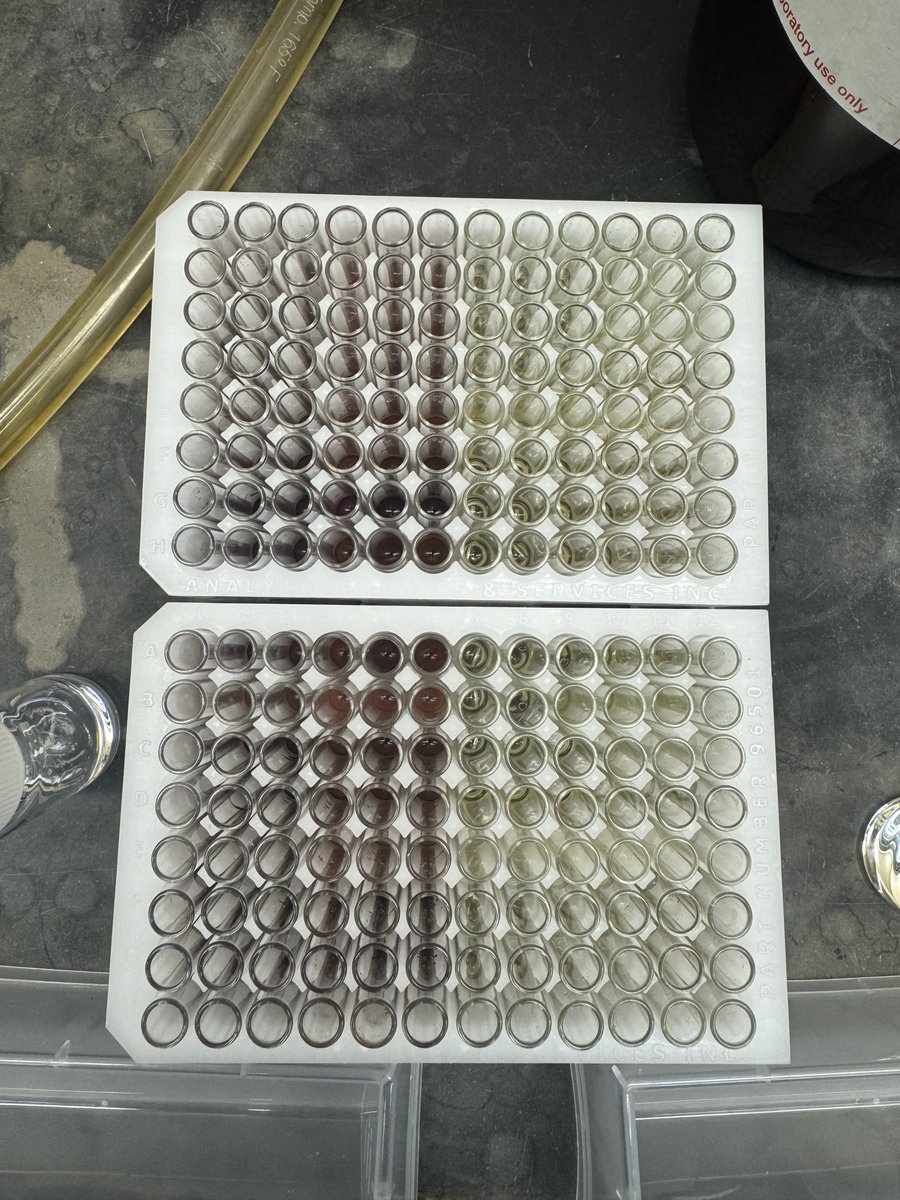
Super pleasant to see this radical-radical cross-coupling coming out. It's great to use high throughput experiments (HTE) screening to help with the optimization of the pyrrolidine coupling.
A Pragmatic Radical Strategy for Dearomative Hydroalkylation of Unactivated Indoles | Journal of the American Chemical Society @UTSWMedCenter https://t.co/FBfPh8ypoI
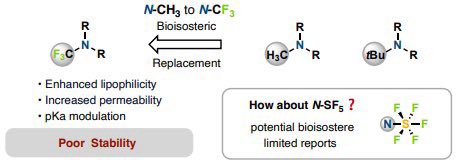
Congrats to the SF5 team @Renzhe1122@Chaohu_103 in @QinLab . N-SF5 substituted azetidines really enlarged novel chemical space with SF5 substitution and will provide a new type of isosteres for medicinal chemists!
If you are a medchemist, you must have considered introducing CF3 on amine to reduce basicity and improve ADME property, but gave up realizing its poor stability. Why don't you use SF5 now? Honored to be a part of this collaboration with @QinLab!
https://t.co/cXbtzEQ0pq
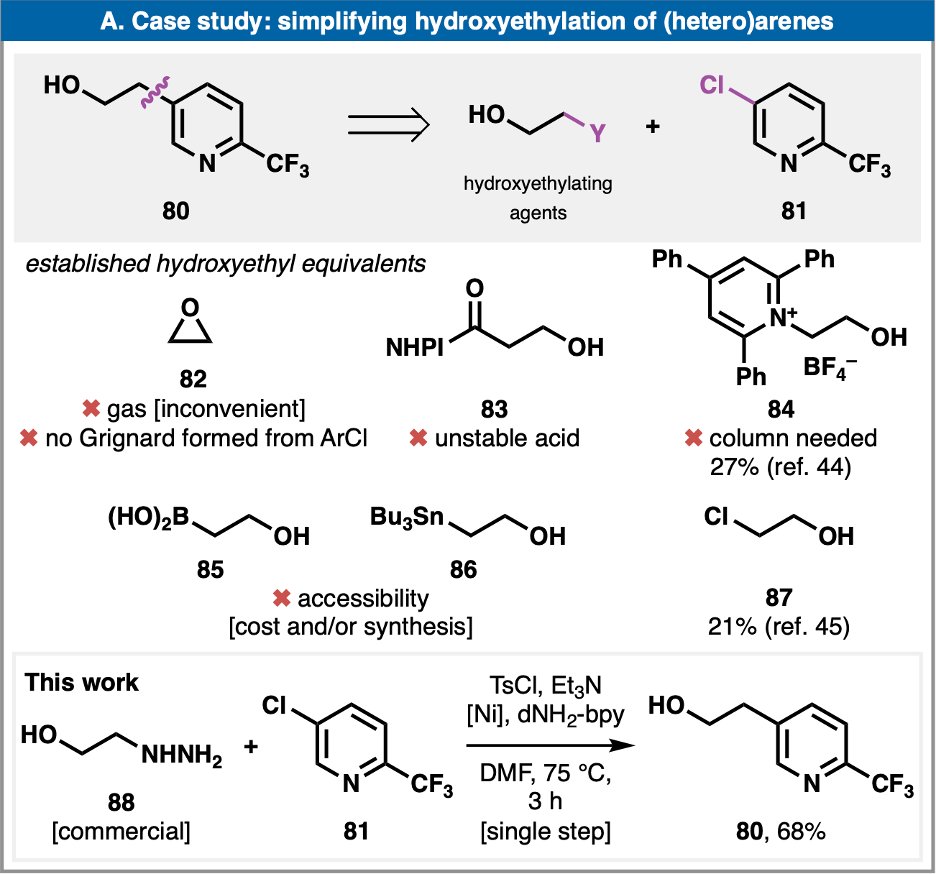
💊Accelerating Medicinal Chemistry💊: A C(sp3)-rich Fragment Toolbox for Redox-Neutral Cross-Coupling, appearing today in @chemrxiv: https://t.co/KRpQG8J3iY
A great collaboration with brilliant drug hunters at BMS, Pfizer, and Biogen.
Quick summary: A new toolbox of 15 sulfonyl hydrazide reagents (some of which are already commercial) enables redox-neutral, nickel-catalyzed radical cross-coupling to attach small C(sp3)-rich fragments like methyl and cyclopropyl to (hetero)arenes, streamlining the hit-to-lead phase of drug discovery. These stable, easy-to-synthesize reagents require no additional oxidants, reductants, or costly catalysts, offering mild, dump-and-stir conditions and broad substrate compatibility across over 60 (hetero)aryl halides. Compared to traditional methods like Suzuki or Kumada couplings or radical couplings wedded to redox, this unified approach significantly improves yields and simplifies synthesis, accelerating analog optimization and late-stage functionalization of drug-like molecules.
It is super excited to see one of my last projects in which I participated during my last months in UTSW come out: https://t.co/VqrmChLvMi;
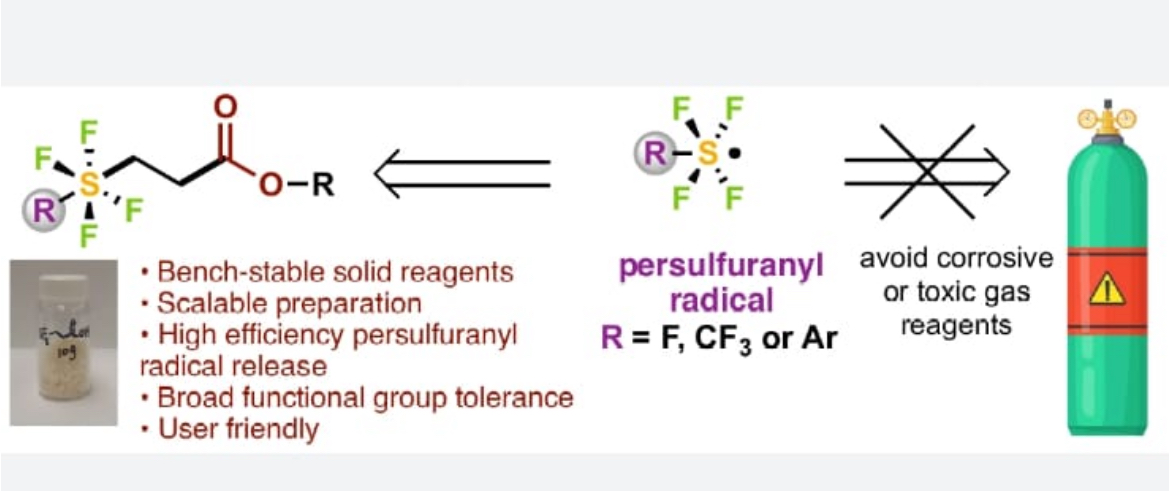
Very excited to share our latest work on modular installation of persulfuranyls, SF5 in particular, with a series of bench-stable reagents.
It is super excited to see one of my last projects in which I participated during my last months in UTSW come out: https://t.co/VqrmChLvMi;
Very excited to share our latest work on modular installation of persulfuranyls, SF5 in particular, with a series of bench-stable reagents.
Finally, RADICAL CROSS COUPLING without the exogenous REDOX. We disclose in @ChemRxiv (https://t.co/FYy6i1J7p9) a broadly general platform for achieving transformations that normally required excess metallic or chemical reducing agents or photochemical setups (and their requisite catalysts) or potentiostats for electrochemistry. Now, such transformations can be accomplished with the same ease that one conducts a Suzuki coupling. You can scale up (its homogeneous) or scale down (use cheap parallel screening plates). Moisture is tolerated and base metal catalysis is used. As the best engineers like to say, "The best part is no part". Now, chemists have the option to remove the redox part from radical couplings.
Quick Summary: Sulfonyl hydrazides are disclosed as versatile radical precursors as exemplified with seven new C–C bond forming, redox-neutral cross-couplings with: (1) activated olefins, (2) alkyl halides, (3) redox active esters, (4) aryl halides, (5) alkenyl halides, (6) alkynyl halides, and (7) a trifluoromethylating reagent to forge C(sp3)-C(sp3), C(sp3)-C(sp2), and C(sp3)-C(sp) bonds. Sulfonyl hydrazides are stable and usually crystalline substances that can be accessed in a variety of ways including transiently from hydrazones to achieve a net reductive arylation of carbonyl compounds. Exogenous redox (chemical, photo/electrochemical) additives are not necessary as these functional groups serve the dual role of radical precursor and electron donor. The operational simplicity (homogeneous, water tolerant, dump-and-stir) and practicality of the method are demonstrated as well as applications to streamlining synthesis and mild late-stage functionalization.
The final version of this work has appeared today in @J_A_C_S
A General Three-Component Alkyl Petasis Boron–Mannich Reaction | Journal of the American Chemical Society https://t.co/3WMRt8Vm0J
Reaction Paradigms that Leverage Cycloaddition and Ring Strain to Construction Bicyclic Aryl Bioisosteres from Bicyclo[1.1.0]butanes (S. J. Sujansky and X. Ma) https://t.co/9rzamSHJ6Q
Very pleasant collaboration with our industry colleagues from Merck @rohanmerchant1@SijieChen17 and Novartis @yuzururururu ! Really fantastic alkyl amine library via HTE implementation done by Si-Jie @SijieChen17