🚨 BREAKING: ENERGY WAR HAS BEGUN
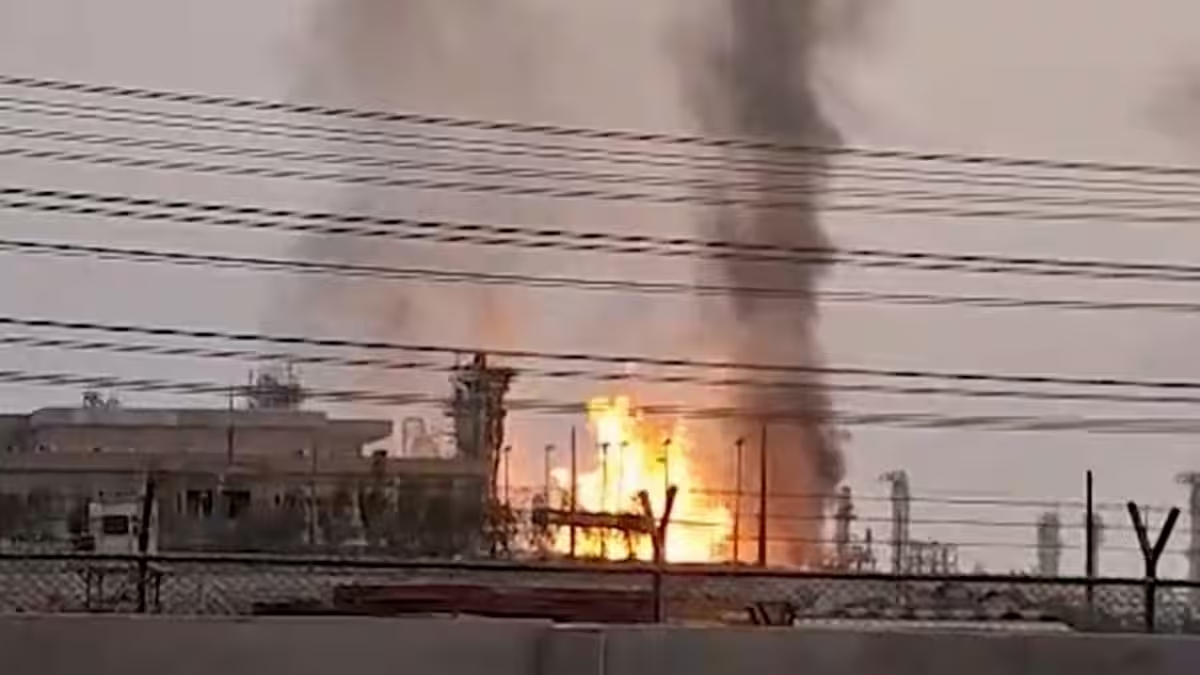
The US and Israel have just struck Iran’s South Pars gas field — the largest on Earth.
This isn’t symbolic.
This is economic warfare.
Gas facilities are burning.
Refineries offline.
Smoke rising over the Gulf.
For the first time, Iran’s core energy infrastructure is now a battlefield.
This changes everything.
If Iran retaliates by targeting oil routes or closing the Strait of Hormuz,
the global economy will feel it within days.
Fuel. Energy. Supply chains.
All exposed.
We are no longer watching a regional conflict.
We are watching the opening phase of a global shock.
🚨 THE NUMBERS DON’T ADD UP
The Government will collect around £331bn in income tax this year.
It will spend roughly £333bn on welfare.
This is the position we’re now in.
One of the country’s largest revenue streams
is now almost entirely absorbed by welfare spending alone.
And the cost?
National debt per person has risen from
~£11,500 in 2000 (inflation adjusted)
to over £41,000 today.
That’s the burden being passed on to the next generation.
This isn’t sustainable.
The question is no longer if the system needs reform —
but how long it can continue like this.
🚨 WHILE THE WORLD WATCHES WAR — THE FOOD SYSTEM IS STARTING TO BREAK
This isn’t being talked about enough.
Fertiliser supply is tightening.
Energy costs are rising.
Farmers are already under pressure.
That combination leads to one thing:
Lower yields. Higher prices. Shortages.
And it doesn’t happen overnight.
It starts quietly…
Smaller harvests
Reduced supply
Gradual price increases
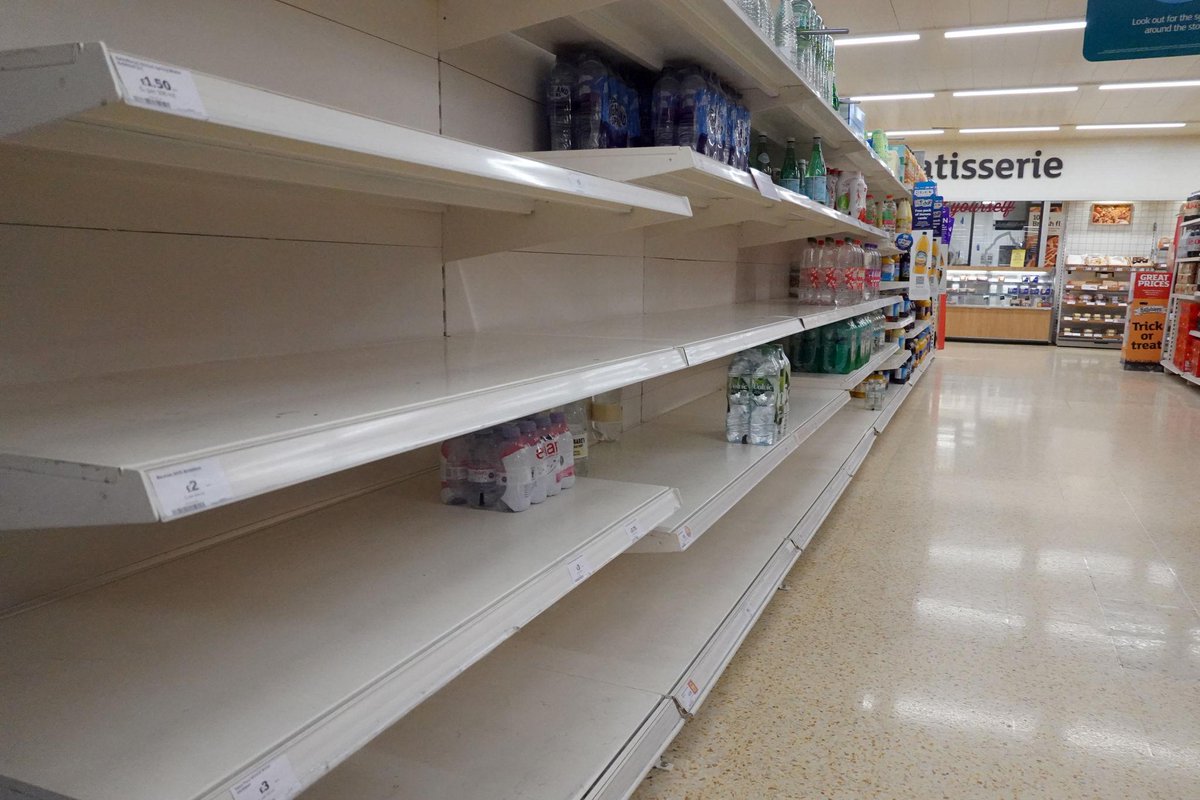
Then suddenly — shelves don’t look the same.
This is how every food crisis begins.
Not with panic.
But with signals people ignore.
Most won’t see it coming — until it’s too late.
🚨 HUNGARY ELECTION UNDER FIRE — BIG TECH AND BRUSSELS ACCUSED OF INTERFERENCE
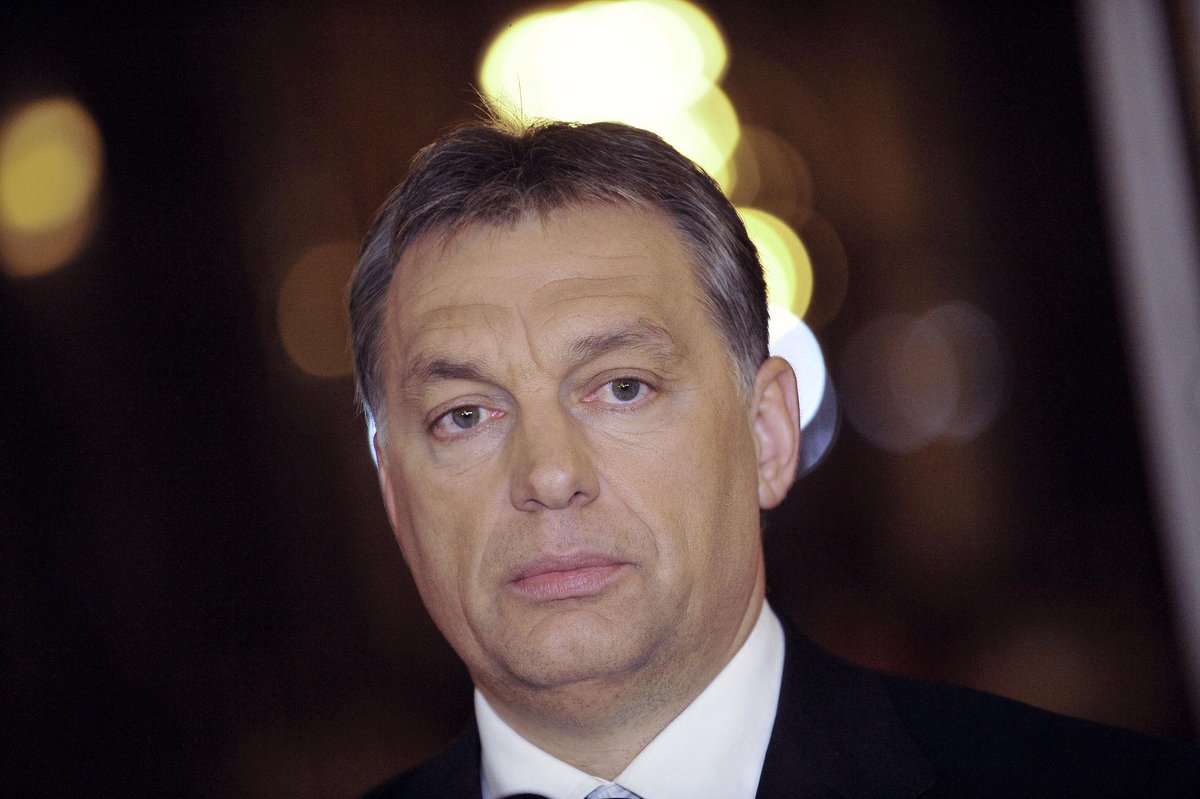
Viktor Orbán is reportedly being restricted on Facebook just weeks before a national election.
The sitting Prime Minister…
Facing reduced reach on the country’s largest platform…
Right before voters go to the polls.
At the same time:
Opposition figure Péter Magyar is seeing unusually high engagement levels — far beyond what would typically be expected in a smaller, language-limited country.
And it gets worse.
Reports suggest:
Mass-report campaigns targeting Orbán’s content.
Use of alternative account setups that may bypass political restrictions.
Platform moderation decisions aligning with broader EU narratives.
Now bring in the bigger picture.
The EU’s Digital Services Act mechanisms are reportedly being activated — coordinating with:
Fact-checkers
NGOs
Platform moderation systems
All under the banner of tackling “disinformation.”
But here’s the problem:
Who decides what counts as disinformation?
Because in practice, this system can:
Limit reach
Suppress narratives
Shape public perception
All without voters ever realising it’s happening.
This isn’t just about Hungary.
This is about whether:
Elections remain decided by citizens
Or increasingly influenced by platform algorithms and external oversight bodies
This raises serious concerns about:
Free speech
Electoral fairness
Digital interference in democracy
The timing alone demands scrutiny.
Because when information flow is controlled…
So is the outcome.
🚨 EU CORRUPTION SCANDAL EXPOSED
Police found €600,000 in cash in an apartment
linked to the EU bribery probe known as Qatargate.
At the centre: former MEP Antonio Panzeri, who is accused of taking money to influence decisions in the European Parliament.
Investigators allege millions flowed through a network,
with links to foreign influence operations.
He admitted involvement.
Cut a deal.
Avoided serious prison time.
Let that sink in.
“This wasn’t a rumour. This was a police raid.”
Suitcases of cash.
Influence over EU decisions.
Minimal consequences.
And this is the same system that lectures Europe on democracy, transparency, and standards.
So the real question is:
Who is holding the institutions accountable?
🚨 TEACHER BANNED — DESPITE BEING CLEARED
A UK PE teacher has been banned from teaching indefinitely…
Not for racism.
Not for misconduct with pupils.
But for posts on X.
Sam Everett was reported to his employer over his social media account.
In one post, he wrote:
“if you don’t respect our laws, culture and way of life you should leave — nobody is forcing you to stay.”
An independent panel reviewed everything — and ruled:
NOT racist
NOT sexist
NO ongoing risk
SHOULD KEEP HIS JOB
They recommended no ban.
Yet the Department for Education overruled them
and removed him from the profession.
A teacher with a clean record, respected by colleagues…
banned — not for what he did in the classroom,
but for what he said online.
So where is the line?
At what point do personal views — expressed outside of work —
become grounds for losing your livelihood?
And what does this mean for free speech in modern Britain?
🚨 MACRON STEPS BACK — AND CALLS IT “BALANCE”
Emmanuel Macron has made it official:
France will NOT take part in efforts to reopen the Strait of Hormuz.
“France did not choose this war… we will not take part.”
Let’s be clear about what that means.
While one of the most critical shipping routes on Earth is under threat…
While global energy markets are destabilising…
While allies are being asked to step up…
France is choosing non-involvement.
Framed as “balance.”
Presented as “peace.”
But in reality?
It’s strategic withdrawal at a critical moment.
Even if France did step in, the reality is unavoidable:
The heavy lifting would still fall to the United States.
That’s the uncomfortable truth behind all of this.
Europe talks about influence, power, and independence…
But when the moment comes to act in a real-world crisis?
It hesitates.
It distances itself.
It avoids commitment.
This isn’t about dragging nations into war.
It’s about securing global trade, energy stability, and freedom of navigation — the very foundations the West depends on.
And yet, when asked to contribute meaningfully…
France steps back and calls it strategy.
The gap between rhetoric and reality has never been clearer.
🚨 ARGENTINA BREAKS FROM THE WHO — MILEI LEADS THE WAY
Javier Milei has officially withdrawn Argentina from the World Health Organization — aligning with the direction set by Donald Trump.
This is not a minor policy shift.
It’s a clear assertion of national sovereignty over global institutions.
Milei is positioning Argentina as:
Independent in decision-making
Resistant to external control
Aligned with allies who prioritise national interest first
In a region often shaped by external influence, this move signals something different:
Leadership with intent.
While many governments follow global frameworks without question…
Argentina has stepped out — and taken a stand.
For supporters, Milei is becoming a reference point:
A leader willing to act decisively
Challenge established systems
And back his position with real policy
The implications now extend beyond Argentina.
Because once one country walks away…
Others begin to consider whether they should too.
This is how shifts begin.
Not with consensus — but with one nation deciding to move first.
🚨 TRUMP BLASTS BBC — SPECIAL RELATIONSHIP UNDER STRAIN
Donald Trump has just launched a direct attack on the BBC — calling its Iran coverage “corrupt, fraudulent, and beyond fake.”
This isn’t just media criticism.
It’s a major fracture point between Washington and London.
At the same time, Trump openly criticised Keir Starmer — blaming him for weakening the UK–US relationship at a critical moment.
And the context matters.
The Strait of Hormuz is under threat.
Global energy markets are unstable.
The U.S. is actively pushing to secure shipping lanes.
Yet Britain?
Hesitating.
Delaying.
Talking about “negotiated solutions” while the crisis escalates.
Even now, discussions suggest the UK may only act after a peace deal is reached — not when action is needed to prevent escalation in the first place.
Trump made his position clear:
He doesn’t need allies to act — but he expects them to stand up when it counts.
And right now, from Washington’s perspective, Britain isn’t.
The BBC row adds another layer:
Accusations of biased reporting
Mistranslations of key statements
Even legal action over alleged editing of past speeches
This is no longer just geopolitics.
It’s media, military, and diplomatic tensions converging at once.
The bigger picture?
A growing divide between:
An America willing to act decisively
And a Britain increasingly seen as cautious, reactive, and unreliable
The “special relationship” hasn’t disappeared.
But it is being seriously tested — in real time.
🚨 UN ON THE BRINK — RUNNING OUT OF MONEY
The United Nations — the very institution that claims to guide global governance — is now warning it could run out of money entirely.
Let that sink in.
Over $1.5 billion in unpaid dues.
An “unsustainable trajectory.”
And officials openly admitting: “We face a real danger of running out of money.”
This isn’t a minor shortfall.
This is a system breaking under its own weight.
For decades, the UN has positioned itself as:
A global authority
A policy driver
A crisis manager
Yet now it cannot even maintain its own financial stability.
Why?
Because member states are not paying.
And that tells you everything.
Confidence is collapsing.
Commitment is fading.
The illusion of unity is cracking.
Countries are starting to reassess:
Why fund institutions that overreach…
Dictate policy…
And deliver diminishing results?
This is what the slow unravelling of global governance looks like.
Not a dramatic collapse overnight…
But a steady withdrawal of support until the structure can no longer hold.
The question now is:
Is this a temporary cash crisis — or the beginning of the end for one of the world’s most powerful institutions?
🚨 BRITAIN IS LOSING CONTROL OF ITS STREETS
Scenes from recent protests have raised serious questions about law enforcement, national security, and political leadership.
Chants glorifying extremist groups.
Open displays of support for hostile regimes.
Intimidation tactics reported in communities and on campuses.
This isn’t peaceful protest.
It’s a test of whether the state is willing — or able — to enforce its own laws.
The government attempted to act… and then admitted it lacked the legal powers to stop it.
That alone tells you everything.
A country that cannot control its streets,
cannot enforce its borders,
and cannot uphold its laws equally…
is a country drifting into instability.
This is no longer a fringe issue.
It’s a question of order, authority, and the future direction of Britain itself.
The real question now is:
Will the government act decisively — or continue to manage decline?
🚨 EU STANDS DOWN — HOURS LATER, HIT IN BAGHDAD
This morning, the European Union announced it would not join efforts to secure the Strait of Hormuz.
Tonight, an Iranian drone struck Baghdad’s Al-Rashid Hotel, hitting the floor hosting EU officials and European diplomatic offices.
The timing is impossible to ignore.
Step back from the conflict — and still find yourself inside the blast radius.
This is the reality of modern warfare:
Distance offers no protection.
Neutrality offers no immunity.
The question now is simple:
Will this force Europe to rethink its position — or will it continue to stand aside as the conflict escalates?
🚨 RUBIO: RADICAL ISLAMIST MOVEMENTS ARE AN EXPANDING GLOBAL THREAT
Secretary of State Marco Rubio has issued a stark warning:
This is not a localised threat.
According to Rubio, radical Islamist movements are revolutionary in nature — they don’t seek to control one region and stop, they seek to expand influence, territory, and power wherever possible.
His argument is clear:
These groups view the West — especially the United States — as a primary adversary, and have repeatedly shown a willingness to use terrorism, proxy warfare, and state-backed operations to achieve their goals.
He points to a consistent pattern:
• Attacks on Western targets
• Hostility toward U.S. allies in the Middle East
• Attempts to destabilise regions beyond their borders
Rubio’s core warning:
This is not about one country or one conflict.
It is an ideological threat that operates across borders and adapts to different environments.
The question now is whether Western nations are prepared to confront it strategically — or continue reacting after the damage is done.
🚨 JAPAN JUST DEPLOYED A SILENT WARFARE WEAPON
Japan has quietly moved into the next phase of modern conflict.
The EC-2 SOJ stand-off jammer is no longer a concept — it is now operational and in the air.
This is not just another aircraft.
It’s a battlefield controller designed to:
• Blind enemy radar systems
• Disrupt communications and command networks
• Create confusion before a single missile is fired
And here’s the critical shift.
It doesn’t need to enter hostile airspace.
With stand-off capability, it can operate at range — jamming, degrading, and dismantling enemy defenses without exposing itself to direct threat.
That changes everything.
Because once radar is blinded and communications collapse:
Fighter jets move in unseen.
Strike aircraft face minimal resistance.
Defence systems react too late — or not at all.
This is how modern wars are now fought.
Not just with firepower…
but by silencing the enemy before the fight even begins.
The sky isn’t getting louder.
It’s getting quieter.
And far more dangerous.
🚨 EUROPE WALKS AWAY — AGAIN
The European Union has made its position clear:
“This isn’t Europe’s war.”
No ships.
No support.
No backbone.
After decades of relying on American protection — from World War II through NATO — Europe is now stepping back the moment real pressure arrives.
President Trump called for allied naval support to secure the Strait of Hormuz — one of the most critical energy lifelines on Earth.
The response from Europe?
Silence… hesitation… refusal.
This is the same bloc that has repeatedly leaned on U.S. power, resources, and military strength — yet when the tables turn, there is “no appetite” to act.
Not when global oil is under threat.
Not when shipping lanes are at risk.
Not when stability depends on it.
Instead, they retreat behind cautious language and political cover while expecting America to carry the burden — again.
The message coming out of Washington is unmistakable:
The era of one-sided alliances is coming to an end.
If Europe won’t stand up when it matters most…
They may soon find themselves standing alone.
🚨 ISRAEL CLAIMS ELIMINATION OF TOP IRANIAN FIGURES
Israel’s Defense Minister Israel Katz has announced that Israeli forces have eliminated senior Iranian leadership figures, including:
• Ali Larijani
• The head of the Basij militia, a key internal security force of the Iranian regime
According to the statement, the strikes were part of a broader campaign targeting Iran’s command structure, intelligence network, and missile capabilities.
Israeli officials say operations are continuing with “great force”, aimed at degrading the regime’s ability to function and project power.
If confirmed, this would mark a major escalation, directly targeting individuals linked to internal repression and strategic decision-making inside Iran.
The language coming from Israeli leadership is clear:
This is no longer limited to infrastructure.
It is a systematic dismantling of the regime’s leadership and control mechanisms.
🚨 TWO-TIER BORDER POLICY EXPOSED
An American woman trying to fly to the UK is stopped at check-in and told she now needs authorisation.
She’s scanned.
Her passport is checked.
Her face is verified.
She answers questions about her job, background — even whether she’s ever been involved in terrorism.
She pays a fee.
Waits for approval.
Gets cleared.
That’s the system working exactly as designed.
And yet…
At the same time, thousands are arriving by small boats with no documents, no verification, and no clear identity — and are being processed into the country regardless.
So the question writes itself:
Why is a law-abiding visitor from the United States subjected to full digital screening and approval, while illegal arrivals can enter with minimal or no initial verification?
This isn’t about being against immigration.
It’s about consistency, security, and trust in the system.
Because when the rules appear strict for some… and optional for others…
People start to ask:
Is this really about border control — or something else entirely?
🚨 UK COULD FACE PETROL RATIONING AND EMPTY SHELVES
Experts are warning that the war with Iran could hit Britain within weeks — not just through higher prices, but through real shortages.
If the Strait of Hormuz remains disrupted, the consequences could be severe:
Petrol rationing at UK forecourts
Medicine shortages as supply chains break down
Bare supermarket shelves due to shipping disruption
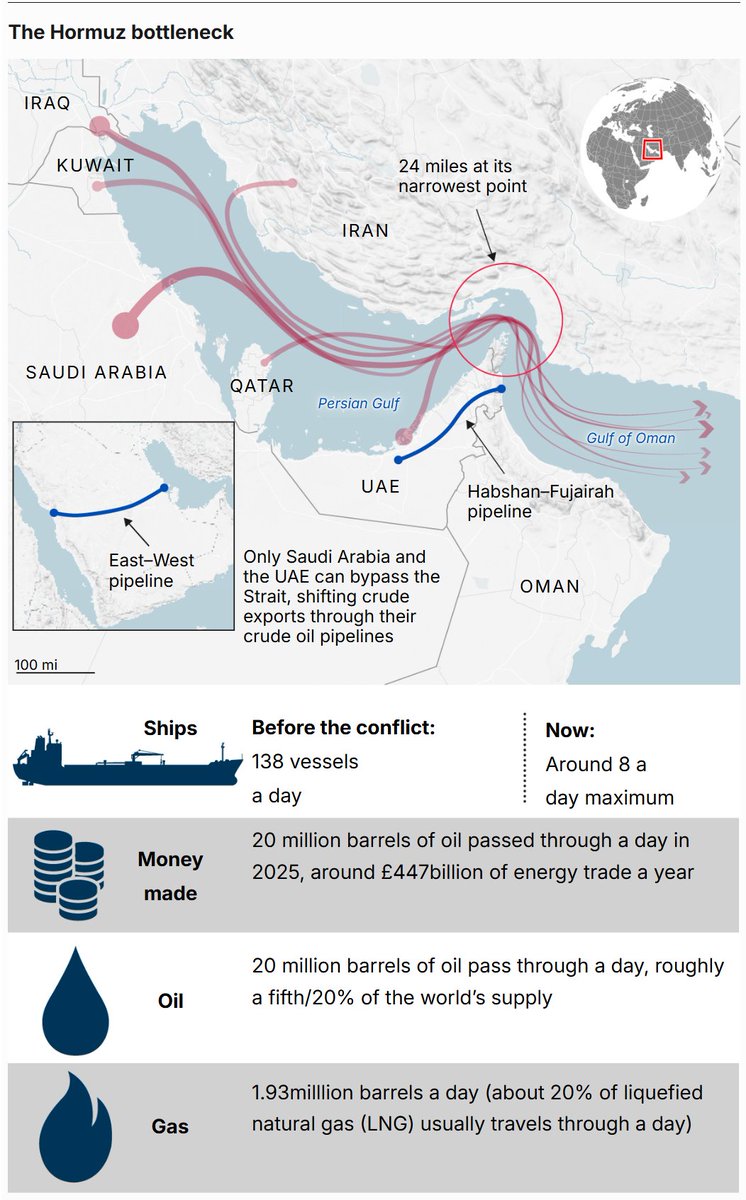
Around 20% of the world’s oil supply normally passes through the Strait of Hormuz. When that artery is threatened, the shock spreads quickly through global transport, manufacturing and food supply chains.
The result? Fuel becomes scarce. Logistics slow down. Imports stall.
And while ministers quietly prepare targeted bailouts for benefits claimants and pensioners, many businesses and working households could soon be facing another supply crisis.
Britain has lived through empty shelves before.
The question now is whether the government has any real contingency plan if global energy and shipping routes remain under threat.
🚨 AIRPORT SECURITY CHAOS IS A POLICY CHOICE
Travelers at Austin-Bergstrom International Airport are facing massive Monday morning security lines — and it raises a bigger question about priorities in Washington.
While Americans are trying to get to work, meetings, and family commitments, critical security and infrastructure agencies like DHS, TSA, FEMA, and the National Guard depend on consistent funding and staffing to function smoothly.
When those systems are stretched, the result is exactly what passengers are seeing: long lines, delays, and frustrated travellers. Airport security isn’t just an inconvenience — it’s part of the broader system that keeps transportation safe and functioning.
For millions of Americans trying to travel for work or family, the message is simple:
Security infrastructure needs to be properly funded and managed so the system actually works.
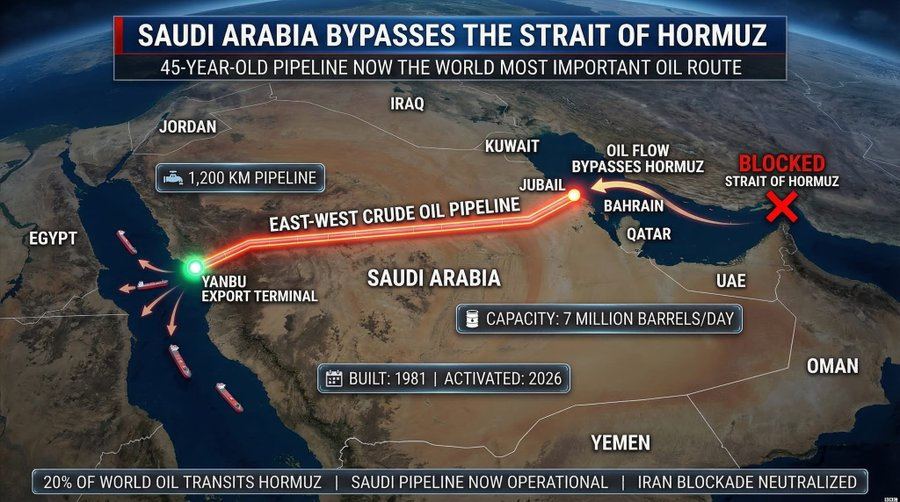
🚨 SAUDI ARABIA BUILT ITS HORMUZ BACKUP… 45 YEARS AGO
While the world panics over threats to the Strait of Hormuz, Saudi Arabia quietly activated something most people forgot even existed.
A pipeline built in 1981.
Let that sink in.
When Iran threatens to choke the world’s oil supply, roughly 20% of global oil normally flows through that narrow strait. Any disruption instantly sends markets into chaos.
But Saudi Arabia planned for this scenario decades ago.
Buried in the desert is a 1,200 km pipeline running from the Persian Gulf to the Red Sea, linking Abqaiq and the eastern oil fields to Yanbu on the west coast.
Its capacity?
Up to 7 million barrels per day.
Which means Saudi oil does not need the Strait of Hormuz to reach global markets.
While warships scramble, oil traders panic, and headlines scream about blocked shipping lanes, Saudi crude can simply flow west to the Red Sea and straight into global shipping routes.
This wasn’t built last year.
It wasn’t built after a crisis.
It was built 45 years ago, during the Cold War, when Saudi planners realized the Strait of Hormuz could become the world’s most dangerous choke point.
That foresight just paid off in a massive way.
The real lesson here isn’t just about oil.
It’s about strategic planning.
Because when the crisis arrived, most of the world started asking “What do we do now?”
Saudi Arabia had already built the answer half a century earlier.