Congratulations to Jingbo Meng, Jiaqi Qin, Anfan Chen, Cuihua Shen, Kaiping Chen, & Jingwen Zhang, winners of the #ICA23 Top Faculty Poster Award for, “Temporal Collective Legitimacy of Support Seeking and Received Social Support on Social Media During a Public Health Crisis.”
I'm sure we will encounter questions when it gets close to the submission deadline, but a head-up may help some of you to better plan for your submissions.
We're hiring a postdoc at UCI to help us write up findings from our evaluation of the Help@Hand project. If you have an interest in digital mental health and love writing this could be the position for you!!!
https://t.co/Ep5oYeZ7Vl
🌟 I am honored to be elected as the Vice Chair of the Health Communication Division at @icahdq. Looking forward to joining the leadership team and working with brilliant colleagues to build and strengthen a global community of students and scholars in #healthcommunication
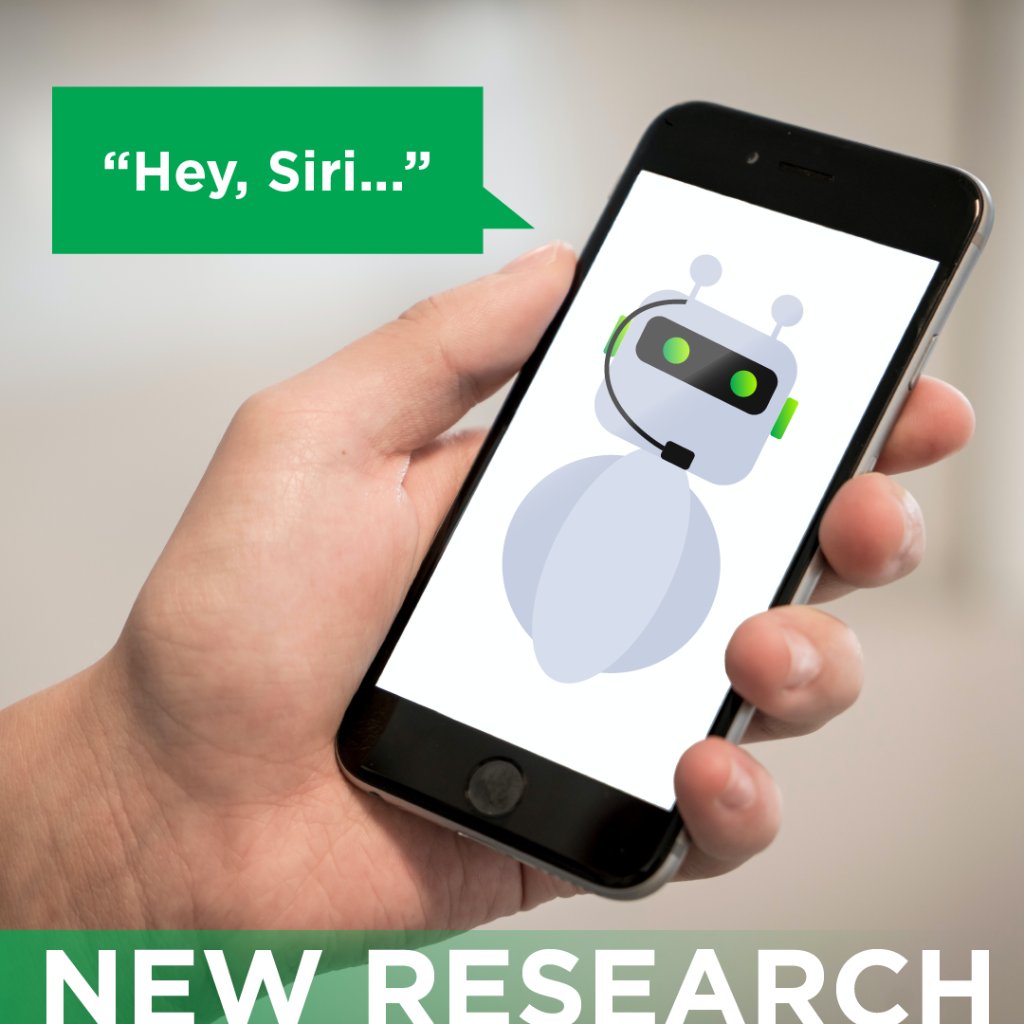
However, if a chatbot only reciprocally self-disclosed but offered no emotional support, the outcome was worse than if the chatbot did not respond to people at all. Love to see more work on chatbots for mental health.
📢New pub🔔 in Journal of Computer-Mediated Communication on comparing chatbots vs humans providing emotional support during a stressful time. We tested which approach could best effectively reduce people's worry and stress. https://t.co/bP6QAph1Ab
When either a person or a chatbot was able to engage with a stressed individual and tell that individual about their own experiences, they were able to build rapport. We found that this type of reciprocal self-disclosure was effective in calming the worry of the individual.
Open position for a methods/stats/psychometrics expert at my academic home, @USC Dept. of Preventive Medicine @USCpm , Division of Health Behavior Research: https://t.co/qHNyIYhhMS
An excellent example of correctly setting the behavior norm. Read @sinanaral Op-Ed: Why public health messaging should emphasize vaccine acceptance, not hesitancy https://t.co/qbNZ1g3g7v
@PsychNiles How about caregiver networks? They may be interested in helping those who have needs and they are trustworthy sources. Also, some online networks where patients anonymously support each other. If a few patients find apps useful, there could be sharing going on. Just a thought.
@PsychNiles I see several connections with communication science that studies dissemination over social networks and social influence on adopting a new practice.
We just published a piece in Conversation @ConversationUS, highlighting the nationalism narratives behind COVID-19 conspiracies, and strategies for countering misinformation on social media. #policomm#scicomm https://t.co/7aIiR2bOqj