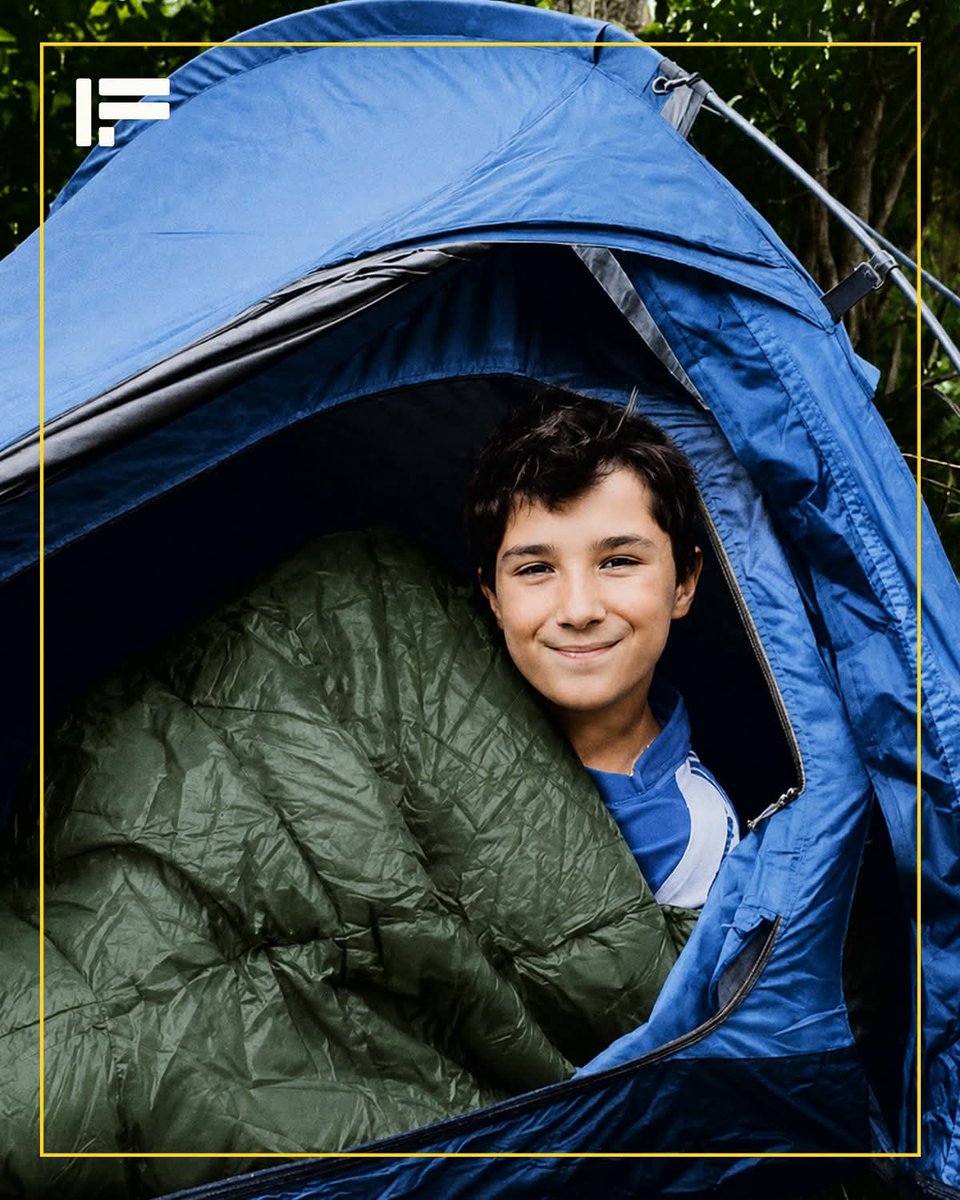
On the twenty-ninth of March, 2020, a ten-year-old boy named Max Woosey set up a tent in the back garden of his family's house in Braunton, North Devon, and climbed inside.
The tent had belonged to his next-door neighbour, a seventy-four-year-old man named Rick Abbott who had died of terminal cancer six weeks earlier. Rick had given Max the tent before he died. He had told Max to use it for an adventure.
Rick had not asked Max to raise money.
The translation of the personal token into a fundraising mechanism for the institution that had cared for Rick in his final months was Max's own institutional invention.
By the time he was thirteen years old, he had funded fifteen nurse-years of hospice care.
Rick Abbott had been a kayaker, a paddleboarder, and a gym-goer. He was a close neighbour of the Woosey family. When he received his terminal cancer diagnosis at the age of seventy-four, the North Devon Hospice arranged the palliative care that allowed him to die at home rather than in a hospital ward.
The Woosey family — Max, his mother Rachael, and his father Mark (a serving Royal Marine) — were close to Rick throughout the final months. They observed the hospice care directly. They saw what the institutional infrastructure of community palliative care could do for a man who wanted to die in his own house surrounded by the things he loved.
Rick Abbott died in February of 2020.
Before he died, he gave Max his camping tent. He asked Max to use it for an adventure.
Six weeks later, on the twenty-third of March, 2020, the United Kingdom entered its first national lockdown under the COVID-19 pandemic restrictions. All in-person fundraising activities for UK charities were cancelled overnight. UK hospices — which are not part of the National Health Service and are largely charity-funded, with the average UK hospice receiving only approximately thirty percent of its operating budget from the NHS — were among the worst affected. Their fundraising infrastructure depended on community events, charity shops, and in-person gatherings that were no longer permitted.
The North Devon Hospice — the institution that had just cared for Rick Abbott — was, by late March of 2020, looking at the loss of substantially all of its normal fundraising revenue for the foreseeable future.
On the twenty-ninth of March, 2020, six days into the national lockdown, Max Woosey set up Rick's tent in his back garden and posted a fundraising page online.
The page set a goal of one hundred pounds.
The page text explained that his friend Rick had given him a tent before he died and had asked him to have an adventure, and that an adventure was what Max was doing.
He did not come back inside that night. Or the next. Or the night after that.
He continued sleeping in the tent for the next three years.
The fundraising page raised one hundred pounds. Then five hundred. Then five thousand. Then fifty thousand. Then five hundred thousand. By the time Max ended the challenge on the twenty-ninth of March, 2023 — exactly three years after the first night — the page had raised more than seven hundred and fifty thousand pounds for the North Devon Hospice.
Through the three years, he slept outside in storms, in snow, in hail, in torrential rain, in baking summer heat, in freezing winter cold. He slept outside on his birthdays. He slept outside on three consecutive Christmases. He slept outside when he had COVID-19. He went through approximately fifteen separate tents as the weather destroyed them one after another. On one documented night, his tent collapsed in heavy rain and high winds at midnight; he stayed inside the collapsed shelter because he could not find a replacement tent in time.
He camped in places other than the back garden when the schedule permitted. He spent a night on a hotel balcony at London Zoo. He pitched the tent in the garden of Number Ten Downing Street and met the Prime Minister of the United Kingdom, Boris Johnson. He camped at the Sandy Park stadium of the Exeter Chiefs rugby club. On the one-year anniversary of his challenge, he organized a worldwide children's camp-out called Max's Big Camp Out, which inspired approximately two thousand other young people to raise money for their own local charities through their own backyard camp-outs.
In the 2022 New Year Honours List, Max was awarded the British Empire Medal for services to fundraising for the North Devon Hospice during the COVID-19 pandemic. He was twelve years old at the time of presentation. The medal was presented to him by the Lord Lieutenant of Devon, David Fursdon, at the Royal Marines base at Lympstone in May of 2022. He was among the youngest BEM recipients in the country. He was also recognized with a Pride of Britain Award, a Spirit of Adventure Award, and the Bear Grylls Chief Scout Unsung Hero Award.
On the twenty-ninth of March, 2023, Max ended the challenge. He held a final celebratory festival at the Broomhill Estate in North Devon on the first of April. He then slept in his own bedroom for the first time since the lockdown began. He was thirteen years old.
Guinness World Records confirmed Max as the holder of the world record for the most money raised by camping by an individual.
The North Devon Hospice translated the seven-hundred-and-fifty-thousand-pound total into the institutional terms that mattered. The chief executive, Stephen Roberts, said publicly that Max's fundraising had directly funded fifteen nurses for a whole year. The hospice estimated, in its own subsequent statements, that those fifteen nurse-years had supported the at-home palliative care of approximately five hundred patients — patients who, like Rick Abbott, had been able to die at home rather than in hospital wards because the institutional infrastructure was funded to be in their houses.
The structural reading of Max Woosey's three years in the back garden is that the promise Rick Abbott extracted from him in February of 2020 was personal. It was a promise from a dying older man to a ten-year-old neighbour to use a tent for an adventure.
Max's translation of that personal promise into a three-year institutional fundraising operation for the hospice that had cared for Rick was not in the original promise.
The translation was Max's own work.
The fifteen nurse-years and the approximately five hundred at-home palliative patients were the institutional yield of a ten-year-old converting a personal token into community infrastructure.
Rick had asked for an adventure.
Max delivered an institution.
If his story moved you, drop one word in the comments — Max, Rick, tent, anything that comes to mind. Tap the like button so more people find this story. The page is small. Every reaction helps us keep telling the stories where a ten-year-old converted a personal promise into community infrastructure.
In 1858, a young doctor named John Langdon Down accepted a job that no ambitious physician wanted.
He was being sent to run the Royal Earlswood Asylum in Surrey — a place where people with intellectual disabilities were warehoused rather than cared for. The floors were filthy. The staff was brutal. Physical punishment was routine. The residents were dressed in rags, fed poorly, and treated as problems to be contained rather than people to be known.
Down was 30 years old. He could have managed the place from a distance, filed his reports, and moved on to a more prestigious posting.
Instead, he walked the wards every day. He learned his patients' names. And he saw something that apparently no one else had bothered to look for — people.
His first acts weren't medical. He fired abusive staff. He banned physical punishment entirely. He ordered proper food, clean clothes, and fresh air. Then he told his colleagues something that would have sounded almost absurd in 1858: that a doctor's primary duty was to be a friend to their patient, and that their happiness mattered as much as their health.
After years of careful, meticulous observation, Down published a landmark paper in 1866 describing a specific pattern of physical and developmental characteristics he had identified in some of his patients. His original terminology reflected the racial theories of his era and was later rightfully abandoned. But his clinical observations were so precise and so thorough that nearly a century later, the medical community honored him by naming the condition he had described. We know it today as Down syndrome.
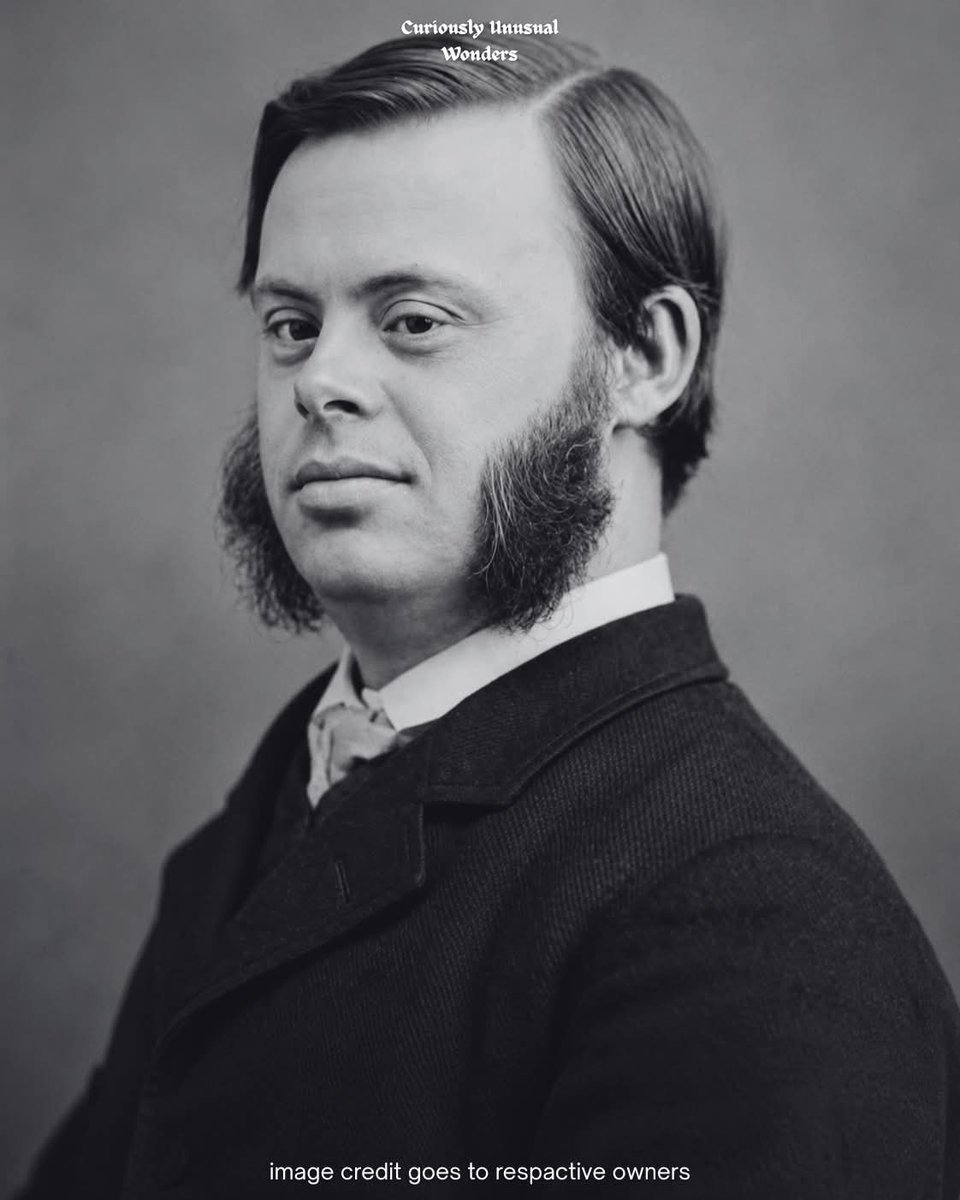
He also began photographing his patients — not as clinical specimens, but as individuals. He dressed them in their finest clothes. He gave them dignity in a frame. In an age when such people were deliberately hidden from society, that simple act of portraiture was quietly radical.
By 1868, Down had grown frustrated with the asylum's governors. When they refused to fund an exhibition of artwork created by the residents, he made a decision that would define the rest of his life. He resigned.
He and his wife Mary purchased a large home in Teddington and turned it into something the world had never quite seen before. They called it Normansfield — and it was not a hospital. It was a home.
Residents grew food in gardens Down planted himself. They learned trades. They were taught to read and write whenever possible. They were given structure, fresh air, and the revolutionary expectation that they were capable of growth.
Then, in 1879, Down built something that still stops people when they first hear about it.
A theater.
A full, proper theater — with a stage, real seating, and proper acoustics — on the grounds of a care facility for people society had written off as uneducable.
Why? Because Down believed that art, music, and performance weren't luxuries. They were necessities. They were part of what it meant to be human — and his patients, he insisted, were fully human.
Every week, residents took that stage. They performed plays. They sang. They stood in the spotlight and received applause.
For many of them, it was the first time anyone had ever clapped for them.
Normansfield flourished for over a century. Families who had been told their children had no future began seeing something they had nearly stopped believing in — progress, joy, and a life worth living. By 1876, the community was home to around 160 residents.
When Down died in 1896, his sons carried the work forward. Normansfield remained a home until 1997.
Today, the site houses the Langdon Down Museum of Learning Disability and serves as headquarters for the Down's Syndrome Association in the United Kingdom.
The theater he built in 1879 still stands. Beautifully restored. Still hosting performances more than 140 years later.
John Langdon Down advanced medical knowledge — but that may not have been his greatest contribution. What he really did was challenge a foundational assumption of his age: that some lives were worth less than others.
He proved, through daily practice and stubborn conviction, that every person has something to offer — and that the right environment, offered with patience and genuine respect, can reveal it.
The world he was born into locked its most vulnerable people away in darkness.
The world he left behind had, in some small but permanent way, begun to let the light in.
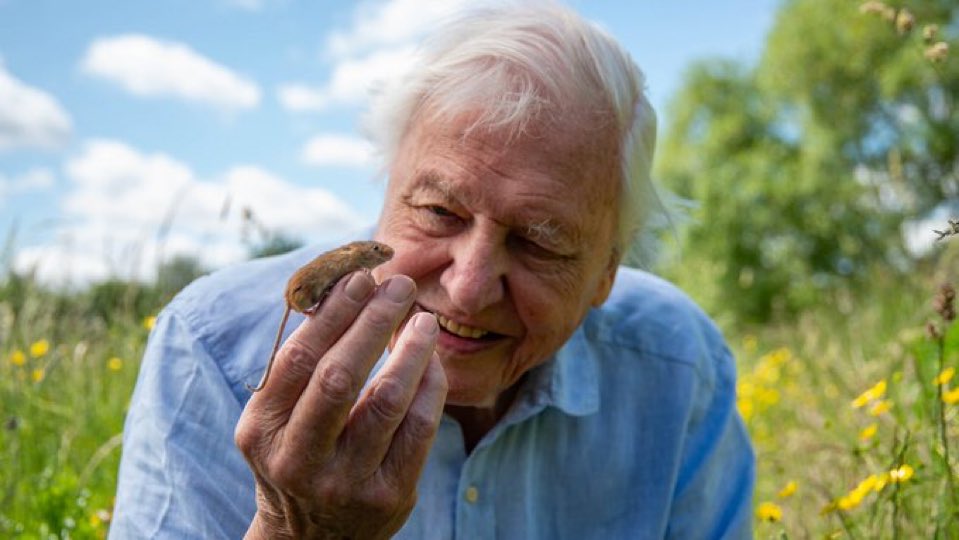
A very happy 100th birthday to David Attenborough.
The whole world owes an enormous debt to David Attenborough for passionately defending the natural world and how we relate to it.
Let us heed his lesson of living with nature, not on top of nature.
Breaking:
Wales has become the first country in The World to bring in rules to sack politicians for lying or for misleading the public.
It is a major shift toward accountability and political honesty and it sets a precedent other countries have never taken this far before.