This week the project @OpenVPP ($OVPP) claimed to be working with the US government on the tokenization of energy.
12 hrs ago Hester Pierce replied saying she does not work alongside or endorse private crypto projects.
OpenVPP then hid her reply from the post.
I reviewed the accounts promoting OpenVPP and it’s the usual influencer suspects.
In a world filled with misinformation and clever scams, the blockchain serves as a kind of "truth machine." It's an immutable record of what actually happened. My work is translating that truth, using on-chain data to cut through the lies and expose the facts of a fraudulent scheme. #Truth #Decentralization #BlockchainForensics
Say no to #crypto scam Say no to #Qfs scam Say no to #Nft scam Say no to #Giveaway scam
Say no to #Telegram and #YouTube scam If you're a victim of such scam... Dm me immediately for help.
Let's work together to save Crypto space.
Update on the NPM attack: The attack fortunately failed, with almost no victims.🔒
It began with a phishing email from a fake npm support domain that stole credentials and gave attackers access to publish malicious package updates. The injected code targeted web crypto activity, hooking into Ethereum, Solana and other chains to hijack transactions, and replacing wallet addresses directly in network responses.
The attackers’ mistakes caused crashes in CI/CD pipelines, which led to early detection and limited impact. Still, this is a clear reminder: if your funds sit in a software wallet or on an exchange, you’re one code execution away from losing everything. Supply chain compromises remain a powerful malware delivery vector, and we’re also seeing more targeted attacks emerge.
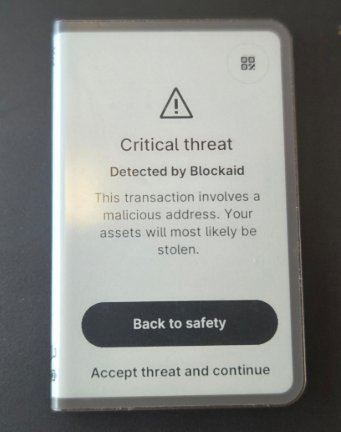
Hardware wallets are built to withstand these threats. Features like Clear Signing let you confirm exactly what’s happening, and Transaction Checks flag suspicious activity before it’s too late.
The immediate danger may have passed, but the threat hasn’t. Stay safe.
🚨 There’s a large-scale supply chain attack in progress: the NPM account of a reputable developer has been compromised. The affected packages have already been downloaded over 1 billion times, meaning the entire JavaScript ecosystem may be at risk.
The malicious payload works by silently swapping crypto addresses on the fly to steal funds.
If you use a hardware wallet, pay attention to every transaction before signing and you're safe.
If you don’t use a hardware wallet, refrain from making any on-chain transactions for now.
It’s still unclear whether the attacker is also stealing seeds from software wallets directly at this stage.
SCAM🚨!!
Do not deposit, invest or backup your xrp or XIm on Qfsledger or Qfsledgerlab (quantum financial system) platform!
send a message for help now!
#Qfsledger#qfsledgerlab#Xrp#xIm#qfs#trustwallet
Write me now if you've lost your funds!
RecoveryCase–✅ Result: $410,000 successfully traced and partially recovered within 72 hours.A victim clicked a fake token airdrop via a Twitter bot.The phishing site prompted a wallet connection and fake claim transaction. over $400K in USDT, ETH, and tokens were drained.
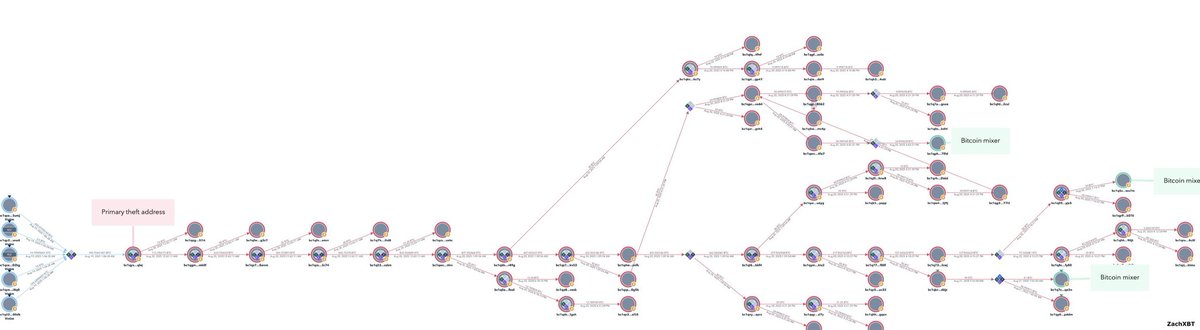
On Aug 19, 2025 a victim fell for a social engineering scam and lost 783 BTC ($91M) after exchange and hardware wallet customer support were impersonated.
The stolen funds began to peel off and deposits to Wasabi were made by the threat actor.
Coincidentally this theft happened on the one year anniversary of the $243M Genesis Creditor theft.
Theft txn hash
da598f2a941ee3c249a3c11e5e171e186a08900012f6aad26e6d11b8e8816457
Theft address
bc1qyxyk4qgyrkx4rjwsuevug04wahdk6uf95mqlej
The blockchain isn't just a ledger; it's a permanent time capsule. A fraudulent transaction from five years ago is as visible today as it was then. This immutability is our greatest tool. It means there's always a record to analyze, a puzzle to solve, and a chance to find the truth, no matter how much time has passed. #Blockchain #Crypto #DigitalForensics
Most crypto scams start with a human element—a fake profile, a trusting conversation. But the scam ends on the blockchain. The interesting part of my work is bridging this gap: connecting the social engineering tactics used to trick people with the on-chain evidence that proves the crime. #SocialEngineering #CryptoCrime #DigitalInvestigation
A human can't track millions of transactions, but an AI can. The next evolution of crypto forensics is using AI to detect subtle, illicit patterns that go unnoticed by the human eye. This is about using technology to outsmart the criminals and build a safer digital economy for everyone. #AI #Crypto #FutureOfForensics
The "DeFi" landscape is the new frontier for crypto scams. From fake yield farms to rug pulls, the methods are getting more sophisticated. This means our forensic tools must adapt. The focus is shifting from simply tracing to proactively identifying and flagging these new, complex threats. #DeFi #CryptoSecurity #ThreatIntel
Think of the blockchain like a public library. Every book (transaction) is recorded, and we can see who checked out what and where it went. Crypto forensics is like being the librarian with the tools to connect all the check-out cards, revealing a complete story of the money's journey. #CryptoEducation #BlockchainExplained #Cybercrime
Why is blockchain forensic analysis so important? Because it turns anonymous-looking wallet addresses into key pieces of a puzzle. We can link transactions, identify patterns, and provide clarity where scammers try to create confusion. This work helps bring accountability to the crypto world. #DigitalAssets #FraudPrevention #CryptoSafety