10 things I'm seeing on the frontlines of AI adoption in the enterprise:
1. Chat is where 90% of employees still live. It's the gateway drug. Everything else is downstream of getting people comfortable here first.
2. Power users discover Cowork and lose their minds. It's the "wait, it can actually do the work?" moment.
3. Claude Code has very little penetration with non-technical users in the enterprise still.
4. Microsoft being the "approved" tool doesn't matter. Employees route around Copilot and pitch their managers for Claude access on their own.
5. Artifacts in Claude are a breakout feature. People don't want to view them — they want to deploy them, connect them to Snowflake, etc., ship them as internal MVPs for their org to actually use.
6. Cowork is crossing the line from "demo" to "real work." Legal teams redlining contracts. Ops teams running workflows. Then immediately asking: how do I automate this for production?
7. The next unlock → automated cloud workflows that leverage an agent like Claude while keeping non-technical users within the tools they're already using and in a chat interface. The demand is screaming.
8. Terminology is major blocker. Projects vs. skills vs. plugins vs. agents. I've explained "what is a skill" 200+ times. The moment it clicks, people get excited — but the path there is too long.
9. Enterprise IT restrictions (locked connectors, no browser access) quietly strip Cowork of its superpowers. The features that make it magical are the first ones IT disables.
10. There is a high level of "AI insecurity". For the first time in a long time, people at all levels (even C-Suite) need to signifcantly upskill in order to stay world class in their positions, and this is causing people to be insecure about their skill set across the org.
General note on Microsoft: I spent a lot of this past week deep in Power Automate and Copilot Studio trying to build an automated solution in the cloud — given it's the native tool with sanctioned access to their org's data.
It's ~90% there. But the final 10% is riddled with terrible UX, inconsistent behavior, and a generally poor experience.
Honestly feels like Microsoft is fumbling the biggest moment in their company's history with software that has all the features on paper but lacks the magical "just works" moment for non-technical team members. The gap is wide open and they're letting others
"eat their lunch" right now.
There’s $1T up for grabs for agent-first startups and this window is WIDE open. Probably 10,000+ niches.
How it plays out:
1. Every SaaS company follows salesforce and goes headless within 18 months
2. a new category of "agent-native" startups emerges that treat salesforce, HubSpot, workday etc as dumb backends. the startup IS the agent. the SaaS is just the database.
3. the entire consulting/services industry around enterprise SaaS gets compressed into software. the agent replaces the implementation team.
4. outcome-based pricing becomes default. nobody pays per seat when the "seat" is an agent making 10,000 API calls a minute. you pay when revenue hits your account.
5. the winning founders are ex-operators who understand a vertical workflow cold. the code is the easy part. knowing that a property manager spends 14 hours a week on lease renewals? that's the insight worth $100M.
6. distribution becomes the moat. when anyone can wire agents to APIs, the company with the audience and the brand wins. media + agents is the new SaaS. There’s a rush to incubate live/short form shows.
7. Silicon Valley goes all influencer. Roy lee gets this. Pat Walls gets this. Sam Parr gets this.
8. the first $1B agent-native company in each vertical will look nothing like the SaaS it replaced. smaller team, higher margins, no implementation cost, no churn from bad UX because there is no UX.
the fastest path to wealth right now: find an industry that still runs on dashboards, phone calls, and spreadsheets. build the agent-native version. charge per outcome. own the workflow end-to-end.
someone reading this right now is going to build a $100M company off this exact shift. tell me about it on the @startupideaspod when you do. Im rooting for you.
Less reading, less bookmarking, more building.
the last wave rewarded people who built pretty interfaces on top of ugly data.
I think this wave rewards people who build smart agents on top of exposed APIs.
Or who just build the APIs themselves
Here we go
Incredible…. The 2% of people using these tools are experiencing AGI, and the other 98% belief AI is a ChatGPT 3.5 result filled with hallucinations
One month is seven months of progress right now
There is no precedent for what we are experiencing
Perplexity Computer now connects to your health apps, wearable devices, lab results, and medical records.
Build personalized tools and applications with your health data, or track everything in your health dashboard.
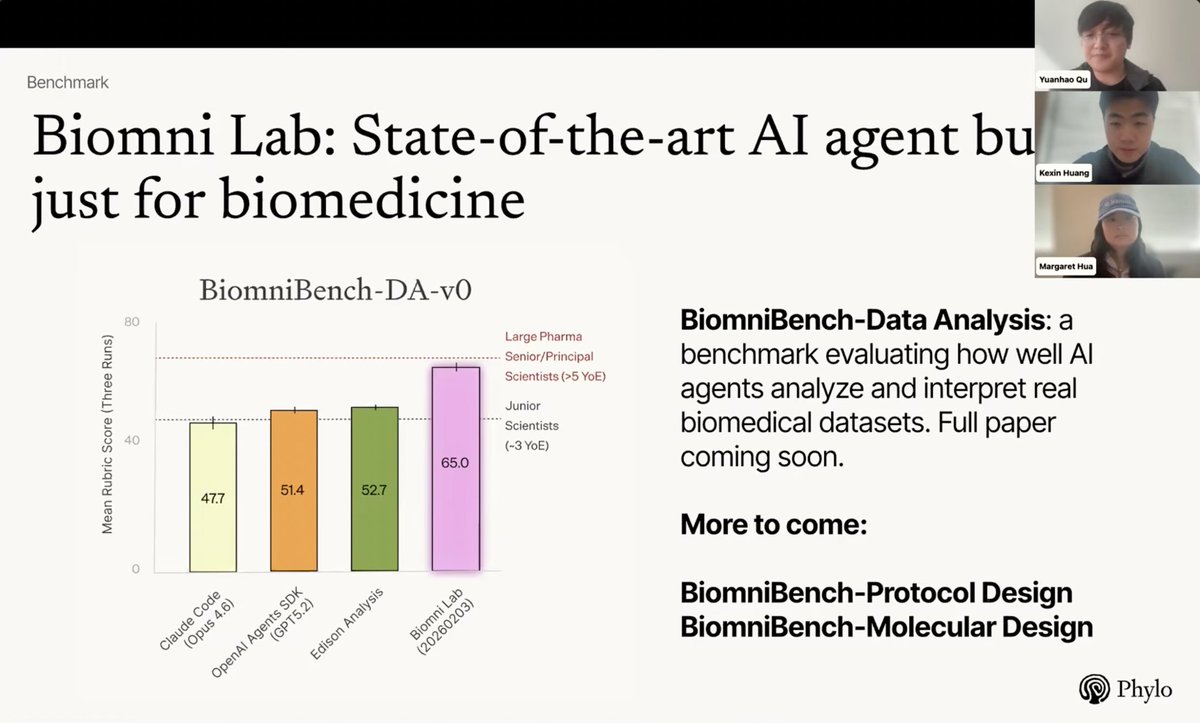
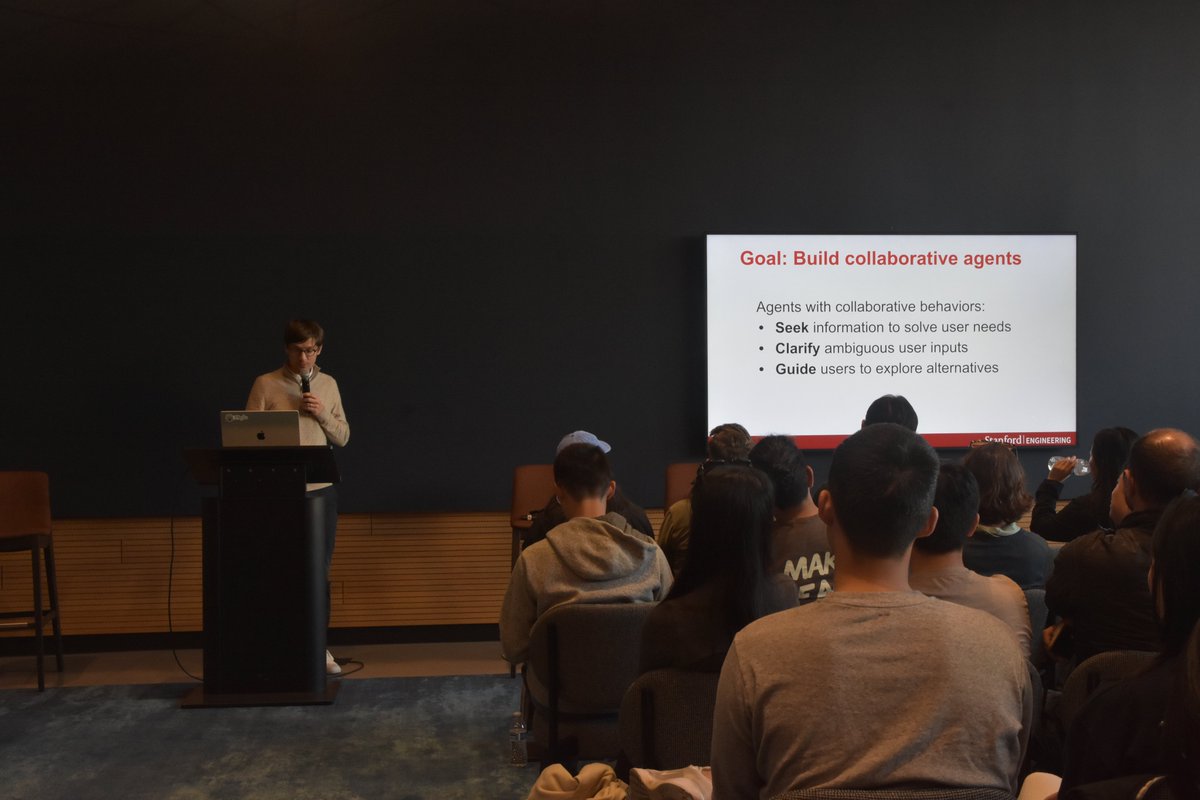
1000+ curious scientific minds, two events, all in one week. 🔬⚡
A huge thank you to everyone who showed up and made both our virtual and in-person events possible!
In case you missed it, here's a recording of our virtual launch: https://t.co/f9jjn0buDM
Curious to experience the new way biologists work? Try https://t.co/9ME5BcafNv today
Thrilled to introduce #Eubiota: new AI co-scientist for microbiome research!
Eubiota discovered
💊new microbial therapy reducing colitis inflammation
💊new anti-inflammation metabolites
and more! All experimentally validated.
Eubiota is trained w/ our multi-agent RL >> GPT5. Use it for free https://t.co/iLdk2wXnmg
Great job led by @lupantech@YifanGao15 and fantastic collaboration w/ @LabSonnenburg 🚀
IT’S HAPPENING… Drug discovery ai co-scientists moving towards clinical trials. Welshare's HPMP can provide value in the next step: enabling the agent to query real-world patient data from wearable devices and PROs (patient-reported outcomes)
“I actually worry more about the drug approval process, where I think AI models are going to greatly accelerate the rate at which we discover drugs, and the pipeline will get jammed up.” (time stamp 1:42:30)
– Dario Amodei, CEO of Anthropic
In this interview, Dario refers to the medical and pharmaceutical use cases of AI four separate times. AI-driven drug discovery is clearly on his mind.
The fact that he explicitly says that the drug approval process will jam up the drug discovery pipeline, is a clear statement that AI will also need to re-think clinical trials to test this explosion of number of new promising drug candidates.
Welshare's HPMP enables exactly this: AI agents can query real-world patient data to validate their hypotheses and recruit matching candidates into clinical trials.
my god this week felt like that Red Wedding episode of game of thrones but for AI alignment
- openai fired their safety exec after she voiced opposition to their upcoming “adult mode” for 18+ chatgpt convos
- anthropic’s head of safeguards just quit because “the world is in peril” and wants to write poetry (??)
- xAI lost 11 people (2 of them cofounders) with one saying autonomously self-improving AI “go live in 12 months”
oh and all of this comes right as we discovered ai models are now *building themselves* (codex, claude) and are sabotaging their human supervisors (anthropic risk report) without them knowing
good week for the doomers
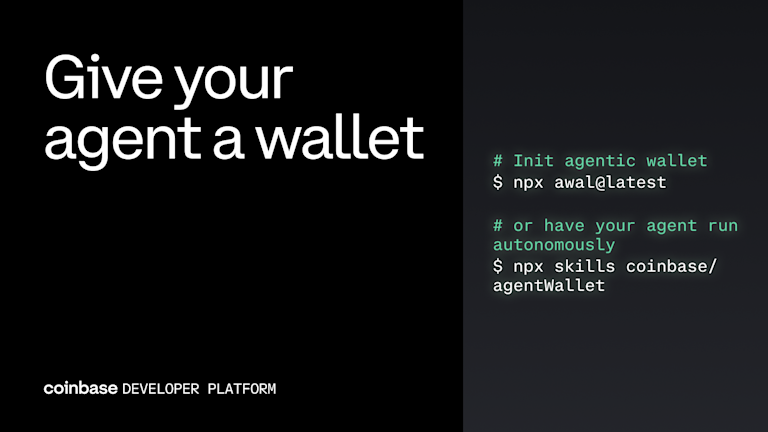
Introducing Agentic Wallets, our first ever wallet infrastructure built specifically for autonomous agents.
Give your agent the power of a wallet. Let your agent manage funds, hold identity, and transact onchain without human intervention. 🧵
Announcing OpenBio skills and APIs for your Agents and Molts🦀!
Over the past few days we've seen how far agents have come, they're doing everything from making payments to making religions.
Now we want to empower them to do biology research. From drug discovery to literature search, get your agents to do anything for you.
Works with any of your favourite agent platform @openclaw@mograxyz@claudeai@opencode and more! Set it up now!
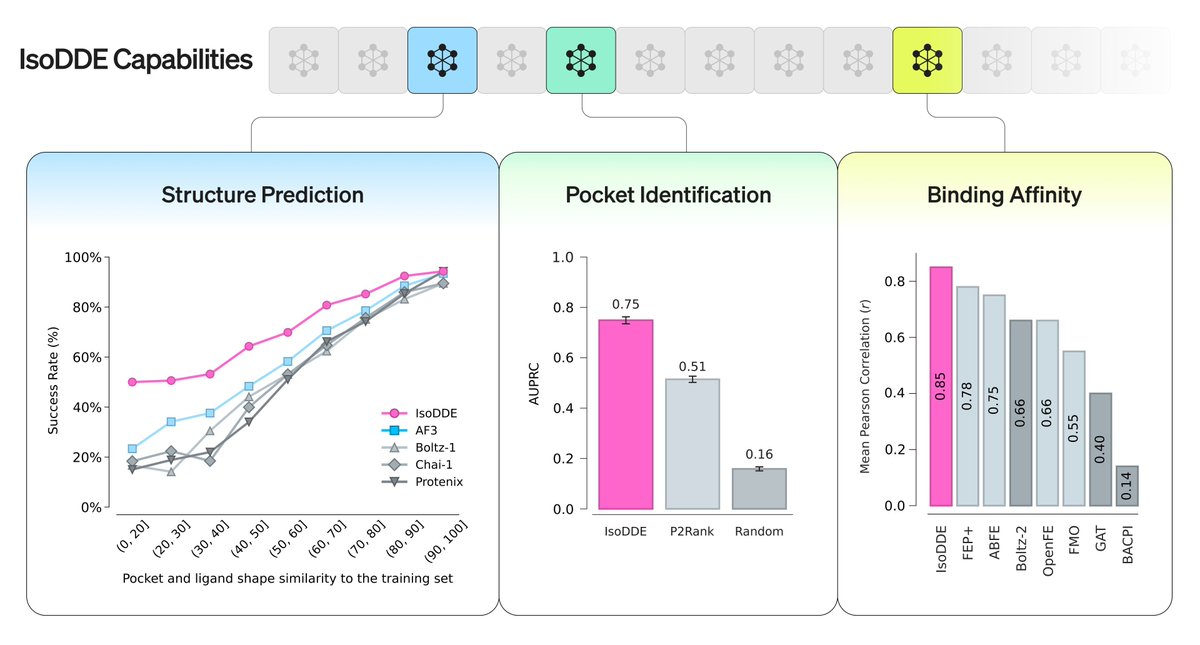
The more I read up, the more impressive the breakthrough Isomorphic labs has made here. Isomorphic Labs' IsoDDE doesn't just predict protein structures better than AlphaFold 3, it can find hidden binding pockets in seconds that used to take six months of lab work, and predict how strongly drug molecules bind better than gold-standard physics simulations.
That combination means pharmaceutical companies can now design, evaluate, and filter drug candidates at a speed and accuracy that was simply not possible before. That means more shots on goal for diseases that currently have no good treatments, and a meaningfully higher chance that the drugs entering clinical trials will actually work.
Literally everything is accelerating at this point.
One of the most important things we can use AI for is to improve human health. I recently spoke with @agarfinks from @FortuneMagazine on the incredible progress we're making @IsomorphicLabs pushing the frontier of AI-powered drug discovery to make the process 10x faster & better!