NYT bestselling author with 5 million copies in print. Co-Founder and editor-in-chief of ALL ISRAEL NEWS and ALL ARAB NEWS. Host of THE ROSENBERG REPORT on TBN.
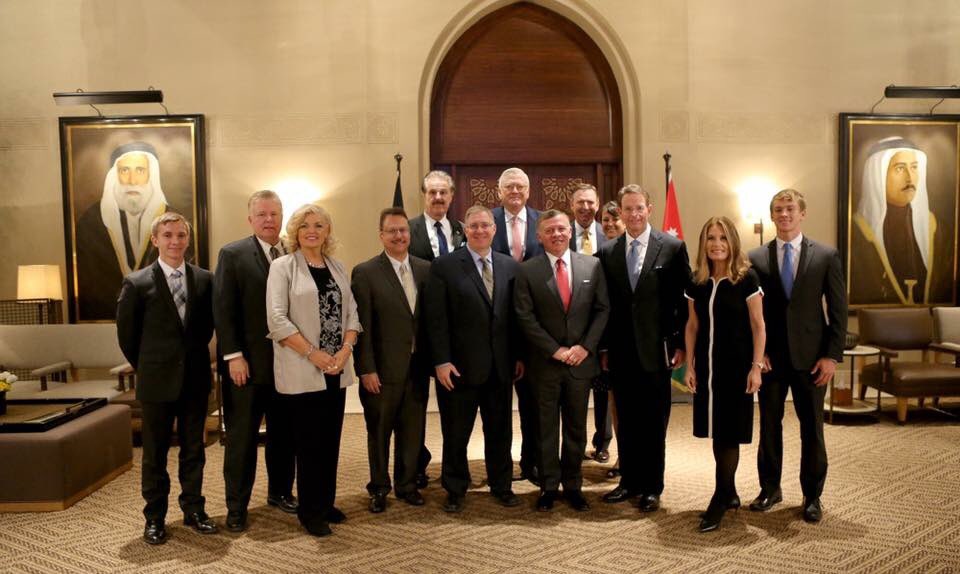
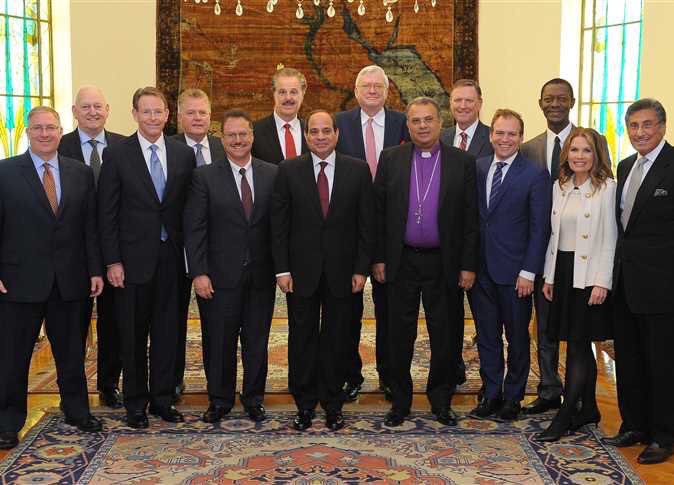
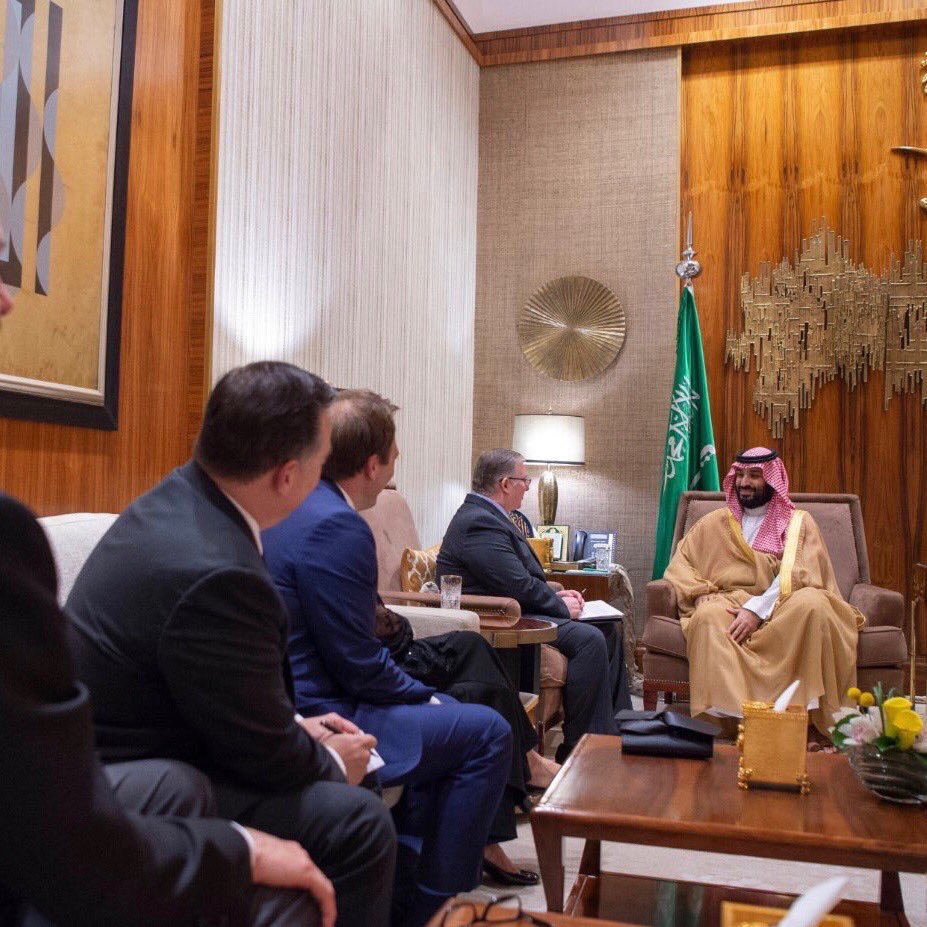
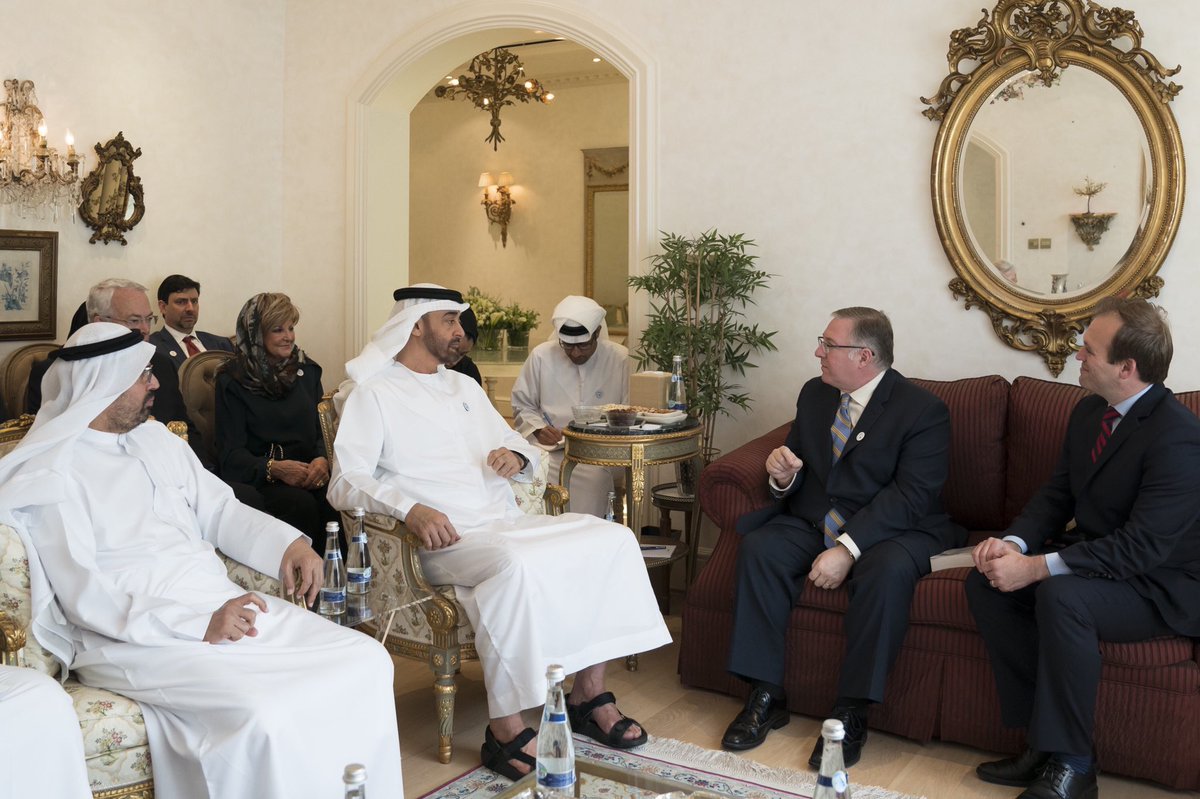
As an author, dual US-Israeli citizen & an Evangelical, I’m grateful for the opportunity to meet w/various Middle Eastern leaders—from Jordan’s King Abdullah II to Egyptian President el-Sisi to UAE Crown Prince MBZ to Saudi Crown Prince MBS—to discuss peace and religious freedom.
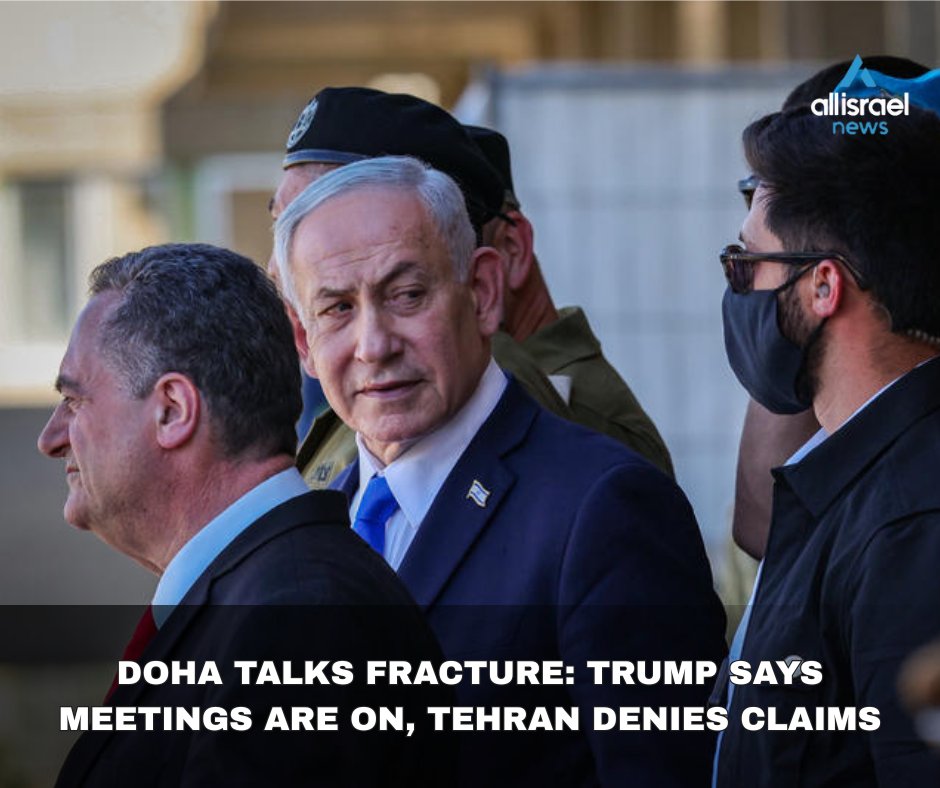
“The IDF is also preparing to operate independently in Iran, in a blue-and-white operation. The IDF is only waiting for it. We have targets for attack in Iran, and the IDF is prepared and on alert...” — Israeli Defense Minister Israel Katz
Direct military conflict between Israel and the Iranian regime could reignite within days, Israeli Defense Minister Israel Katz warned in a closed briefing to military reporters. Katz revealed that the IDF is fully prepared to launch a unilateral, independent "blue-and-white" military strike against vetted targets inside Iran if U.S.-led diplomatic tracks collapse or if Tehran launches fresh missile volleys. While emphasizing that Israel will not prematurely interfere with the White House’s diplomatic maneuvers, he made it clear that Jerusalem is ready to act alone.
This stark warning comes amidst immense confusion surrounding the U.S.-Iran peace talks in Doha, Qatar. While President Donald Trump touted dropping oil prices ($69 WTI crude) and declared on Truth Social that high-level meetings were set for Tuesday, Iranian negotiators flatly contradicted him, refusing to confirm the technical talks. Adding to the tension, Defense Minister Katz offered a candid critique of Washington's strategy, stating that Trump's insistence on linking the Iranian and Lebanese negotiation fronts effectively rescued a collapsing Hezbollah, forcing Israel to pivot to "Plan B"—the unilateral deepening of its "Yellow Line" security zone in southern Lebanon.
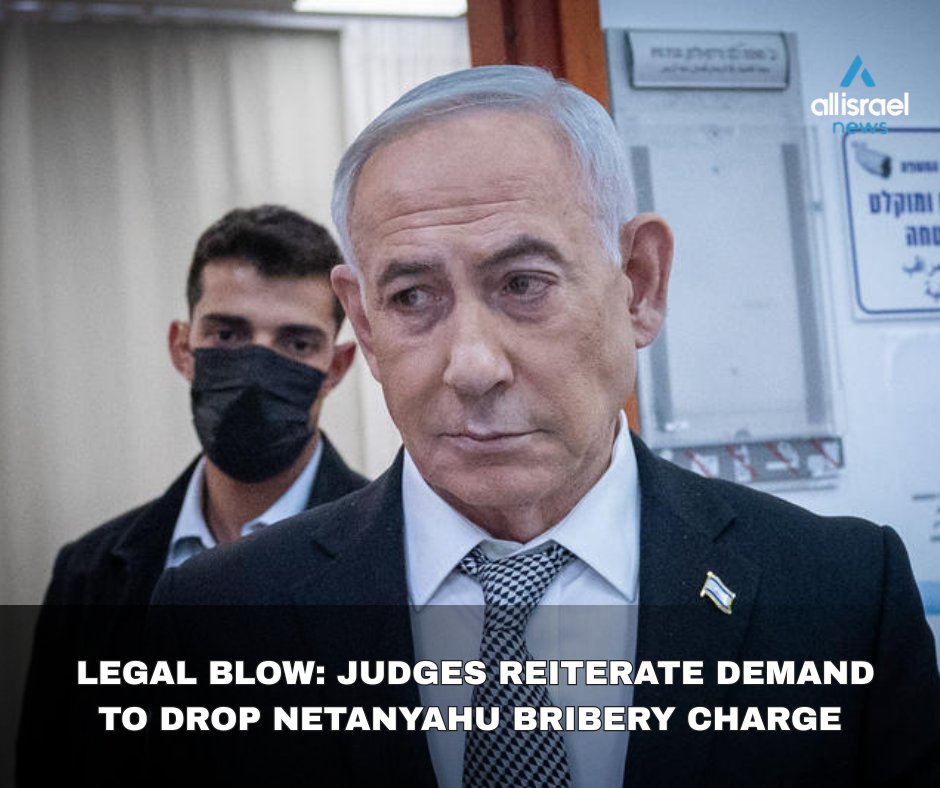
“This was an attempt to harm — a direct and deliberate harm, a political assassination — to prevent the citizens of Israel from electing who they want.” — Prime Minister Benjamin Netanyahu
Israeli Prime Minister Benjamin Netanyahu has officially concluded a grueling 18-month testimony phase in his marathon corruption trial, marked by a scathing counter-attack against the prosecution and a major tactical victory from the bench. The Jerusalem District Court judges have forcefully reiterated their standing recommendation that the state drop its headline bribery charge in Case 4000 (the Bezeq-Walla case). The panel of judges warned prosecutors that after months of exhaustive wartime testimonies, the bribery element remains too difficult to prove, essentially signaling that the accusation will not hold up in the final verdict.
Netanyahu, who appeared in person despite his attendance not being legally required, slammed the decade-long investigative process as "10 years of hell" designed purely for political removal. With chief defense attorney Amit Hadad warning that retaining the bribery charge would force hundreds of additional witnesses to the stand and drag the mammoth trial out until March 2028, the judges' intervention places immense pressure on the state prosecution. As the trial transitions to final closing arguments, the collapse of the bribery charge leaves Case 4000 vulnerable to a total acquittal, completely shifting the legal momentum in favor of the Prime Minister.
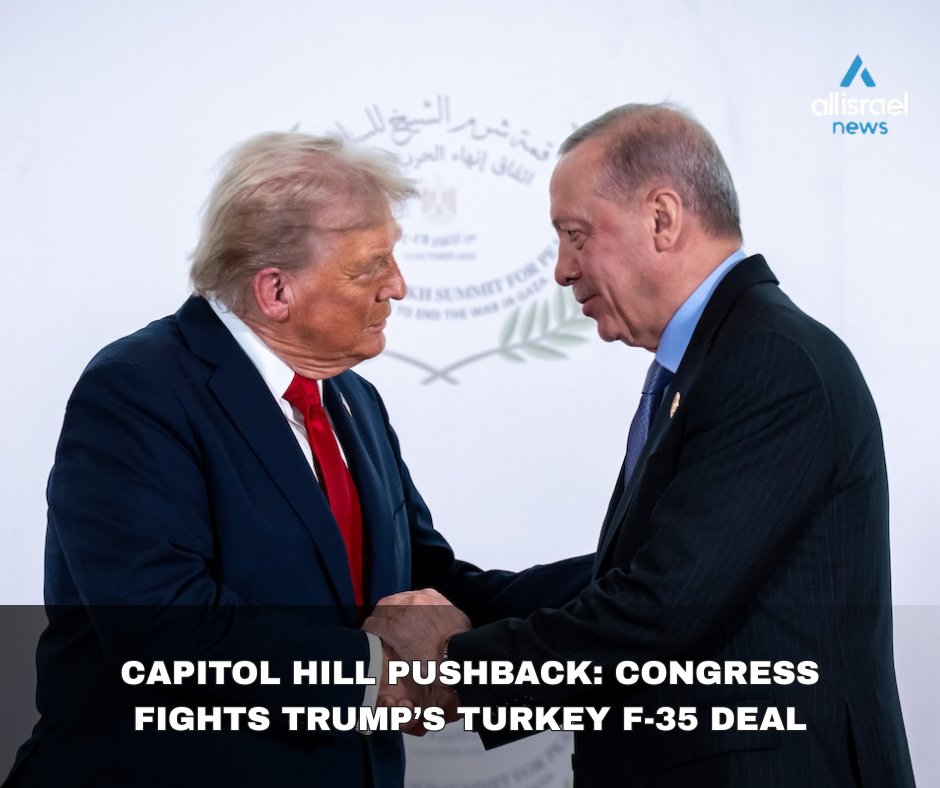
“It is concerning…there’s no secret that Erdoğan and Turkey have some big question marks over them. And what their plan is for the region, what their desire is for the region is extremely concerning.” — Congressman Mark Harris
Bipartisan friction is rapidly heating up on Capitol Hill as lawmakers mobilize to block the Trump administration from potentially readmitting Turkey into the F-35 stealth fighter jet program. Sparked by White House signals hinting at an upcoming move to make Turkish President Recep Tayyip Erdoğan "very happy" ahead of the NATO summit, a letter of concern is actively circulating through Washington to lay the groundwork for a Joint Resolution of Disapproval.
The congressional pushback highlights a massive national security dilemma. Under current U.S. law, transferring F-35 aircraft to Ankara is strictly prohibited as long as Turkey remains in possession of Russia's S-400 missile defense system, a combination defense experts warn poses an unacceptable risk of exposing classified stealth software to Moscow. Beyond technical intelligence leaks, lawmakers are deeply alarmed by Erdoğan’s "neo-Ottoman" foreign policy trajectory—including his hosting of Hamas leadership, aggressive anti-Israel rhetoric, and expanding military footprint in Syria and Libya—raising serious doubts about whether Turkey remains a reliable ally for Western strategic interests.
The day the investigation against Netanyahu began was one of the greatest days of my life: my son was born. Now he’s less than two years away from his bar mitzvah, and it looks like he’ll become a Jewish man before Netanyahu becomes a free one.
After his testimony ended last week, for the second time in three years, the panel of judges overseeing Netanyahu’s corruption trial told prosecutors what they apparently do not want to hear: the central bribery charge against the premier is not worth pursuing.
During a hearing at the Jerusalem District Court yesterday—convened to debate whether to expand the trial to five sessions a week—the three-judge panel reiterated a recommendation it first issued in June 2023, advising the prosecution to drop the bribery count on the grounds that it would be difficult to prove and would only drag the proceedings out further. “Our position, as expressed in June 2023, remains unchanged,” lead judge Rivka Friedman-Feldman told the court, adding that the panel had not intended to revisit the issue but did so after both sides raised it.
What makes the renewed statement weightier than the first is its timing. The original recommendation came before the defense had called a single witness. Back in June 2023, the judges took both sides into chambers and said plainly that the bribery count in Case 4000 could not be sustained, urging the state to withdraw it. The prosecution refused—betting it could resurrect the charge by breaking Netanyahu on the stand during the defense phase. A convenient narrative took hold, echoed even by retired Supreme Court President Aharon Barak and others: that the defendant’s own testimony would be his undoing. It wasn’t. After some 98 hearings and hundreds of hours of cross-examination, Netanyahu did not incriminate himself, and the gamble collapsed. With no further testimony or evidence left to introduce, the judges’ return this week to the exact position they staked out three years ago carries a blunt meaning: the prosecution’s last avenue to prove bribery has closed. The bench is simply unconvinced.
The bribery charge sits within Case 4000, the Bezeq-Walla affair, and is the most serious of the three cases against Netanyahu. Prosecutors allege that as communications minister he advanced regulatory decisions benefiting the telecommunications company Bezeq’s controlling shareholder, Shaul Elovitch, by hundreds of millions of shekels—some 1.8 billion shekels, roughly $500 million, between 2012 and 2017—in exchange for favorable coverage from Elovitch’s Walla news site. The indictment described the arrangement as a relationship “based on give and take.” Netanyahu, Elovitch, and Elovitch’s wife, Iris, all deny wrongdoing.
The bribery charge was contentious from the outset, even within the office that filed it. The decision to indict was said to have divided Attorney General Avichai Mandelblit’s team, with some prosecution officials pressing for a bribery charge and others warning it would not hold. Mandelblit himself was reportedly among the doubters, weighing whether to charge the prime minister at all. Reports before the indictment indicated the count would be watered down and narrowed, and Mandelblit took the unusual step of reopening the case files for clarification after the defense’s pre-indictment arguments. He ultimately included the charge, calling the overall decision “a difficult and sad day” made “with a heavy heart but also with a whole heart,” and insisting that where the evidence carried “a reasonable likelihood of conviction,” indicting was his legal duty rather than a choice.
As it turns out, his assessment was wrong. If, back then, Mandelblit had gone with what he had—Case 1000 and Case 2000—the trial would have ended years ago, we would even have finished with the inevitable appeal to the Supreme Court.
Still, the consequences of withdrawing the charge now would be significant but bounded. Removing bribery would leave the lesser fraud and breach-of-trust charges intact across all three cases, so the trial itself would continue. But the defense argues the practical effect would be dramatic. Chief defense attorney Amit Hadad told the court that keeping the charge in place would require calling hundreds of witnesses, warning there would be “no chance” of finishing by March 2028—the deadline tied to Friedman-Feldman’s mandatory retirement at age 70, well after my son has read from the Torah. There is indeed “no chance” the trial wraps by 2028. Add the lengthy decision-making process and the inevitable appeal to the Supreme Court by one side or the other following any verdict, and I’d put the end date somewhere around 2032 — just in time for my son to receive his draft notice.
But they won’t give up on bribery, because along with shortening the proceedings, dropping the count would strip away the only accusation that threatens Netanyahu’s ability to remain in office. It would, in effect, collapse the prosecution’s central theory of corruption while leaving the murkier, harder-to-define breach-of-trust allegations standing.
The failure to accept reality has a name—in fact, two. The bribery theory was flimsy from the day Avichai Mandelblit signed off on it—a problematic legal construction stitched together over the objections of people inside his own office who saw it would not hold. His successor, Attorney General Gali Baharav-Miara, inherited a charge the court had already told her could not be proved and pressed on regardless. She could have spared the system dozens of sessions, hundreds of days of litigation, and the spectacle of a prime minister marched through endless cross-examination on a count the bench had already written off. She chose not to—not because the evidence, or some abstract notion of justice, demanded it, but because letting the charge die would mean conceding that the most consequential corruption prosecution in Israeli history was built on sand.
That is the real scandal. A charge that everyone including the judges, and the prosecution’s own witnesses recognizes as unprovable is nonetheless kept alive for years.
For now, the bribery charge remains formally on the docket, and at this point a third signal from the bench won’t make much of a difference. But if the count is finally struck—or collapses in what seems an inevitable acquittal—the only open question will be why it took the better part of a decade to reach an obvious conclusion. I think I know the answer, and it does not bode well for the health of Israeli society.
As much as we might like to imagine there are moderates waiting in the wings of the Iranian regime, there simply isn't any evidence to support that notion.
These are radical theocrats dedicated to destroying Israel and the United States - and we must behave as such.
🇺🇸🇮🇱🇵🇸 Sec. Kennedy:
"If Israel wanted to commit a genocide against Palestinians, it could do it in a minute. It's doing the opposite. The Palestinian population is growing enormously around Israel.
If you want to see where a real genocide is happening, it's not in Israel. It's in all the nations around it."
Worth noting: His father was assassinated by Palestinian nationalist Sirhan Sirhan in 1968.
Writer: Michael
🚨 Erdogan responded to Israel's decision to recognize the Armenian Genocide: "In our history, there is no genocide, no massacres, no oppression, and no colonialism. Throughout our thousands of years of glorious history, there has only been justice and compassion."
So grateful that President Trump chose @GovMikeHuckabee to be the U.S. Ambassador to Israel — this is a great American patriot, a devout Evangelical Christian, and a true champion of a strong U.S.-Israeli alliance because it serves the most vital interests of the American people.
US ATTACKS 10 IRANIAN TARGETS: Good—it’s absolutely critical that President Trump uses consistent military pressure on Iran in response to every Iranian violation of the ceasefire. More importantly, I hope the President realizes Iranian leaders can’t be trusted to keep this deal.
U.S. Navy and Air Force fighter jets conducted strikes tonight on 10 Iranian military targets at multiple locations in and near the Strait of Hormuz for Iran's drone attack on M/T Kiku.
The leader of the largest Christian bloc in Lebanon, Geagea, throws his weight behind the agreement with Israel. He rebuts the February 6 Alliance (Shia Berri and Druze Jumblatt) that killed the 1983 Agreement for peace with Israel, and says Lebanon is represented by its elected President Aoun, PM Salam, and the cabinet. Those crying for restoring the 1949 Truce (instead of peace) should have stood up for the truce during the many times it was violated by militias in Lebanon since 1964.
Following another escalation in US-Iran fighting since Friday, what is the status of the Memorandum of Understanding and ceasefire that was supposed to be making things more, not less, peaceful in the Middle East? joined @VictorBlackwell on @CNN this AM to explain. 👇
Mamdani is either willfully ignorant or maliciously mendacious.
27 countries have Islam as an official state religion, while 23 Muslim-majority countries explicitly declare Islam the state religion in their constitutions.
A partial list of countries with an official or constitutionally privileged religion includes Afghanistan, Algeria, Armenia, Bahrain, Bangladesh, Bhutan, Brunei, Cambodia, Costa Rica, Denmark, Egypt, Greece, Iceland, Iran, Iraq, Jordan, Kuwait, Libya, Malaysia, Maldives, Malta, Mauritania, Monaco, Morocco, Oman, Pakistan, Palestine, Qatar, Saudi Arabia, Somalia, Sri Lanka, Tunisia, UAE, and Yemen.
Religions: Islam, Christianity, or Buddhism.
Israel has no official state religion.
Yet Israel is routinely portrayed as uniquely problematic because it is a Jewish state. The double standard is obvious. Remember that the next time Israel is smeared by the likes of Mamdani and his ilk.
Lebanon has recognized Israel as a sovereign state and agreed to end the state of war.
That would have been unthinkable without U.S. and Israeli successes against the Islamic Republic in Iran and Hezbollah—and @SecRubio’s diplomacy.
Many obstacles remain, but this is a hopeful sign in a region that rarely offers one.
🇱🇧🇮🇱 The explosion from Israel destroying a tunnel network in southern Lebanon was so massive it practically destroyed an entire town and was heard as far away as Israel
The 200m long network was buried 25m underneath the town of Majdal Zoun
It was so devastating the blast even triggered earthquake detection systems
Writer: Ian
Is Israel prepared if Democrats take control of Congress or return to the White House?
@DrMichaelOren reflects on the shifting relationship between the US and Israel.
“Iran signed a ceasefire agreement. We have honored it. If they have disagreements about how the MOU is being applied, they can pick up the phone. But violence will be met with violence.” — U.S. Vice President JD Vance
The fragile U.S.-Iran ceasefire has faced its first major military test. The United States launched precision airstrikes against Iranian missile, drone, and coastal radar sites on Friday, retaliating for an Iranian one-way drone attack on the Singapore-flagged cargo ship M/V Ever Lovely in the Strait of Hormuz. The escalation comes just days after Washington revealed plans to establish a direct CENTCOM-IRGC communication hotline in Doha to resolve regional disputes.
While an Iranian parliamentary official bizarrely defended the drone strike as "ceasefire management," President Donald Trump condemned the aggression, and the IRGC rapidly retaliated by targeting U.S. bases in the Gulf. With regional tensions soaring, the International Maritime Organization has suspended its emergency evacuation plan, leaving approximately 500 commercial ships stranded in the volatile maritime trade corridor.
"Serious organizations need serious leadership, and I think that by getting rid of him, there are no other leaders of his stature at the top of Hamas today..." — Israeli Military Intelligence Officer to Walla News
Nearly three years after orchestrating the October 7 massacres, Hamas faces near-total military decapitation in Gaza. Relentless Israeli precision strikes have eliminated virtually every high-ranking commander—including Yahya Sinwar, Mohammed Deif, and recent military wing chief Mohammed Odeh—leaving only veteran Imad Aqel alive. Yet, the group maintains an iron grip on Gaza's civilian population by systematically exploiting and taxing imported humanitarian goods to prevent total organizational collapse.
Now mired in a deadlocked internal election, the external politburo faces a profound strategic crossroads. Deepening fractures in the Iran-Qatar alliance are forcing the remaining leadership to choose between a pro-Iran track or a newly aligned Sunni Islamist camp backed by Turkey. While leadership dynamics hang in the balance, intelligence officials emphasize that Hamas's fundamental jihadist ideology remains entirely unaltered.