A modern chip factory costs around $20 billion to build, and undergraduates are almost never allowed near the machines inside it. A group of students at IIT Bombay built their own versions of those machines for about ₹30 lakh, roughly $32,000, in ten months.
They call themselves HackerFab IITB, and they started in August 2025 with no fab of their own. Since then they have built three of the main tools that turn a bare silicon wafer into a chip. One prints tiny patterns onto the wafer using light. Another bakes the silicon at up to 1,100 degrees to grow a thin protective layer. A third coats it with a film of metal inside a vacuum.
The patterns are small. Their light-printing machine has made patterns about a micron wide. A human hair is around 70 microns wide, so that is roughly seventy times thinner than a hair. The vacuum chamber they built pulls the air down to about the pressure you would find in low Earth orbit.
The price tag is what people focus on, but money is not the hardest part. The people who actually know how to make chips are maybe a few thousand engineers spread around the world, sitting on top of a trillion-dollar industry. A lot of what they know never gets written down.
So the students put it together piece by piece. Some of it from their own professors. A surprising amount from Discord groups full of retired chip engineers, many in their seventies, who answer questions for free because they enjoy being asked. The whole idea traces back to a project at Carnegie Mellon, which itself grew out of an American teenager named Sam Zeloof building working chips in his parents' garage.
There is a nice full-circle to where this landed. The first transistors of this kind made at IIT Bombay came out of the same department in the late 1980s, printed at about three microns. HackerFab is printing at a few microns right now, except the people doing it are undergraduates who built the machines themselves. They expect their first complete working transistor within weeks.
None of this competes with the chip in your phone, which is built at a scale hundreds of times finer. That was never the goal. The wall around chipmaking was made of access, to the tools and to the knowledge. A handful of students just showed you can get past both for the price of one car and a willingness to ask strangers for help.
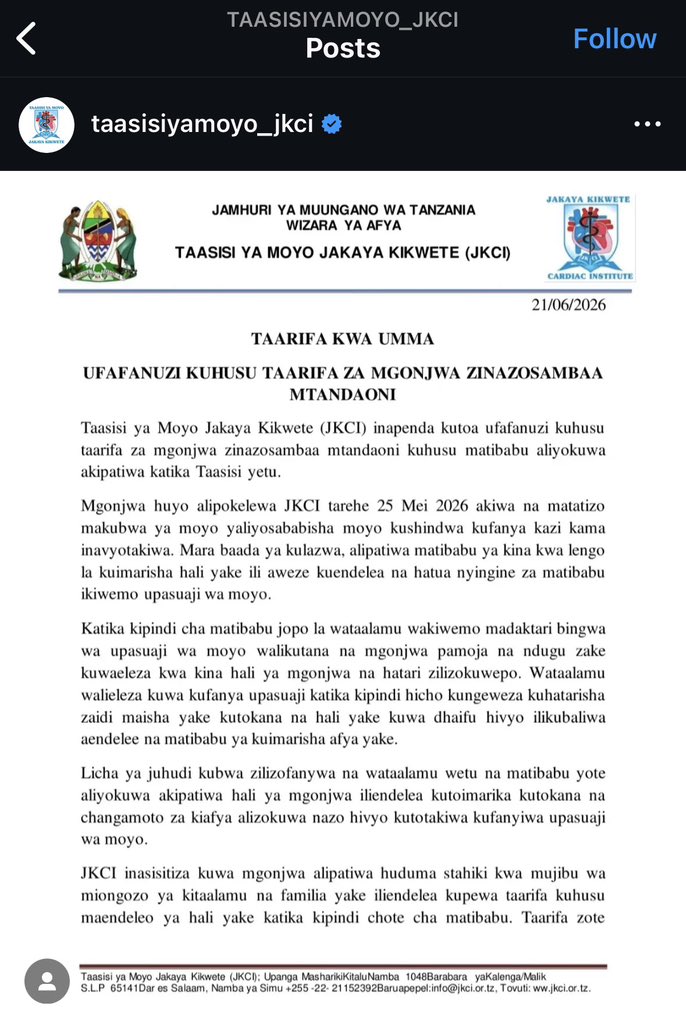
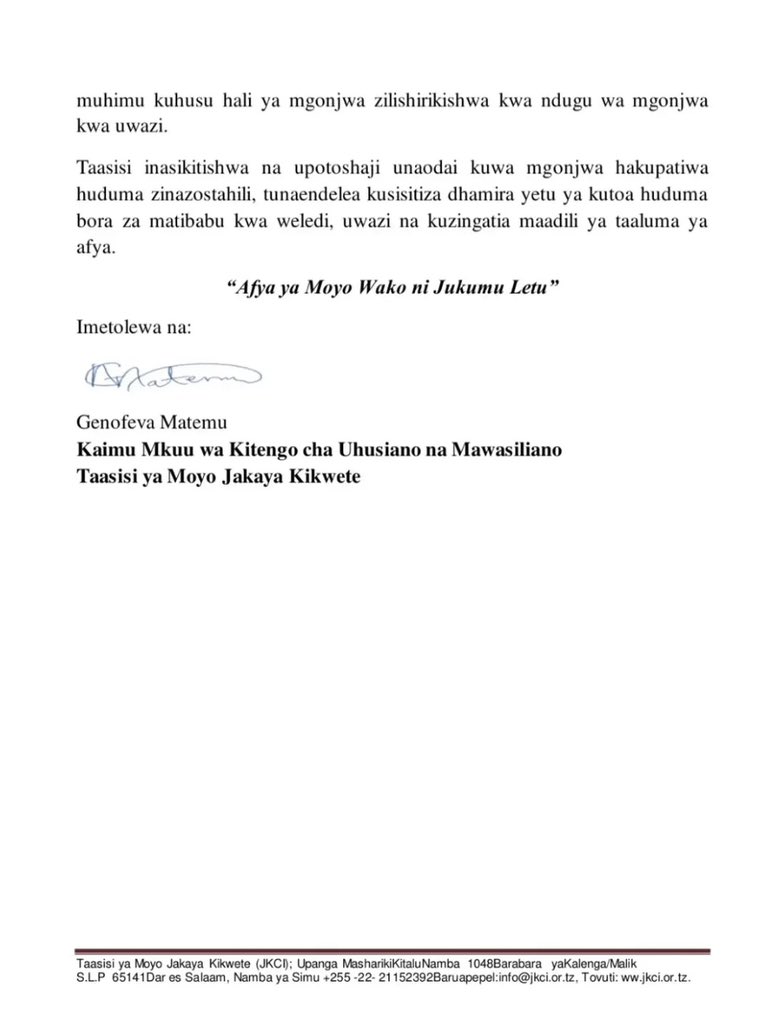
#TajiriLaKihaya@TaasisiMoyoJKCI kuna maswali muhimu hamjayapatia Majibu kwenye hili andiko langu!
Mmetoa taarifa ya juuu juu saana!
Kwa nini mlimuHAMISHA CHUMBA??
Kwa nn chumba mlichomhamishia mapigo ya moyo na pressure hayakua yanasoma kiusahihi…??
Hadi yule daktari wa kihindi alipokuja kupima na kipimo chake ndio tukagundua hilo na bado hamkubadilisha??
Mgonjwa wetu alikuja akiwa mzima… ila mlipomlaza tu hali kila siku ikazidi kuwa mbaya???
Kwa nn manesi kuna dawa walikuwa wanaambiwa wampe mgonjwa… ila hawampi kwa wakati hadi tena madaktari watakapopita waulizie kama kapewa ndio wampe???
Maswali ni mengi saaana…
The Haya people of Tanzania were producing carbon steel in the year 100 AD, nearly 1,900 years before the process was independently developed in Europe. Their furnaces reached 1,800 degrees Celsius using preheated forced-draft technology that European metallurgists did not achieve until the Industrial Revolution. When anthropologists arrived to study it in the 1970s, the knowledge only survived because a few elderly men still remembered it. Cheap European steel had already put the Haya out of business decades earlier.
Africa did not need to be taught how to build. It needed to be left alone.
Senegal's President Bassirou Diomaye #Faye has defied Ousmane Sonko's call to keep PASTEF/Les Patriotes out of new government, unveils a new 30-member cabinet that includes at least 4 PASTEF party members and officials who served under former President Macky Sall.
Faye distances himself from Sonko while opening the door to Sall. The move is striking given that Sonko and Faye were jailed during the Sall era and repeatedly accused his administration of political persecution and repression against the opposition.
Mouhamadou Mactar Cissé, now Minister of the Interior and Public Security, previously held the same position under former President Macky Sall. He also served as Sall's Chief of Staff (Director of Cabinet), Minister of Petroleum and Energy, Minister of Budget, and Director-General of Customs.
Cheikh Diba, who has been retained as Minister of Economy, Finance and Planning, previously served in senior positions within Macky Sall's administration, including as a budget official, adviser at the Ministry of Finance, coordinator of IMF-supported programs and Director of Budget Programming.
Cheikh Niang, now Minister of African Integration, Foreign Affairs and Senegalese Abroad, is a career diplomat who served as Senegal's Permanent Representative to the United Nations under Macky Sall before joining the Faye–Sonko administration as foreign minister.
Marie Angélique Mame Selbé Diou, now Minister of Family, Social Action and Solidarity, is a member of parliament and vice-president of the PASTEF–Les Patriotes parliamentary group.
Moussa Bala Fofana, Minister of Urban Planning, Local Authorities and Territorial Development, is among the most recognizable PASTEF loyalists in government, having played a key role in organizing and expanding the party's presence in the Diourbel region.
Ibrahim Sy, now Minister of Health and Public Hygiene, is a PASTEF party loyalist.
Yankoba Diémé, now Minister of the Armed Forces (formerly Minister of Transport) is a PASTEF member.
Bakary Sow serves as Minister of Communication and Relations with Institutions, while also acting as the government's official spokesperson.
STANDOFF! #Senegal’s ruling party, PASTEF/Les Patriotes, led by Ousmane Sonko, now says it is not participating in the formation of the next government and “will not be represented there by any minister,” after a meeting between Sonko and President Diomaye Faye fails to produce an agreement.
Sonko says his "long meeting" with President Faye today had "areas of convergence" but significant disagreements were persisting, particularly over the role of the governing majority within the executive branch.
“We know nothing about the structure,” the statement by Sonko says in part.
The meeting was the first between Sonko and Faye since the president dismissed Sonko and dissolved the government, a move that exposed growing tensions within Senegal's ruling leadership.
The announcement by Sonko now deepens uncertainty over the composition of the next administration and the role of the ruling party in government, signalling a widening rift between two political allies whose partnership helped propel them to power.