When people ask me what kind of company Meesho is, whether we are an e-commerce company, a logistics company, or a retailer, I find the honest answer is simpler. We are a technology company that starts with the user and builds whatever it takes to reach our mission.
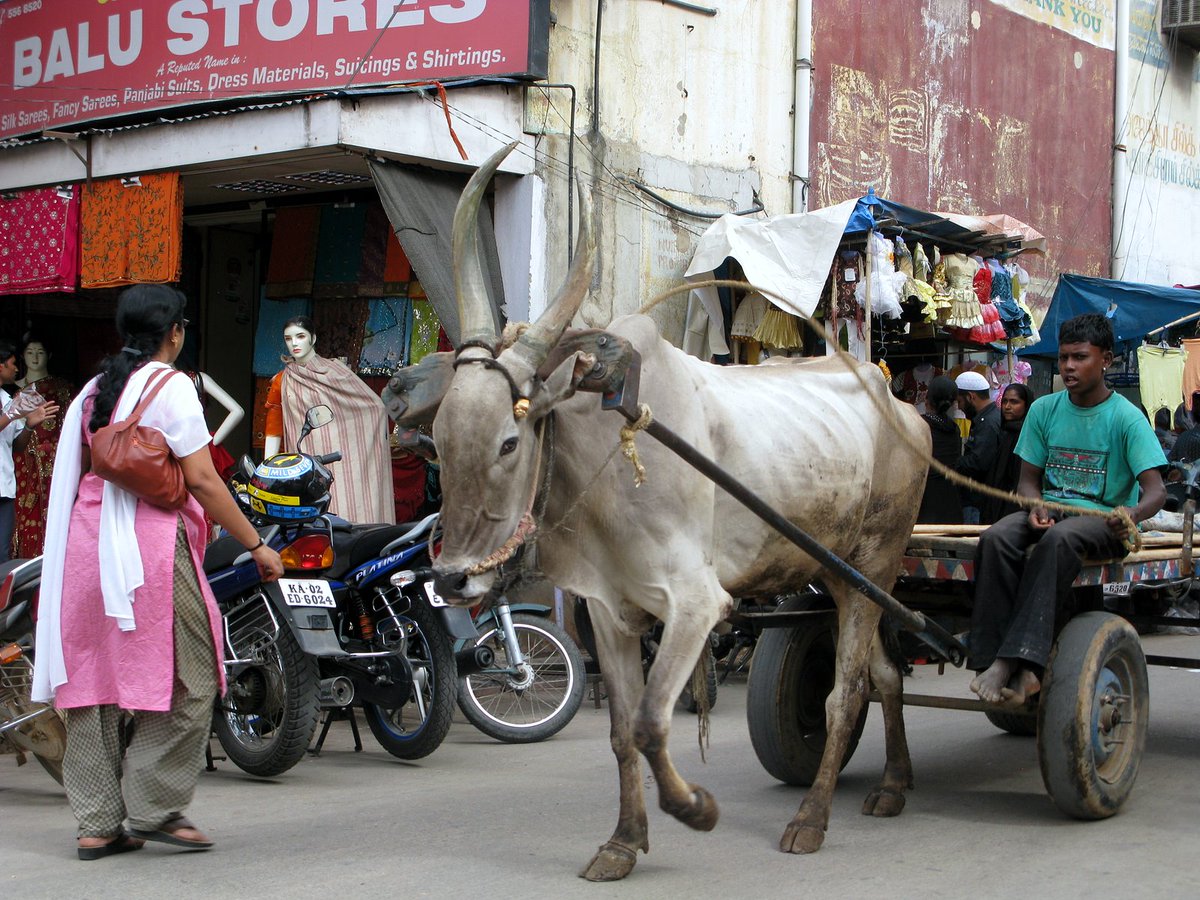
Ten years ago, we sat with a homemaker in Bangalore selling suits through WhatsApp forwards, a shopkeeper with no efficient way to source inventory, a small manufacturer with excellent products and no national distribution. No storefronts, no logistics partners. Just ambition and customers built one referral at a time.
Those images have stayed with me. They are still what Meesho is for. The question has always been: how do you build for them at scale, reliably, and fast enough to matter?
AI is changing the answer.
Today, over 70% of our code is now AI-generated. Platform experiments up 2x YoY.
But the number I keep coming back to: 75%+ of orders on Meesho come not from users searching, but from personalised feeds powered by PRISM (Personalised Ranking and Intent Signal Module) - our AI recommendation engine that infers what a consumer is looking for before they've articulated it themselves.
That is a fundamentally different way to think about e-commerce.
Vaani brought in first-time users who had never completed a purchase. GeoIndia LLM outperforms commercial geocoding systems on Indian addresses. TrustMesh blocked 9Mn high-risk transactions in FY26.
Every order becomes a training example. Every interaction makes the next one sharper.
What excites us most is that AI is finally making internet commerce accessible for everyone. And increasingly, that's reflecting in the business outcomes too:
Q4 NMV grew 43% YoY to ₹11,371 Cr
717M orders (+43% YoY)
FY26 ATUs reached 264M (+33% YoY)
Losses narrowed ~66% as operating leverage improved
We believe the next phase of Indian e-commerce will be AI-native, vernacular-first and built for Bharat.
Humbled by how far we've come. Energised by how much remains.
What an unforgettable day for Meesho Tech, kicking off our Mega Blockbuster Sale with record-breaking numbers 🚀
On Day 1, total orders doubled year-on-year, with over 6.5 crore unique customers visiting our app. Our cutting-edge feed ranking AI processed over 7 trillion features in real-time, derived from crunching 200 trillion rows of data powering a constellation of deep learning models to deliver hyper-personalized shopping experiences.
API traffic surged to 650K queries per second, while features like voice, image, and vernacular search grew by a remarkable 70% compared to last year.
The energy in the office has been electric, and it’s incredibly rewarding to see everyone’s hard work pay off. Can’t wait to see what the next few days bring! Thank you 🇮🇳 for trusting us as your go-to shopping destination!
I miss Bangalore, but this person is romanticizing the city. It was crumbling under its population and bad governance when I left India 5 years ago. I've been told it has only gotten worse.
In 2008, Google Maps launched in India.
But we quickly ran into a problem:
Nobody used street names.
And street names were the foundation of Google Maps.
The team had to make some big adaptations.
15 years later, the changes have stood the test of time.
Here's how the team came up with creative solutions to adapt Google Maps to work in India:
–––
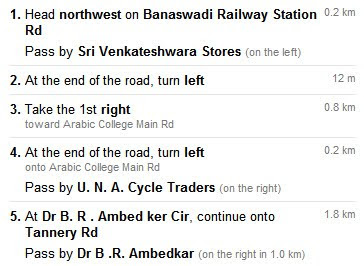
When Google Maps launched in India, turn by turn directions were unusable.
Because there were no road names, directions looked like this:
This was before real time, accurate GPS in phones had become mainstream.
In short, directions were pretty much useless in India.
–––
We could have left the product as it was.
We could have assumed it was good enough, would get better over time, or that eventually people would adapt.
But India was a massive potential market and we wanted the product to thrive.
The solution wasn’t just a case of acquiring and cataloging street names.
Many streets either didn’t have names, had multiple names, or weren’t known by their official names.
So we had to find an alternative.
We already knew that many communities around the world relied on landmarks (rather than street names) for navigating.
e.g. “Turn left at the park, head towards the water”
We knew this was also true in India.
But we had to confirm landmark based navigation would work.
And if it did, how we could make it work.
–––
So we dove in.
We started to explore how Google Maps could work if it oriented around landmarks.
But we needed to understand 2 key questions:
1. How did people use landmarks to navigate in India?
2. What types of landmarks were good for navigating?
This is where user research came in.
At the time, Google had robust support for user research.
There were research labs on campus with eye tracking technology and one-way mirrors.
There was a team dedicated to recruiting research participants.
But in this case, my friend and researcher extraordinaire, Olga (@okhroust) simply focused on how she could best answer these key questions.
She put together a creative and scrappy research plan.
And then she and Janet, the designer, hopped on a plane to India.
–––
What followed was nimble, on the ground field research to understand, first-hand, the answers to these questions.
They creatively explored various approaches including:
• Calling businesses and asking them for directions to their stores
• Asking people to draw diagrams of routes to familiar places
• Following people around as they navigated unfamiliar places
• Recruiting people to keep track of directions they gave or received + later interviewing them on their experiences
• Sharing early designs of landmark based directions and asking for feedback
Rather than relying on sophisticated technologies or being bounded by formal research methods, they creatively tried several different tactics to understand how locals navigated their way through India.
Olga and Janet found that people used landmarks to navigate in a few key ways:
• Orientation: “Head towards the water”
• Description of a turn: “Turn just past the Big Bazaar”
• Confirmation of the right path: “You'll see a petrol station on the right”
• Error correction: “If you get to the roundabout, you've gone too far”
Landmarks that were used for navigating included parks, monuments, shopping centers, notable buildings, stores, petrol stations, roundabouts, etc — basically anything that anyone would notice while on the road.
And so the team reworked turn-by-turn street directions to include navigational landmarks to help orient people, signal turns, confirm direction, and error correct.
The team worked through several iterations before landing on a final solution that emphasized landmarks, but also subtly included road names (when available):
–––
The research drove the product changes that helped transform Google Maps into the dominant navigational product for India.
A lot has changed in the last 15 years with the pervasiveness of location-enabled mobile phones, cheap mobile data, and generally how locals navigate in India.
But the use of landmarks to help people navigate through India has stood the test of time.
–––
What I love about this story and my 2 biggest takeaways are:
1. Research is a critical tool for ensuring you’re building a good product
2. Research can be as simple as just talking to people to answer your questions
tl;dr: If you are looking for answers, go talk to people.
For more on design + tips for early stage founders, follow @elizlaraki
Time to Reset & Recharge: Our 3rd Consecutive Company-Wide Break!🚀
From Nov 11th to 19th, Meeshoites are off on a 9-day break for some well-deserved Reset and Recharge!
Each year, we've seen this break work its magic, boosting our team's mental health. It's a highlight on every Meeshoite's calendar, and it's more vital than ever in today's world. Here's to another year of prioritizing our well-being!
Just updated: another ~600 companies added. Browse the list for ~1,300 companies hiring software engineers and engineering managers.
Here: https://t.co/WUJcYIu7N2
Honored to work with the @OfficeOfLGJandK @MDJKSRLM & Umeed- JKRLM to digitize 1,800 Self-Help Groups and help them grow their business on @meesho_official.
This initiative will also inspire countless other women from rural areas to come online & achieve financial independence.
After many sleepless nights & countless iterations, @meeshotech pulled off a record breaking start to the #MeeshoMegaBlockbuster Sale.
~87.6 lakh total orders on Day 1
0.420 million requests/sec
with ~85% of orders & 75% sellers coming from tier 2+ cities
🇮🇳 is coming online!
We’ve announced an 11-day company-wide break for a second consecutive year!
Keeping the upcoming festive season & the significance of #WorkLifeBalance in mind, Meeshoites will take some much-needed time off to Reset & Recharge from 22 Oct-1 Nov.
Mental health is important.
. @Meesho_Official is helping millions of merchants in India come online by bringing down costs and barriers to entry. Find out how the startup is enabling e-commerce with its no-frills product in this chat with @viditaatrey and @Sequoia_India’s @mobhat. https://t.co/hLegohrcvE
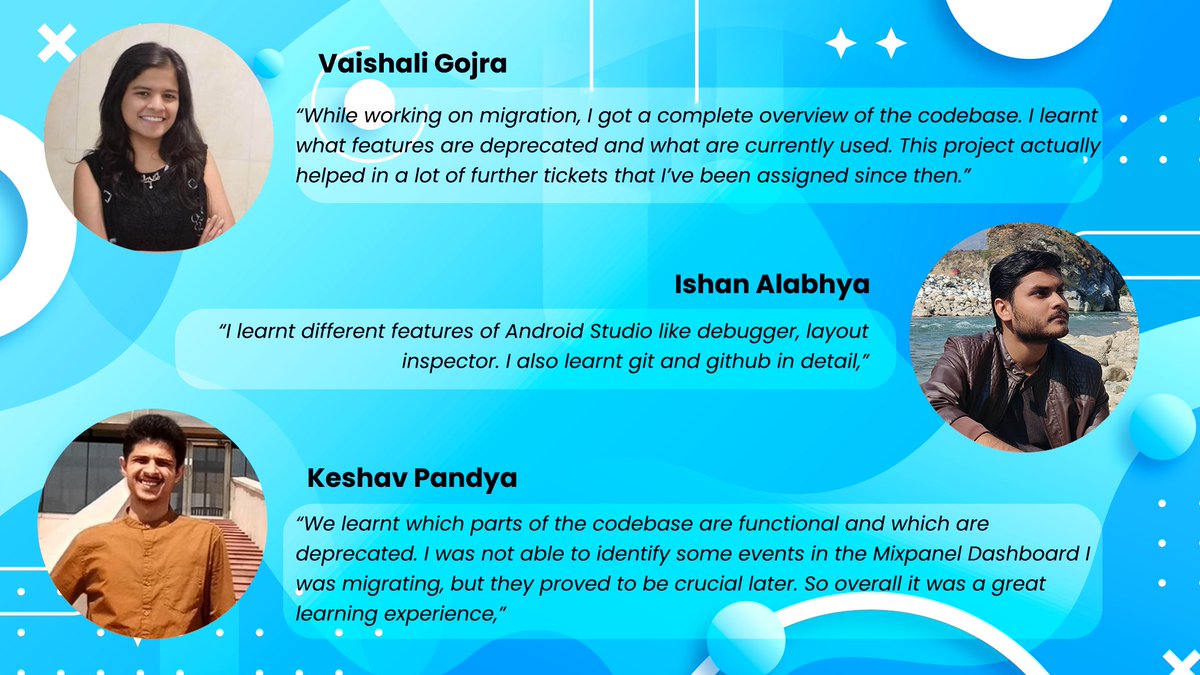
Happy to see when knowledge and learning gets passed on to budding engineers at @meeshotech. Having a mentor by your side is always the best!
Hire and grow exceptional talent - #MeeshoMantra
https://t.co/4rIJAo7qES
#android#hiringtech
How much time does it take to become an Android Dev? 🤔
At Meesho, the answer is 1 month 📆
@mohantee gives you a glimpse into our syllabus, curated to meet the needs of 10 crore+ Play Store downloads