Communications for @ChathamHouse | Writer @TheWorldToday | Think tanks and higher education | Tweets on international affairs/security | China | Views my own.
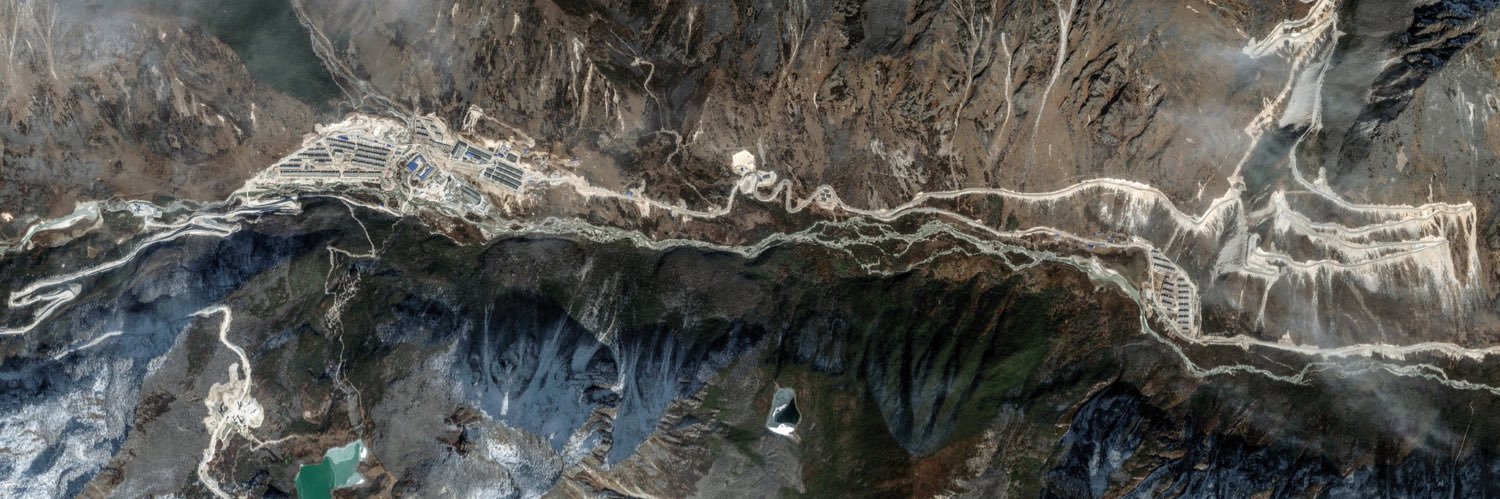
In 2023 the world thought China was building an airstrip on Triton Island. New @Maxar images 📸 reveal the PLA was instead building a counter-stealth radar.
Read mine and @detresfa_'s latest for the @TheWorldToday on 🇨🇳's activities in the Paracels.
https://t.co/sZQ1sRhJYf
If Russia can claim victory in Ukraine – or even if it is perceived as victorious – Moscow will be emboldened with serious consequences for the entire Black Sea region.
https://t.co/FNxhMev6zC
For Turkey, the worst-case scenario remains that Israel seeks to engineer state collapse in Iran — the fallout of which would consume Iran and its neighbours for years.
Read @GalipDalay's (@CH_MENAP) latest analysis for Chatham House. https://t.co/UtybEz0XN6
Iran has a considerable advantage — it can produce low-cost drones faster than its opponents can make high-cost interceptors. Ukraine has avoided that trap by investing in capabilities that can detect, track, identify and defeat drones. Gulf governments should learn from Kyiv.
Read Associate Fellow Bilal Saab's (@CH_MENAP) latest analysis on ties between the Gulf States and Ukraine for the @FinancialTimes.
https://t.co/VQUaRmpu5l
A ceasefire in Ukraine that is poorly defined could provide Russia with an opportunity to rearm, while enabling the Kremlin to continue exerting pressure on Ukraine.
Read the latest analysis from @CHUkraineForum⤵️ https://t.co/SebMSYGFXe
"The Xi–Putin relationship remains one of the most consequential strategic partnerships in the world. Yet its durability lies not in limitless friendship, but in carefully managed limits." My latest @ChathamHouse https://t.co/XJ2gflPdvT
"Iran is signalling that they too are ready to go back to a military conflict — and that their capabilities are not as degraded as what is presented by the Pentagon."
@SanamVakil (@CH_MENAP) discusses with @jimsciutto the latest developments in the US negotiations with Iran, via @CNN ⤵️
"I worry [Australia] won't get any submarines, it's a submarine deal with no submarines."
Former Prime Minister of Australia @TurnbullMalcolm
discusses AUKUS with @benjaminbland and what the agreement means for Australia's defence.
Watch our event➡️ https://t.co/oSlZ4z627H
Day 1 of the Trump-Xi summit is over. Here are my key takeaways from the readouts, interviews, and the banquet.
(1) New Chinese Formulation: Most interesting takeaway for me is that China is out with a new frame for the relationship: “I have agreed with President Trump on a new vision of building a constructive China-U.S. relationship of strategic stability. This will provide strategic guidance for China-U.S. relations over the next three years and beyond.” Beijing appears to me to wish to lock in a "truce" favorable to them, and they want to do so beyond Trump, with this post-trade war detente setting the baseline. Presumably, any U.S. actions to reckon with excess capacity or deter conflict could be framed by Beijing as a violation of this new frame. Beijing acknowledges the relationship as competitive - as they did with us in 2023 - but talks about keeping it within acceptable limits.
(2) Rare Earths, Export Controls: Surprisingly absent from both readouts despite their centrality to the current detente.
(3) Taiwan: China emphasizes mishandling it could cause "clashes and even conflicts," elevated public language, while the U.S. doesn't mention it.
(4): Artificial Intelligence: Nothing in readouts, but Bessent said to CNBC after (1) there will be talks and (2) that U.S. leadership in AI is the reason why China is willing to talk at all: "The two AI superpowers are gonna start talking. We’re gonna set up a protocol in terms of how do we go forward with best practices for AI to make sure non-state actors don’t get a hold of these models....The reason we are able to have wholesome discussions with the Chinese on AI is because we are in the lead. I do not think we would be having the same discussions if they were this far ahead of us."
(5) Iran and Characterizing Xi: Normally we don't say, "Xi Jinping said X" in a readout, because that's for them to say. But the White House readout does so over Iran: "President Xi also made clear China's opposition to the militarization of the Strait and any effort to charge a toll for its use, and he expressed interest in purchasing more American oil to reduce China's dependence on the Strait in the future. Both countries agreed Iran can never have a nuclear weapon."
(6) Chinese Investment in the US. This is mentioned in the White House readout. Bessent then said on television, "we’re going to talk about a board of investment that will be responsible for investment in nonsensitive areas."
(7) Fentanyl. The US readout emphasizes "the need to build on progress in ending the flow of fentanyl precursors into the United States. No mention in the Chinese readout.
(8) Mil-Mil Channels: Notably, the Chinese readout calls to "make better use of communication channels in the political and diplomatic and military-to-military fields." No mention in the U.S. readout, and historically something the US - not China - keeps in the foreground.
(9) Xi Visit: At the banquet, Trump invited Xi to visit in September. Seems like it may align with the UN General Assembly, which Xi hasn't addressed in some time.
As Trump landed in China, what Xi wants from Trump: managing a competitor that is both strategically powerful and politically unstable may prove more difficult than dealing with one that is consistent, if adversarial. My latest piece @TIME@ChathamHouse
Great to chat with @jimsciutto@cnn tonight about the continuing US Iran standoff and disconnect between Trump and Tehran that can only really be bridged through continued discussions
NEW: The U.S. has burned through so many munitions in Iran that some administration officials increasingly assess that America couldn’t fully execute contingency plans to defend Taiwan from a Chinese invasion if it occurred in the near term, U.S. officials said.
As the world scrambles to respond to the closure of the Strait of Hormuz, the Iran war should prompt preparations for a crisis over Taiwan.
https://t.co/LXTTub1mUY
Vietnam is rapidly expanding its military bases on reefs and shoals in the South China Sea, new satellite images show. Could this trigger competitive island building? 🇻🇳
Read @John_Pollock22 & @detresfa_'s story here: https://t.co/XSfacVS99c
The decision by the Houthis to join the US-Israel-Iran war marks a serious escalation. Their involvement risks widening an already volatile war to Yemen, the Red Sea and beyond.
Read @almuslimi’s (@CH_MENAP) latest analysis for Chatham House ⤵️
https://t.co/YLHRJlvbx8
"The Houthis have not yet said they will attack the Red Sea — but that doesn't mean they won't move on to that in the next few days."
@almuslimi (@CH_MENAP) responds to reports that the Houthis in Yemen have attacked Israel for the first time since the start of the US-Israel war with Iran, via @BBCr4today ⤵️
A prolonged Israeli presence in the south risks further weakening Lebanon. It also creates the conditions for Hezbollah to reconstitute and rebuild popular support. https://t.co/Rdt25LfjRy
"The Islamic Republic is not only ready and willing to continue to fight for what it sees as an existential war— but that it is prepared for a longer fight."
@SanamVakil (@CH_MENAP) on the latest developments in the US-Israeli war on Iran, via @BBCNews⤵️