Lionsgate, in collaboration with Mel Gibson and Bruce Davey’s Icon Productions, announced Thursday that the highly anticipated film “The Resurrection of the Christ” will be released in theaters in two parts — Part 1 will be released on May 6, 2027, and Part 2 will be released on May 25, 2028.
The production studios also announced that filming concluded ahead of schedule after shooting for 134 days in the cities of Rome, Bari, Ginosa, Craco, Brindisi, and Matera in Italy.
“Mel is a true visionary with an artist’s eye for scale and a storyteller’s instinct for emotional truth,” Adam Fogelson, chair of the Lionsgate Motion Picture Group, said in a press release on May 21. “Every image we’ve seen from set feels like a masterwork painting brought to life. There are very few directors who can operate at this level of epic spectacle while at the same time delivering such depth and conviction. Mel has crafted a film of extraordinary ambition that audiences worldwide have been waiting to experience for over 20 years.”
“The Resurrection of the Christ” is the sequel to Gibson’s famous film “The Passion of the Christ,” which starred Jim Caviezel as Jesus.
While many believed that Caviezel would reprise his role as Jesus, the filmmakers decided to instead select an entirely new cast. Finnish actor Jaakko Ohtonen will portray Jesus, Cuban actress Mariela Garriga will play Mary Magdalene, Kasia Smutniak will play the Blessed Virgin Mary, and Italy’s Pier Luigi Pasino will play Simon Peter.
Released in 2004, “The Passion of the Christ” vividly depicts the final hours of Jesus’ life, from his arrest in the Garden of Gethsemane to his crucifixion.
The film has been the subject of debate since its release. The graphic scenes of Christ’s scourging and crucifixion sparked controversy; some critics considered it excessively violent, while others praised it for its historical authenticity and its ability to realistically convey Christ’s suffering.
In January 2004, Joaquín Navarro-Valls, then-director of the Holy See Press Office, noted that Pope John Paul II had seen the film and gave it a positive review, describing it as “the cinematographic recounting of the historical fact of the passion of Jesus Christ according to the Gospel accounts.”
Despite controversies surrounding the film, it garnered a profit of $370 million domestically with many crediting it as having opened the door to faith-based media in Hollywood.
https://t.co/zt146qiV2F
There’s a silent disaster happening in Nigeria that nobody wants to confront honestly.
We keep shouting about unemployment, bad leadership, low productivity, corruption, poor healthcare, failed institutions and why our country is not working. But many people are avoiding the root cause.
Our education system has been deeply compromised.
A student enters secondary school or university full of dreams, intelligence and potential. Then the system teaches them something dangerous:
“You do not need competence to succeed.”
WAEC malpractice. NECO malpractice. GCE runs. Sorting. Sex for grades. Extortion. Intimidation. Victimization. Handout rackets. “See me after class.” “Talk to your lecturer.” “Settle this course.”
And after 4 or 5 years of surviving that environment, we expect excellence to magically appear.
It won’t.
A country cannot repeatedly reward dishonesty in classrooms and expect integrity in government offices, hospitals, engineering sites, courtrooms and businesses.
This is where many of our unemployable graduates are coming from.
Not because Nigerians are not intelligent.
Not because our youths are lazy.
But because too many people were trained inside a system where merit was murdered.
The painful part is this:
UNN, UNILAG, FUTO, ABU, UI, IMSU, ABSU and many others are using largely the same NUC-regulated curriculum.
The difference is standards.
The universities that still command respect are usually the ones with stronger resistance against sorting, extortion and academic fraud.
The ones collapsing in reputation are often the ones where corruption became normalized.
Once a student realizes they can buy an “A” with ₦20,000, or sleep their way through a course, or manipulate results through connections, the motivation to truly learn starts dying slowly.
And when millions of such graduates enter the labor market, the entire country pays the price.
That weak engineer may eventually supervise a bridge.
That poorly trained nurse may handle a patient.
That compromised accountant may manage public funds.
That fake first-class graduate may become a lecturer and reproduce the same cycle again.
This is no longer just an education problem.
It is a national security problem.
Countries become great because they protect competence fiercely.
Singapore did it.
China did it.
Germany did it.
South Korea did it.
You cannot build a first-world country with a third-world attitude towards education integrity.
Nigeria does not have a shortage of talent.
Nigeria has a shortage of systems that protect excellence.
And until we become ruthless about fighting academic corruption, exam malpractice, sorting, sex-for-grades and institutional intimidation, we will continue producing certificates instead of competence.
This fight is bigger than schools.
It is about the future survival of Nigeria itself.
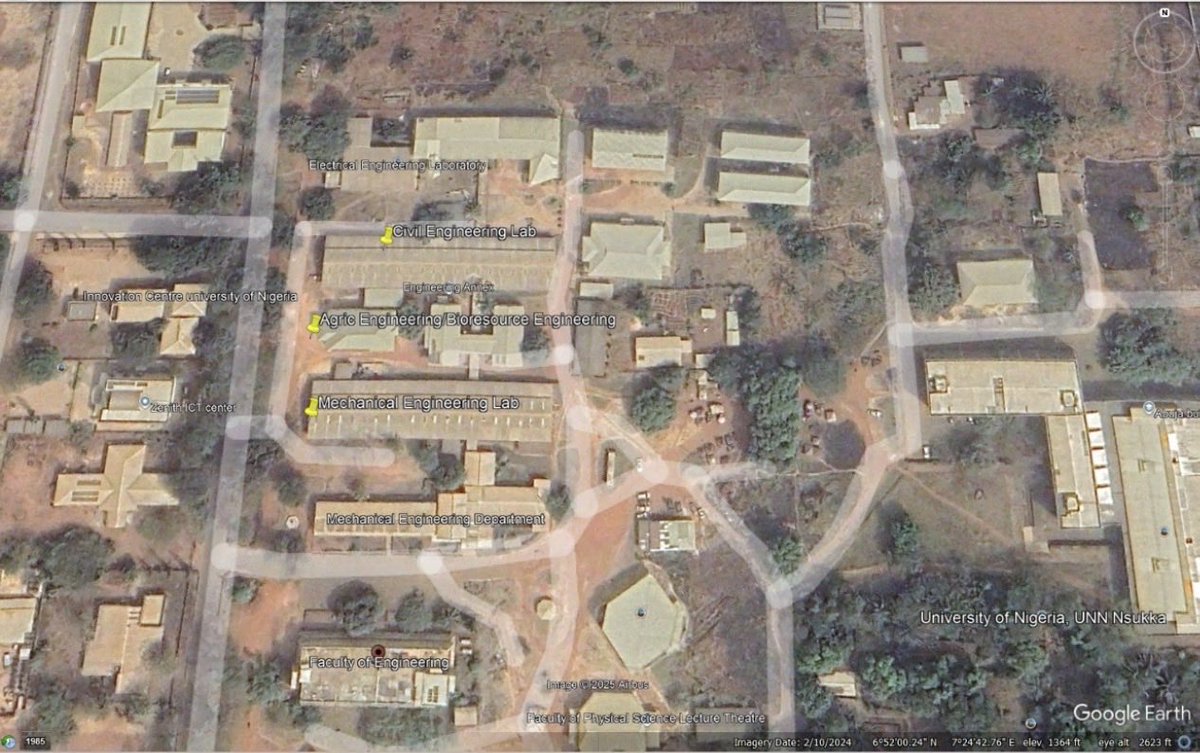
We will be deploying high speed internet at Engineering Faculty in UNN to cover all departments.
This will be for students and staff of the faculty only.
This will enable a new wave of research and learning there.
We will become the greatest workforce in Africa in 10 years.
JUSTICE FOR OCHANYA
I have been seeing the trending hashtag #JusticeforOchanya and this afternoon, I decided to read about the case. It is indeed a heartbreaking one. The story has it that Elizabeth Ochanya (5) was taken from her village by a family who promised to help her achieve her dream of becoming a doctor. But instead, the family killed both her and her dream. The man and the son sexually molested for years until she died as a result of complications from the abuse.
This story is not just sad, it is enraging. It exposes the darkness that hides behind some so-called “help.” Many children today especially the ones from poor family backgrounds are suffering the same fate under people who claim to be helpers and guardians.
The most painful aspect of the case of Ochanya is that it has been seven years since she died, yet justice has not been served. The two men responsible for her death are still walking freely – typical of Nigeria’s judiciary system that too often fails the weak, the poor, and the voiceless.
We must demand justice for Elizabeth Ochanya and every child like her. We must speak out against every form of abuse, no matter who commits it. Silence helps the oppressor, never the victim.
And then, to every Oga/Madam or guardian out there: if you know you cannot treat someone else’s child as your own, do not take that child into your home. It is not help if it destroys a life.
Join us in this worldwide fast on October 22. Why? Because Pope St. John Paul II said you should.
In his encyclical “The Gospel of Life,” JPII wrote:
“…a great prayer for life is urgently needed, a prayer which will rise up throughout the world. Through special initiatives and in daily prayer, may an impassioned plea rise to God, the Creator and lover of life, from every Christian community, from every group and association, from every family and from the heart of every believer. Jesus himself has shown us by his own example that prayer and fasting are the first and most effective weapons against the forces of evil (cf. Mt 4:1-11). As he taught his disciples, some demons cannot be driven out except in this way (cf. Mk 9:29). Let us therefore discover anew the humility and the courage to pray and fast so that power from on high will break down the walls of lies and deceit: the walls which conceal from the sight of so many of our brothers and sisters the evil of practices and laws which are hostile to life. May this same power turn their hearts to resolutions and goals inspired by the civilization of life and love.” (Evangelism Vitae, 100)
He was referring especially to the horror of abortion. Decades later, we are still surrounded by a culture of death. The tragic bloodshed this year, and the shocking contempt for human life has made it increasingly clear that demons are very real. And Christians everywhere are rising up, realizing we must do more. When the heroes of salvation history (Moses, Esther, Ninevah, Daniel, Our Lord Himself) were confronted with demonic strongholds, they turned to prayer AND fasting. Let us do the same.
If your health permits, you can join the many who will be drinking water only! Others might add bread, or stick to the standard fast and abstinence practiced by Catholics on Ash Wednesday and Good Friday (1 full meal, 2 small meals that together ≠ 1 full meal). Sacrifice more than you want to, that’s the key!
"Love to be real, it must cost—it must hurt—it must empty us of self." - St. Mother Teresa
“The devil is much afraid of fasting, prayer, humility, and good works.” - St. John Vianney
Gospel of the Day (Luke 12,13-21)
Someone in the crowd said to Jesus, "Teacher, tell my brother to share the inheritance with me." He replied to him, "Friend, who appointed me as your judge and arbitrator?" Then he said to the crowd, "Take care to guard against all greed, for though one may be rich, one's life does not consist of possessions."
https://t.co/srh7BxIqql
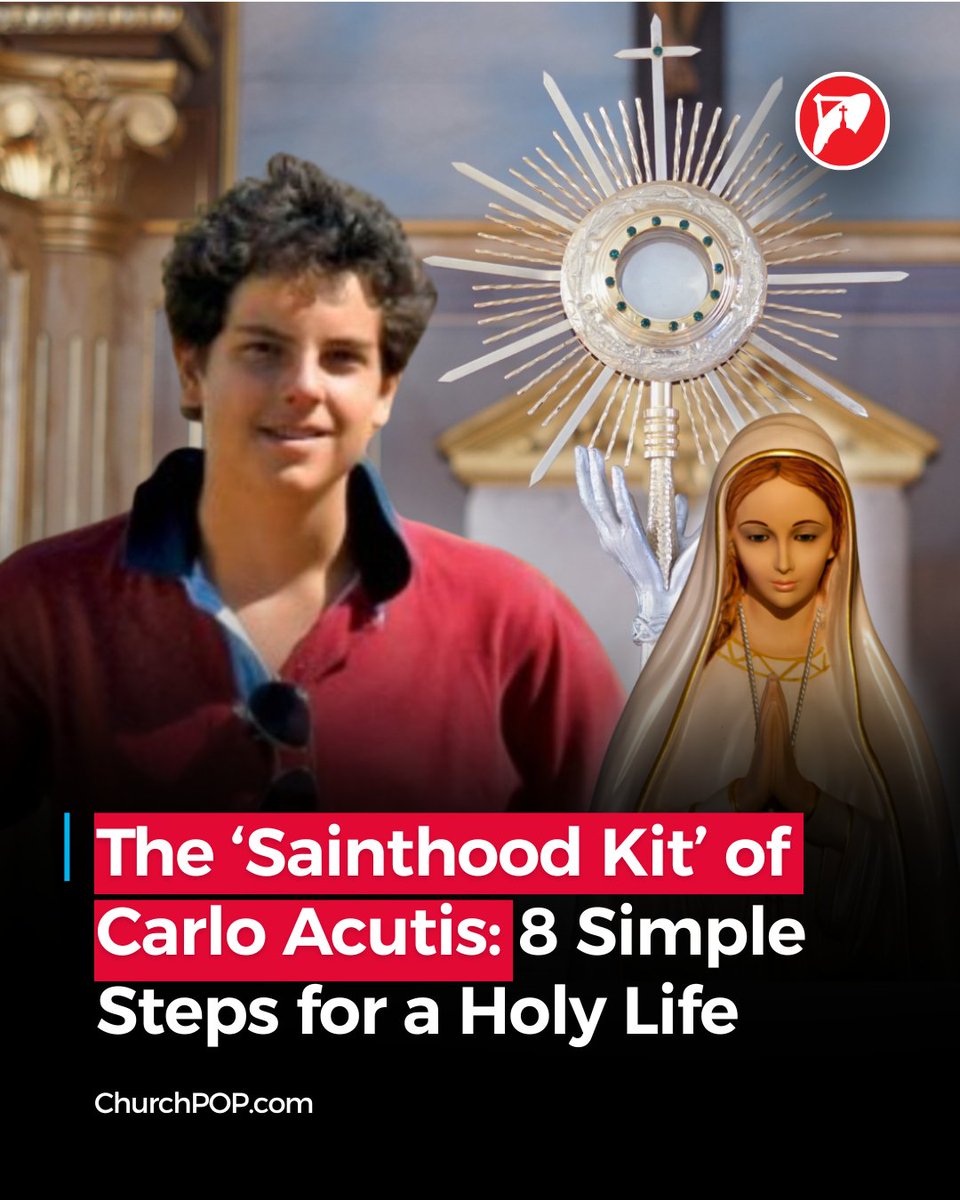
Saint Carlo Acutis, the young man known for his deep love of the Eucharist, left behind a valuable guide for growing in the spiritual life. In eight simple steps, he outlined a concrete path toward the greatest goal to which we are all called: holiness.
Carlo Acutis is the first millennial saint and best known for his virtual apostolate. Thanks to his passion for computers, he created a website documenting Eucharistic miracles from around the world.
However, his faith was not limited to technology—though it earned him the nickname “God’s Influencer.” Carlo was also deeply devoted to the Eucharist, the Rosary, and the Blessed Virgin Mary. He spent his short life serving the poor, the sick, and the needy.
Carlo died at the young age of 15 from leukemia, but his legacy continues to inspire countless souls to draw closer to Christ.
The Carlo Acutis Association, an organization dedicated to spreading his example of faith and devotion, compiled what the young saint once gave to children in Catechism classes—a simple “Kit” for becoming a saint.
Carlo Acutis’ “Kit” to Achieve Holiness
1) Desire holiness with all your heart. And if you don’t yet desire it, ask the Lord insistently until you do.
2) Go to Holy Mass and receive Holy Communion every day, if possible.
3) Pray the Holy Rosary every day.
4) Read a passage from Sacred Scripture each day.
5) Spend time in Eucharistic Adoration, even if only for a few minutes before the Tabernacle, where Jesus is truly present—you’ll see how your holiness will grow immensely.
6) Confess every week, even venial sins, if possible.
7) Make small resolutions and sacrifices for the Lord and the Blessed Virgin, offering them to help others.
8) Ask for help often from your Guardian Angel, who must become your best friend.
Through this simple yet powerful guide, Saint Carlo reminds us that holiness is not something distant or reserved for a select few—it is a universal vocation, open to everyone who desires to live in the presence of God.
Saint Carlo Acutis, pray for us!
TODAY is the feast day of Saint Carlo Acutis! In the short 15 years of his life, Carlo touched thousands of people with his testimony of faith and deep devotion to the Holy Eucharist. Pope Leo XIV canonized him on September 7, 2025.
SAINT Carlo Acutis, pray for us! Stream this free documentary on Carlo: https://t.co/0Ttl6duSpl
Yes, there's been a downgrade😐
I remember when Piggybank interest was 22%, maybe for testing, not it's quietly down to 17%, your🫵 users aren't happy about the silent downgrade @piggyvest
@iamLuizDon@dinma_x There's been no downgrade. The interest rate on Piggybank and SafeLock was recently increased to 18% pa and 22% pa, respectively. The Flex Naira wallet has always been at 12% pa.