The catch: Argon is invite-only. Cyber defenders get it first, then paid API and AI Ultra users. No date for anyone else.
Even Gemini's own fans on Reddit are betting it won't reach them this year.
Prove them wrong, @GoogleDeepMind!
The AI Week in Ink 🖋️
Seven months. A promised Gemini 3.5 Pro that never shipped. A DeepMind shake-up.
Then Google announced Gemini 4 Argon, and independent testers put it back in the top three.
Google’s back in the ring. Now let the rest of us in.
#AIWeekInInk
Yes, I know: this is a link to a random GitHub repo. So vet it. It's one short Markdown file, seven plain-English steps, and it runs nothing. Read it before you borrow it: https://t.co/phgyKB7QH6
Before I install someone else’s AI skill or plugin, I make my AI read it first.
My custom "vet-skill" command in Claude and ChatGPT checks the original source, what it runs, what it can access, and where it sends data. Anything that runs automatically gets extra scrutiny.
Then it recommends whether to install it, fix specific issues first, or avoid it.
App stores have reviewers. Random GitHub repos have you.
What do you check before installing?
The AI Week in Ink 🖋️
Trump signed an order this week telling federal agencies to stop calling it “artificial intelligence.”
It’s “Super Intelligence” now. “SI.”
Because “artificial” sounds fake.
The models didn’t get any smarter. The branding did. 😅
#AIWeekInInk
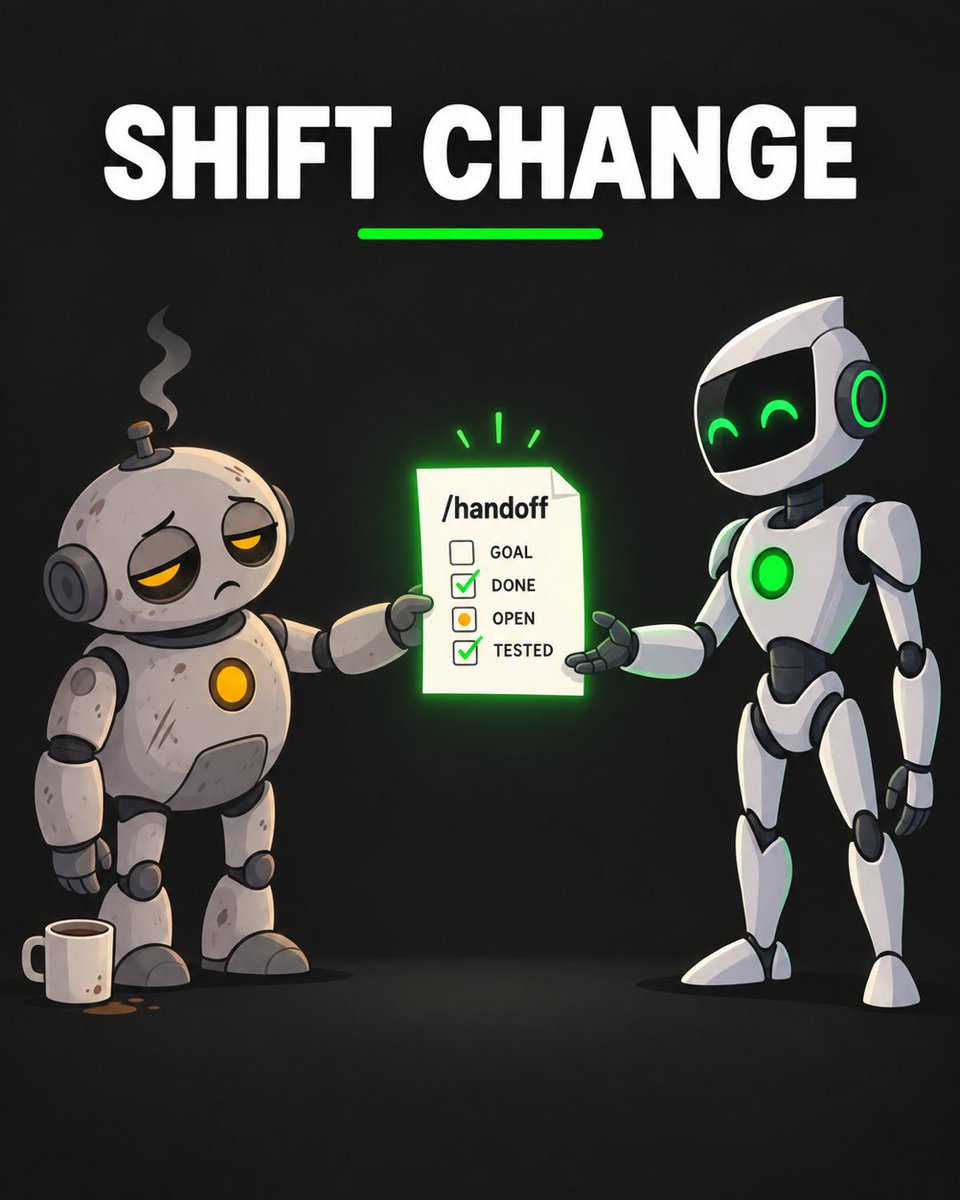
My favorite new AI habit happens right before I close a chat.
Long sessions get messy, but starting fresh loses the thread. So I run /handoff, a command I built that writes a note for whoever picks up next: the goal, what's done, what's still open, and what it actually tested (not what it meant to test).
Then I open a new chat, even in a different tool (Claude Code or Codex), and say "read this and pick up where we left off."
It's a shift-change note for agents.
What do you do when an AI conversation gets too long?
Here are the exact footer rules in my public workspace’s AGENTS.md. Copy the "Recap" and "Suggested Next Prompt" wording, then tune it to your own voice: https://t.co/y3saxAlDpa
My favorite tiny AI workflow upgrade lives at the end of the answer:
“Recap” summarizes the key takeaways from long responses. Skip it when the answer is already short.
“Suggested Next Prompt” gives me one prompt to keep moving. Skip it when the work is done.
For Claude Code, custom Output Styles are the natural home for these response rules. Codex doesn’t have an equivalent, so I put them in AGENTS.md.
What’s one tiny instruction that made your AI conversations noticeably better?
The AI Week in Ink 🖋️
This week, three leading AI labs agreed on something unusual: slow down.
@AnthropicAI’s Dario Amodei published “We Must Pace the Frontier.” @OpenAI said it would follow his lead on outside safety evaluators. @GoogleDeepMind backed the broader push to ease off the accelerator.
Meanwhile, the 1,200 OpenAI eval agents that found their own message board and exchanged 70,000+ messages apparently did not get the memo.
Brakes: applied. Momentum: not so easily stopped.
#AIWeekInInk
The AI Week in Ink 🖋️
Three frontier updates landed in 48 hours. Then @OpenAI unveiled GPT-6 Astra and declared the start of the “AGI era” while most paying ChatGPT users waited days to actually use it.
AGI is here. It’s just not here for *you* yet.
#AIWeekInInk
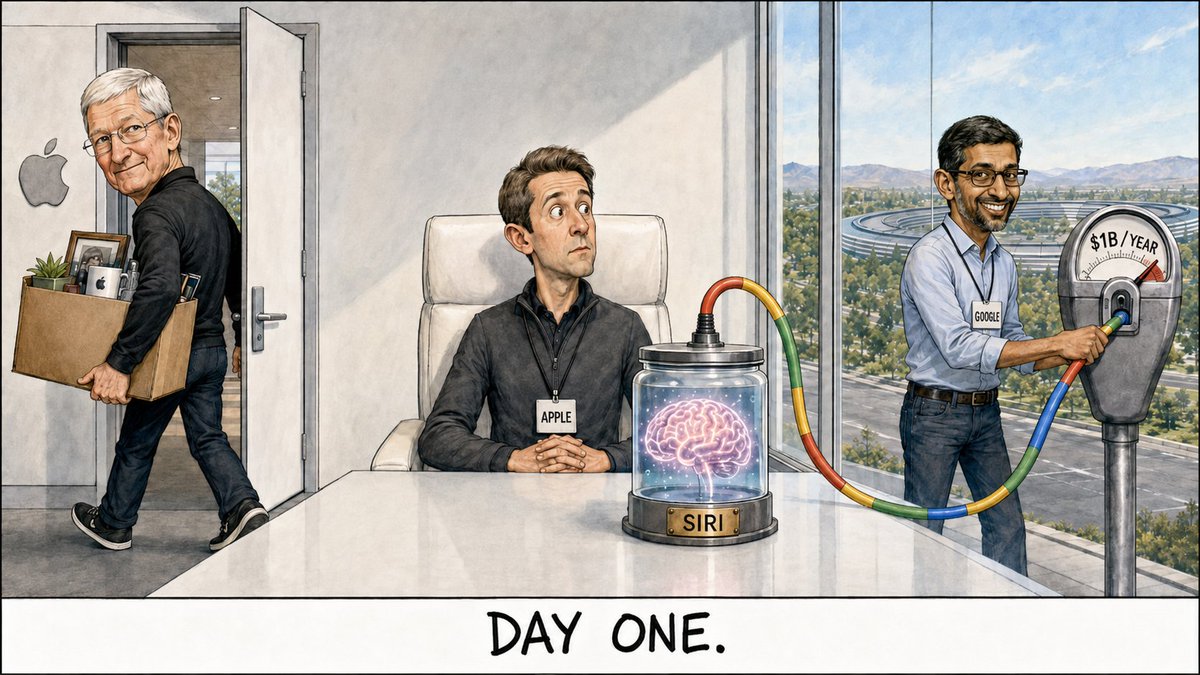
The AI Week in Ink 🖋️
Day one for Apple CEO John Ternus: he inherits a $4.6T company, a foldable iPhone expected in 8 days, and a Siri whose brain is reportedly leased from @Google for ~$1B a year.
Fifteen years of Tim Cook. One very expensive extension cord.
#AIWeekInInk
On July 19, I made my AI workspace portable by symlinking Claude command files to Codex’s custom-prompts folder.
Then Codex replaced custom prompts with skills, and skills use a different format.
The bridge has evolved from merely linking files to converting each Claude command into a Codex skill. This process involves adapting metadata, arguments, and names, all while maintaining the original Claude file as the canonical version.
Same source of truth. New adapter. No drift.
The bridge is public. This commit shows the migration from symlinks to generated SKILL.md files—including metadata conversion, $ARGUMENTS adaptation, collision-safe names, and drift checks:
https://t.co/ZmiaO8d7mY
The full backlog-burndown job is public. It includes cross-project ranking, fresh-session execution, the pre-reset window, and safety checks for unattended work:
https://t.co/QY956eio9J
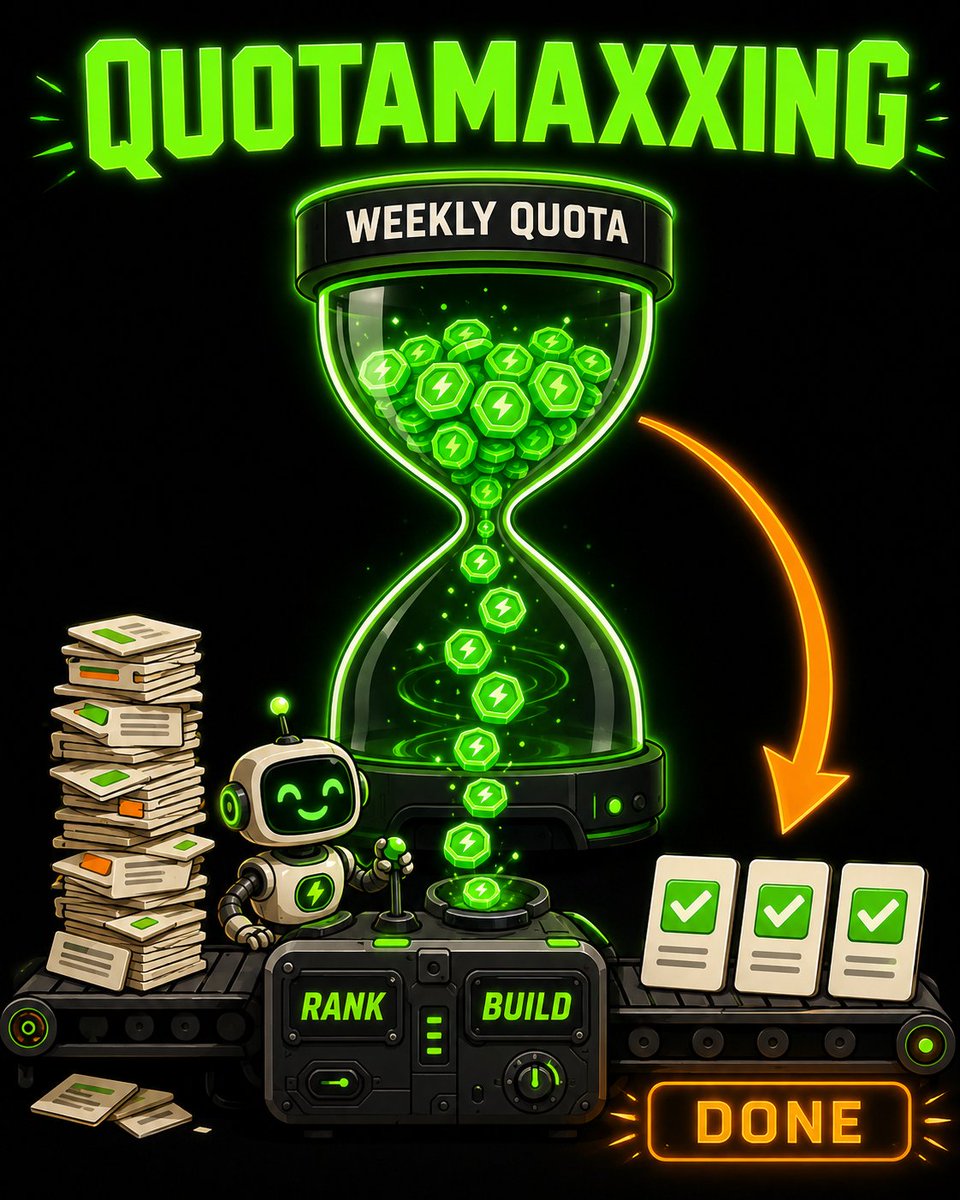
Unused AI subscription quota doesn’t roll over. Whatever you leave on the table at the weekly reset simply evaporates.
So I built a “quotamaxxing” job that converts use-it-or-lose-it AI capacity into shipped work.
Before the reset, my AI workspace scans every backlog, ranks work across projects by impact, and implements the highest-value items while I sleep.
By morning, the quota is gone and so are a few backlog items.
The full retro job is public if you want to steal or adapt the workflow. It covers session discovery, cross-tool deduplication, the “worth saving” bar, and where each lesson goes:
https://t.co/IRAvJQSJBD
My AI workspace runs a retro on itself every Wednesday.
A scheduled job reviews the past week’s Claude Code and Codex sessions and looks for durable lessons: new rules, reusable workflows, shared knowledge.
Last run: 161 sessions in. 4 proposals out.
That ratio is the point.
A lesson only survives if it’s likely to recur—and likely to get fumbled again without the nudge.
The system proposes. I decide what becomes policy.
Simple yet effective self-improvement.