@mclumber1@DJSnM The F9 and New Glenn are subsonic when they relight the engines for landing. The engineers let the atmosphere deplete as much velocity as possible.
@joebarnard I know the feeling. I fly on average 3 rockets per month, collecting flight dynamic data at 1KHz. This month the data rate goes up to 2KHz. A mountain of data generating even more data results for clients with 5KHz and 10KHz systems in testing.
@steveflyzz@SciGuySpace I was a member of an ozone balloon flight. The control room received a call from the FAA requesting ground coordinates and altitude. A commercial flight had reported a near miss. The ground coordinates were correct for the balloon, but the balloon was at 87,000.
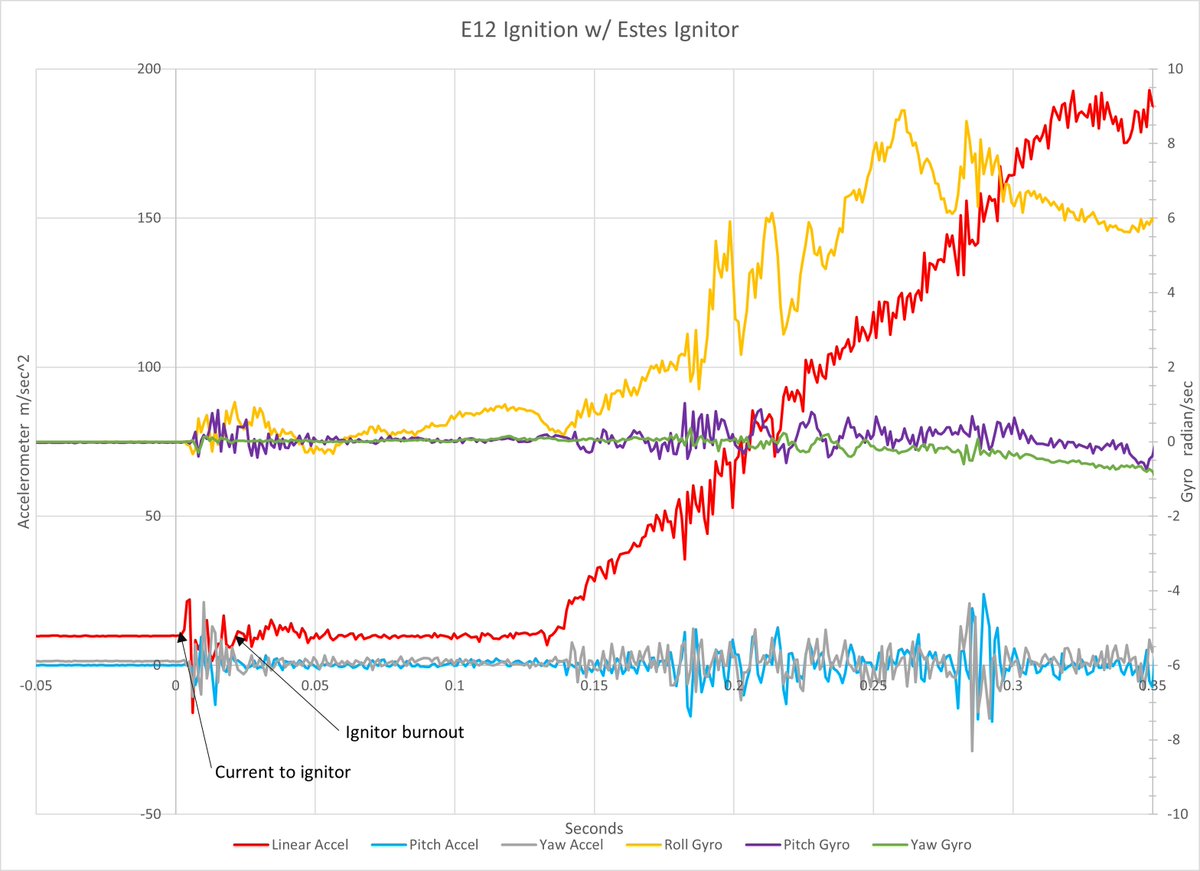
For years I was told that it was impossible to detect a model rocket ignitor firing. It imparted too small of a force over an insignificant length of time. What value would it be to the rocket's flight?
Data does have value and beauty.
The low-resolution Starship flight 10 performance data comparison is interesting. The hot staging negative acceleration caught my attention. Plus, the maximum acceleration of the Starship just prior to suborbital insertion velocity. SpaceX is truly testing the limits of Starship.
It took me 5 months to develop my first 500Hz model rocket flight computer. It took another 5 years to develop a 1000Hz system. I had to wait on technology, but 1 week after losing the 1000Hz system I reached 2000Hz. Knowledge + motivation = advanced results.
@DJSnM It appears that one of the electric motor turbo pumps failed as the vehicle was released. There could be other issues including debris in the HTP. If they pre-decompose the HTP before injection it could be a catalyst pack issue.
@grok@CWilliamAshby@DefiyantlyFree At the rate the charging stations are being built, it will be 2360 when the project is completed. About the same year the High Speed Rail line will be completed in California.