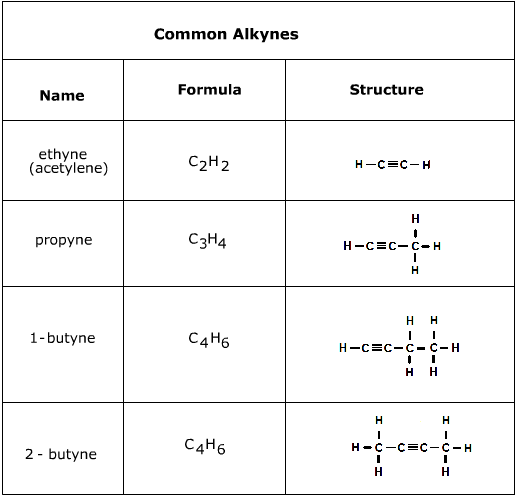
Alkynes and compounds containing alkynes in their chemical structures are useful in various industries. For instance, in the fuel industry and plastics industry, alkynes like propyne and acetylene are used as starting materials in manufacturing plastic products.
Ultraviolet-visible, or UV-Vis, spectroscopy is one of the most popular analytical techniques in the laboratory. In UV-Vis spectroscopy, light is passed through a sample at a specific wavelength in the UV or visible spectrum.
#Submit_Article
https://t.co/cN0eVxebtK
Ultraviolet-visible, or UV-Vis, spectroscopy is one of the most popular analytical techniques in the laboratory. In UV-Vis spectroscopy, light is passed through a sample at a specific wavelength in the UV or visible spectrum.
#Submit_Article
https://t.co/cN0eVxebtK
Alkynes and compounds containing alkynes in their chemical structures are useful in various industries. For instance, in the fuel industry and plastics industry, alkynes like propyne and acetylene are used as starting materials in manufacturing plastic products.
Sn2 & Sn1 reaction mechanism Sn2 reactions are bimolecular in rate of reaction & have concerted mechanism The process involve simultaneous bond formation by nucleophile & bond cleavage by leaving group This process first involves bond cleavage by LG to generate a C2 intermediate
Alkanes are organic compounds that consist entirely of single-bonded carbon & hydrogen atoms & lack any other functional groups. Alkanes have the general formula CnH2n+2 & can be subdivided into following 3groups: the linear straight-chain alkanes, branched alkanes & cycloalkane.
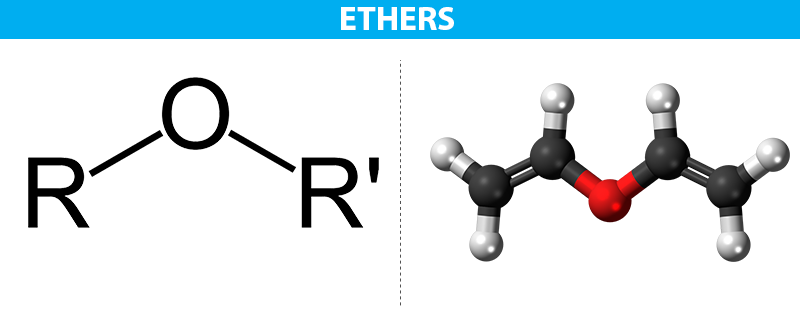
There are two ways to name ethers The most common way is to identify the alkyl groups on either side of the oxygen atom in alphabetical order, then write “ether” For example ethyl methyl ether is the ether that has an ethyl group & a methyl group on either side of the oxygen atom
2 examples of nucleic acids include deoxyribonucleic acid (better known as DNA) & ribonucleic acid (better known as RNA) These molecules are composed of long strands nucleotides held together covalent bonds. Nucleic acids can be found within the nucleus and cytoplasm of our cells
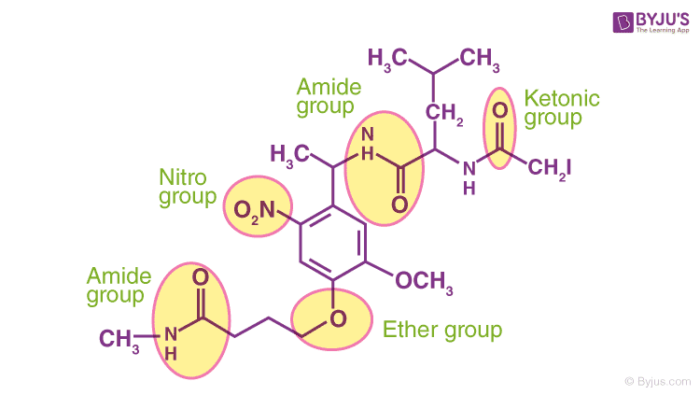
Functional groups are specific groupings of atoms within molecules that have their own characteristic properties, regardless of the other atoms present in a molecule. Common examples are alcohols, amines, carboxylic acids, ketones, & ethers.
#Submit_Manuscript#Organic_Chemistry
Stereochemistry the study of how molecules are affected by the way their atoms are arranged in space It is also known as 3D chemistry as word stereo means 3 dimensional Using this chemists can work out the relationships between different molecules that made up from the same atoms
The study of organic reactions includes the chemical synthesis of natural products, drugs, and polymers, and study of individual organic molecules in the laboratory and via theoretical (in silico) study.
#Submit_Manuscript#Article_Request#trendingtopic
https://t.co/cN0eVxebtK
The study of organic reactions includes the chemical synthesis of natural products, drugs, and polymers, and study of individual organic molecules in the laboratory and via theoretical (in silico) study.
#Submit_Manuscript#Article_Request#trendingtopic
https://t.co/cN0eVxebtK
Chemical element, also called element, any substance that cannot be decomposed into simpler substances by ordinary chemical processes. Elements are the fundamental materials of which all matter is composed.
#Submit_manuscript
https://t.co/cN0eVxebtK
Stereochemistry the study of how molecules are affected by the way their atoms are arranged in space It is also known as 3D chemistry as word stereo means 3 dimensional Using this chemists can work out the relationships between different molecules that made up from the same atoms
Functional groups are specific groupings of atoms within molecules that have their own characteristic properties, regardless of the other atoms present in a molecule. Common examples are alcohols, amines, carboxylic acids, ketones, & ethers.
#Submit_Manuscript#Organic_Chemistry
There are five major categories of organic compounds involved in normal physiology of the body:
. Carbohydrates.
. Lipids.
. Proteins.
. Nucleic acids.
. High-energy compounds.
#Submit_Article#Trending_Organic_chemistry
https://t.co/cN0eVxebtK
Organic chemistry is an extremely interconnected science. As you have already seen in the 1 semester of your organic chemistry sequence 1 topic connects to another in such a way that mastering consequent topics is very hard without mastering previous ones.
https://t.co/cN0eVxebtK
Learning organic chemistry is challenge for less tangible reasons too it requires a huge amount memorization but even more so requires learning & applying for flexible rules with more than 15 million compounds work with there essentially infinite number possible organic reactions
Inorganic chemistry is the study of elements and their compounds; except carbon and its compounds which are studied under Organic chemistry. However, the distinction between the organic and inorganic are not absolute, and there is much overlap.
https://t.co/cN0eVxebtK
Chemical bonding, any of the interactions that account for the association of atoms into molecules, ions, crystals, and other stable species that make up the familiar substances of the everyday world
#Submit_Article#Organic_Chemistry
https://t.co/tYJTAFEHwd