Your strongest performer earns the promotion. Six months later, the team is coming apart.
We reward the work, then hand people a role built on skills nobody taught them.
None of the failures are technical. All of them are human.
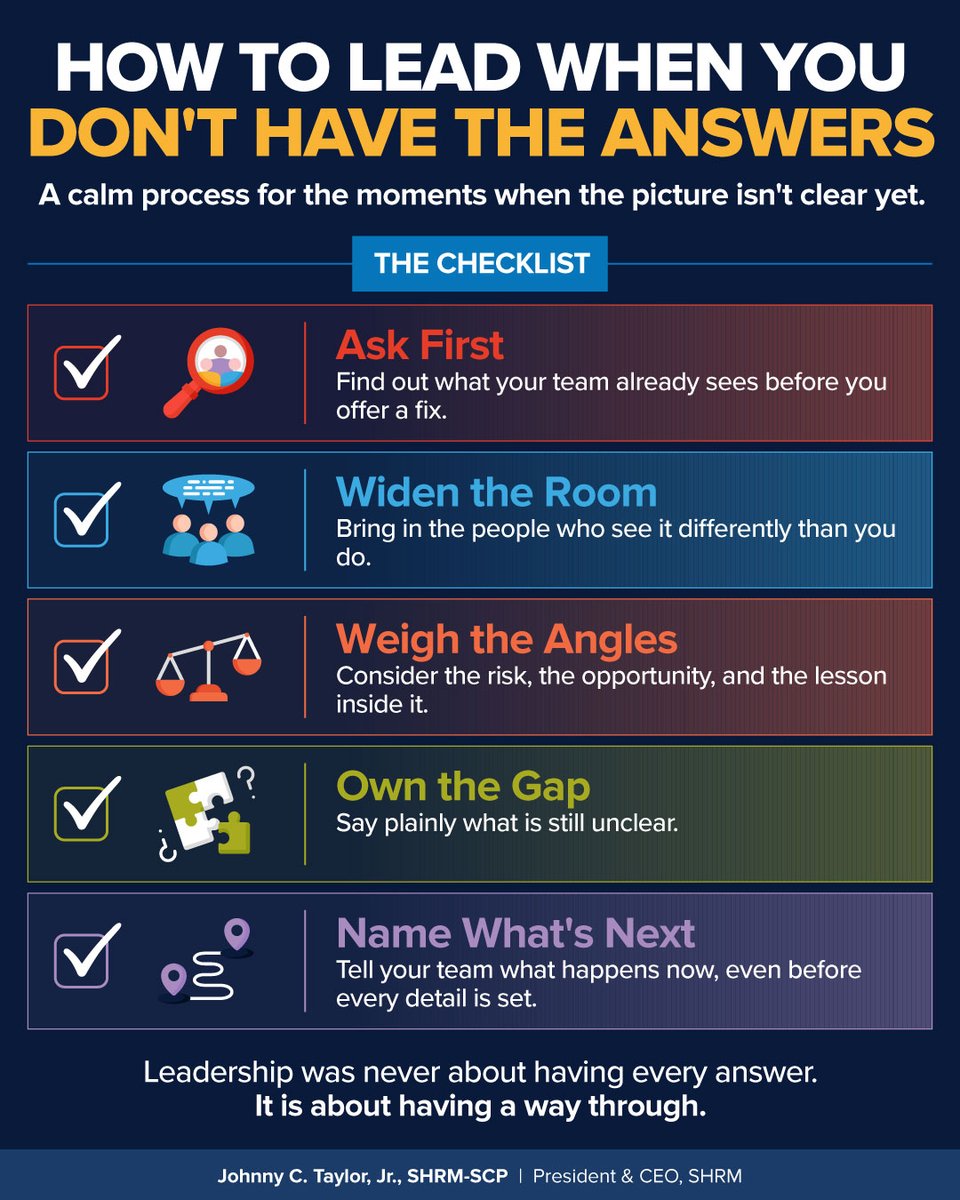
"I do not know" is one of the hardest things for a leader to say out loud.
The leaders holding up right now are not the ones with more answers. They have a process their team can see and trust.
Your people can handle an honest gap. They cannot handle silence.
The biggest impact doesn't always come from the biggest title.
Leadership shows up in what happens to people after they've worked with you.
If no one grows around you, the title doesn't mean much.
Some of the most uncivil workplaces I have seen were led by very nice people.
Nice avoids the tension. Kind names the problem while it is still small.
43% say their manager could have done more to stop the incivility they witnessed.
92% of HR leaders call people managers critical to the business. Only 25% invest in developing them.
The gap is where teams break down.
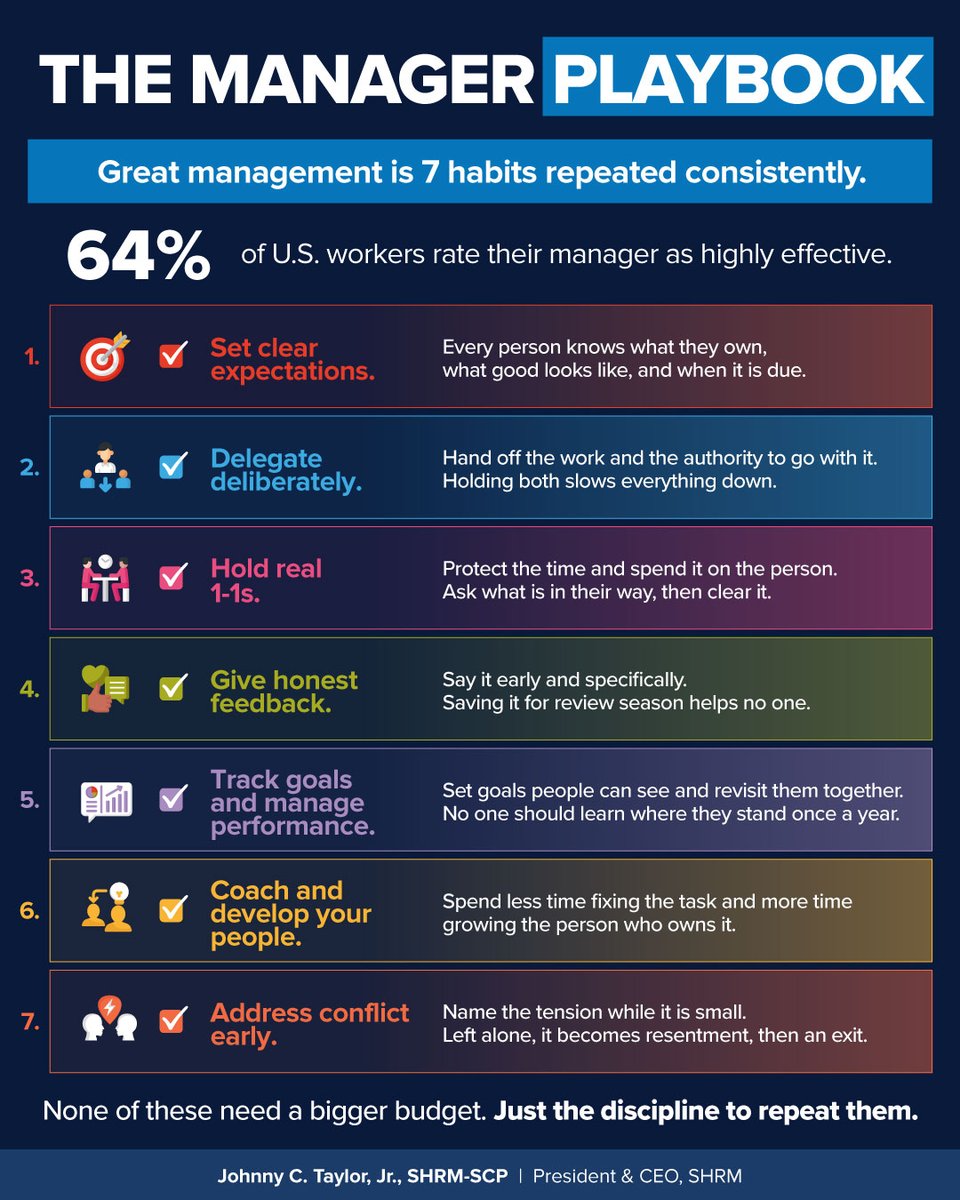
The best manager you ever had was not complicated. They were consistent.
Your most reliable employee just used all their PTO. Not for a vacation, but to care for an aging parent.
Only about 11% of employers offer eldercare support.
Caring for your people and running the business are not opposing goals.
Workplace toxicity is becoming the new normal.
Most of it starts as everyday incivility, the kind leaders let slide until it hardens into the culture.
61% of U.S. workers say at least one uncivil act they witnessed happened at work.
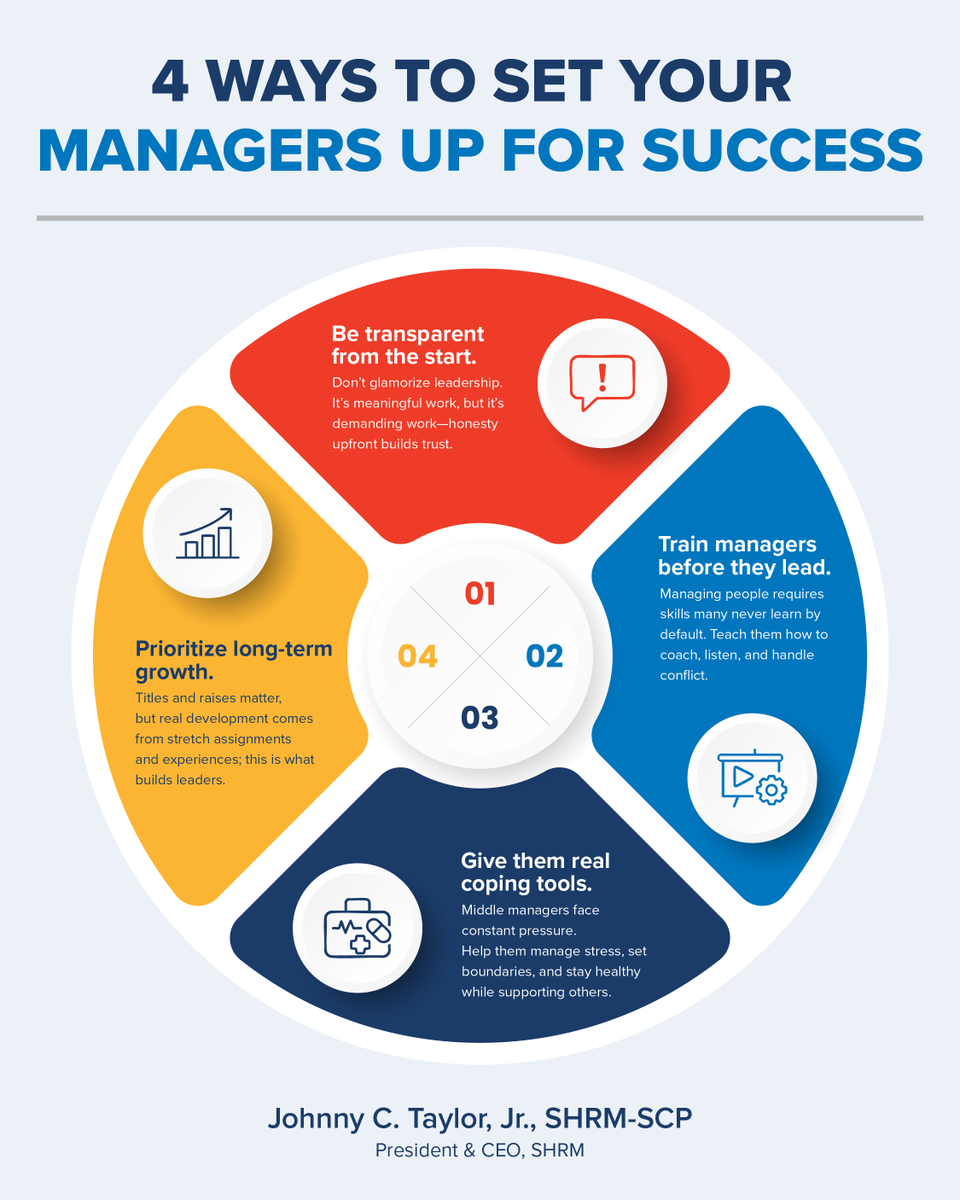
Talented employees are looking at middle management and saying, "No, thanks."
The job asks managers to hit goals, coach teams, settle conflict, and retain talent, without burning out themselves.
If we want more people raising their hands for leadership, we have to rethink how we prepare and support them.
Leaders don't need to speak up every time a social or political issue surfaces.
One question matters: Is this tied to our mission, values, or business purpose?
Coaching and mentoring are not the same.
Mentoring hands someone your roadmap.
Coaching helps them draw their own.
Which one does your team need right now?
Your strongest performer earns the promotion. Six months later, the team is coming apart.
We reward the work, then hand people a role built on skills nobody taught them.
None of the failures are technical. All of them are human.
Most CEOs don't lose their boards over a bad quarter.
They lose them the moment directors realize they've been getting a curated version of reality.
Bad news early beats bad news late. Every time.
Your best performer just resigned. You never saw it coming.
The signals were there for months. You read them as "fine."
Catch them while they're still quiet enough to fix.
The job interview you spent years learning to ace is on its way out.
A strong interview tells me how well someone interviews, not how well they'll do the job.
As hiring moves to skills first, employers want proof over performance. The interview becomes a live audition.
This is the moment we take HR back.
We perfected the engagement survey and the performance review, and called it strategy.
But none of it touched the real question: was the company stronger because we were there?
The next CHRO isn't a head of people. It's a Chief Work Officer. No one hands you that role. You claim it.
The strongest résumé does NOT always win.
Early on, you get noticed for being good at the task in front of you. Then you hit a level where that's just the entry fee, because everyone around you is good too.
That's where power skills decide whether you stay put or move up.
Most people flinch at the word "servant." HR leaders don't.
Doing this work well means truly wanting to see others become their best.
The weight keeping you up at night isn't your own security. It's whether the people counting on you will still have a job in 5 years.