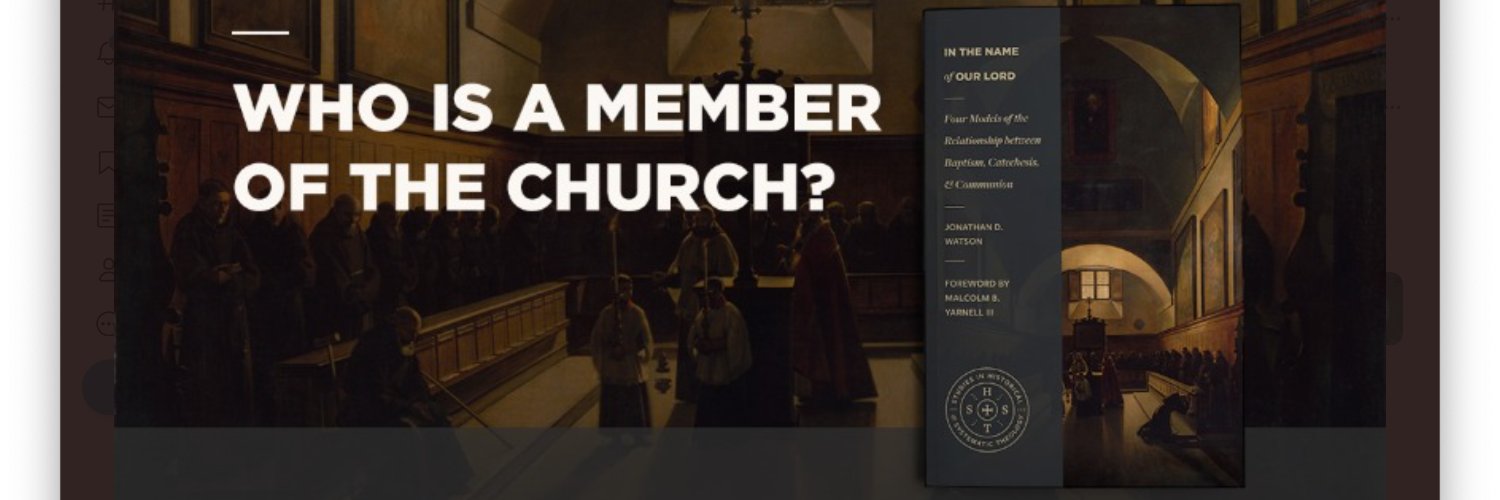
🎧 to @CSUNIV Prof @JonathanDWatson talk about his @LexhamPress book "In the Name of Our Lord: Four Models of the Relationship Between Baptism, Catechesis, and Communion"
📘: https://t.co/npPBeMFT6B
🔊🔊🔊: https://t.co/5sjgbb03jS
https://t.co/LzfuUvEqDW A good word here from my friend @mattmillsap “If we forget this heritage, & our students leave our institutions fluent in orthodoxy & orthopraxy yet impoverished in imagination, have we truly succeeded in the formation of the whole Christian person?”
Last week, a student asked me whether it was appropriate for Vice President Vance to recite the Nicene Creed while hosting the Charlie Kirk Show. It’s a great question—especially in light of all the public Christianity on display at Kirk’s memorial service yesterday.
So, should Baptists be uneasy about this, given our convictions about the separation of church and state? Here’s what I told my student:
1. Public officials may bring their faith into public life.
It is entirely appropriate for leaders to express religious convictions in their political messaging. Baptists are not Rawlsian liberals who imagine that one’s deepest “comprehensive doctrines” can or should be bracketed out of public life. Our faith shapes our moral reasoning, and that inevitably bears on public life. This is why, even when liberal Catholics appeal to their faith to justify a political stance, I may disagree with them, but I do not object to the act of bringing faith into the conversation. Faith is architectonic—it gives foundational posture to all arenas of a person's life.
2. Religious liberty applies to politicians, too.
Public officials retain the same religious freedom as every other citizen. There is no formal—or even informal—requirement that they sanitize their language of religious references or motivations. To demand otherwise is to impose a secular test for office (that our Constitution prohibits).
3. We distinguish between the person and the office.
Baptists are clear: if the “Office” of the Vice President began legislating with regard to religion—convening synods, dictating doctrine, or enacting laws that establish a church—that would be a violation of Baptist convictions around church and state. But what we saw yesterday was not an abuse of office. They were citizens who happened to hold office, exercising their faith in public.
4. Civic religion has a legitimate place.
What we witnessed from numerous public officials was not a de jure attempt to legislate Christianity but rather the best of American civic religion: a recognition that public order rests on transcendent authority. Such expressions remind us that moral reasoning, political traditions, and civic virtue are not sustained by government alone (or secularism, for that matter) but by an appeal to God as the ultimate source of order.
What occurred yesterday was a demonstration of the complementarity of civic order and religious foundation. Baptists should celebrate it.
This chart is not making the editorial cuts as I need to get a manuscript down a few thousand words.
Figured I'd post it here in the small chance it may be helpful to others.
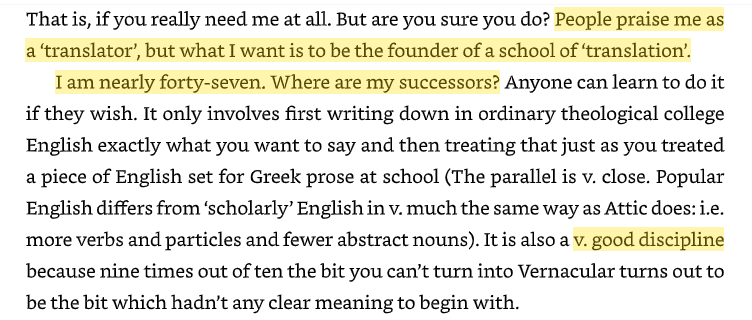
C.S. Lewis on how his way of writing about Christian doctrine for a general audience is "just a technique," adding "I’m desperately anxious to see it widely learned." Oct 1945 letter (Letters Vol 2)
28 years later, and we’re almost here. This development isn’t quite “Gattaca,” but it’s close enough to be deeply concerning in its own right.
If the development of such technologies continue unabated, we are looking at an eventual future in which Christians (and others) are discriminated against for refusing to modify or engineer the genetics of their preborn children.
Mark it down.
I very much enjoyed this conversation about a very illuminating book. One of my favorite parts is the way he explains how biblical interpretation can change the world!
I very much enjoyed this conversation about a very illuminating book. One of my favorite parts is the way he explains how biblical interpretation can change the world!
When you're working through "Christology from Above" and "Christology from Below" (or arguing against these categories), don't forget about "Christology from the Beginning!"
https://t.co/wWzwYj50MP
“Theological education is but a noisy gong or clanging cymbal if it is not helping students to read the Bible well in order to understand God truly.”
—@VanhoozerKevin, Mere Hermeneutics, 97.
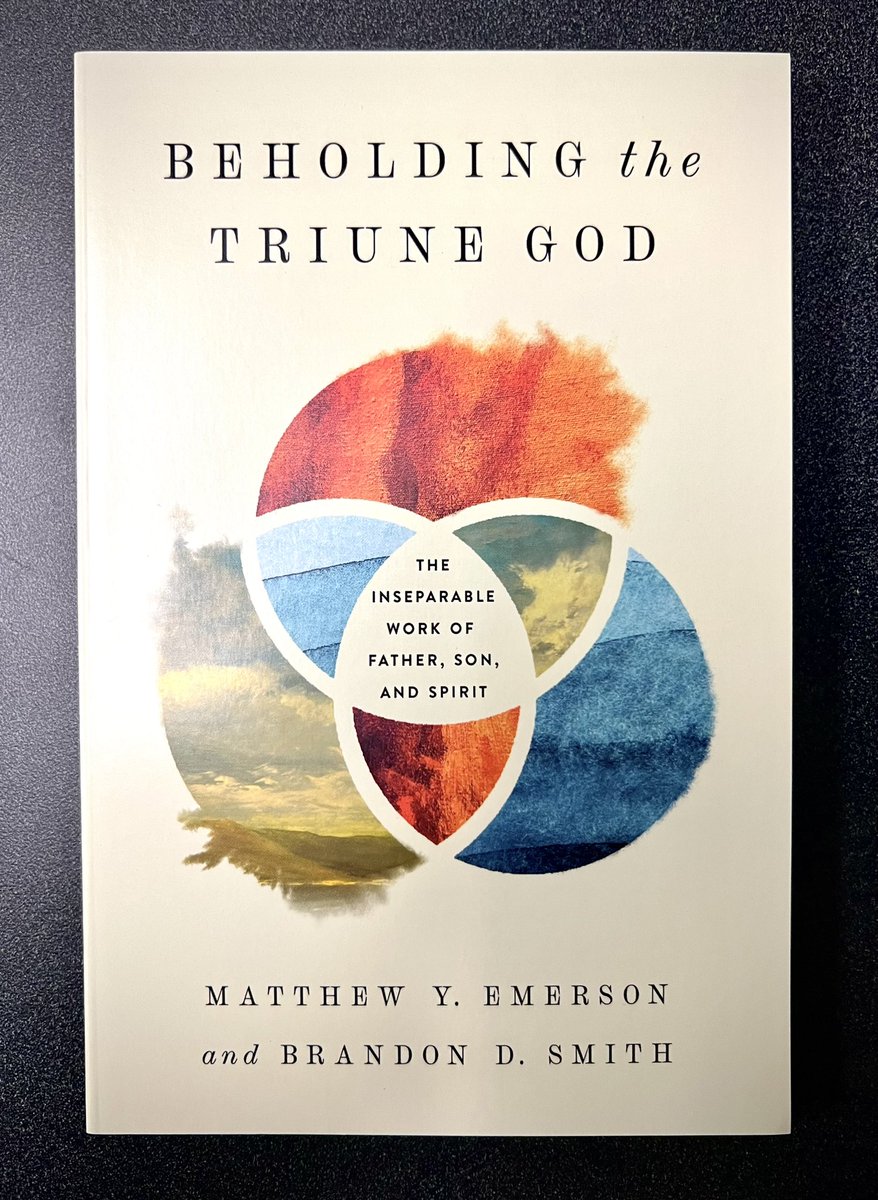
In just a couple of weeks, me & @M_Y_Emerson’s new book from @crossway releases.
Preorder here: https://t.co/YxYYgd3IMJ
It’s meant to be an accessible biblical-theological intro to inseparable operations, showing how the doctrine helps us understand other major doctrines.
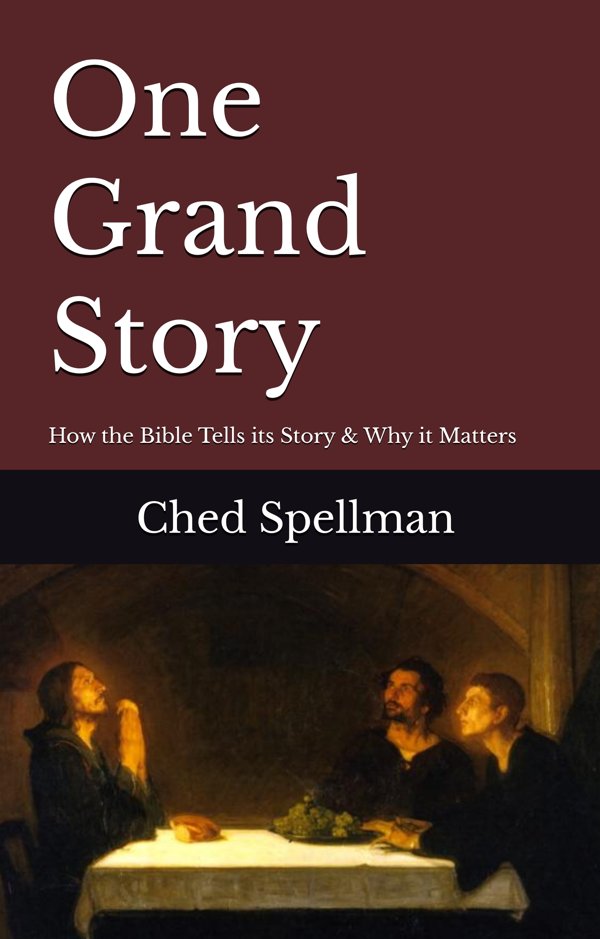
Here's a preview of a little project I've been cooking.
It's a little book on the Bible's "big picture." I'll post a link when it's available to order/pre-order if you're interested. Lord willing, next month!
Here's the cover & a few further details:
https://t.co/U3q8R2YZIq