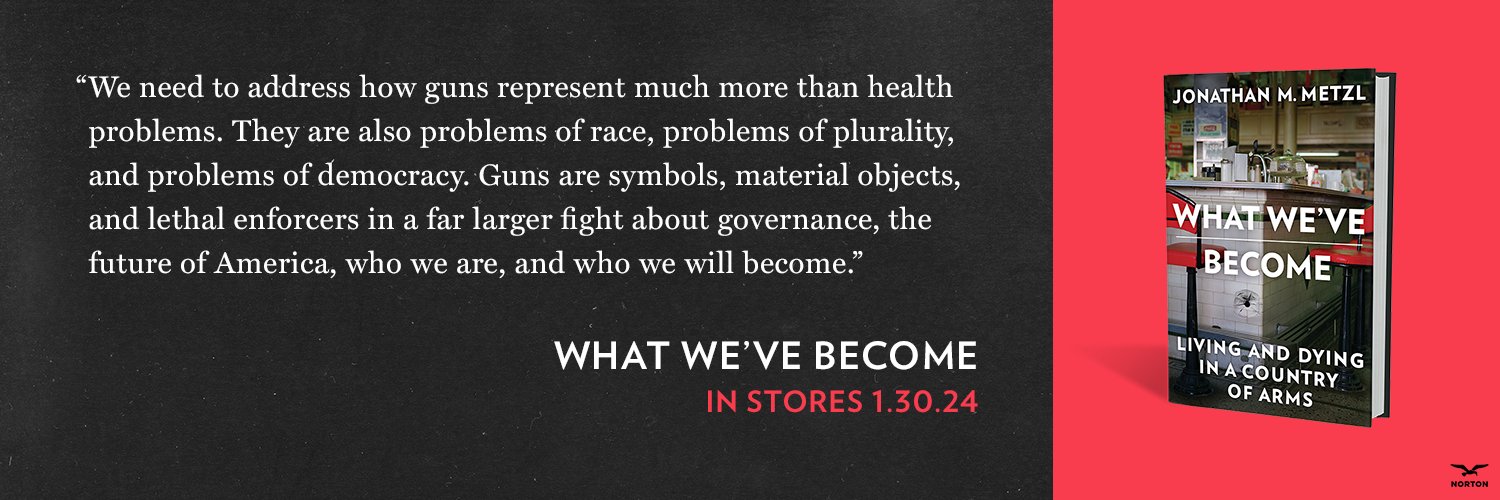
Today is launch day for WHAT WE’VE BECOME: LIVING AND DYING IN A COUNTRY OF ARMS.
The book begins in the early morning hours of April 22 2018, when a naked white man with an AR-15 burst into a Nashville Waffle House and shot and killed four young adults of color. I spent five years learning everything about the case – reading police reports, interviewing families, going to court hearings, studying how a man with a highly lethal gun ended up at a Waffle House, and what happened after he left.
My research changed much of what I thought I knew about #gunviolence in #America and the best ways to prevent it. #WhatWeBecome started as a book about #guns – and evolved into a terrifying, infuriating, and
exceedingly unexpected story about race, politics, and sanity in the US South.
#tnpoli #gunsafety #WhatWeveBecome @wwnorton@McKinnonLit
Miley Cyrus & Dolly Parton singing I Will Always Love You x Wrecking Ball. Their last performance together and one of the greatest performances ever.
An apt day to remember that Dolly Parton once recorded a cover of Stairway to Heaven - and, in defiance of every moral law in the universe, she absolutely owned it.
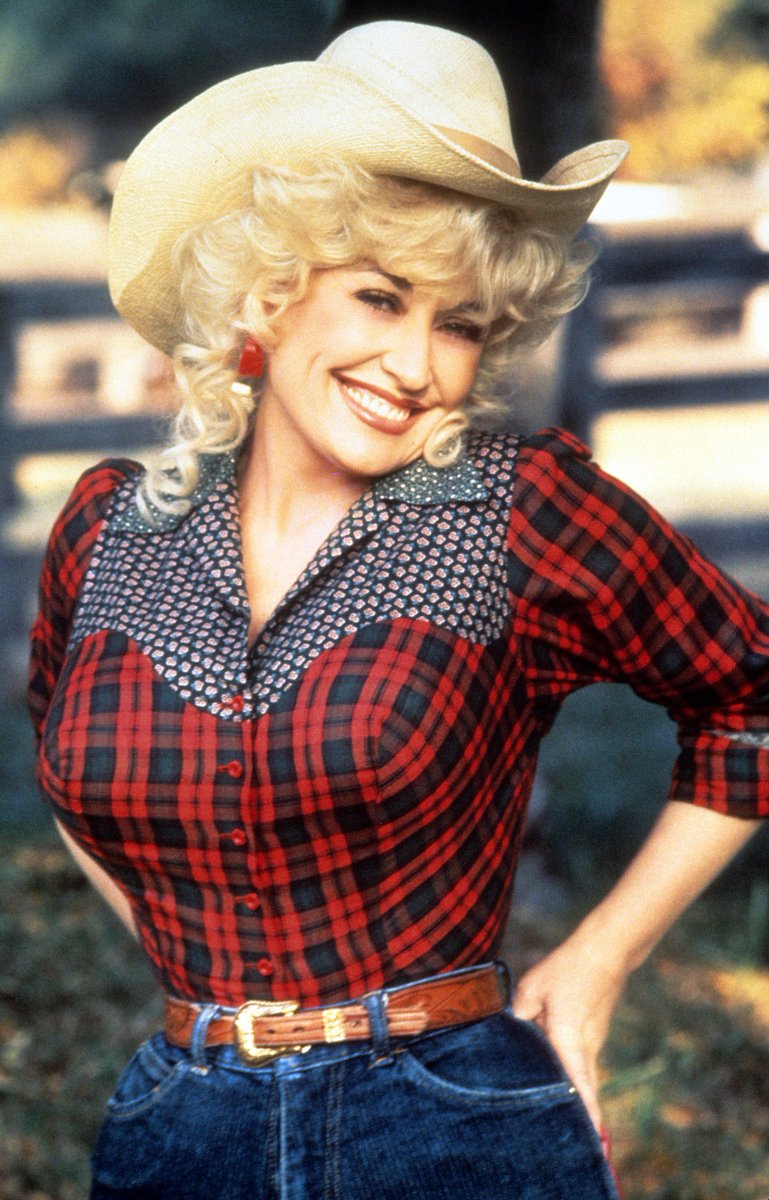
Dolly Parton spent decades quietly funding band uniforms and instruments at Black high schools across the South - never once putting her name on it. No headlines, no fanfare — just help, given because it was needed.
Rhinestones on the outside, gold on the inside. 💛
In 1988 Dolly Parton pulled every 7th and 8th grader in Sevier County into a room and told them to pick a buddy.
She made them sign a contract.. if BOTH graduate, she hands you both $500. One fails, nobody gets paid.
The county dropout rate went from 35% to 6%.
She handed out the checks herself.
In 1989 she offered $500 to every kid in the county who wanted to go to the local college.
When Gatlinburg burned in 2016, she sent 900 families $1,000 a month for six months.
You've probably heard that part.
Here's the part you haven't:
The fund raised more than expected, so she showed up in May and handed every one of those families another $5,000 on top.
Then she quietly put $3 million into the recovery group that handles the years after the news trucks leave.
She built her county an entire hospital.
She played a benefit concert in 2007, Dollywood and the Stampede matched it, and LeConte Medical Center opened in 2010 with a birthing unit and a women's center in it.
In 2022 she started covering 100% of tuition, books, and fees for Dollywood employees.
Full-time, part-time, AND seasonal.
In 1991 she paid for a bald eagle sanctuary because the birds couldn't be released back into the wild, no press release.
And when Hurricane Helene came through here in Western North Carolina, she wrote a personal check for $1 million and her companies matched it.
She didn't owe North Carolina anything, but she helped us anyway.
She started the Imagination Library because her daddy couldn't read or write. Before he passed, he told her it was the most important thing she ever did.
Rest in Peace, Dolly 🇺🇸
If a bill were introduced in the Tennessee legislature to rename Nashville’s airport Dolly Parton International, it would pass unanimously.
Let’s make it happen, fellow Tennesseans.
In 1972, Elton John delivered a breathtaking performance of "Rocket Man" at Royal Festival Hall, just months after the song's release.
Originally released earlier that year on the album Honky Château, "Rocket Man" became one of Elton John's first major international hits, reaching #2 on the UK Singles Chart and #6 on the Billboard Hot 100. The Royal Festival Hall performance remains one of the song's earliest and most celebrated live renditions, capturing Elton John at the beginning of the remarkable commercial and artistic peak.
Why Carly Simon’s Voice in This Live Performance Still Feels Impossible to Replace
(George Harrison & Art Garfunkel attended the concert)
Some voices don’t need to soar or dazzle. They only need to sound true. Carly Simon’s live version of “That’s The Way I’ve Always Heard It Should Be” is one of those rare moments where a singer doesn’t perform a song so much as she simply tells it.
Her voice has always carried a slight natural rasp, a textured quality that never aimed for polished perfection. In this live setting that texture becomes even more present. Without the protective layer of studio production, the warmth and intimacy of her tone come through clearly. It feels close, almost conversational, as if she is speaking directly to the listener rather than projecting to a crowd.
What stands out most is how she shapes the words. Simon delivers each line with deliberate clarity and unhurried pacing. The phrasing stays close to natural speech. She doesn’t force dramatic arcs or ornamental runs. Instead she lets the melody follow the emotional weight of the lyric, pausing where thought would naturally pause and leaning into certain words when they carry more meaning. The result is less like traditional singing and more like a private confession set to music.
Her breath control supports this approach without drawing attention to itself. You can hear the air move. That small human detail keeps the performance grounded. It reminds you that a real person is sitting at the piano, not a perfected recording.
The emotion in the song has always been complicated—doubt about the expected path of marriage and family, quiet resistance to the life everyone said should bring happiness. In the live performance that complexity feels sharper. Simon doesn’t overplay the melancholy. She sings with a calm, almost resigned honesty that makes the questions in the lyric land harder. There is no theatrical sadness, only the weight of someone who has thought carefully about what she is saying.
That honesty is inseparable from her artistic personality. Carly Simon never seemed interested in becoming a conventional pop ideal. Her independence and slight edge of resistance shape every phrase. You hear a woman who values her own perspective more than audience approval, and that self-possession gives the performance its quiet authority.
Other singers can learn the melody and match the notes. What they struggle to recreate is the particular combination of texture, conversational phrasing, and unforced emotional truth that Simon brings. The voice does not try to be beautiful in the expected way. It becomes beautiful because it refuses to pretend.
This is why the live recording continues to matter. It proves that the power of the song never depended on studio perfection. When Simon sits at the piano and sings it in front of people, the same essential quality remains: a voice that sounds like it belongs only to her, telling a story that still feels uncomfortably real. In an era full of carefully crafted performances, that kind of unfiltered presence remains rare—and still impossible to replace.
Metallica performs “Enter Sandman” in Moscow in 1991, drawing an estimated 1.6 million attendees.
It’s considered one of the best performances of all time
When I lived in New York this gym was awesome. You could be running 5s on Friday and suddenly you're guarding Melo. They'd close the gym down for big names but you regularly got to shootaround with role players
"Steppin' Out" was inspired by the excitement of New York nightlife after Joe Jackson moved there following his divorce. The sophisticated synth-pop classic became his biggest US hit, peaking at #6 on the Billboard Hot 100 and earning Grammy nominationsfor Record of the Year and Best Male Pop Vocal Performance.
The song found a new audience decades later after being featured on the Emotion 98.3 radio station in Grand Theft Auto: Vice City Stories(2006), introducing its sleek 1980s sound to a new generation of players.
Rita Moreno’s unforgettable performance of “Fever” on The Muppet Show originally aired in 1976, with Animal wildly backing her on drums. The performance became one of the most memorable moments of her appearance—and it ultimately earned Moreno a Primetime Emmy Award in 1977. 🎶❤️