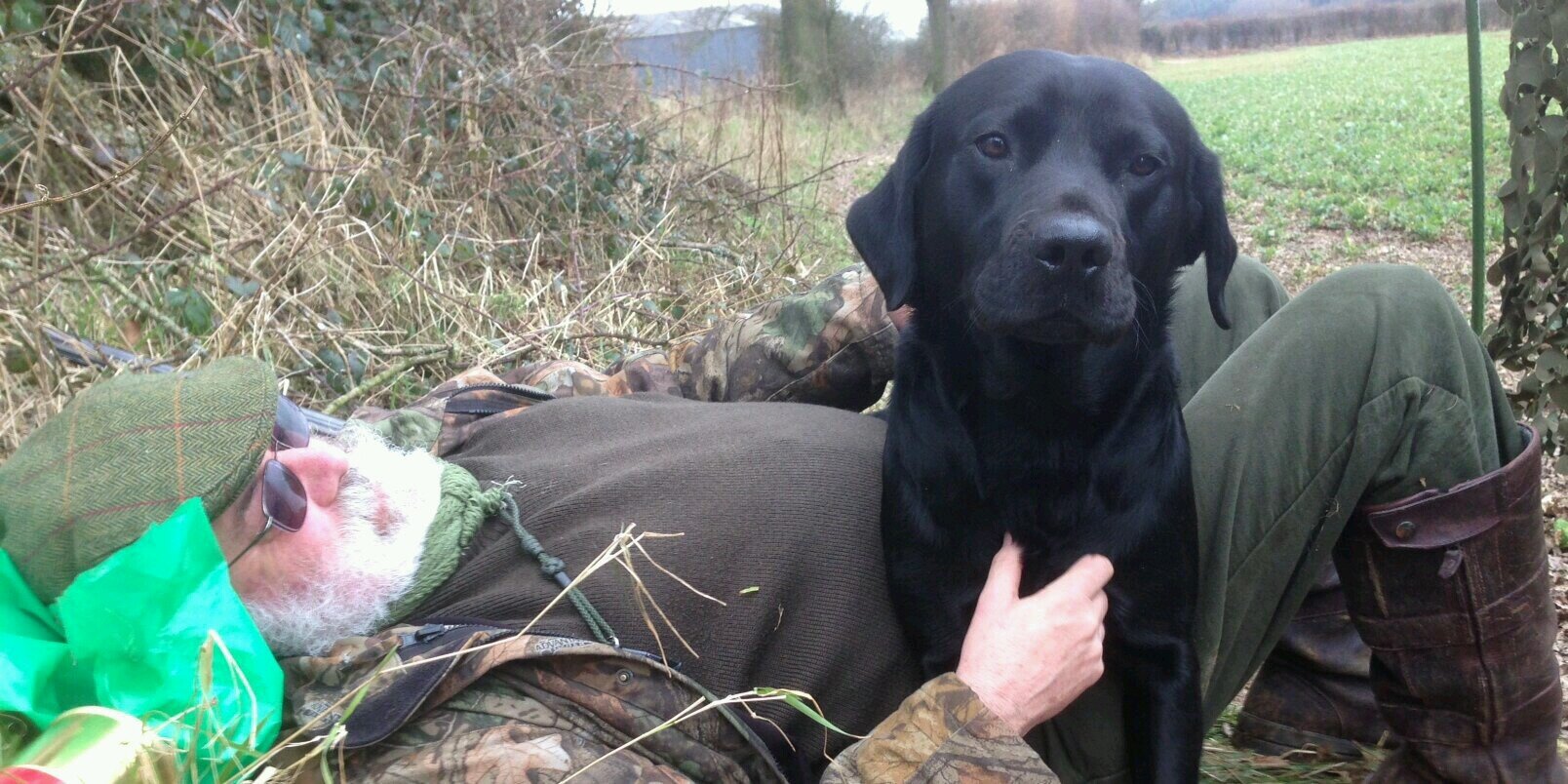
Ex ship & yacht builder. Pirate, cider maker, parent, husband, grumpa, morris dancer, Lab owner. Bowel cancer survivor, Fellow of The English Breakfast Society.
There is a drowned country under the North Sea, and the fishing boats keep pulling bits of it up in their nets.
It is called Doggerland. Ten thousand years ago you could have walked from Norfolk to the Netherlands across it without getting your feet wet. Think rivers and reed beds, wooded valleys, marsh and lagoon, and probably the richest hunting ground in the whole of Europe. Red deer. Wild boar. And aurochs, the great wild cattle, moving across the lowland the way game does where nobody has ever hunted it hard.
People lived there. Thousands of them, following the herds, building camps on the high ground where the animals came to drink. For a mobile hunting people it was close to paradise. Endless meat, endless fresh water, and not one reason on earth to plant a seed.
Then the ice that had been holding the sea back finished melting. The water came up slowly, year on year, taking the low ground first. A vast landslide off the Norwegian coast sent a tsunami tearing through what was left. The sea did the rest, and the best hunting country in Europe went under and stayed there.
We only know any of this because of the fishermen. In 1931 a trawler called the Colinda, working the sea off Norfolk, dredged up a lump of ancient peat, and inside it was a barbed harpoon point carved from antler, around nine thousand years old, dropped on dry land by a hunter who had no idea the sea was coming for him. Since then the nets have brought up mammoth tusks, the bones of woolly rhino, reindeer, wolf and bear, and a pick carved from the leg bone of an aurochs. Early trawler crews used to fling the bones back overboard so they would not foul the gear.
Sit with the picture for a moment. Britain spent the deepest, longest stretch of its human story not as a nation of farmers but as a hunting ground, and the people who lived here did it on meat, in a landscape so generous that agriculture would have looked like a downgrade. The grain came later, with the rising water and the shrinking land, when there was no longer room to simply follow the herd.
We did not give up being hunters because we found something better. We did it because the finest larder we ever had drowned, and we have been improvising ever since.
The harpoon sits in the castle museum in Norwich. The country it was lost in is forty metres down off the Dogger Bank, where the wind farms are going up now.
@muzzleloaderjon I’m not sure whether these came from Henry Krank or elsewhere off the internet. It’s a long time since I bought any. I’ve mostly been demonstrating matchlock loading and firing of late!
@muzzleloaderjon No flies on you! Exactly that. It’s for sea shanty “pirate” festivals where the public mustn’t be frightened by authentic or de-acts. My 1805 Sea Service is too valuable and too heavy for an old pirate to carry for such outings!
Dark chocolate is the only confectionery with a press team. "It's basically a superfood," people murmur, snapping off a square with the solemnity of someone taking a vitamin. Start with the word that sells it.
Antioxidants. The flavanols everyone cites are the cacao plant's own defence chemicals, and they barely survive your digestion. Rather than mopping up oxidation, they cause a little of it, a flicker of stress that mildly poisons your cells and forces your body to switch on its own repair machinery. The benefit, such as it is, comes from your system scrambling to neutralise a plant toxin. The marketing sells you the toxin and takes the credit for the cleanup.
Now the metals. Cacao is a bioaccumulator. It hauls cadmium up from the soil and picks up lead as the beans dry on roadside tarps. In 2022 Consumer Reports tested 28 dark bars and found both metals in every one. For 23 of them, an ounce a day pushed an adult past a recognised level of concern. Cadmium then settles into your kidneys for decades and sends no notification.
While it sits there, the oxalates in the same cocoa get to work building kidney stones, and the pesticide residues from intensive cocoa farming ride along uninvited.
And the crop itself is an ecological disaster, most of it grown on cleared West African rainforest, a good deal inside protected parks, much of it by child labour everyone deplores for a fortnight at a time.
So enjoy your square. Just retire the word medicine. You are eating a metal-laced, stone-building plant toxin, and calling the damage a health benefit.
@jimthekeeper Just the thing for a shoot day. Right tyres on them and they will go absolutely anywhere. My 39 year old 90 has power steering, which is a great “modern” advantage!
The woman speaks for the entire country right now. An absolutely glorious rant against Keir Starmer. And she signs off in the most quintessentially British way.
Walk into the cave at Lascaux. The paintings are around seventeen thousand years old, made by people with no writing, no agriculture, and no opinions about cholesterol.
Look at what they painted.
Aurochs, the enormous wild cattle that stood taller at the shoulder than a man. Horses. Bison. Deer. Great heavy-bodied animals laid down in ochre and charcoal across the ceiling by people lying on their backs in the dark, holding a light up with one hand and painting with the other, because this mattered to them more than comfort did.
Now count the paintings of grain.
Count the lovingly rendered root vegetables. The heroic turnip. The sacred bowl of lentils.
You will be counting for some time.
The people of Lascaux painted what they revered, and what they revered was the animal. The animal was food, clothing, tools, sinew, fat, marrow, and the difference between surviving the winter and not. They did not paint a balanced plate. They painted the thing that kept them alive, over and over, for generations, in the most important room they had.
Seventeen thousand years later their descendants would be told that the animal was the problem, and that the road to health ran through the field of grain the cave painters never once thought worth drawing.
The oldest art we have is a menu.
It is not a subtle one.
@meddlingmike This bitter is a 4.8% ABV premium golden ale by an independent local brewery & won the Hampshire Beer of the Year award in both 2013 & 2014. This multi-award-winning ale is highly celebrated among local drinkers & is brewed in Cheriton, Hampshire.
@meddlingmike How can you overfill a glass. It’s a pint brim measure. Look it up. That beer has won the CAMRA best beer of Hampshire on various occasions. It’s brewed by a small independent brewery and is served in my local straight from the cask on gravity dispense. You are just so wrong.
@meddlingmike Is presumably one of those “designer” beers that the young trendies drink? This is what a pint of bitter should look like and at least the glass is full!
Let me categorically Debunk this utter rot. @sainsburys.
I am a poultry Breeder. The hens that lay white eggs (Amberline/White Star) DO NOT have a lower carbon footprint.
Yes they eat a bit less and produce roughly the same amount of eggs as the Brown egg layers (Bovan/Lowman/ISA Brown) but they live shorter lives, are prone to dying suddenly when startled, a flighty and nervous and because they live shorter productive lives (12 -18mnths) vs brown 18/24mnths (both commercial farmed), you have to incubate more which is increased (Electricity/gas costs) and their eggs are not the same quality.
I breed and keep 20+ different breeds, including: ISA Brown hens and White Stars. All my hens are 100% free range, Not a single barn kept bird, I have ISA browns that are 5yrs old and still laying beautiful Brown eggs, I have not seen a White star live beyond 3yrs and certainly none have laid eggs past 18-24mnths.
White stars Lay themselves to death. They are slender birds and because they dont eat a lot, it drains their personal vitality to keep up laying the eggs you want to sell because of the nonsensical lie that they are "More Carbon Neutral"
You want to know about eggs, come talk to someone like me, Don't rely on some hairbrained imagination of a buyer who's trying to squeeze the profit margin for a few extra pennies at our expense and to the poor hens detriment.