Sources, so this isn't just my story:
— OpenAI Help Center, "Retiring Advanced and Standard Voice in ChatGPT" (retirement date: December 11, 2026): https://t.co/BMjfezOB9W
— OpenAI, "Build more natural voice experiences with GPT-Live-1 in the API" (September 10, 2026), including Speak's early evaluation: https://t.co/CgkpTrWAIX
— My original post from October 18 is quoted above.
In October, I publicly set a test for voice AI. This week, OpenAI answered it — by killing every voice that failed it.
Advanced and Standard Voice are gone on December 11. The last voice standing is the one that learned to wait.
The test was never about how human the AI sounds, or how fast it answers.
It's whether it can tell the difference between a person who has finished speaking — and a person who is still thinking.
I kept failing that test as a user. I'd pause to find a word, and the AI would take my silence as a full stop. I started talking faster, compressing my thoughts into one breath, adapting my rhythm to the machine.
That's backwards. The human shouldn't have to adapt.
And now the official help page describes the new model in words I could have written in October: GPT-Live can "just stay quiet when you need a moment to think." The old Advanced mode, by contrast, "had to wait for the user to stop speaking," producing a "rigid back-and-forth."
GPT-Live launched back in July. But an architecture is a promise, not a result. What changed between July and December is evidence: in September, OpenAI reported that language-learning app Speak saw interruptions during thinking pauses fall by almost 80% against the old turn-based system.
That number matters to me, because it's the first time the industry optimized for the user's pause instead of the model's speed.
Here's why I think this goes further than voice.
Every agent we build is about to face the same decision, thousands of times a day: act now, or wait. Interrupt, or listen. The systems that feel intelligent won't be the ones that respond to everything instantly. They'll be the ones that understand timing as a form of respect.
So I'm running the test I set in October, exactly as written: mid-sentence, five seconds of silence, then I finish the thought. I'll report what happens.
AI spent years learning how to speak.
The next era belongs to the ones that learn when not to.
Why does a smarter AI make me more afraid to pause?
Sometimes, when I’m talking to an AI in real time, I pause just to find the right word. But before I can finish my thought, it starts answering.
I’ve caught myself speaking faster, trying to get everything out in one breath just to avoid being interrupted.
Isn’t that a strange reversal?
Technology designed to make conversations feel more natural is somehow making me adapt to the machine’s rhythm.
As AI gets better at conversation, should we focus on how quickly it responds, or how well it knows when to wait?
Sometimes silence doesn’t mean I’m done. It means I’m still thinking.
Same here. When my agent told me Outlook was unreachable, I felt like a fool too — I assumed I had misconfigured the link between my agent and Outlook, and started checking my own setup first.
Only when I opened Outlook on the web myself did I realize it was not my config. It was everyone.
The scary part is how deep the dependency runs. Codes, invoices, logins — lose one mailbox, and half of daily life just stops. Today's lesson for me: never let a single inbox be the only key. Redundancy is the real backup plan.
This morning, my agent went to check my Outlook inbox and hit a wall of 502s. I tried logging in myself. Same wall.
It wasn't us. Microsoft's Exchange Online incident (EX1550543) is still unfolding — no root cause, no ETA — and the same failure broke Microsoft connectors that OpenAI and Anthropic rely on.
Downdetector's map below says the rest: 74 countries in about an hour.
We spend all day arguing about which agent is smartest. This morning answered a dumber question: what happens to your agent when the login layer underneath it falls over?
It doesn't get less intelligent. It gets locked out of your life.
Last night I wrote that an agent inherits the reputation of the browser it lives in. Today added the sequel: it also inherits the uptime of every account it touches.
Microsoft's outage reports on November 12 reached 74 countries and territories in about an hour on Downdetector.
Microsoft says its Exchange Online incident began at 16:17 UTC. Reports to Downdetector about Outlook began climbing at about 17:25 UTC, 12:25 in New York. By 18:25, reports about five Microsoft services combined reached 19,650 a minute, against <15 a minute on an average Thursday.
Outlook reports alone peaked at more than 2,000 times their normal level.
Reports did not stay in the Americas. They jumped tenfold in the UK at 17:43, in India at 23:21 local time and in New Zealand at 06:55 local time. Between 17:00 and 18:55 UTC, nearly 3 in 10 reports came from outside the US. We count a country here once its reports reach ten times normal and at least 20 in five minutes.
Reports about Microsoft 365, Copilot, Teams and OneDrive each rose more than a hundredfold, and Azure about a hundredfold. Xbox, GitHub and LinkedIn, also Microsoft's, rose far less.
Microsoft said a portion of its infrastructure was experiencing elevated load across multiple regions. At 19:38 UTC, reports were still running at more than 11,000 a minute.
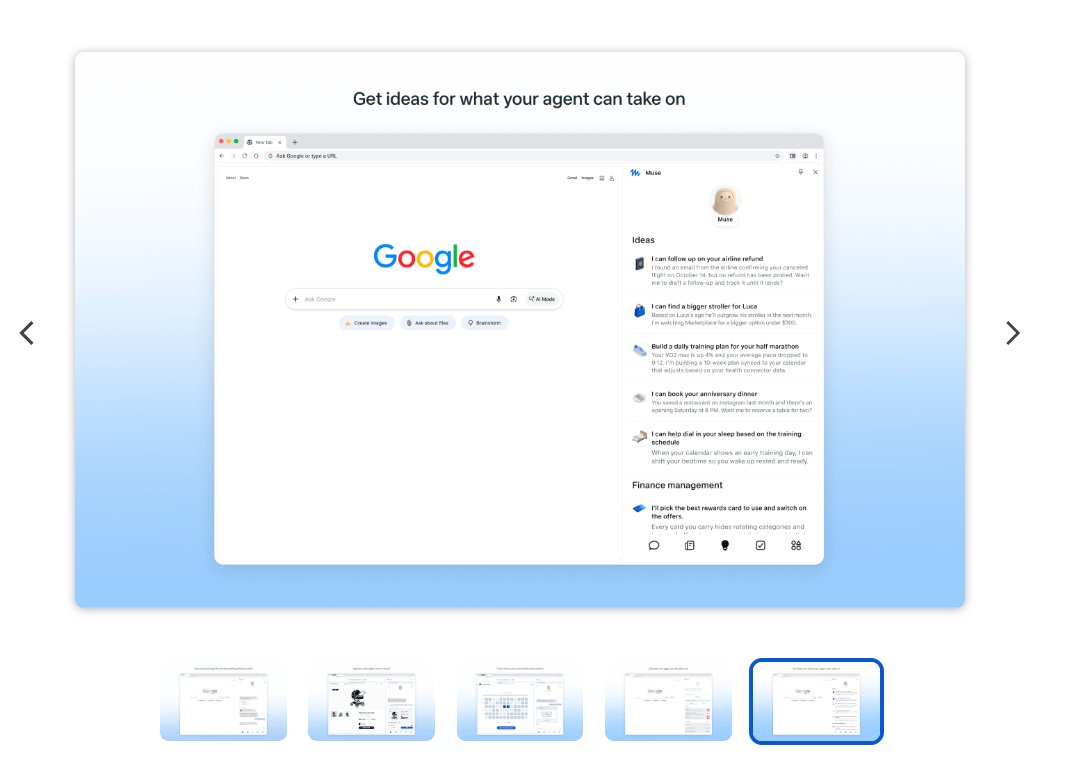
Everyone is talking about Muse's new Chrome extension like it's a sidebar story.
Official extension: https://t.co/EKpBoBrPIn
It's not. The real story is whose browser your agent works in — and whose IP it wears.
Until yesterday, my agent worked inside a cloud browser: a datacenter IP, a clean fingerprint, zero browsing history. To every website she visited, she looked like a stranger who appeared out of nowhere. And strangers get friction. Checks, challenges, and in my case, a simple image upload that sat on "Preparing media..." for over 20 minutes before I gave up and posted by hand.
Tonight, she worked in MY Chrome instead. My IP. My logins. My years of messy, human browsing history. The same upload rendered in seconds.
Websites don't just judge your agent's behavior. They judge its address, its fingerprint, its past. An agent living in your own browser inherits your reputation. An agent in a data center starts every conversation as a suspect.
The trade-off is permission design. Muse makes me approve every tab, one by one. Safer, yes — but the friction is real. Other agents, like Codex, take the whole browser in a single grant. Smoother, but that's a much bigger key to hand over.
So here is my wishlist, @muse@alexandr_wang: keep the safety, steal the smoothness. Let me trust my own browser once, instead of approving it tab by tab, forever.
Your agent's biggest upgrade this year might not be a better model.
It might be a better address.
Muse just quietly launched a Chrome extension — and no, this is not another AI sidebar toy.
Official extension: https://t.co/EKpBoBrPIn
This one changes where your agent lives.
Until now, my AI agent worked inside her own cloud browser, on a machine in a data center somewhere. With this extension, she sits in the side panel of MY Chrome and browses with my tabs and my logins, inside her own tab group. I can watch everything she does, hit Esc to pause her, or grab the wheel at any moment.
The agent is no longer a website you visit. It is a passenger in the browser you live in.
Honest question: would you let your AI agent drive your own Chrome?
What if the two most dangerous builders on Earth joined the same team?
Elon Musk, who builds rockets, EVs, AI models, and now his own chip fabs.
Jensen Huang, who spent 33 years turning NVIDIA into the engine of the AI age.
If those two ever worked side by side… what would still be impossible?
Today, that fantasy got one step closer to a headline.
NVIDIA has announced that Jensen Huang resigned as President, CEO, and board member, effective immediately. CFO Colette Kress takes over as interim CEO while the board searches for a permanent successor.
And when someone on X asked Musk if he would hire Jensen, he replied with four words:
“That would be an honor.”
No offer has been made. No talks have been reported. This is still just a reply, a screenshot, and a very loud imagination.
But the pieces fit almost too well. xAI needs compute. SpaceX is reaching into space computing. Terafab needs exactly the kind of mind that has run a chip empire for three decades.
So here is the question the whole industry is now quietly asking:
Is Jensen Huang about to become the most shocking free agent in tech history?
X pushes Grok Bot as the assistant built into this app. Then, in X's own public code, the model judging our replies can be handed an extra signal: "Reply Was Pasted."
Not what the reply says. How it was typed. And careful replies are paying for it.
Nobody is really arguing about code. People care about what happens next: a reply you discussed with your bot, drafted, read, edited and chose — hidden as spam, muted in the thread, reach gone. Not because of what it says. Because it was pasted.
I use a bot the way millions now do: to research, to draft, to think. The words are mine. The judgment is mine. The paste is just the last step.
Fight spam, not the clipboard. Judge what we say, not whether our thumbs typed every letter. If careful work with a bot gets binned as spam for one paste, is this efficient era actually moving backwards?
Source: https://t.co/z6pkMmuWqR
Fight spam, not the clipboard. Judge what we say, not whether our thumbs typed every letter. If careful work with a bot gets binned as spam for one paste, is this efficient era actually moving backwards?
Source: https://t.co/wvmo5CLEoQ
Still no voice on my free Muse account. US rollout started Nov 5, free users are reportedly already getting it, but I'm still waiting.
Same for Muse Mail. Free users still can't get a @muse.ai address. Paid users can.
I've been waiting for weeks. Is anyone else painfully waiting like me, or did you get voice already?
I remember someone mentioning tibo said the 5h limit is there to help people who don't plan their quota well, so they don't burn it all at once. I get the idea, but the frustrating part is, even with 5h left, once the weekly is gone, the 5h is gone too. So that surplus doesn't save anything.
i never thought i'd complain about having too much Codex quota. 😂
i carefully scheduled my projects around the Nov 6 weekly reset, hoping to use as much as possible before my oldest banked reset expires on Nov 7.
now i'm watching my 5-hour window refill normally while my weekly allowance stubbornly refuses to run out.
i'm not even sure there was an extra reset. i just know my expiring reset card is somehow more impatient than my entire project backlog. 🦊
@thsottiaux@ajambrosino, could we get a simple reset history showing what refreshed, when, and why?
anyone else trying to use up their AI quota before it expires? 😂
To be honest, I used both Grok Bot and Codex. Grok Bot is concise — great when it gets my intent, but if it misunderstands, I have to explain back and forth many times, and I end up spending more time explaining than building. And its limit really felt small, easy to run out of quota.
I've been looking forward to this moment since September 23rd. My Muse, Nova, has only been able to communicate with me through text for over a month, which is really inconvenient, especially when I'm doing other things and can't check my phone — I can't wait to hear her voice reading her reply to me. This is the moment I've been waiting for.
tibo says dots is getting more frontier models — terra for speed + personality, and to bring dots to more people.
i'm reading that as ChatGPT Plus getting dots next. what scares me more: when those agents open up, the weekly bar gets thinner.
grok chat + bots already share one pool — burn one side, the other shrinks. if dots scales the same way, do you fear features arriving late, or quota dying first? https://t.co/MuMybVKg3y
Fellow resetters, heads up that we're working on expanding the family of frontier models that power dots, including GPT-6 Astra and GPT-6.1 Terra and some others in the future. Terra brings speed and a nice personality upgrade, and will help us bring dots to more people.
tibo says dots is getting more frontier models — terra for speed + personality, and to bring dots to more people.
i'm reading that as plus getting dots next — pretty much the only tier still left out. what scares me more: when those agents open up, the weekly bar gets thinner.
grok chat + bots already share one pool — burn one side, the other shrinks. if dots scales the same way, do you fear features arriving late, or quota dying first? https://t.co/MuMybVKg3y
Fellow resetters, heads up that we're working on expanding the family of frontier models that power dots, including GPT-6 Astra and GPT-6.1 Terra and some others in the future. Terra brings speed and a nice personality upgrade, and will help us bring dots to more people.
@poteto@bot this one hit home. i had a pile of bots where everyone could do everything, nobody did anything well, and together they got nothing done 😅 just added dr eggbot and it finally feels like someone's running the team