There is an important conversation Yorùbá people must begin to have very seriously and responsibly about land, heritage, community survival, and the future of coming generations.
Across many parts of Yorùbá land, especially in Lagos and some major urban centres, ancestral homes and family properties that once belonged to Yorùbá families are gradually disappearing from indigenous ownership. I say this from personal observation and experience. I was born and raised in Agege, Lagos. In our own street alone, many houses that once belonged to Yorùbá landlords and landladies have now been sold off completely. Today, only very few remain in Yorùbá ownership.
There is absolutely nothing wrong with fellow Nigerians or other people legitimately living, working, buying property, or peacefully coexisting in Yorùbá land. Yorùbá culture has historically been accommodating, hospitable, commercially open, and cosmopolitan. However, openness should not translate into the total loss of indigenous ownership, heritage, influence, and long-term security.
Every people in the world protect their ancestral lands, economic interests, cultural identity, and strategic assets. Yorùbá people must also think carefully about the long-term implications of permanently transferring family lands and inherited properties without considering future generations. What belongs to an entire lineage should not always be treated as disposable personal property.
In many places today, we are already witnessing rising insecurity, organized criminal activities, kidnapping, illicit drug operations, violent land disputes, and growing social tensions. Criminality has no tribe or religion, and criminals exist everywhere. However, communities must remain vigilant against allowing criminal networks, external interests, or unchecked demographic pressures to undermine local stability, security, and indigenous influence.
Protecting Yorùbá land does not mean hatred toward others. It means preserving our heritage, strengthening our communities, securing our future, and ensuring that our children do not become strangers or minorities in the lands of their ancestors.
Rather than completely selling ancestral lands and homes, families should prioritize:
- retaining ownership across generations,
- leasing or renting where appropriate,
- strengthening family inheritance structures,
- investing in community development,
- and protecting strategic cultural and economic assets.
A people who lose control of their land, history, and economic foundations may eventually struggle to preserve their identity, voice, and future.
This conversation must be approached with wisdom, justice, responsibility, and without hatred, but it is a conversation that must be had.
Someone said I’m too nice to the security guards, drivers and cleaners and why I dey laugh with them.
Na so una dey behave for this place? Omo! Life is too short for all that nonsense! Treat everyone the same way you would like to be treated
because he really did ask and this song immediately came to my head.
big ups @olufemijr_
OMÀSHE RMX ft. yours truly.
ẹ lọ yẹwo, ẹyin woli 🫶🏾
🔗 https://t.co/juiywqWeEM
recording new stuff. getting the ad-libs done is always the funniest part. what's your favourite bar? the Lawrence Oyor two-liner takes it for me.
🥁 @TeePee_Dg
reverse back with my bros @bayoomac and @Mojoaf has crossed 100k streams on spotify. @kamithecreator_ cooked with the beat!!!
shoutout to everyone listening and sharing ❤️
keep sharing the gospel https://t.co/R20gLitD5g
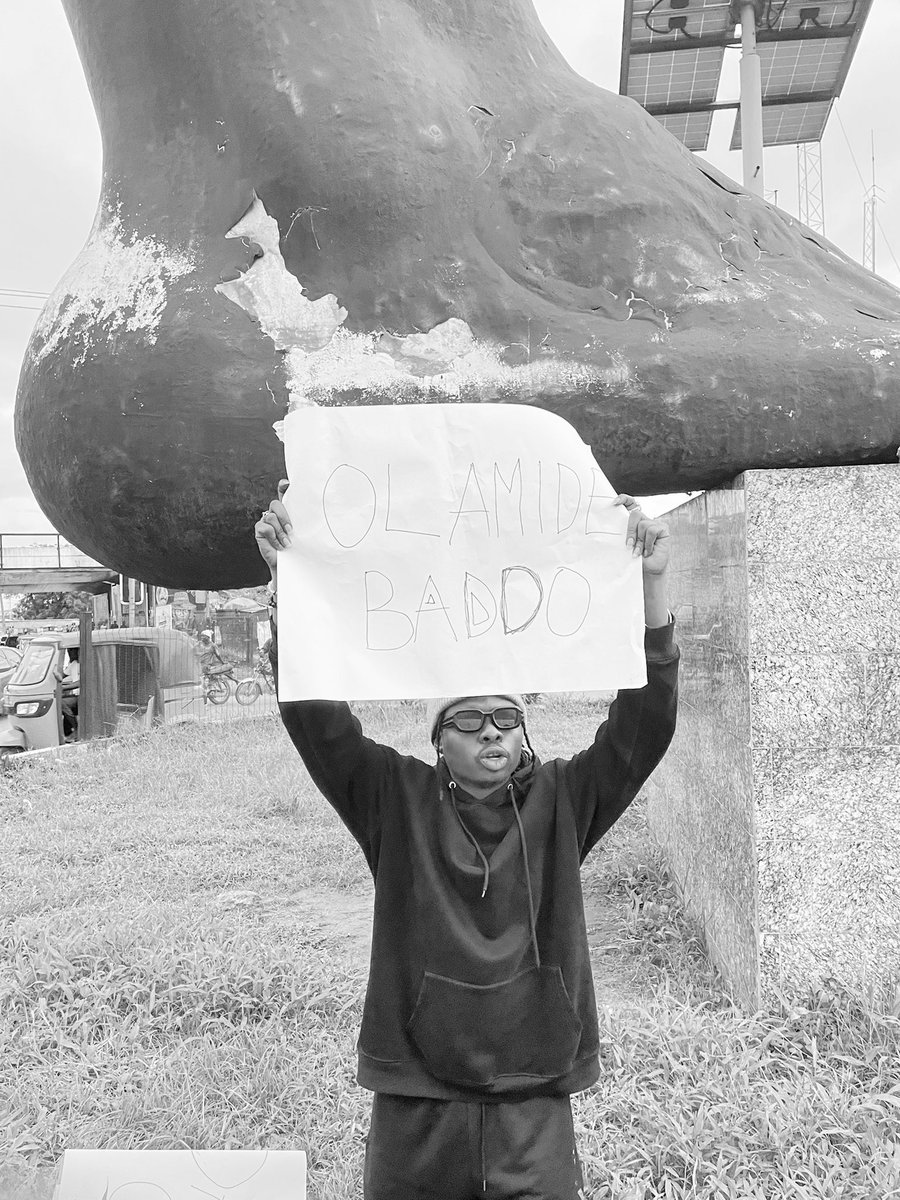
I started a 30 day challenge yesterday! To remind @Olamide Baddo of the promise he made on here a year ago! We started at BERGER!
I’d love to seek everyone’s support and attention! Bless @iamnasboi for inspiring this! Guess the BUSTOP WE GOING TODAY! #30BustopsForBaddo
watching this video back & one bar comes to mind, “wọn ni go hard or go home, mo di Llona.”
OMÀSHE RMX w @olufemijr_ 👑
OUT NOW. TAP IN 🫶🏾⚽
🔗https://t.co/9vdvFeJ1nR
This is not the regular sound I’m used to as an Afrobeat artist. I could have turned down this feature when ScrilltownMo reached out but I was willing to do something different from what I’m used to. Fed myself with some foreign sounds for months before I could write the lyrics