Que nuestras debilidades y pecados puedan superados con la gracia de Dios. Porque sin él no podremos superlar las barreras que nos coarta para sumerginos en su amor y permanecimiento de su salvación.
@SantiPenap mi estimado presidente Santiago Peña quería hacer una breve solicitud pero de suma importancia ¿porque no hay embajada de Nigeria en nuestra nación?
God bless you @Joel7Richardson. I know what the early Church Fathers' original concept was regarding water baptism? Wouldn't that clash with the vision espoused by evangelical churches, considering it a mere symbolic act? Why did Jesus and the apostles insist on baptism?
Since Joel continues to spread his falsehoods and refuses to debate, I'll just offer a quick correction here.
First, Mr Webbon's claims here are flat-out historically bogus. Those Messianic Jews who left Jerusalem for Pella did so years before Jerusalem was besieged. They did so because of a personal prophecy, having nothing to do with Jesus' warnings. Eusebius records this in Ecclesiastical History, 3.5.3. He says the Jewish Christians in Jerusalem:
“were commanded by an oracle given by revelation before the war to those in the city who were worthy to leave it, and to dwell in a certain city of Perea called Pella.”
That's right, despite Joel's claims that they fled in AD 70, as a direct result of obeying Jesus, the early Christians left in response to an early "Charismatic" prophecy. The exact year of the flight is not definitively recorded, but most scholars place it sometime between AD 66 and 68, likely closer to the outbreak of the Jewish Revolt in AD 66. This would be about three or four years before the actual destruction of Jerusalem in AD 70.
Second, if the Olivet Discourse, as recorded in Luke 21, is about the events of AD 70, then Jesus issued some truly horrific advice. For in warning his hearers not to flee Jerusalem until they see it surrounded by troops, He would have nearly guaranteed their deaths.
Concerning those who did attempt to flee the city after it was surrounded, Josephus, in The Jewish War, Book V, Chapter 13, Section 4, records the following:
"The Arabians and Syrians... cut up those that came as supplicants, and searched their bellies. Nor did they think it unlawful to kill them, but in one night’s time about two thousand of these deserters were thus dissected."
The point being that if the disciples who remained in Jerusalem had waited until Jerusalem was surrounded, they likely would have been killed, and died a horrible death.
Preterism fails.
10. SAY THIS PRAYER: I was baptised into Christ and I died when He died, sin’s power over me - be broken, in Jesus’ name! Oh Holy Spirit, help me to do what is right at all times, even if it is contrary to what I naturally want to do.
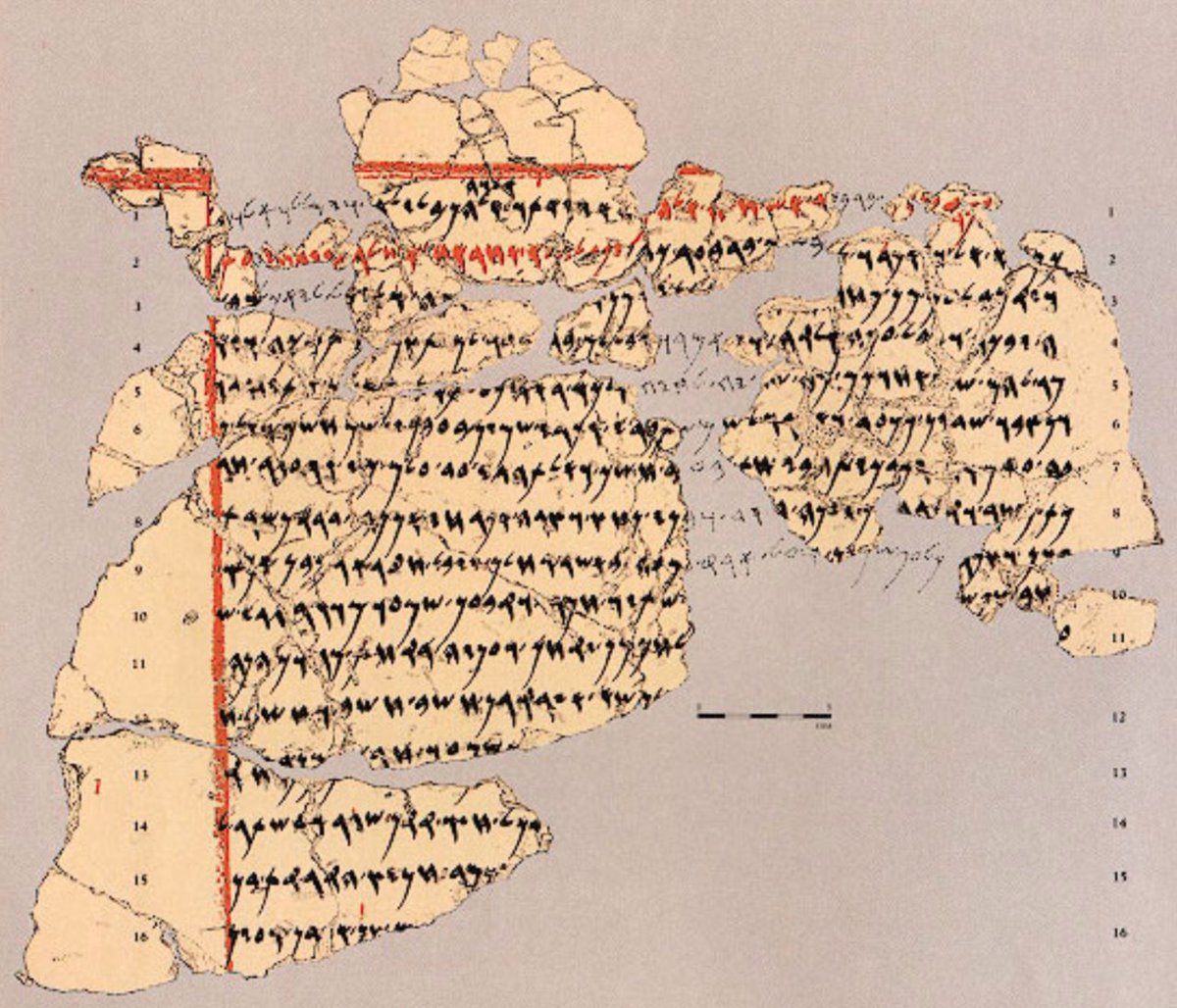
This weekend, Jews around the world read the Torah episode of Balaam ben Beor - the infamous unholy prophet who was hired by Balak, king of Moab, to curse the Israelites.
In 1967, an inscription was dug up in Deir 'Alla, Jordan, dated to 825 BCE. In it, Balaam is mentioned explicitly:
"This is the book of Balaam, son of Beor, a seer of the gods. To him came the gods at night. And they spoke to him according to the utterance of El, and they spoke to Balaam, son of Beor, thus: ..."
This find rocked the archaeological world, as it was a non-biblical, non-Jewish source corroborating the Torah and confirming the existence of 'Balaam ben Beor' as a regionally recognized pagan prophet.
Balaam, instead of cursing the Israelites, was coerced by God to bless their camp no less than 3 times.
Balaam's second non-consentual blessing, as recounted in the book of Numbers (ch. 23), contains the verse from which the name of Operation Rising Lion was derived.
Your Faith Will Not Fail!
1. Luke 22:32 says, “But I have prayed for you, Simon, that your faith may not fail. And when you have turned back, strengthen your brothers.” Jesus knew that Simon Peter would betray Him and also knew that he would repent.
The following passage from Daniel 8 was fulfilled when Alexander the Great defeated the Medo-Persian Empire. Later portions of this prophecy do speak of the last days, but not this section. A few have asked, however, if this could be repeating itself. The US as the goat, coming from the West (in B-2 Bombers), without touching the ground, and ferociously striking the Persian Ram, etc. First, I must restate that this is not the correct primary meaning of the passage. It is not feasible for several reasons. If that is true, then why does it seem to look so much like what Daniel describes? Because this is the nature of prophecy and history. They frequently echo.
While it may not be THE primary meaning or fulfillment of the passage, as the apostles interpreted prophecy, they would call it A fulfillment. Not only do I find this nuanced approach more biblical, but it also strikes a balance between those who say that every event in the Middle East is THE fulfillment of Bible prophecy and those naysayers who say that nothing that happens in the Middle East has any relevance in Biblical prophecy.
"As I was observing, a male goat appeared, coming from the west across the surface of the entire earth without touching the ground. The goat had a conspicuous horn between his eyes. He came toward the two-horned ram I had seen standing beside the canal and rushed at him with savage fury. I saw him approaching the ram and, infuriated with him, he struck the ram, breaking his two horns, and the ram was not strong enough to stand against him. The goat threw him to the ground and trampled him, and there was no one to rescue the ram from his power." (Daniel 8:5–7)
Did modern-day Evangelicals or Reformation-era Jesuit priests invent the literal and "futurist" view of Bible prophecy? Hardly.
Did early Christians believe that all the Old and New Testament prophecies were fulfilled in 70 AD, or fulfilled in the persecutions of the seven churches of Revelation? Not at all.
Read below the words of Hippolytus of Rome, writing around the year 200 AD in his book "Treatise On Christ And Antichrist" — a full century after the Roman persecutions of those famous seven churches. I have made some things bold for emphasis, but any comments that I made are in brackets.
"The golden head of the image and the lioness denoted the Babylonians; the shoulders and arms of silver, and the bear, represented the Persians and Medes; the belly and thighs of brass, and the leopard, meant the Greeks, who held the sovereignty from Alexander’s time; the legs of iron, and the beast dreadful and terrible, expressed the Romans, who hold the sovereignty at present; the toes of the feet which were part clay and part iron, and the ten horns, were emblems of the kingdoms that are yet to rise; the other little horn that grows up among them meant the Antichrist in their midst..." (Part II, 28). [He doesn't view the Romans as the final kingdom; he like many others expected Rome to fall and ten kings to come from what was left; Antichrist would arise from among those ten.]
"Let us look, therefore, at the things which are to befall this unclean harlot in the last days; and (let us consider) what and what manner of tribulation is destined to visit her in the wrath of God before the judgment as an earnest of her doom" (Part II, 29). [He yet expects an end-times Babylon.]
"With respect, then, to the particular judgment in the torments that are to come upon it in the last times by the hand of the tyrants who shall arise then, the clearest statement has been given in these passages. But it becomes us further diligently to examine and set forth the period at which these things shall come to pass, and how the little horn shall spring up in their midst.... Now Daniel will set forth this subject to us. For he says, 'And one week will make a covenant with many, and it shall be that in the midst (half) of the week my sacrifice and oblation shall cease.' By one week, therefore, he meant the last week presumably which is to be at the end of the whole world [so he views this as a literal seven-year period just as modern Evangelicals do, and sees a gap between the 69th and 70th Weeks of Daniel]; of which week the two prophets Enoch and Elias [apparently following the idea that they are the "Two Witnesses" because they are the only two people who never died] will take up the half. For they will preach 1,260 days [seeing them as literal, future days] clothed in sackcloth, proclaiming repentance to the people and to all the nations" (Part II, 43).
"It is a matter of course that His forerunners must appear first, as He says by Malachi and the angel, 'I will send to you Elias the Tishbite before the day of the Lord, the great and notable day, comes; and he shall turn the hearts of the fathers to the children, and the disobedient to the wisdom of the just, lest I come and smite the earth utterly.' These, then, shall come and proclaim the manifestation of Christ that is to be from heaven; and they shall also perform signs and wonders, in order that men may be put to shame and turned to repentance for their surpassing wickedness and impiety. For John says, 'And I will give power unto my two witnesses, and they shall prophesy a thousand two hundred and threescore days, clothed in sackcloth.' That is the half of the week whereof Daniel spake" (Part II, 46, 47). [So he identifies it clearly with the 1,260 days that begin at the Abomination of Desolation.]
"...we ought in fear to keep faithfully what has been told us by the blessed prophets, in order that when those things [concerning the Antichrist and his number] come to pass, we may be prepared for them, and not deceived. For when the times advance, he too, of whom these thing are said, will be manifested" (Part II, 50). [This is a clear statement that the Church will face Antichrist and be exposed to his and the False Prophet's deceptions. There are also other places where he speaks plainly of how the Church will be persecuted by Antichrist, and he takes Revelation 12 and the Church's flight into the desert quite literally.]
"These things, then, being to come to pass, beloved, and the one week being divided into two parts, and the abomination of desolation being manifested then, and the two prophets and forerunners of the Lord having finished their course, and the whole world finally approaching the consummation, what remains but the coming of our Lord and Saviour Jesus Christ from heaven, for whom we have looked in hope? who shall bring the conflagration and just judgment upon all who have refused to believe on Him" (Part II, 64). [Hippolytus in no way took a preterist or a spiritualizing approach to the prophecies of Christ returning and judging the wicked. For him it was literal and future.]
Hippolytus taught and affirmed not only the literality of these well known end-time prophecies, but that they were yet future, and could not even come to pass unless and until the Roman Empire had first broken apart or been destroyed. These teachings are not the recent invention of Evangelicals "worshiping Israel" or doing "newspaper exegesis."
A gentle reminder that from the beginning, belief in the return of Jesus has been one of the most essential doctrines of the historical Christian faith. His return has always been the blessed hope of the Church. Believing in the return of Jesus is not some unique Dispensationalist idea—it's basic Christianity.
@Joel7Richardson God bless you, brother Joel. Should we unconditionally support or defend the modern state of Israel, knowing that they are attacking Iran, where there are innocent people and Christian communities?
Lee Brainard's Pretribulational Dishonesty
Many pretribbers are now claiming that Eusebius—the early Church historian—taught a pretribulational rapture. They are wrong, and sadly they’ve been duped by Lee Brainard's dishonesty.
Let’s break it down:
Lee Brainard quotes Eusebius selectively to argue that believers will be “hidden before the wrath of God is poured out.” Sounds like a pretrib rapture, right? But when you read the full context of Eusebius’ comments, it becomes painfully obvious that he’s not teaching anything like a secret rapture or escape before the tribulation. In fact, it's the exact opposite.
The passage in question is from Eusebius, Proof of the Gospel, Book 1, Chapter 6. Eusebius is reflecting on Luke 17:26–30 — where Jesus compares His return to the days of Noah and Lot. But pay attention: the key verse here is Luke 17:30:
“It will be just the same on the day that the Son of Man is revealed.”
This is the visible return of Jesus in glory, not a secret coming. Eusebius writes that just like the days of Noah and Lot, the righteous will be “removed” before the fire of judgment falls on the wicked. But when does this happen? “On the day that the Son of Man is revealed” (Luke 17:30). Not 7 years earlier.
That’s the Second Coming, not a pretrib event.
Brainard then quotes Eusebius referencing Isaiah 26:20: “Come, my people, enter your chambers… until the wrath passes.” Eusebius likens this to God sheltering His people. But again, when does this happen? Eusebius says it happens after the Antichrist is revealed, after the apostasy, and at the coming of the Lord.
Here’s the slam-dunk. Eusebius then says:
“His people and church will remain and endure… until they witness all of this for themselves.”
Let that sink in.
The church remains—endures—until they see the rise of the Antichrist and the wrath of God poured out. This is posttribulational theology, not pretrib.
Brainard’s method:
– Stitch together small, disconnected quotes
– Remove key time references (like Luke 17:30)
– Omit Eusebius’ own summary that the church remains to witness it all
– Repackage it all as "pretrib."
That’s not honest exegesis. That’s propaganda. Christians often frame themselves as defenders of truth against deception. But here, the deception is coming from within—twisting early Church sources to fit a modern theological system that simply didn’t exist in the early centuries.
Let’s be clear:
– Eusebius taught that God would preserve His people through tribulation.
– He taught that they would endure until the visible return of Jesus.
– He never taught a secret rapture.
– And he never separates the coming of Christ from the day of God’s judgment.
This is a clear example of how modern pretribulationalists are trying to rewrite Church history to make pretrrib appear more ancient and authoritative than it actually is.
If your position is true, it shouldn't require misleading citations or historical revisionism. Eusebius isn’t a perfect authority—but he’s a reliable witness to what the earliest Christians believed. And the early church believed what the Bible teaches: Jesus will return once, in glory, after the tribulation, to gather His saints and judge the wicked.







![nickuva's tweet photo. Did modern-day Evangelicals or Reformation-era Jesuit priests invent the literal and "futurist" view of Bible prophecy? Hardly.
Did early Christians believe that all the Old and New Testament prophecies were fulfilled in 70 AD, or fulfilled in the persecutions of the seven churches of Revelation? Not at all.
Read below the words of Hippolytus of Rome, writing around the year 200 AD in his book "Treatise On Christ And Antichrist" — a full century after the Roman persecutions of those famous seven churches. I have made some things bold for emphasis, but any comments that I made are in brackets.
"The golden head of the image and the lioness denoted the Babylonians; the shoulders and arms of silver, and the bear, represented the Persians and Medes; the belly and thighs of brass, and the leopard, meant the Greeks, who held the sovereignty from Alexander’s time; the legs of iron, and the beast dreadful and terrible, expressed the Romans, who hold the sovereignty at present; the toes of the feet which were part clay and part iron, and the ten horns, were emblems of the kingdoms that are yet to rise; the other little horn that grows up among them meant the Antichrist in their midst..." (Part II, 28). [He doesn't view the Romans as the final kingdom; he like many others expected Rome to fall and ten kings to come from what was left; Antichrist would arise from among those ten.]
"Let us look, therefore, at the things which are to befall this unclean harlot in the last days; and (let us consider) what and what manner of tribulation is destined to visit her in the wrath of God before the judgment as an earnest of her doom" (Part II, 29). [He yet expects an end-times Babylon.]
"With respect, then, to the particular judgment in the torments that are to come upon it in the last times by the hand of the tyrants who shall arise then, the clearest statement has been given in these passages. But it becomes us further diligently to examine and set forth the period at which these things shall come to pass, and how the little horn shall spring up in their midst.... Now Daniel will set forth this subject to us. For he says, 'And one week will make a covenant with many, and it shall be that in the midst (half) of the week my sacrifice and oblation shall cease.' By one week, therefore, he meant the last week presumably which is to be at the end of the whole world [so he views this as a literal seven-year period just as modern Evangelicals do, and sees a gap between the 69th and 70th Weeks of Daniel]; of which week the two prophets Enoch and Elias [apparently following the idea that they are the "Two Witnesses" because they are the only two people who never died] will take up the half. For they will preach 1,260 days [seeing them as literal, future days] clothed in sackcloth, proclaiming repentance to the people and to all the nations" (Part II, 43).
"It is a matter of course that His forerunners must appear first, as He says by Malachi and the angel, 'I will send to you Elias the Tishbite before the day of the Lord, the great and notable day, comes; and he shall turn the hearts of the fathers to the children, and the disobedient to the wisdom of the just, lest I come and smite the earth utterly.' These, then, shall come and proclaim the manifestation of Christ that is to be from heaven; and they shall also perform signs and wonders, in order that men may be put to shame and turned to repentance for their surpassing wickedness and impiety. For John says, 'And I will give power unto my two witnesses, and they shall prophesy a thousand two hundred and threescore days, clothed in sackcloth.' That is the half of the week whereof Daniel spake" (Part II, 46, 47). [So he identifies it clearly with the 1,260 days that begin at the Abomination of Desolation.]
"...we ought in fear to keep faithfully what has been told us by the blessed prophets, in order that when those things [concerning the Antichrist and his number] come to pass, we may be prepared for them, and not deceived. For when the times advance, he too, of whom these thing are said, will be manifested" (Part II, 50). [This is a clear statement that the Church will face Antichrist and be exposed to his and the False Prophet's deceptions. There are also other places where he speaks plainly of how the Church will be persecuted by Antichrist, and he takes Revelation 12 and the Church's flight into the desert quite literally.]
"These things, then, being to come to pass, beloved, and the one week being divided into two parts, and the abomination of desolation being manifested then, and the two prophets and forerunners of the Lord having finished their course, and the whole world finally approaching the consummation, what remains but the coming of our Lord and Saviour Jesus Christ from heaven, for whom we have looked in hope? who shall bring the conflagration and just judgment upon all who have refused to believe on Him" (Part II, 64). [Hippolytus in no way took a preterist or a spiritualizing approach to the prophecies of Christ returning and judging the wicked. For him it was literal and future.]
Hippolytus taught and affirmed not only the literality of these well known end-time prophecies, but that they were yet future, and could not even come to pass unless and until the Roman Empire had first broken apart or been destroyed. These teachings are not the recent invention of Evangelicals "worshiping Israel" or doing "newspaper exegesis."](https://pbs.twimg.com/media/GuGJl5VXgAEiCnF.jpg)


