Economista por la UNAM/ Por un mundo donde seamos socialmente iguales, humanamente diferentes y totalmente libres / Además de economía, cine y videojuegos.
El Museo de Arte Moderno (@museoAmodernoMX) presenta una nueva exposición dedicada a Remedios Varo, centrada en los personajes que habitan su obra.
La muestra "Habitantes de lo insólito" reúne cerca de 90 piezas y propone una mirada a las figuras y universos de la artista. 🖼️
📲 Entérate de esto y más en #CulturasVeintidós:
https://t.co/TyhyVK1MRy
Presentación editorial de David Harvey en @filosunam
📆 14 de abril, 16:00 h, Foro experimental del anexo Adolfo Sánchez Vázquez.
Cupo limitado, entrada libre
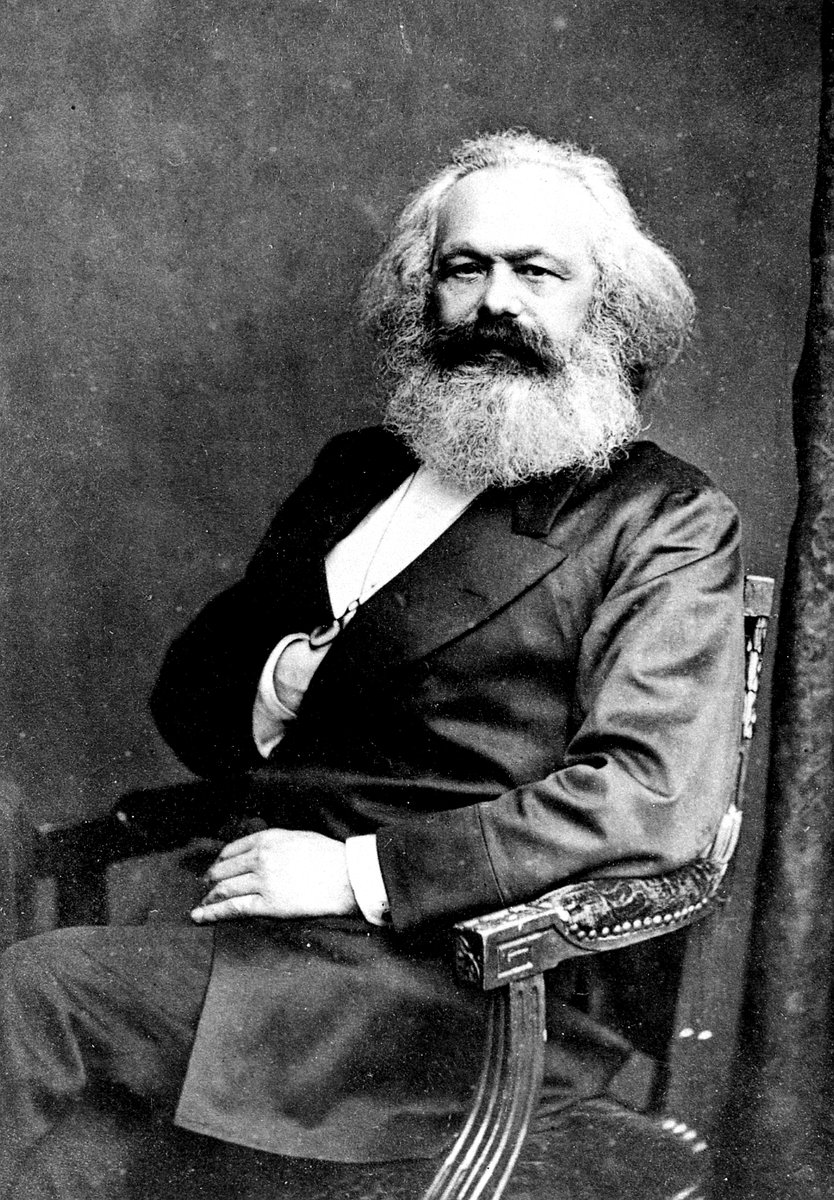
Karl Marx murió un día como hoy, en 1883.
Su obra nos ayuda no solo a comprender el capitalismo, sino también a luchar por un mundo libre de explotación y dominación. 🧵
Between 1974 and 2014, only 0.1% of publications in the top 50 economics journals were replication studies.
That's 40 years. Thousands of papers. Almost none replicated.
We've built careers on findings no one has verified.
When economists finally replicate studies, 40-67% fail depending on the study.
Federal Reserve (2015): Only 49% of 67 papers from top journals successfully replicated — even with the original authors' help.
Most papers? Never checked at all.
Here's the worst part: Papers that don't replicate get cited MORE than papers that do.
And after a failed replication is published, only 12% of subsequent citations mention it.
The profession rewards interesting findings, not true ones.
Remember Reinhart-Rogoff (2010)? "Debt above 90% GDP kills growth."
Herndon, Ash & Pollin found a spreadsheet error. Results didn't hold. But by then, it had shaped austerity policy across Europe and the US.
How many other canonical papers have Excel errors?
We replicate recent papers, but canonical findings from the 1970s-90s? Nobody touches them. Too famous. Too foundational.
The older the paper, the less scrutiny it gets. Yet these are the studies we cite most.
Maybe we should replicate backwards.
Start with the most-cited papers from 1975-2000. See what holds up.
https://t.co/AjpGF2Mrv9
“La idea de masculinidad ha estado relacionada con la de hombría. En el Japón moderno y contemporáneo, esta idea de masculinidad a menudo se relaciona con la imagen del samurái, la cual incluso se utilizó como el respaldo ideológico del militarismo japonés.”
Aquí tienen un video del mismo centro histórico pero en 1995 que nos demuestra que el problema no se resuelve quitando a los comerciantes. Hay que ir más allá.
La gente quiere trabajar pero es el sistema quien le cierra las puertas. Ese trabajo que llaman "formal" ni siquiera cumple con la LFT y la STPS no inspecciona de manera correcta para hacer cumplir la ley. ¿El resultado? Los empresarios hacen lo que quieren y hay una gran porción de la población que está quedando fuera.
Sigan pensando que el problema se resuelve quitándolos y se volverá a poner porque no se resuelve el fondo.
Paul Samuelson described John Maynard Keynes’ seminal book, The General Theory, as, badly written, arrogant and full of contradictions; and went on to add, “In short, it is a work of genius.”
Kalecki never claimed that firms can set prices arbitrarily high. What he argued is that prices are administered, i.e., set by firms as a markup over costs, within the bounds of effective demand. The key constraint is not competition in the neoclassical sense, but the purchasing power and spending behavior of the broader economy.
Firms typically target a markup (μ) over unit costs:
P=(1+μ)⋅Unit Cost
The markup reflects desired profits, market power, and industrial structure, but it's anchored in the recognition that raising prices too high would contract demand and reduce total profits. In oligopolistic markets, each firm's pricing decision depends on expected reactions of rivals and aggregate demand conditions, not on an abstract equilibrium curve.