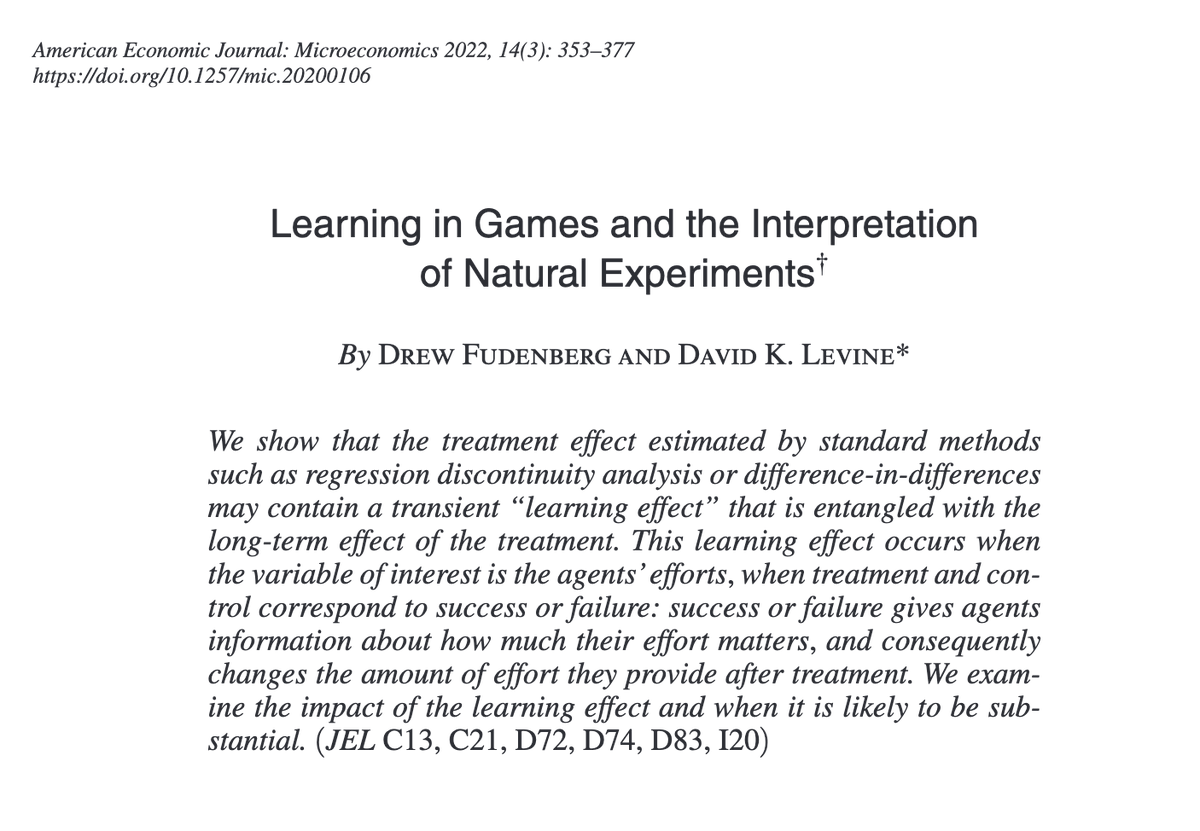
Sometimes critical replications don't replicate out of sample, even as the original paper being replicated does.
This recent AI replication of Dube Lester Reich 2010 finds our original result (comparing across border county pairs [BCP]) continues to hold with recent data through 2026, even as the gap in minimums across the border have become larger.
But when they consider the critical replication of DLR by Jha Neumark and Rodriguez-Lopez (JNR), who argue BCP comparisons are not valid and instead should look within cross-state commuting zones, they can reproduce the negative within-CZ effect in JNR's sample, in more recent years, the CZ and BCP estimates are similar and both close to zero.
https://t.co/4GKBNbxBtf
Happy that my paper w. @LobeckMax has been conditionally accepted at the American Economic Review.
We show that citizens have varying beliefs about how inequality affects society, that such beliefs differ from fairness views, and that they causally affect policy preferences. 1/6
Parental connections help young workers access high-paying jobs, reinforcing intergen earnings persistence. Just Accepted new paper by Matthew Staiger @MatthewStaiger https://t.co/lczNYdH7Cu
The same inflation news can lead professional forecasters to revise stock return expectations differently, depending on their narratives, from Christian Conrad, Julius Theodor Schoelkopf, Michael Weber, and Frank Brueckbauer https://t.co/2RxdIArmLP
This (only for nerds!) thread on mechanism design and price theory is wonderful, the reason to be in Twitter.
And there is nothing to disagree on the technical/mathematical l argument, the argument is transparent and entirely correct of course. But one thing missing (or not sufficiently emphasized) in my view, is that that the "price theory side" of the spectrum always emphasizes (see e.g. Kevin Murphy 's summer camp lecture) is that game theory based micro is concerned first with theoretical rigour and interactions between small groups of players. Most useful e.g. to think about price war between Anthropic and OpenAI. By contrast , price theory is much more concerned with the empirical application and the market context in which the interaction takes place.
Think about the Rosen-Roback model: people and firms sort across locations, and wages/rents adjust to capitalize amenities and productivity differences until utility equalizes. The model generates sharp empirical predictions about the wage-rent gradients, migration, the incidence of local shocks, all driven (as @alz_zyd_ says) by preferences, technologies, and competition.
( For those curious, here is a nice intro to the model by illustrious price theorist Ed Glaeser https://t.co/CGgqcv47iU)
This issue has to be tackled at a higher level to change the whole incentive structure.
1) abolish take-home exams university-wide;
2) supplement student evals with peer review from external experts;
3) substitute oral exams for written theses;
My latest Science commentary on something that I have been thinking about recently: Zero-sum mindsets and economic policy preferences.
https://t.co/naZCbTnfij
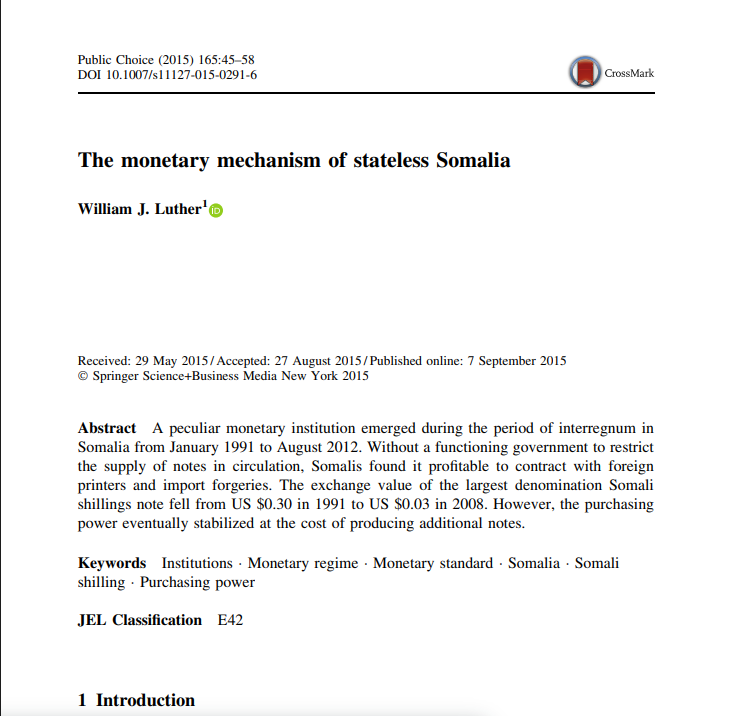
Um dos experimentos naturais mais interessantes que tivemos em economia monetária nos últimos anos foi o caso a Somália. Como funciona a oferta de moeda em um país sem governo?
Uma das coisas mais reveladoras desse experimento é a fragilidade da tese cartalista de que o valor da moeda é dado pela imposição da autoridade estatal. Mesmo sem nenhum governo para impor a obrigatoriedade de aceitação ou a necessidade da moeda para pagamento de impostos, os somalis continuaram a usar os schillings antigos.
De início muitos senhores da guerra somali e comerciantes tiveram a ideia de importar (sobretudo de Singapura) novas notas de schillings ou fabricar eles mesmos novas moedas. Como consequência a oferta das mesmas disparou, com cada novo fabricante tentando usar sua capacidade de importação/fabricação para aumentar seu poder de compra. Como consequência a inflação medida nessas notas aumentou, reduzindo o poder de compra das mesmas e desvalorizando o schilling para praticamente nada em relação ao dólar.
Quando o poder de compra dessas notas caiu ao seu custo de produção, a produção estabilizou e por consequência também o poder de compra das notas.
For EconTwitter: my better half has a delightful JEP paper on the Bayesian Bootstrap and why you should use it more. It has a surprising number of exclamation points for him, which I guess I should attribute to his more fun coauthors.
https://t.co/r5EVdzllgz
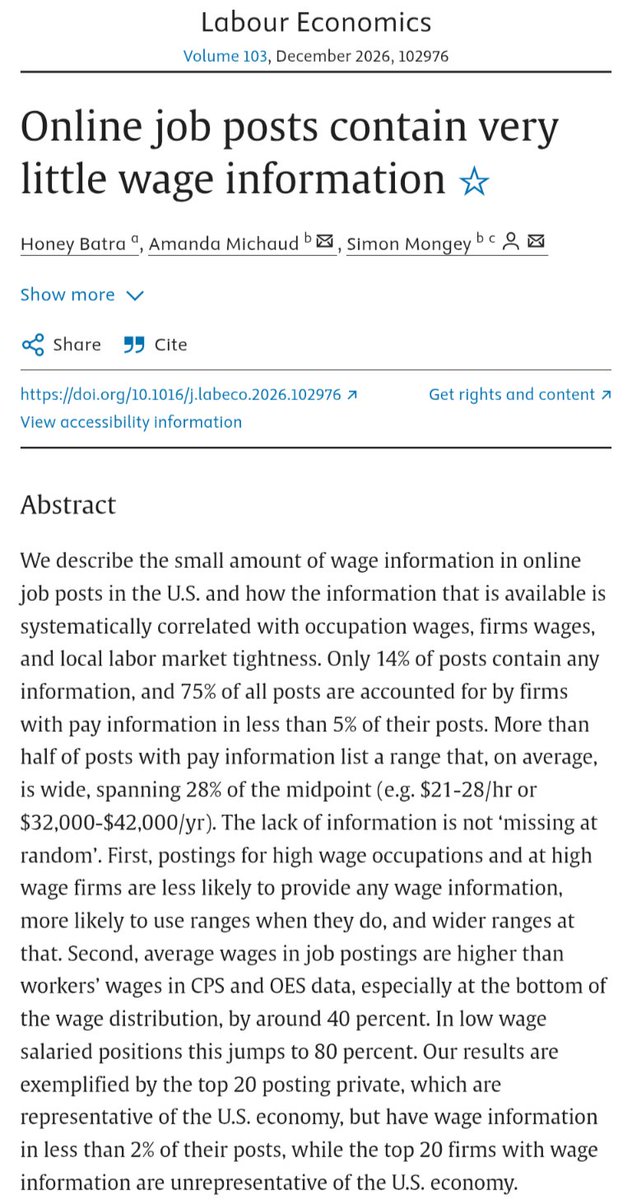
Our paper on the availability of wage information in job postings is now in Labour Economics. Data is high quality and tells an important story: employers really don't tend to include wages in their ads. Important facts for thinking through how labor markets work.
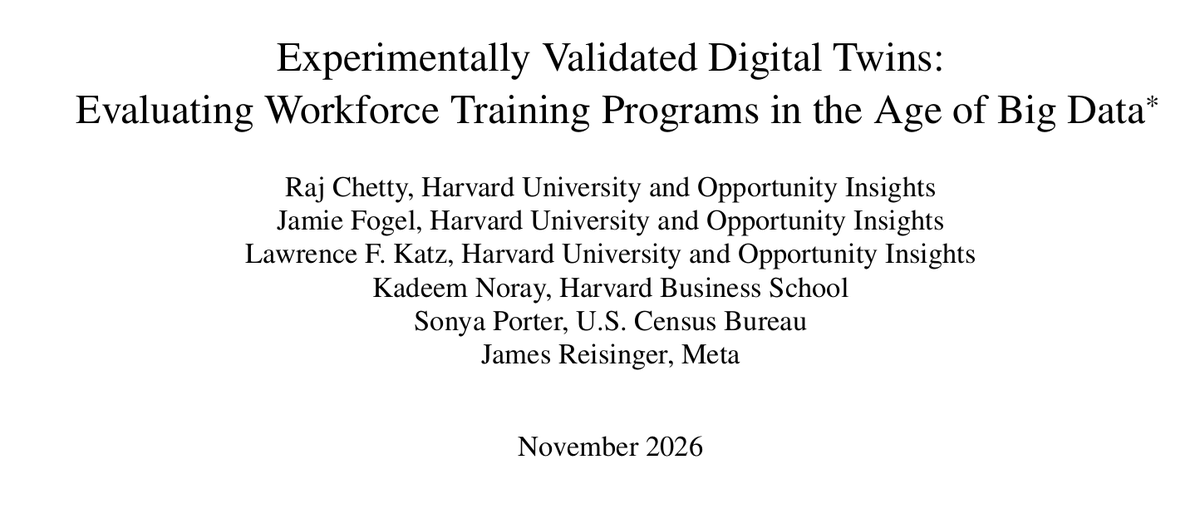
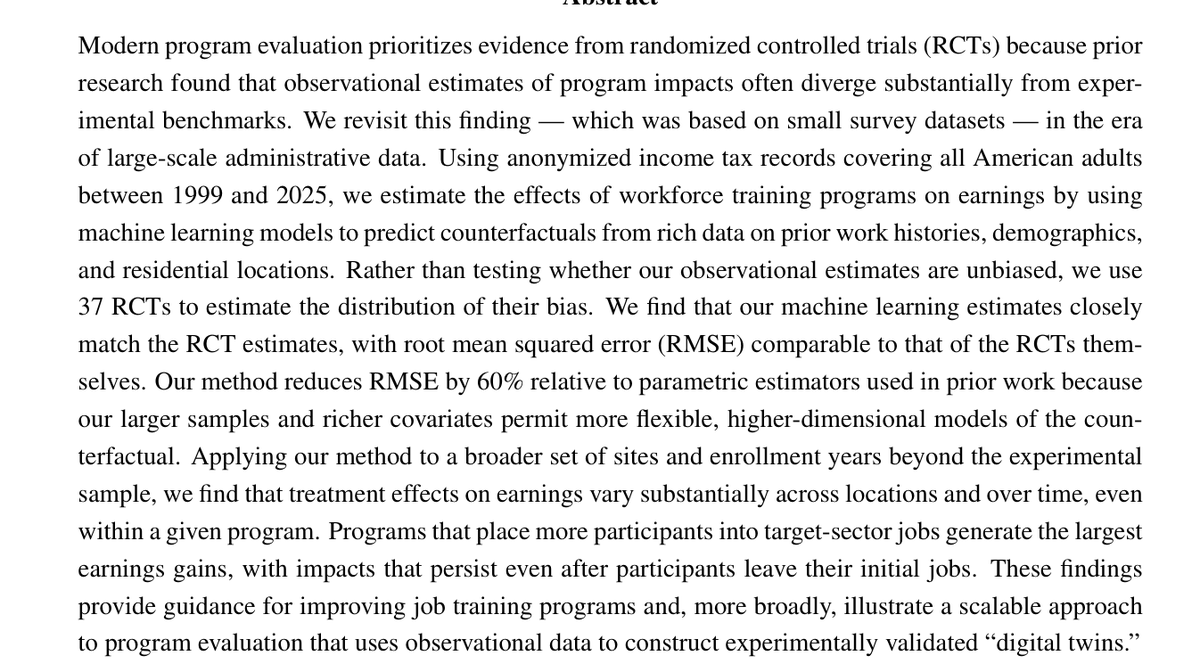
Amazing new paper by Chetty and the Opp Insights team — digital twins can recover causal effects
They validate the digital twins (ie rich ML applied to generate counterfactuals from lots of covariates) with RCTs, allowing for scalable program evaluation
https://t.co/9QCEEKiiWA
Why does economics work with utility functions, and not just decision rules? The key trick is the use of the mathematical technique of Lagrangians to solve the age-old philosophical "is-ought" problem
One of my favorite papers in the LLMs & Social Sciences literature is Ashokkumar et al. which shows that LLMs (GPT-4) asked to simulate how people respond in survey experiments is predictive of actual trt effects & the result is not likely to be memorization; their data & code are public and I used it to do a follow-up w/ more recent models 1/
And Brazil defeated extremism, guns, environmental destruction, militarization, democratic threat, and organized crime ruling politics. It’s not going to be easy for Lula, he will need to do a very different government, but what a beautiful mobilization of civil society
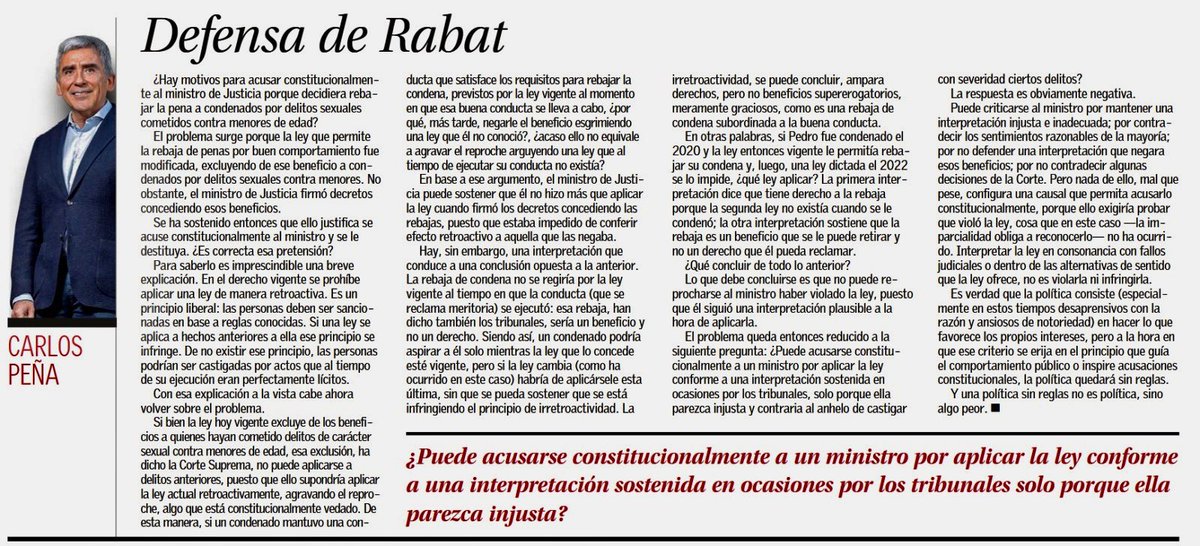
El rector Peña, una vez más: “Es verdad que la política consiste (especialmente en estos tiempos desaprensivos con la razón y ansiosos de notoriedad) en hacer lo que favorece los propios intereses, pero a la hora en que ese criterio se erija en el principio que guía el comportamiento público o inspire acusaciones constitucionales, la política quedará sin reglas. Y una política sin reglas no es política, sino algo peor”.
This is a good question.
So labor economics circa 2026 reflects insights from institutionalist and heterodox ideas from 1950s, 1970s, 1980s that were neglected for many years in mainstream economics at the time.
This includes the ideas of wage contours, segmented labor markets, contested exchange. (Even as these terms may be unfamiliar to many labor economists today.)
Part of the empirical turn in labor economics is that we today are much more attuned to realistic aspects or wage setting, and can incorporate insights from a variety of sources that were ignored at the time.
I write about this in my book, The Wage Standard.
I keep seeing people run all sorts of documents through Pangram and get outraged when they come back as AI-positive. I feel like I’m starting to lose sight of what we’re trying to achieve here. Is the outrage always warranted? 1/