Unexpected residency vacancies test a program’s flexibility, judgment, and preparedness, yet they also offer an opportunity to strengthen systems and reaffirm core values https://t.co/TsFnw0i9hP #MedEd
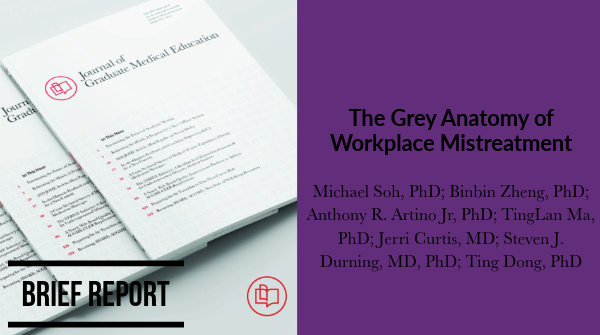
Grey mistreatment experiences, ambiguous in isolation but potentially harmful when repeated frequently, were more strongly associated with resident well-being and burnout than explicit mistreatment. https://t.co/hjyNAXYdha #MedEd
Effect sizes translate statistical significance into meaningful educational impact but are often not reported in manuscripts https://t.co/fdDsnktIff #MedEd
The prevalence of large language model-associated words rose substantially in the 2024 application cycle, while changes to linguistic complexity, personalization, and topic diversity were modest https://t.co/TfOZc684Gr #MedEd
Transitional Year residency programs maintain common foundational clinical training while varying substantially in curricula and administrative support, underscoring the need for further research on how these differences affect resident preparedness #MedEd https://t.co/NEsvREsPXN
AI scribes may reduce documentation burden and free residents to focus on patients, but they may also remove opportunities to develop clinical reasoning https://t.co/SX5y8kxEDj #MedEd
Our October issue is out. Find articles about ambient AI scribes, gaps in effect size reporting, the state of the transitional year and so much more https://t.co/GXS2PpZ6Oe #MedEd
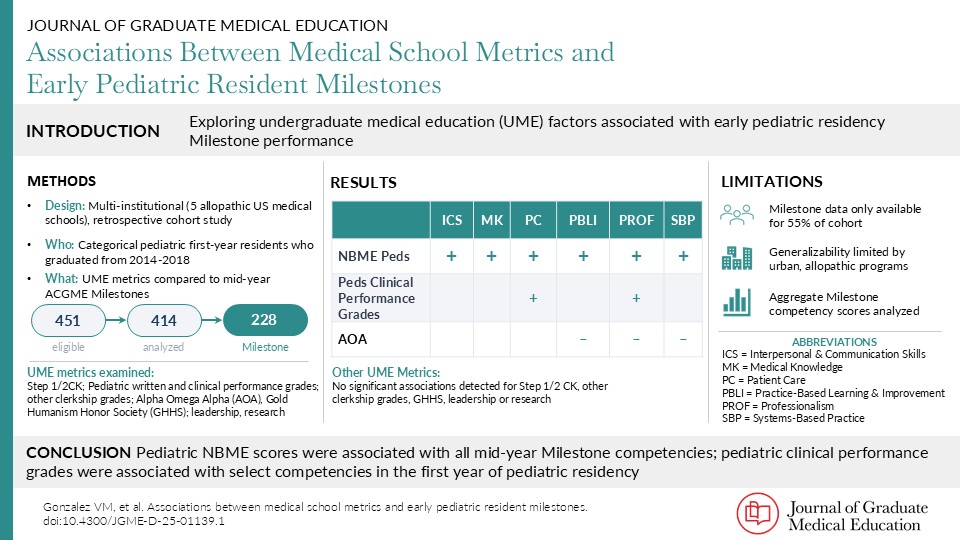
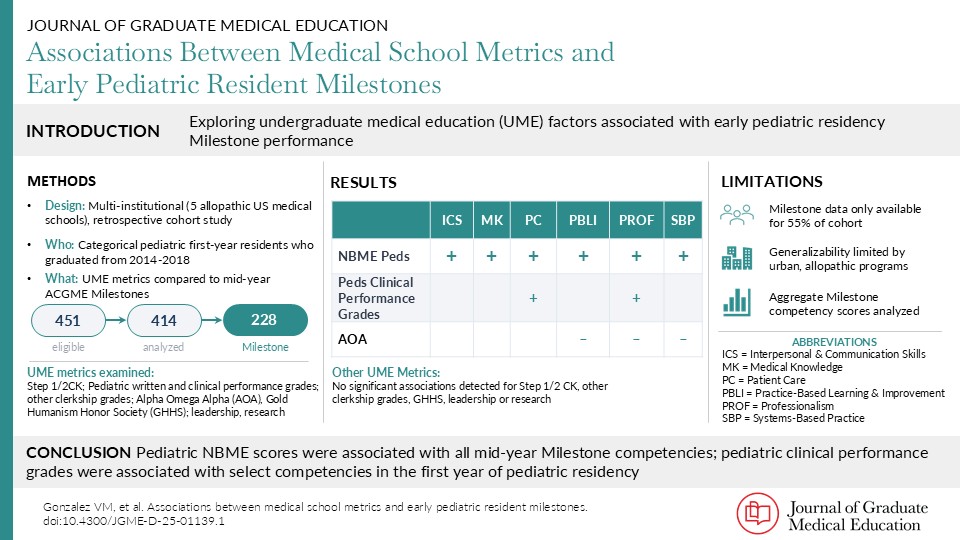
In this study, authors found the National Board of Medical Examiners Pediatrics Subject Examination score was the only measure significantly associated with Milestone performance in the first year of pediatrics residency https://t.co/PSVjEDXKCf #MedEd
Local pedagogical practices are often misread as deficits when measured against “universal” standards. Recognizing the Veneer and Core of each culture enables genuine cross-cultural learning https://t.co/REtbPcvHzV #MedEd
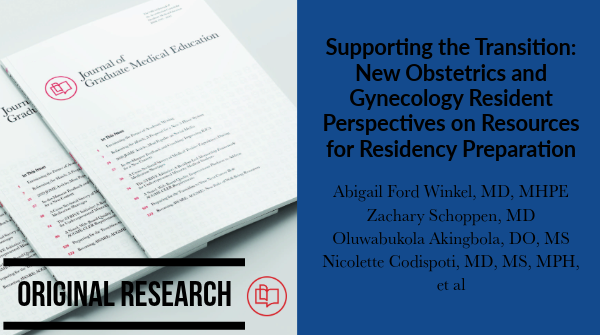
Tailoring support strategies to align with learning goals may enhance the effectiveness of transition resources and promote early resident growth and well-being https://t.co/WrR2brS7ai #MedEd
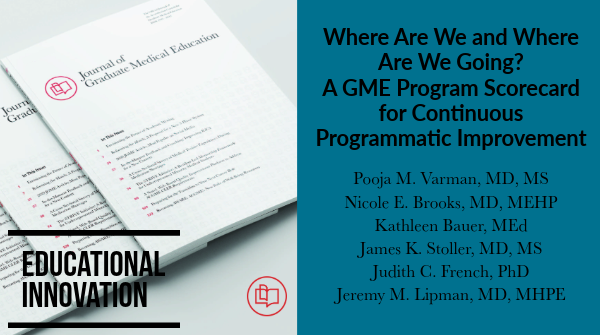
A GME Program Scorecard can be feasibly implemented and offers an opportunity for more streamlined outcomes evaluation and continuous quality improvement for GME programs https://t.co/gshFsGaWXW #MedEd
A locally developed dashboard can be feasibly implemented and offers an opportunity for more streamlined outcomes evaluation and continuous quality improvement for GME programs https://t.co/gshFsGbuNu #MedEd
The goal of globalized GME should not be to enforce a single metric of psychological safety, but to develop the capacity to navigate multiple cultural codes https://t.co/QcJRXcFbpR
Pediatric National Board of Medical Examiners scores and clinical performance grades were associated with either all or select midyear Milestone competencies in the first year of pediatrics residency https://t.co/PSVjEDXcMH #MedEd
Program leaders looking to optimize learning environments can consider using this concise tool with early validity evidence that offers a practical way to assess psychological safety in GME settings https://t.co/suVObaSXlc #MedEd
In specialties with high application-per-applicant volume, a high-signal approach is associated with reduced application numbers and associated costs https://t.co/jkU9pVEyt1 #MedEd
Cultivating a trainee’s ability to recognize their limits and articulate the need for support should carry the same weight as mastering procedural skills https://t.co/sd3iAjPhOo #MedEd
In this episode, JGME Editorial Board members discuss articles from the August 2026 issue of JGME. Hear about topics such as using humor in teaching, survey tools, psychological safety in GME, preference signaling, and more https://t.co/LBQUAKCQkS #MedEd
AI-enabled analysis of clinical notes, electronic health records, and narrative assessments can give GME programs valuable new insights into resident learning, but its outputs may be misleading, inequitable, or disconnected from what trainees learn https://t.co/TqYrOFtlj3 #MedEd