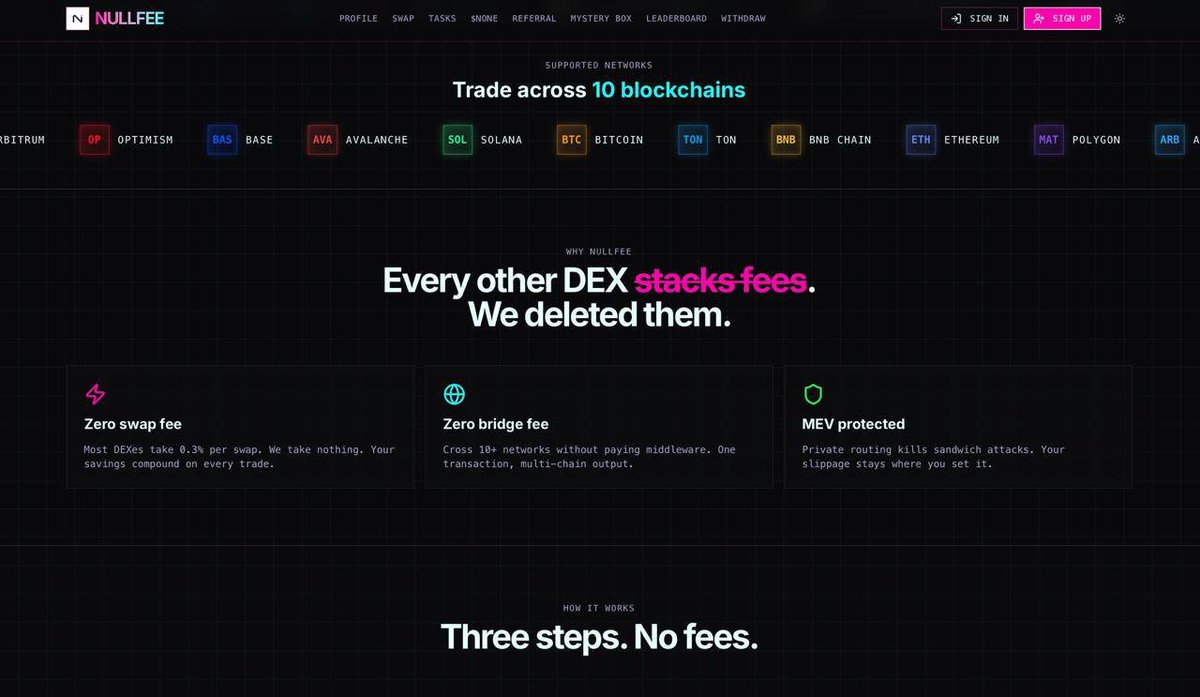
THE NEXT PHASE OF NULLFEE STARTS THIS WEEK.
The upcoming trading terminal is not just another feature.
It is the next layer of the ecosystem.
•••
For beginners:
A place to learn.
Practice.
Build real trading skills.
The terminal is designed to become an entry point where new users can sharpen their trading abilities before entering deeper ecosystem layers.
•••
For experienced traders:
You will be able to prove your skill immediately.
Without waiting for the full ecosystem launch.
Without waiting for the $NONE token launch.
Trade now. Compete now. Earn now.
Real performance will be rewarded with BNB.
•••
Our goal is bigger than building another platform.
NullFee is becoming a place for hundreds of thousands of traders.
From newcomers learning markets for the first time…
To experienced traders competing for rewards.
•••
And there is one more thing.
A unique upcoming feature: Capital Marketplace.
Users will be able to receive trading capital from other participants:
• No collateral.
• No obligations.
• Trade with allocated capital.
• Share profits with the capital provider.
A new model where traders bring skill.
And capital providers bring liquidity.
•••
This is not just a DEX anymore.
This is becoming an ecosystem.
And $NONE will become one of its core layers.
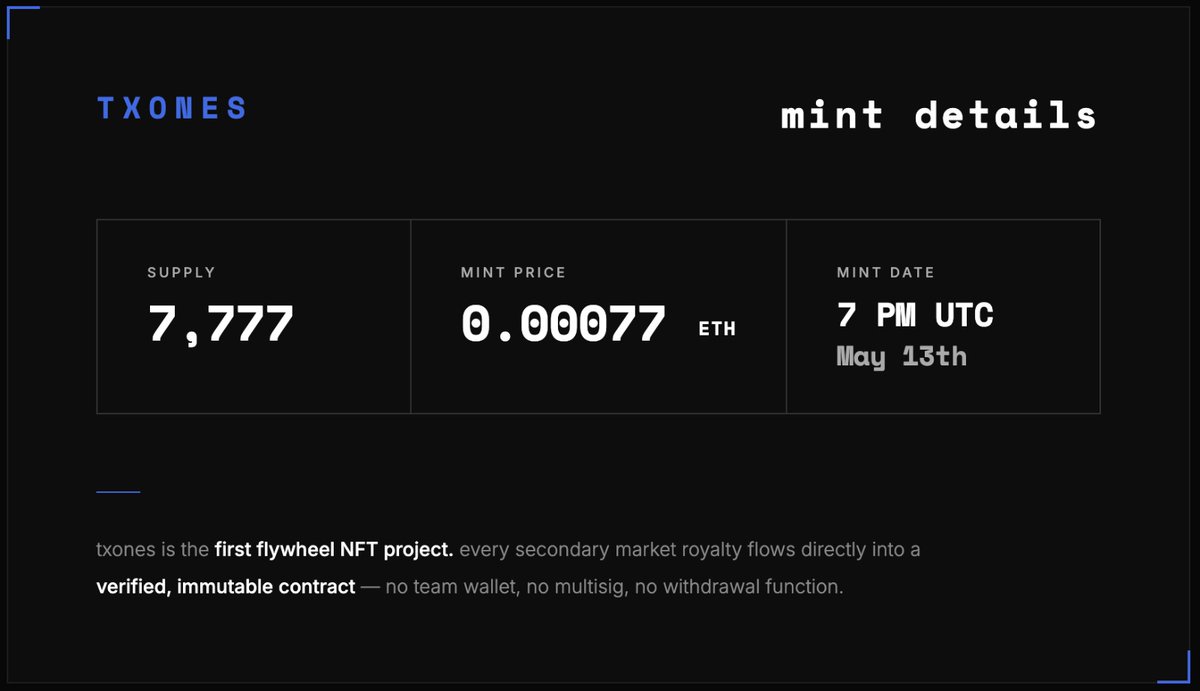
Modulo is dropping this month
-Fully on-chain collection
-Real-time Interactive app
-Burn-to-mint animated composition
-Up to 8 users per composition
-HTML/JS renderer on Ethereum — paste any tokenURI in a browser, it runs
-0.0069 ETH
More info https://t.co/hceYZ4KKPf
Drop your wallet bellow
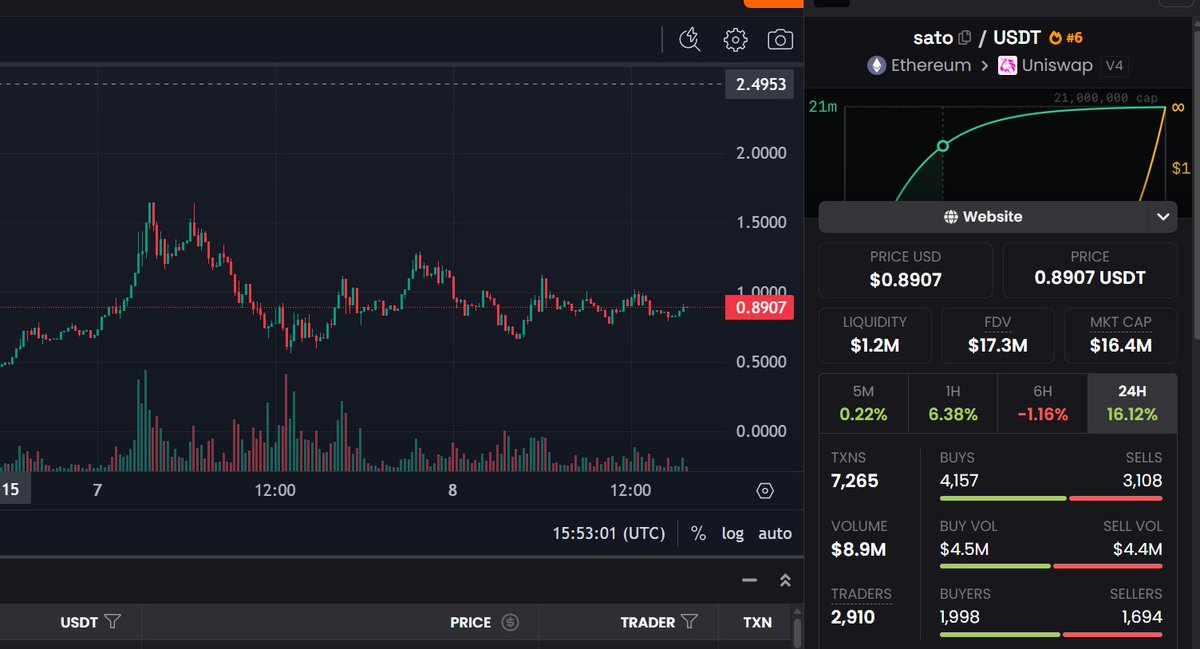
$SATO vs $DATO ( MAX ENGAGE SO EVERYONE SEES THIS )
I built $dato to solve the core flaws in the original $sato model.
Instead of minting and burning directly against circulating supply, users mint $dato from trading fee revenue.
Every trade generates 4% fees in $SOL and $DATO.
Those fees flow directly into the hook pool.
Users then mint $dato from the hook pool according to the bonding curve, while the accumulated $SOL becomes the reserve backing.
This creates a much more stable system because reserves come from real trading activity rather than pure speculative inflows.
According to AI security research, the original $sato design is vulnerable to 3 major issues:
1 Bank run risk ( reserves running low )
2 MEV bot exploitation ( ETH stuff )
3 No external price balancing ( isolated synthetic pricing)
$dato introduces a revenue-backed reserve model designed to reduce those weaknesses significantly.