November 12: Jensen Huang resigns as Nvidia's CEO.
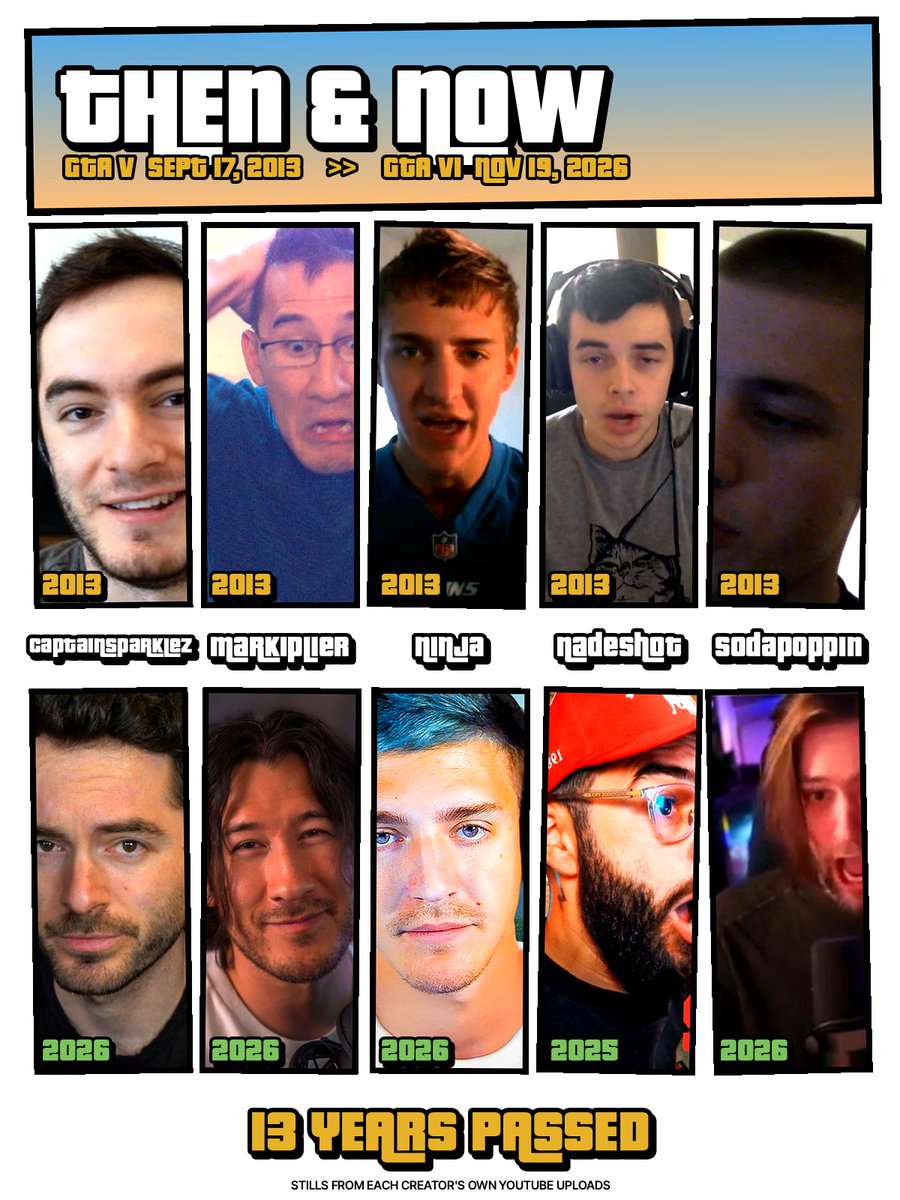
November 19: GTA VI comes out.
November 23: Nvidia's board votes unanimously to bring him back.
Officially, he left after reports of an affair with a woman US officials suspect of spying for China. Now the board says it is "confident" his return "poses no national security risk," based on input from "senior levels of the United States government." Its investigation is still running.
Trump says he talked to the board "directly and indirectly."
Huang: "I am honored to return to NVIDIA."
Unofficially, I have no evidence that he spent the week and a half in Vice City. I also have no evidence that he didn't.
Resign, wait for the biggest game launch ever, beat it, come back. Rockstar says GTA VI made $3.79 billion in its first 24 hours. Perfect timing.
Would you take a week and a half off for GTA VI if you ran Nvidia?
In October 2023, six federal special agents watched an orange light over a sensitive national security site in the western US. It glowed for a second or two, released two to four smaller red lights and vanished. Then it did it again. For several hours.
The Pentagon's UFO office, AARO, calls the case "orbs launching other orbs." Its director, Jon Kosloski, signed the latest update on June 5, 2026. Status: unresolved.
His office thinks military flares could explain about 60% of what the agents saw. Flares don't explain one red orb that stayed "stationary above a ridgeline for several hours."
The other 40% is filed under "unrecognized technology," marked pending. The memo says what that rests on: witness testimony and ruling other explanations out. No technical or physical evidence.
Nobody filmed it. "The reporting agents did not collect video footage, photographic imagery, or other technical data."
It's one of hundreds of files the Pentagon has published since May 8, in seven releases under Trump's PURSUE order. The latest, on October 23, added a 2002 Roswell affidavit about bodies under a tarp, an account first printed in a book in 2007.
Six trained agents, hours of sightings, no footage.
Would you believe them without a single frame?
Eva Elfie and her partner Artyom were paid $200 for their first scene together. The usual minimum for that kind of scene was $500. Her solo shoots paid $50, against a $150 minimum.
In the video below, she explains how they went from underpaid newcomers to around $170,000 a month.
Studios lowball newcomers, she says, and she had nobody in the industry to ask. Other actresses wouldn't say what they earned, as if it were a secret. Her answer to that: every performer who works for less drags the rate down for everyone, because studios start hiring at the lower price.
They started flying to Europe to shoot for different studios. Artyom is reserved and found it hard to work with a professional crew. He asked why they should travel to shoot someone else's script. Why not film themselves and upload to Pornhub?
It worked better than they expected. They spent less energy because they set their own working conditions.
"You can put in the same effort and make two to three times more by working for yourself."
Most actresses don't, she says, because then the filming, editing and lighting are on you, and so is finding the people. "It's easier for them to just show up, do the work, get paid, and leave."
Before all this, Artyom worked as a lawyer. His salary was somewhere between $250 and $300 a month.
Asked what they make in a month now: "On average, I think around $170,000."
$200 for a first scene on someone else's set. $170,000 a month once they ran the camera themselves.
Would you take on the filming, editing and lighting yourself for two to three times the pay?
For $200, Jensen Huang bought a stake in Nvidia he puts at "15%, I think it was 20%."
33 years later, on November 12, he resigned as its CEO.
The video below starts at the end and goes back to the beginning.
1963: born in Taiwan. Later in the US: a national ranking in table tennis, washing dishes at Denny's, college at 16, then chip designer at AMD.
1993: Nvidia is founded.
27 years ago: Nvidia goes public. The company puts him up in a London hotel. "It was the first time I ever had a butler."
"Didn't know how to write a business plan." And now? "Still don't know how to write a business plan."
October 2026, on his Europe tour: "I don't have a plan. I'm not trying to get anywhere."
Asked if the AI industry depends too much on one company: "They don't depend on us. They choose us. We came from nothing and we have to earn our keep every day."
Asked who comes next: "I'm really hoping that the next CEO of the company is already at the company." Then: "Just as I can be fired, the next CEO has to be hired. And I like it that way."
Weeks later he admitted to an extramarital affair, after reports that he had been targeted by a woman US officials suspect of spying for China. Nvidia and the US government opened investigations. CFO Colette Kress is now interim CEO.
A $200 stake, 33 years in charge, and no named successor when the job ended.
Should a company this size have a successor ready before it needs one?
Mia Khalifa was the number one performer on Pornhub, with hundreds of millions of views. For all 12 of her videos, she was paid $12,000 in total.
In the video below, she explains where that left her, and what she does differently now.
The BBC interviewer puts it plainly: $12,000 for her, millions for BangBros and Pornhub. Her answer: "That's just how it is. I'm not the only one." She was 21, with no manager, no agent and no advisers. No residuals either, however popular the videos became. Asked if that's still how porn contracts work: "Absolutely. For everybody."
After she quit, she worked as a paralegal at a law firm, then as a bookkeeper at a construction firm. She lived in a $500-a-month efficiency, "cockroach-infested", while people online accused her of lying about her earnings.
"Everyone thinks I've made it. I don't have shit to my name right now."
In 2020, after the Beirut blast, she joined OnlyFans with one goal: make $100,000 and donate all of it. She reached it and stayed.
The difference, she says: "No contract. You own all of your own content." The production company still owns everything she shot for them, under what she calls an "exploitative standard contract that gets put in front of every single girl."
$12,000 for videos that made millions for someone else. Now no contract, and every file is hers.
Would you give up a studio's reach to own everything you make?
@Zhirapchus hey man, find ur post very interesting, but what you think: could this marketing strategy work for any business, or does it only work because of the controversy?
Cory Chase has made porn for over 20 years, and she runs her set like a shift schedule. Paperwork is printed before talent walks in. The shot list is already in their inbox. If she's kept waiting, she cancels. Then she shot a scene for a mainstream TV show, and 15 seconds of it took four hours.
In the video below, she walks Bree Mills through her production day like an operations manager training a new hire.
Bree asks what she's picked up from other companies' sets. The nifty stuff and the cringe.
Her answer is two words. Time management.
"I don't know how many times I've been on set and I'm just sitting there twiddling my thumbs."
So on her set, nobody waits. Talent shows up, and the paperwork is already printed or emailed. They collect IDs. She pre-fills forms while everyone chats, so nothing gets filled out wrong. "I've learned a lot through paperwork."
The shot list went out to the performers before the shoot. They can chat a little, but she's upfront about it. Getting to know each other happens after they're cut, over dinner if they want.
"We have a job, we have a schedule. The work is work."
Then Bree brings up Billions. Cory did a scene for the show with Lisa Ann and Rayveness. How does a mainstream set compare to an adult one?
"It's all the same. Honestly, all the same."
There was paperwork there too. It was wrong, and she had to deal with it.
They shot in a tight hotel room. Two cameras could have covered it from both angles at once. Instead the crew tore the cameras down, reset the room and flipped it around. Start to finish, with hair, makeup and wardrobe, that 15-second scene took four hours. A lot of what they shot never got used.
Her discipline comes from the Army and the National Guard.
On time for formation means 15 minutes early. Then you stand around for two hours. She hated that in the military, and she hates it on set.
"So if I'm waiting on you, most likely I'm going to cancel on you."
She and her husband have produced their own content since the early 2000s. They're the producers, the camera crew and the performers. On their set, every idle hour is theirs to pay for, and the shot list goes out before anyone shows up.
Have you ever worked somewhere small that ran tighter than the big name down the street?
Public trades can suggest a strategy. Testing it requires explicit rules.
ROC, ATR, Aroon, Claude, Grok, and Horizon: a practical workflow from dataset audit to backtesting and paper trading.
Includes prompts, timing rules, sizing examples, and four stress tests:
https://t.co/EUtDx6CmXe
51,333 tokens launched on https://t.co/3IHwaG7cc8 on Oct 27. 952 left the curve. one in 46.
the other 45 all had a moment where they looked like the next one - and someone decided in 4 seconds.
the case file: standing orders, a 60-second autopsy with Claude, the curve as a map, a read-only scanner, the Sunday review. Claude analyzes. you click.
full file ↓
https://t.co/dGHPbTTB8U
your agent isn't slow because the model is weak. it's slow because it's operating software one click at a time.
every click is a round trip: screenshot in, decide, act, screenshot in again. forty clicks, forty inference passes.
the fix Anthropic's own engineers published is a script layer:
> READ - the task turned into what has to change, not into UI steps
> WRITE - one script against the document instead of forty clicks
> RUN - the loop executes inside the app, at native speed
> CHECK - the result held against the task. exit code 0 proves nothing
> KEEP - passed scripts saved, so a repeat job generates zero tokens
their numbers: 150,000 tokens down to 2,000 on one workflow, -37% on complex research. an independent re-test got -78.5% input tokens - and 7% slower wall-clock, which is the honest part
the stage everyone skips is CHECK. a script that runs clean can still recolor the wrong layer
think once. run at machine speed. keep what worked.
the full breakdown, with the diagrams ↓
https://t.co/b5HE2nrjNL
AI work stopped being a prompting problem a while ago lol
karpathy's loop ran ~700 experiments in 2 days and kept 20 real improvements. one of them was a scaling bug no reviewer would have flagged.
the interesting part isn't the agent - it's the gate around it:
→ GOAL - one job, one mechanical finish line
→ WORK - the agent attempts and writes evidence
→ VERIFY - a script decides, not an opinion, not a second agent agreeing
→ MEMORY - each failed attempt written down once, never paid for twice
→ STOP - a hard budget, not vibes
the real engineering problem isn't making the model smarter
it's designing the environment where a wrong answer has nowhere to hide
in that setup the loop doesn't need supervision - it needs a scoreboard
no dashboards. no ten-agent orchestration. three files and a verifier
prompt engineering still matters. it's just becoming one stage inside something bigger
the full build below ↓
https://t.co/Yi4PL9kZ6M