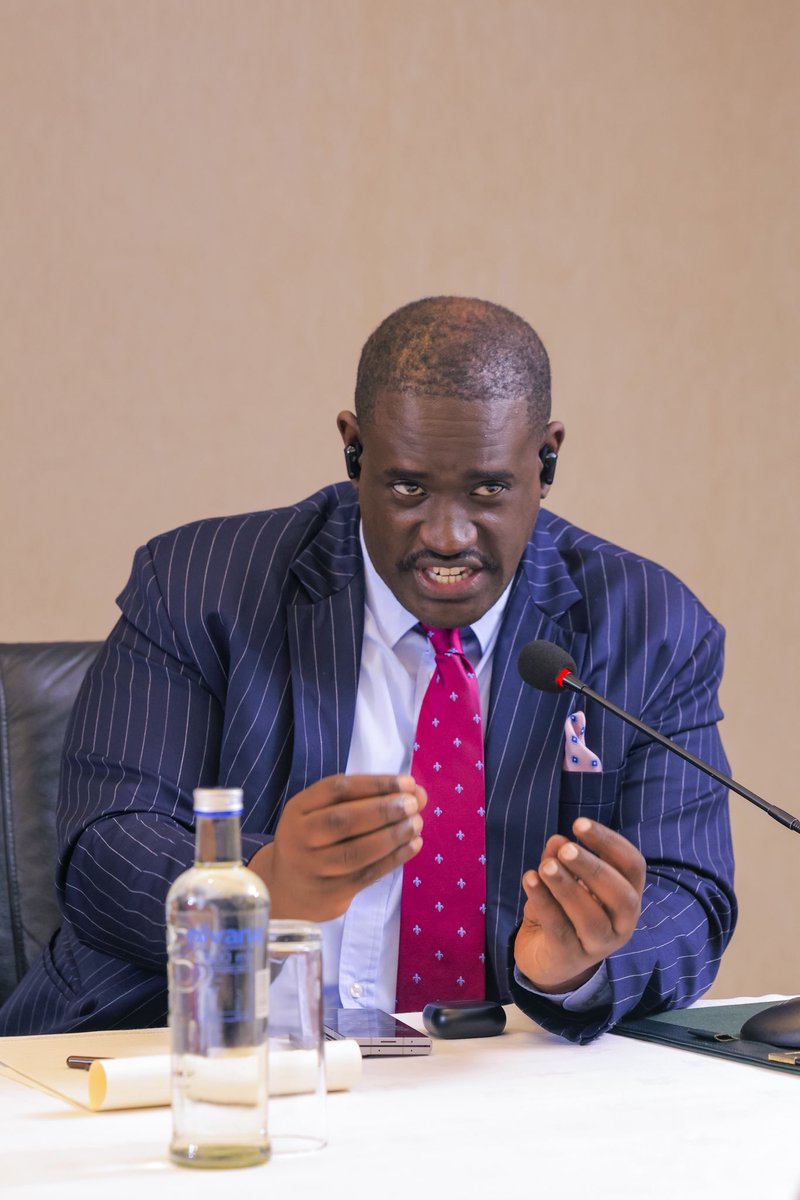
In Mitooma, we found a butcher facility that reportedly cost Shs70 million, built next to a full pit latrine with flies and faeces all around it. We also found a health centre built six years ago that has never had a doctor or medicines, yet the system shows that drugs are being supplied.
Land is not just property it is security, wealth and a key factor of production. A kibanja does not simply “become” a kibanja. It can arise through recognised arrangements such as a licence, inheritance or a gift. Understanding the history and legal basis of kibanja ownership matters.
We may have different challenges like double titling, cancellation of titles, and others but as practitioners, our focus should be on finding solutions.
We must protect the rights of registered proprietors while also addressing the risks and potential damage if these issues are not properly mitigated.
The bigger question is: What is the sector’s vision, and where do we want to go in eliminating fraud and creating a risk free title register?
That is why the vision set for the registration of titles through blockchain technology and the e-register is so important.
The conversation should not only be about the problems. It must be about the solutions.
From struggling to find a job after LDC to volunteering at FIDA, then becoming a legal officer, advocacy officer, and later a criminal justice advisor within government,
@asiimwe4justice reflects on her journey through civil society and government, and the experiences that shaped her work in advancing women’s rights and access to justice.
“Resistance is as human as everything else we do.” Jackie reflects on why resistance to feminism should not be surprising and how it can create space for deeper questions and conversations.
"When you oppress others, you are inadvertently oppressing yourself."
Leaders stop carrying what doesn't serve you. Let it go. The mountain will take care of it.
"Real estate is only 4.8% of our portfolio. Interestingly, we get the most headache from real estate because it is very visible. But it is the smallest part of our portfolio."
Patrick Ayota, Managing Director @nssfug speaking @JSConversations@elisonk
Did you know that NSSF Managing Director Patrick Ayota is from Nyemunyemu Village in Tororo District, Eastern Uganda?
He tells us more about his roots, https://t.co/rb4SLgp9Fk
If you earn UGX 1 million a month, the law requires your employer to withhold UGX 50,000 (5%) and remit it to NSSF. The employer also contributes 10% another UGX 100,000.
That means UGX 150,000 is credited to your NSSF account.
Your employer’s 10% contribution is yours from day one.
It does not make sense. It does not stand up to scrutiny. Inflation is rising, fuel prices are going up, and the cost of living is increasing. Yet these foot soldiers, as I have told you, do 70% of the work in internship centres.
This is not because we are absent, as has been alleged, or because senior doctors are walking away from their responsibilities. No, that is part of the training process. There is no patient who will not be seen by me or under my supervision.
You know, people misunderstand us. We operate much like the army and other institutions, where junior officers can carry out duties under your authority. You do not have to handle every single task yourself or go through all the paperwork all the time. Otherwise, you would lose your mind. When would I have time to come to a talk show like this one? When would I attend meetings?
I can only make time for engagements like this because my intern is on the ward, my senior house officer (SHO) is on the ward, and my junior consultant is on the ward. That allows me to attend to other responsibilities. That is how the system is designed, and it is part of the training. I am not absent; I am present.
My concern is with my colleagues in the Ministry of Health, particularly
The problem is that they are not engaging in meaningful dialogue. They sit and wait for a hailstorm to hit them, then react by saying, “Oh, it’s raining! Are those stones? This is a hailstorm!”
First, they license universities. During the licensing process, the government not necessarily the Ministry of Health alone sets the number of students each university is allowed to admit.
But what benchmarks inform these decisions?
Let me give you an example, without mentioning the university. One university had been admitting 200 students, but its admission numbers were reduced to 60. What was the rationale behind that decision?
We are saying that these decisions should be based on clear criteria, including the number of lecture halls, the availability of lecturers, and the number of cadavers available for medical training.
Ideally, the ratio should be about four to six medical students per cadaver, with a maximum of eight students per cadaver.
“Surrender can also be a tactic.” Dr. Frank Asiimwe Rubabinda reflects on the doctors’ demands, the wins achieved on deployment and payment of private students, and the ongoing court battle over internship pay for medical graduates who previously worked as nurses.
Jane Okot P’Bitek Langoya, Chairperson of ICSA Uganda, shares how Professor Joe Oloka’s lectures on Company Law sparked her fascination with the role of a company secretary. After a brief experience in litigation at Egonda Ntende & Company Advocates in Jinja, she realised that court practice was not for her and decided to pursue a career in the corporate world. watch Full Video 👉 https://t.co/b7Jp9EtHbB
A Mercedes Benz took all my money! 😂 Don’t buy a car whose spare parts are hard to find locally. Always consider the availability and cost of spare parts before purchasing a car.
A measured apology can save a deal, preserve relationships and open doors. In the legal profession, how we speak and treat one another matters. Remember, today’s opponent may be tomorrow’s most important connection. Choose your words wisely.
#JSC#TheLawyersLawyer
Have We Lost Something Valuable in Supreme Court Practice?
@RKirunda reflects on oral arguments, mediation and the changing realities of litigation in Uganda.