Pillar #4: Consolidation
New learning is initially fragile and must be consolidated into long-term memory to last. The primary mechanism is sleep: during sleep, the brain replays the day's learning at up to twenty times the speed of the original experience, transferring fragile new memories into stable long-term storage. Dehaene cites Jan Born's experiment in which participants who slept after learning a complex algorithm were twice as likely to discover a hidden shortcut as those who did not—sleep produced genuine insight, not merely retention. More instruction does not accelerate consolidation. Time, sleep, and spaced retrieval do.
"When you're building championship habits, it's very boring and it's very meticulous. It's frustrating at times, but it never changes. We continue to do what we do, continue to build those habits.
Nothing changes from the first round of the playoffs to the Finals. We know we got to be locked-in, focused, have attention to detail, physicality, a sense of desperation. It's been like that for every single series, every single game of these playoffs and it doesn't change now that we're in the Finals."
- Josh Hart
I don't watch every Knicks possession, however...
I've noticed several times this postseason that when Jalen Brunson makes a mistake, and even when his teammates make a mistake off one of his plays (e.g., missing an open lob), he doesn't berate them or roll his eyes. He immediately turns around and runs back on defense.
Total focus and emotion devoted to the next play.
Love his mistake response.
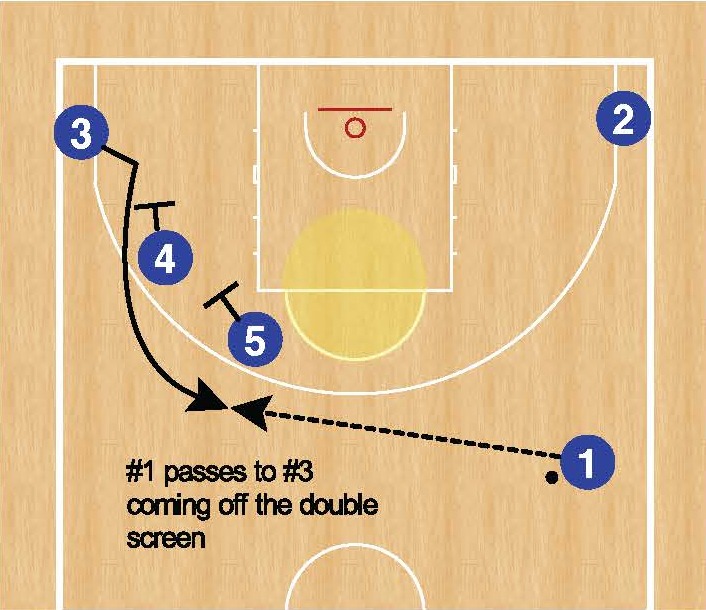
Slice Stagger is a classic action - 3 ways to score
The slice compresses the defense, the stagger expands it
Working slip options off the stagger adds legs to the concept
Switching can shrink the game fast.
The best offenses don’t just “get the matchup” and wait. They create the switch, organize the floor, and attack before the defense can load, scram, or triple switch back to neutral.
This week’s SG Deep Dive: attacking switches with seals, stampedes, clears, flares, pitches, short rolls, and corner skips.
Plus: how to teach the story behind the action so players understand the problem, not just the pattern.
🎧 Listen now https://t.co/0OkZ1HaiAT