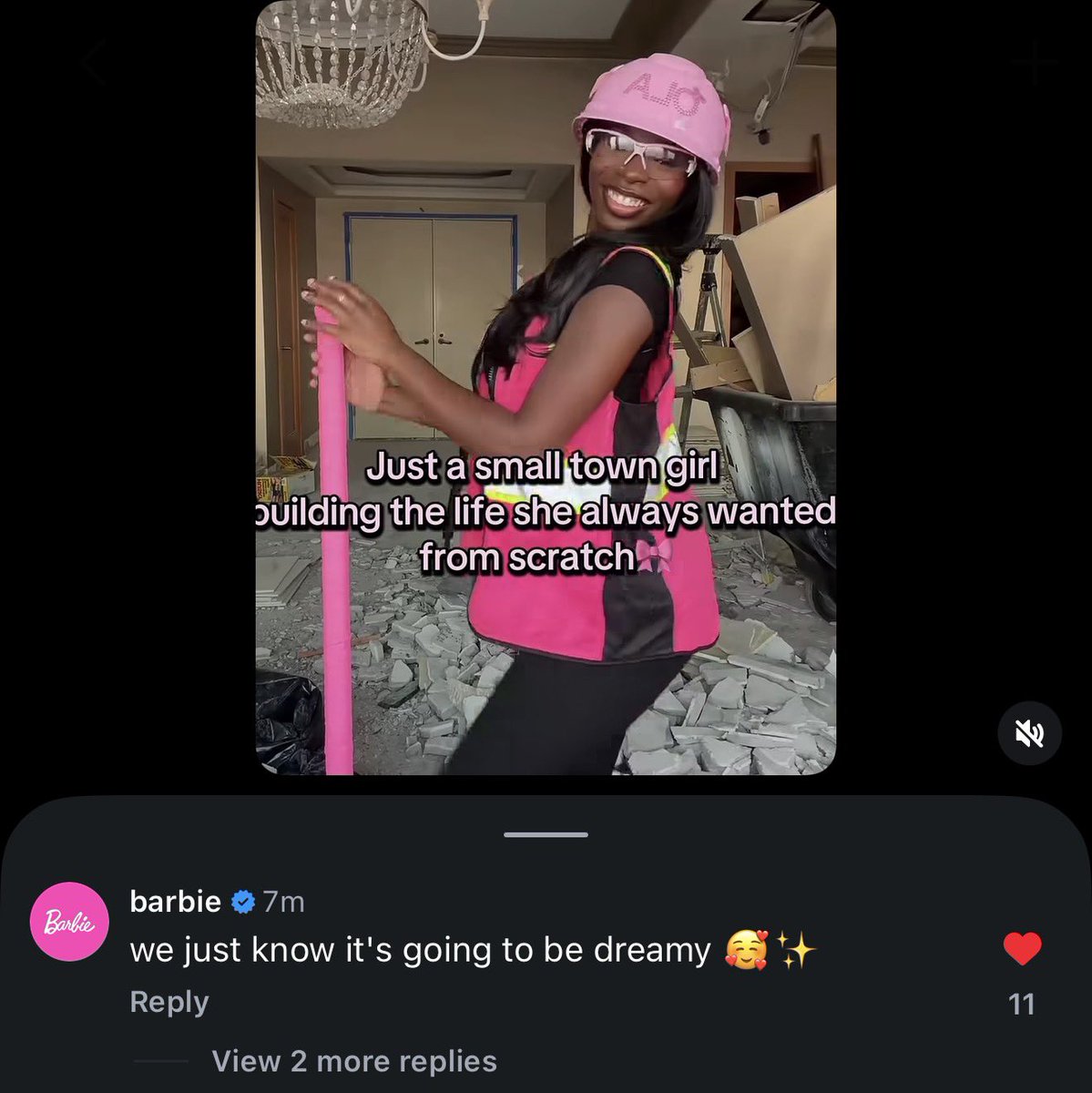
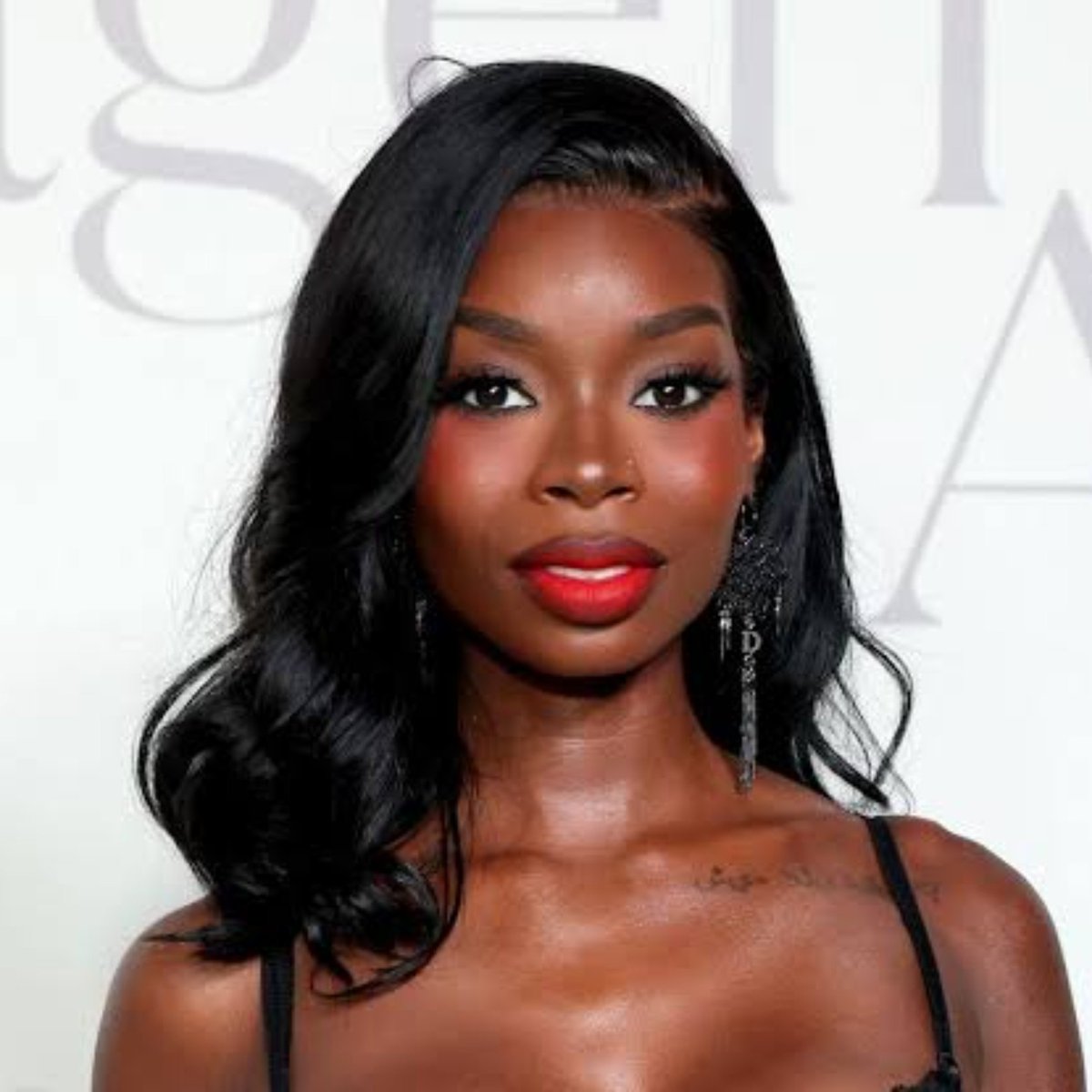
Olandria Carthen on Representation, Intra-Community Criticism, and the Power of an Expansive Mindset:
“Why are you joining forces with the others to bring me down? I’ve seen instances where women that don’t look like me come to my defense and tell my own people, ‘I might not be black, but Olandria represents me because I love what she stands for. I’m an educated woman, I’m driven, I’m this and I’m that.’ You know how embarrassing that is? For women that don’t look like me to come to my defense.
I’m confused. For years, you all have been crying about the erasure of dark-skinned black women in the media, and you get it, and you tear her down. Because is it because I am becoming too successful? It’s the intimidation. I am not doing this stuff to intimidate people. Mind you, I’m a small-town girl from Alabama; it could be you too. This could be your reality too. And that’s where you have to flip the switch. And it’s this expansive mindset. Remember how we spoke about sometimes you’ll meet a woman or you’ll watch a character and they inspire you to see what’s possible, to see what might be? And that is truly who you are. And for the people who can turn those murmurs of, ‘Oh my God, I want that for myself,’ into, ‘If she can have it, if she can do it, I can do it.’ Turn those feelings of, ‘Wow, she is really on the rise,’ into, ‘Well, if she can be on the rise, that’s a possibility for me.’ And so I do feel like it’s this limiting belief. And it just festers, right?”
Carthen’s comments cut to a deeper tension in representation work: the gap between demanding visibility and then supporting the people who actually deliver it. From a small-town Alabama background and a Tuskegee University education, she has built a high-profile career as a model, creator, and public figure after Love Island USA. Her point is not that criticism is off-limits, but that tearing down one of the few visible successes, especially when the long-standing complaint has been erasure, undermines the very progress being sought.
The most constructive takeaway is her call for an expansive mindset. Success is not a fixed pie. When someone from a similar background rises, it expands the map of what is possible rather than shrinking opportunity for others. Turning “she’s winning” into “if she can, so can I” converts potential resentment into fuel. That shift is practical, not merely aspirational: it protects rising talent, multiplies role models, and reduces the isolation that comes with being one of the few.
Supporting representation means more than demanding it. It means refusing to join in the teardown when the representation finally appears, and choosing instead to treat visible success as proof of possibility.
In a new feature, @eurweb covers Olandria’s appearance on Kimberly Bizu’s Rich Little Brokegirls podcast, where she opens up about the representation, the emotional realities of public life, and addressing criticism.
#OlandriaxRichLittleBrokeGirls
Trump has completely deleted his year-old Truth Social post directing then-Attorney General Pam Bondi to speed up prosecutions of his perceived political opponents.
🚨LOCK THEM UP: Rep. Robert Garcia says Oversight Democrats have documented “over 1,000 credible and verified” abuses led by Donald Trump and Stephen Miller.
His message to Miller: “Lawyer Up.”
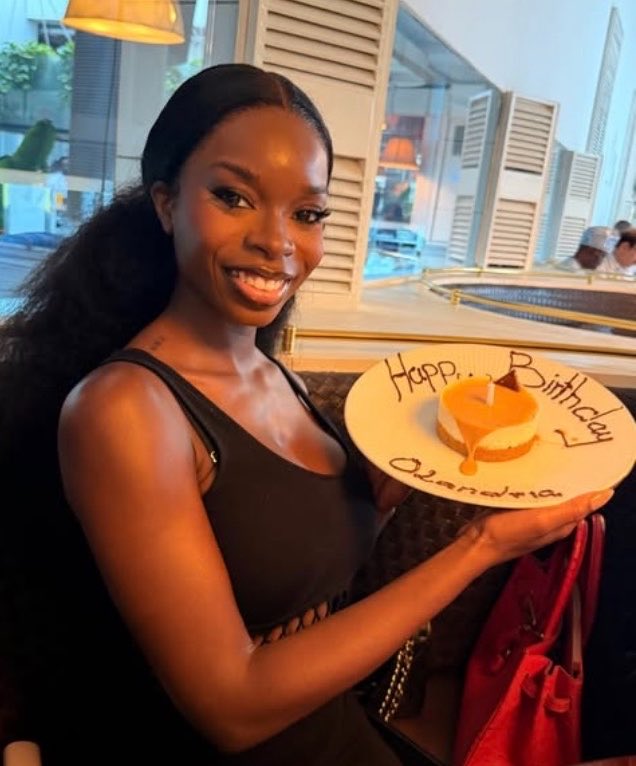
Itohan Barlow (founder of Culture Lab Africa) shared a throwback to hosting Olandria during her trip to Lagos for Rolling Stone Africa. including Nike Art Gallery for Mama Nike’s 90th birthday, and birthday celebration for Olandria at Slow Lagos.
Olandria speaking on the friendships she’s maintained and how they’ve shown up for each other long before fame 🥹 I love that she’s stayed close to those who held her down through the good and bad, and still be surrounded by the same love she had before the world knew her name
Olandria Carthen on refusing to be defined by her starting point:
“People always say like, How could she be a good representation? Look what show she came off of. Let me stop you right there. Hello. It's not how you start, it's how you finish, first of all.
And I know it's weird, because I'm like, my platform came to me in the form of a silly dating show. But it's what I did after the show that what matters. I took my platform, I'm promoting education. I'm trying to be the best representation I can be in the media for us Black women.
And I'm not saying I'm the only representation, but I am one of the few. People are always try to limit you because where you started, where they met you at. And people will always try to remind you of where you came from. I don't need that. I know where I came from and I'm very grateful for it. But this is where I'm at now and this is what we're going to talk about now.”
Her words cut through a common trap: the tendency to freeze people at the moment they first entered the public eye.
A reality dating show is rarely framed as a launching pad for substance, yet Carthen has treated it exactly that way. As a Tuskegee University graduate and first-generation college graduate, she has consistently redirected attention toward higher education, HBCUs, and intentional representation for Black women- particularly dark-skinned Black women who have historically seen limited positive visibility in mainstream media.
This is not reinvention for its own sake; it is strategic ownership of narrative. She acknowledges the origin of the platform without being confined by it, and she insists the relevant conversation is the one she is choosing to lead now. That distinction matters. It models a growth-oriented approach that prioritizes impact over origin story and refuses external attempts to reduce complex people to their most convenient labels.
In a media landscape quick to assign permanent boxes, Carthen’s stance is a clear reminder: starting points can open doors, but they do not dictate the direction or the destination. The work after the introduction is what ultimately defines the contribution.