21+ years in semiconductor security & analog design | PhD in Microelectronics | Expert in secure elements, RF comms & power management | Building security
Remember when everyone screamed about BTC's energy consumption? Where are they now with AI's power demands?
A single ChatGPT query = 10x a Google search
AI data centers: +90 TWh by 2026
Tech giants: +19% energy use in 2023
Be measured. Don't follow blindly. #DYOR#Bitcoin#AI
🚨 Breaking:
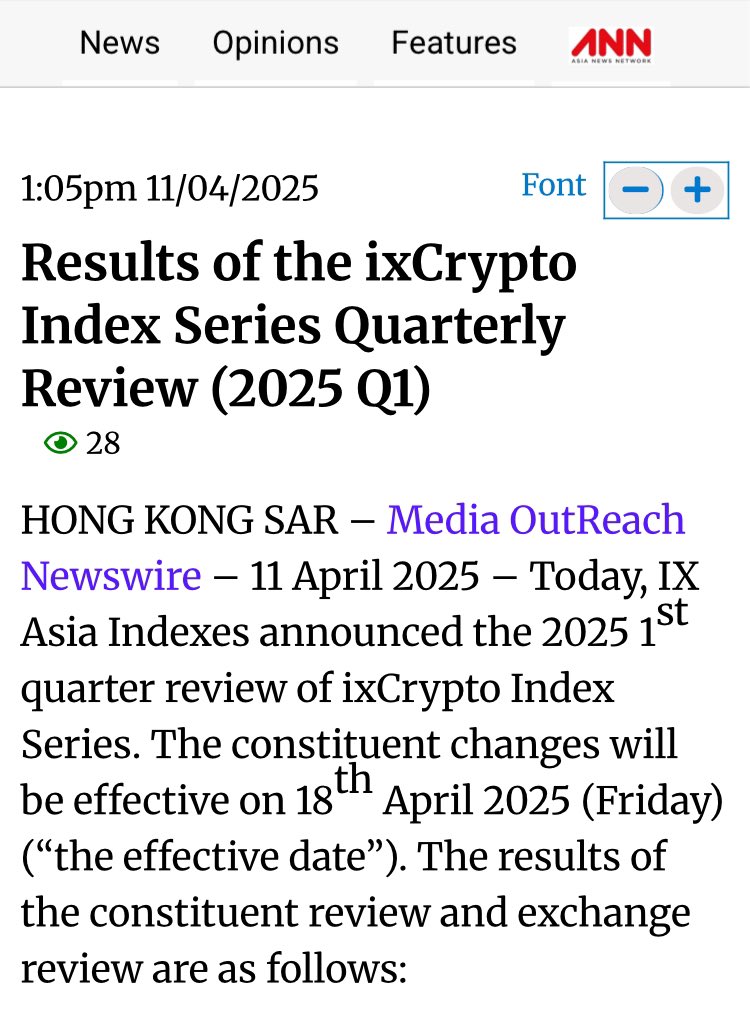
ixAsia Indexes lists $HBAR in ixCrypto Index, the first Hong Kong benchmark crypto index “IXCI” effective April 18th, 2025.
👉 Being listed in the IX Asia ixCrypto Index, signifies that Hedera has achieved significant market relevance and trading volume.
The listing enhances visibility and credibility among institutional and retail investors tracking major digital asset benchmarks.
This is a big deal! 👀
Ready to level-up your homelab security with YubiKeys? 🚀
Jim's Garage walks through the setup process with Authentik and Pocket-ID, providing phishing-resistant protection to self-hosted applications. https://t.co/gDfjTzWBIy
𝗠𝗖𝗣 𝘃𝘀. 𝗔𝟮𝗔
Two days ago Google announced an open A2A (Agent2Agent) protocol in an attempt to normalise how we implement multi-Agent system communication.
As always, social media is going crazy about it, but why?
Let’s review the differences and how both protocols complement each other (read till the end).
𝘔𝘰𝘷𝘪𝘯𝘨 𝘱𝘪𝘦𝘤𝘦𝘴 𝘪𝘯 𝘔𝘊𝘗:
����. MCP Host - Programs using LLMs at the core that want to access data through MCP.
❗️ When combined with A2A, an Agent becomes MCP Host.
𝟮. MCP Client - Clients that maintain 1:1 connections with servers.
𝟯. MCP Server - Lightweight programs that each expose specific capabilities through the standardized Model Context Protocol.
𝟰. Local Data Sources - Your computer’s files, databases, and services that MCP servers can securely access.
𝟱. Remote Data Sources - External systems available over the internet (e.g., through APIs) that MCP servers can connect to.
𝘌𝘯𝘵𝘦𝘳 𝘈2𝘈:
Where MCP falls short, A2A tries to help. In multi-Agent applications where state is not necessarily shared
𝟲. Agents (MCP Hosts) would implement and communicate via A2A protocol, that enables:
➡️ Secure Collaboration - MCP lacks authentication.
➡️ Task and State Management.
➡️ User Experience Negotiation.
➡️ Capability discovery - similar to MCP tools.
𝗛𝗼𝗻𝗲𝘀𝘁 𝘁𝗵𝗼𝘂𝗴𝗵𝘁𝘀:
❗️ I believe creators of MCP were planning to implement similar capabilities to A2A and expose agents via tools in long term.
❗️ We might just see a fight around who will win and become the standard protocol long term as both protocols might be expanding.
Let me know your thoughts in the comments. 👇
#LLM #AI #MachineLearning
Analog security in cryptographic modules is critical for FIPS 140-3 compliance! 🛡️ From tamper resistance to side-channel attack mitigation, robust analog design ensures secure data handling. Don't let vulnerabilities compromise your system! #AnalogDesign#FIPS1403#CyberSecurity
Designing a True Random Number Generator (TRNG) but failing to meet FIPS 140-3 entropy requirements? 🚨 Weak entropy = weak cryptography. Ensure compliance with NIST SP 800-90B to secure your cryptographic modules! 🔐 #CyberSecurity#FIPS1403#TRNG#NIST
This is an excellent write up. This is also why it is EXTREMELY important where and how you store tokens (especially refresh tokens).
Always, always use “secure storage” -> SE, TPM/HSM.
A TEE is *not* secure storage, but should be used for runtime use. https://t.co/8iqu3pJMTD
🔦#ENinthespotlight 🔦EN ISO/IEC 15408-3:2020 ‘Information technology - Security techniques - Evaluation criteria for IT security - Part 3: Security assurance components’ #CyberSecureEurope part III. More info from JTC 13 😁👉https://t.co/AE2FeDjEI5 #TrustStandards
Thomson Quantum AI partners with SEALSQ to equip hardware devices with advanced post-quantum security technology https://t.co/fiUdDl3tiB #IoT#IPv6#M2M#InternetOfThings#tech#IoE#news
🚨 BREAKING - $HBAR Partner SEALSQ Announces:
“SEALSQ’s QS7001 Secure Chip to Quantum-Proof Blockchain Platforms”
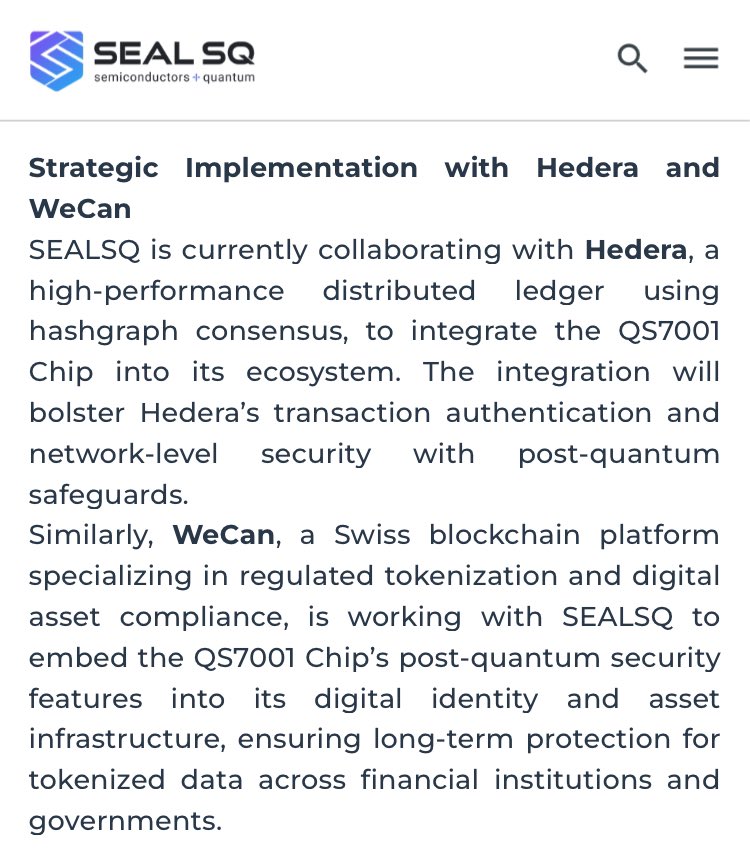
“SEALSQ is currently collaborating with Hedera, a high-performance distributed ledger using hashgraph consensus, to integrate the QS7001 Chip into its ecosystem. The integration will bolster Hedera’s transaction authentication and network-level security with post-quantum safeguards.”
“The QS7001 Chip in now going through certification process while its release is set for Q4 2025”
“The QS7001 Chip strengthens blockchain ecosystems against quantum threats with NIST-compliant post quantum cryptographic algorithms”
👉 SEALSQ and Hedera have been making headlines as SpaceX has launched each multiple WiseSat Quantum Secure Satellite.
SEALSQ has secured a multi-year agreement to supply its VaultIC 408 secure microcontroller for millions of smart meters in the UK - Powered by Hedera.
📢 Big news: SEALSQ, a WISeKey affiliate, has signed a strategic agreement to acquire a 30% stake in Wecan Group!
This strategic partnership will combine SEALSQ’s expertise in post-quantum cryptography and secure semiconductors with Wecan’s blockchain-based compliance platforms.
Together, we aim to strengthen the security and resilience of the financial sector and IoT ecosystems in a post-quantum world.
A key milestone for Wecan — opening up exciting opportunities for our clients, our team, and our shareholders.
We’re thrilled about this new chapter of growth and innovation! 🚀
#Blockchain #Privacy #Web3 #Fintech #Security #Trust #Compliance #CryptoNews #Innovation #SwissTech #Partnership #QuantumSecurity
Some discussions would be so much easier if people knew the definitions of "TEE", "TPM", "Secure element", "Secure enclave", "HSM", "Trusted computing", "FIPS(140-2/3)-certified", "Common criteria", "security target", etc. Plus now the marketing-oriented term "confidential computing" is used to mean a variety of things with varying security properties.
Hardware Solutions To Highly-Adversarial Environments - Whitebox Crypto vs TPM vs TEE vs Secure Enclaves vs Secure Elements vs HSM vs CloudHSM vs KMS - Part 1
https://t.co/gYXPIYt4pC