So Microsoft went down on Thursday. All our flights went down on Friday. And now the banks are down today. But these events are in no way connected. Hmm.
@GSpellchecker I would assume that his lawyer would have told him of these rules after his conviction, since they differ greatly from the U.S. where he had been living the last few years.
From grok- Yes, it differs. US federal inmates may write to named news media via special mail (28 CFR 540.20), with no compensation or acting as a reporter allowed. Outgoing correspondence, including to family, can be published; First Amendment case law (Procunier v. Martinez) limits censorship of outgoing mail more tightly than UK restrictions on third-party public statements or victim distress. State rules vary but generally permit similar contact. Interviews require warden approval.
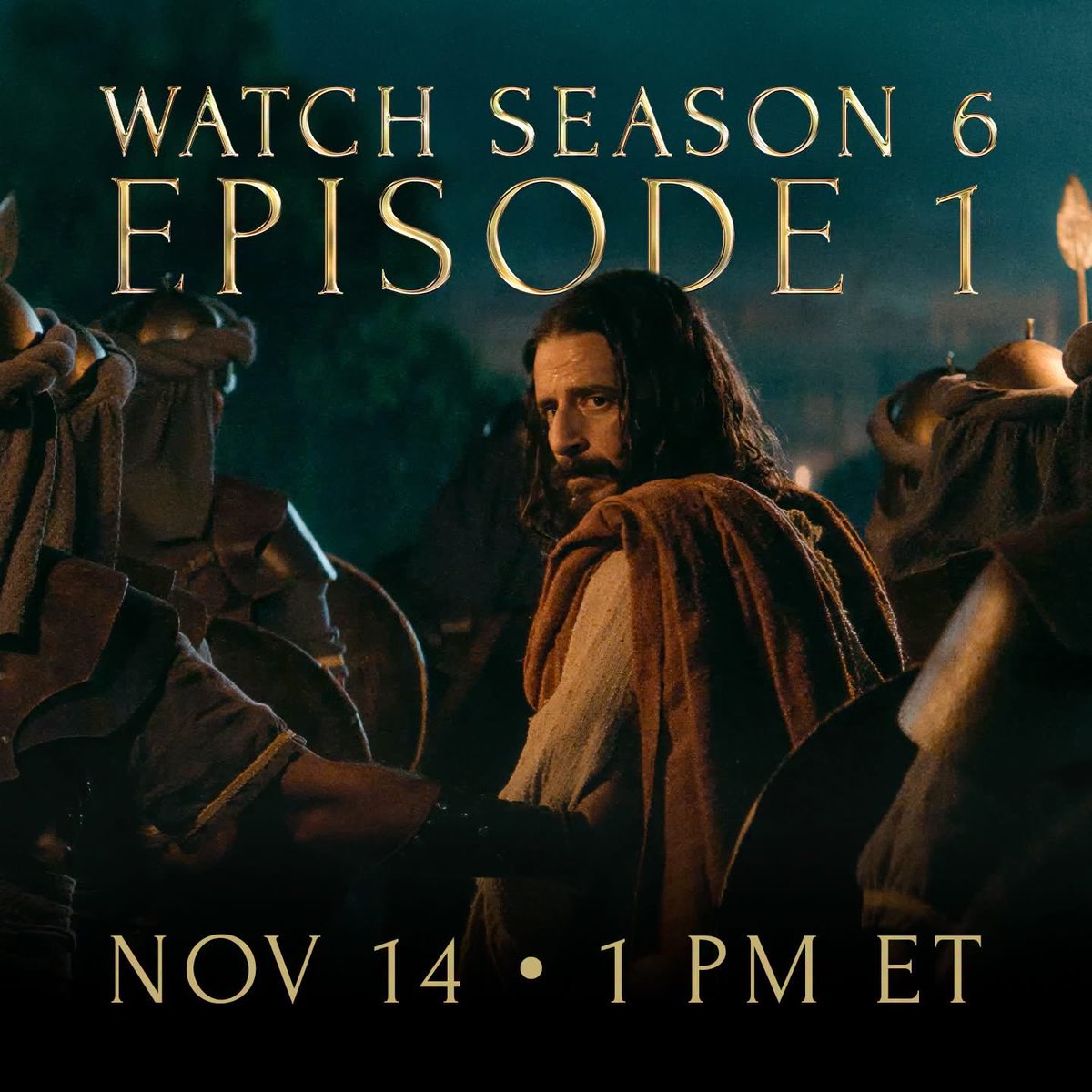
Are you ready? Just a few hours left until Season 6, Episode One is streaming live on Facebook, YouTube, and "The Chosen" app. Dallas is diving into the episode, then sitting down for a conversation with Jonathan Roumie and a Q&A about the episode. (Yes, including those "figures" from our teaser last week.) This livestream isn't staying online for long, so don't miss it.
The Archdiocese of Portland, Oregon, has asked laypeople to refrain from holding hands or raising their hands during the Our Father prayer at Masses in the archdiocese.
While the Catholic liturgy is fairly uniform across Catholic parishes, some Mass attendees raise their hands in the “orans” posture of prayer or hold hands during the Our Father prayer, while others don’t. The Archdiocese of Portland through an official instruction has asked laypeople to refrain from doing either.
“Over the last few decades there has been some confusion as to whether the lay faithful should extend or raise their hands (and even holding hands with others) when the Lord’s Prayer is prayed during Mass, as the priest does,” stated the announcement in the Archdiocese of Portland’s November 2026 issue of its Divine Worship Newsletter.
“Neither the deacons assisting at Mass, nor the lay faithful, are ever instructed to use this posture,” the announcement continued. “It is a liturgical posture that is proper to the priest. When the priest uses this posture, he is praying on behalf of the people.”
In arriving at its decision, the archdiocese cited various Church documents and instructions concerning liturgical norms.
The archdiocese referred to the General Instruction of the Roman Missal (GIRM), a foundational Vatican document on liturgy.
“While the GIRM does not explicitly forbid the lay faithful from using the Orans posture during the Our Father, it gives guidance as to why the lay faithful should not use this posture,” the announcement read. “Whenever the GIRM gives the instructions for hands to be extended, it is always with reference to the priest specifically, whether it be the principal celebrant or concelebrants.”
The archdiocese also referenced instructions given in Vatican II documents.
“Further, the Second Vatican Council’s Constitution on Sacred Liturgy, Sacrosanctum Concilium, states that ‘no other person, even if he be a priest, may add, remove, or change anything in the liturgy on his own authority.’ (SC 22.3),” the archdiocese continued. “Since the GIRM is very specific that the priest is instructed by the GIRM (152) to extend his hands when he prays the Lord’s Prayer, for the deacons or the laity to extend their hands would be adding to the liturgy.”
More: https://t.co/347N3CjiHt