Last week I built an app from a beach chair on Usedom.
My partner's pregnant. I promised to leave the laptop at home.
I built it from my phone instead. Design, code, an 11k-name database, all of it from a Strandkorb.
Here's how it actually worked: 🧵
Lately I've been working with founders.
Their apps are doing > $50k/mo.
These are the tactics they use to convert more users, and the tactics I used to get to $13k/mo in 3 months. https://t.co/xxtdwxbitP
if you're wondering whether you should go all in on AI, the math is simple...
> ignoring it = betting your entire life on the tech not mattering (you already lost)
> going deep = infinite upside for a few months of your time
that's not hype, that's just math
> spend your days playing with the tech
> solve real problems with it
> build something, even if it's ugly at first
worst case you wasted time learning the most important skill of the decade
now flip it:
> ignore AI completely
> hope your current skills stay relevant
> compete against people who didn't ignore it
worst case you're irreplaceable... nah, worst case you're invisible
there is literally no logical argument for sitting this one out
the risk/reward ratio has never been this broken in your favor
take the bet
There is no moat, but there are still countless problems to solve. And where there are problems, there are opportunities.
The biggest opportunities right now:
1. build for solving loneliness (the more AI floods everything, the more people crave real human connection, IRL and small social)
2. build for agents that need to spend money (they're getting virtual cards and budgets, someone builds the spend controls, fraud protection, receipts)
3. build for people drowning in AI output (everyone generates infinite drafts now, the bottleneck moved to reviewing and choosing, build the judgment layer)
4. build for the burnout economy (everyone is expected to always be on and always optimizing, and the backlash toward rest, slowness, and enough is building)
5. build for verifying humans (deepfakes broke trust, every dating app, marketplace, and video call needs proof-of-human)
6. build for the physical world (the trades, hardware, robots that AI is finally reaching)
7. build for the agent that answers the phone (every local business misses calls, a voice agent that books the job creates real value)
8. build for the aging population (millions of older adults want to stay healthy, sharp, independent, and connected)
9. build for the LLM-search land grab (being the cited answer is the new SEO)
10. build for the newly automated (the paralegal, analyst, and marketer whose job just changed and needs to reskill fast)
11. build for the seat-pricing collapse (software moving from per-seat pricing to per-outcome, whoever nails outcome billing wins a category)
12. build for AI enablement (millions of businesses still use nothing beyond basic AI tools, someone has to onboard them)
13. build for the agency everyone resents (businesses pay thousands to agencies for repetitive work, an agent that does most of it can undercut the model)
14. build for verticals on outdated software (dentists, HOAs, contractors, and local businesses overdue for an AI-native rebuild)
15. build for reviving dead software (thousands of abandoned apps with real users, agents can maintain what a team couldn't)
16. build for markets too small to matter before (500 lobster fishermen was never worth a team, now it can be a real business)
17. build for agents hiring agents (an emerging machine economy needs escrow, reputation, identity, and dispute resolution)
18. build for the anti-AI premium (as everything gets generated, human-made and analog become status symbols people pay more for)
19. build for distribution-first (anyone can build the product now, so the audience becomes the advantage, media first, product second)
20. build for the reinvention of college (traditional degrees are being questioned, practical skills and alternative education are becoming more valuable)
21. build for a world with more free time (if AI takes the busywork, what people do with those hours becomes a massive opportunity)
22. build for the return to the physical (screens fill with AI slop, people crave the real world, hands-on, local, and analog)
23. build for the caregiving wave (the population is aging fast, millions are caring for parents, and families need better support)
24. build for the longevity shift (people want to live to 100 healthy, and an industry is forming around managing personal health)
25. build for the housing and rootlessness problem (people struggle to afford stable homes, creating opportunities for new housing and community models)
26. build for spiritual hunger (as institutions change, the need for meaning, ritual, purpose, and belonging is growing)
KEEP BUILDING.
before you ship a landing page, feature, ad, email or launch, run it through this once.
give your AI agent whichever you pick + who it's for, then have it review the same thing from 4 different perspectives:
CUSTOMER: read this like the exact person we're trying to sell to. tell me where you get confused, what feels irrelevant, which claims you'd question + what would make you leave.
COMPETITOR: pretend you work for our strongest competitor. tell me where we're weak, what you'd attack, where our positioning is easy to copy + what sounds exactly like everyone else.
SKEPTIC: assume every claim needs proof. flag anything vague, exaggerated, unsupported or missing the evidence someone would need to believe it.
CONVERSION: read it from top to bottom and find every point where someone has to stop, think, search for context or figure out what they're supposed to do next.
then give it one final instruction: combine all 4 reviews into the 5 changes that would improve this the most. don't rewrite the whole thing. tell me exactly what you'd change, where you'd change it + why.
you can run the same review on landing pages, pricing pages, launch emails, ads, sales decks, onboarding, product announcements + pretty much anything customers are about to see.
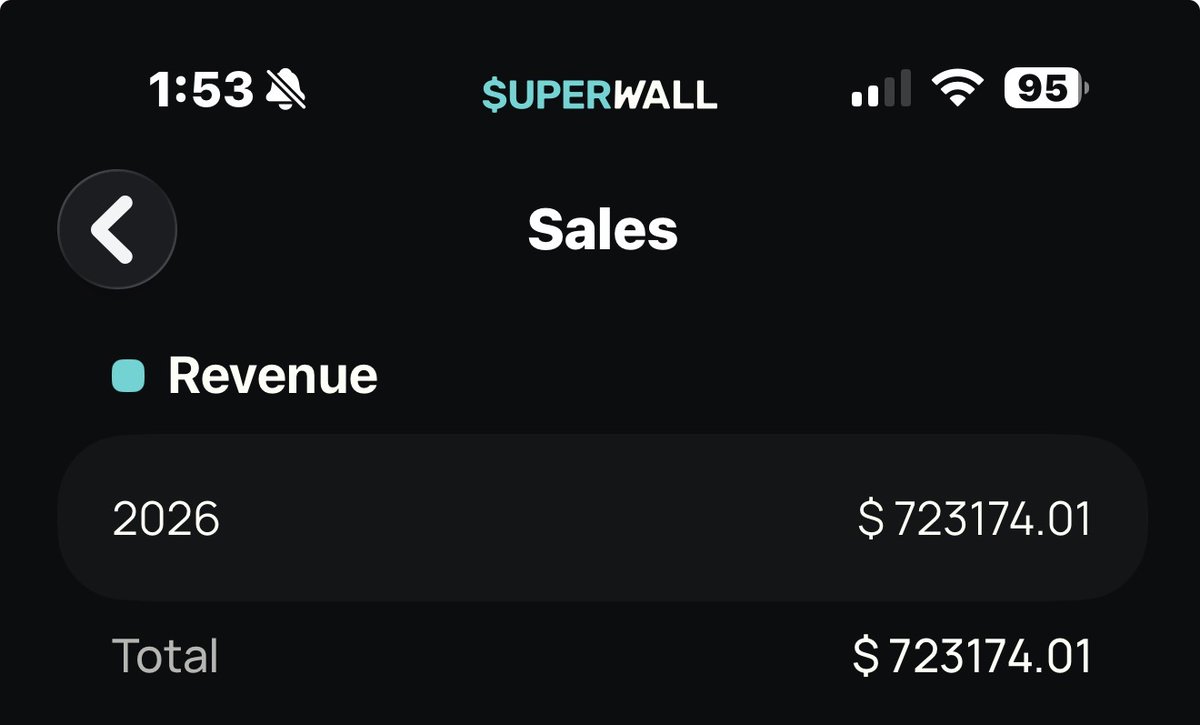
My app Pep AI has generated over $700,000 in revenue in less than 8 months.
Halfway through that run, our #1 marketing channel basically got destroyed.
Influencer marketing had driven a huge part of our growth, but creators in our niche started getting restricted on TikTok and Instagram, videos stopped getting distribution, and some creators were even losing their accounts.
We had to find another way to keep scaling.
That’s when we started taking Meta ads seriously.
Here’s what I’ve learned and what can possibly work for your app too:
1. Start with proven winners
If you already have influencer or organic videos that performed well, start there.
Take your best performing videos and give them some initial spend. Don’t immediately pay for 100 brand new ads when you already have content that has proven people will stop and watch.
Also make sure your funnel actually works before you scale. Meta won’t fix a bad onboarding flow, paywall, or offer. If people already aren’t converting, paid traffic can just make you lose money faster.
2. Optimize for the right event
Optimize for the deepest conversion event you have enough data for.
If you have a free trial, that may mean trial starts. If you have a hard paywall and enough purchase volume, optimize for purchases.
I generally wouldn’t optimize only for installs if your actual goal is paying users.
Meta will optimize toward people it predicts are more likely to complete the event you give it. If you ask for installs, it’ll find installers. If you give it a stronger downstream signal, it can optimize toward better customers.
3. Give Meta time, but don’t blindly burn money
Meta takes time to learn.
You probably won’t launch a campaign and instantly get an amazing cost per trial or purchase. Sometimes campaigns improve over several days or weeks as Meta gets more conversion data.
But that doesn’t mean you should let terrible ads run forever hoping they magically recover.
I learned this the expensive way.
In August, Pep AI did around $170,000 in revenue and still wasn’t profitable.
Yes, many of those subscribers may generate additional LTV through future renewals, but when you’re bootstrapping, you can’t rely on future renewals to fix bad cash flow today.
We tightened things up, cut what wasn’t working, scaled our winners, and kept testing new creative.
The next month we still did over six figures in revenue, but our ads were profitable.
4. Separate scaling from testing
We keep proven ads separate from a lot of our experimental creative so the existing winners don’t immediately take all the spend.
This gives new concepts enough delivery to actually learn something from them.
At the same time, don’t overcomplicate your account with dozens of tiny campaigns and ad sets. Meta still needs enough conversion data to optimize.
The goal is simple: give your winners room to scale while constantly searching for the next winner.
5. Track everything
We use AppsFlyer and it has worked extremely well for us.
You need to know which campaigns and creatives are driving installs, trials, purchases, and revenue.
Before spending heavily, test your tracking end-to-end. Make a real trial or purchase and make sure the event is showing up correctly.
Spending thousands while your conversion tracking is broken is an unbelievably expensive mistake.
6. How we find new ad concepts
Study the companies that are better than you.
Go through Meta Ad Library and look at apps in your niche that appear to be scaling. You can’t see their ROAS, so don’t assume every ad is profitable, but if a company keeps running the same concept or repeatedly makes variations of it, that can be a useful signal.
Then look outside your niche.
Find consumer apps that are growing quickly and study their ads too.
Don’t copy the exact creative. Copy the psychology and framework behind it.
7. Make ads feel like content
Some of the best-performing ads don’t immediately feel like ads.
Don’t open with your logo and spend 30 seconds listing features.
Teach something. Compare something. Tell a story. Show a problem.
Then introduce your product as the solution.
You’re trying to earn the viewer’s attention before asking them to care about your app.
8. Test concepts AND hooks
There’s a big difference between a new concept and a new variation.
A concept is the actual idea behind the ad. A variation might just be the same video with a different hook, creator, caption, or first few seconds.
You need both.
We often take one core concept and create 5 different hooks for the beginning of the video.
So one testing batch might be:
5 concepts × 5 hooks = 25 creatives.
The hook alone can completely change performance.
But don’t only make variations of your winners. Keep testing completely different angles too.
One person might respond to a comparison. Another might respond to a creator talking directly to camera. Another might respond to a screen recording or story.
You want multiple ways to sell the same product.
9. Where we get the content made
We currently use Trybe and SideShift.
For faster experimental concepts, we may pay around $40 per video with multiple hook variations.
For concepts we have more confidence in and want higher production quality on, we may pay around $100 per video with multiple hooks.
Those are just the rates that have worked for us.
You can also source creators yourself by messaging people in your niche on TikTok and Instagram. You can make the videos yourself or pay friends.
The important part is building a constant pipeline of new creative.
Finding one winning ad does not mean you’re done.
Creatives eventually fatigue, so you need a system where new concepts and variations are constantly being produced, tested, killed, or scaled.
You also need to have a place to keep all content stored. We use frame for this and have everything organized in a way where we know exactly where every ad concept is. This makes it very easy when dealing with hundreds of ad concepts.
One more thing: reputation matters on creator platforms.
When you’re starting, you may need to begin with simpler campaigns, build good reviews for your brand account, and prove that you’re easy to work with. Or have a professional Instagram that has lots of followers and is verified.
Then it gets much easier to attract better creators.
10. Final Thoughts
This entire system is how we continued scaling Pep AI after our #1 marketing channel basically got destroyed.
If influencer marketing still works affordably in your niche, keep doing it.
Influencer marketing + Meta ads together can be extremely powerful.
But Meta has become one of the best tools we’ve found for consistently scaling the app.
You do need a testing budget you’re comfortable losing.
But every dollar should be buying information.
If you’re spending money and you aren’t learning anything, you’re not testing.
You’re just losing money.
Once you start figuring out the right offer, creative angles, hooks, and conversion signals, Meta can completely change the scale of your app.
It helped us continue doing over $100,000 a month after the marketing channel we relied on most stopped working.
Hope this helps.
Next up for Pep AI:
We will be trying UGC and influencer marketing again. We hope to find a way that works for us and I will be documenting it. If you made it this far thank you for reading and I will be posting more content soon. I had to stop for awhile when we had to fix our marketing, but I will be posting a lot more so I appreciate the support.
If you have any questions, feel free to comment, DM me, or book a call through the link in my bio.
there's a simple way to 100x your AI outputs and most people will never do it...
agents like Claude Code can spawn sub-agents that run tasks at the same time
most people use this for basic stuff
the real play is having 3-5 sub-agents review Claude's work from completely different angles... using ANOTHER model (ChatGPT, Grok or anything really)
but don't use fake "expert personas" you invented in a prompt, you need real frameworks from real people
how to build these expert profiles:
option 1: use someone so well-known their thinking is already in the training data
> have a Karpathy-style agent tear your systems apart
> build a profile based on Ogilvy's principles to roast your copywriting
option 2: go deeper with Obsidian and Hermes / Grok bot
> feed it an entire youtube channel from someone you trust
> or their blog, their newsletter, their podcast transcripts
> prompt it to extract an expert card with their frameworks, decision patterns, and principles
now upload that material into your agent
what happens next:
Claude generates the first draft
> sub-agent 1 reviews it through expert A's lens
> sub-agent 2 stress-tests it with expert B's framework
> sub-agent 3 catches what the others missed
> all running at the same time
Claude thinks through every piece of feedback and rebuilds
you only see the final version... the one that survived 3-5 rounds of real scrutiny
this is close from getting the absolute best output for a specific task
UI/UX Designers, this might be one of the best animated component libraries to bookmark.
Thinking Orbs gives you animated thinking orb components in different sizes big or small, light & dark modes, plus a playground to experiment with them.
Bookmark it for later 💜
This UGC format has been printing for us recently:
"5 signs you need [product]"
Each sign is something relatable, and by sign 3 the viewer is nodding along.
Then the product shows up as the answer.
Let's say you have a ecom store selling pillows for example.
It would look something like this:
"5 signs you need a new pillow"
- you wake up with a stiff neck
- you flip it to the cold side all night
- you fold it in half just to get some height
- you can't remember when you bought it
- your partner's pillow somehow feels better
"...which is exactly why I switched to this one."
The viewer is checking themselves against the list the whole time.
If they hit 2 or 3 signs, they know the video was made for them, so they stay for the answer.
How to film it:
- 1 sign per cut, a few seconds each
- show each sign on camera instead of just saying it
- keep the product off screen until the last sign
- end on the product in hand and the result
I recommend pulling your signs from reviews, because customers literally describe what made them buy.
Juno, an AI health app for people with chronic illnesses, is making $100K/month.
People with chronic conditions can log symptoms just by describing them in text or voice. It cross-references those logs with sleep and heart rate data to find patterns in what makes things worse.
Because it's such a serious app, the onboarding is long, at about 51 screens:
- Opens by showing it's backed by research from Oxford and UCL to build trust
- A progress bar split into 3 chapters, so you always know where you are even though it's long
- Follow-up questions change depending on which condition you select
- Ends with a screen summarizing everything you entered
When you close the paywall, it doesn't jump straight to a discount. Instead, it offers support plans for people who are unemployed, low-income, or students. Decline that too, and you get a final 60% OFF offer.
Some of its users can't work because of their condition, so it addresses "I can't afford it" first. Putting the support plan before the discount really clicked for me.
See Juno's full onboarding flow and viral social videos on Onbo Hub 👇
https://t.co/Fqe917XJP1
app-store-screenshot got a redesigned website !!
The easiest & best way to generate Screenshots for your apps.
Supports: iOS, Android, iPadOS, TvOS, CarPlay and more ;)
Best part is it's free forever & open-source !
We also showcase the apps which is using this skill, comment link to your app and i'll add it to the website 🫶
Link below 🧵