@gtconway3d The Riverwalk, Mi Tierra, or the Iron Cactus, the space needle, there are a lot of nice souvenir shops to visit. For tomorrow the mission walk, the mercado near mi tierra. It's Texas in mid June, light clothing is a must, as is water. Pace yourselves and enjoy.
I just don’t think we Christians realize how fragile we make Christianity look when we act as though our faith is threatened by every political and cultural shift.
When we act as though our faith needs a political party and an authoritarian president in order to survive.
The Kingdom of God has no geographic, denominational, nor political borders.
Those who try to remake Jesus & his agenda to fit their own agenda violate Genesis 1:27, reversing God's plan.
They make God into THEIR own image.
That's more comfortable but it is also idolatry.
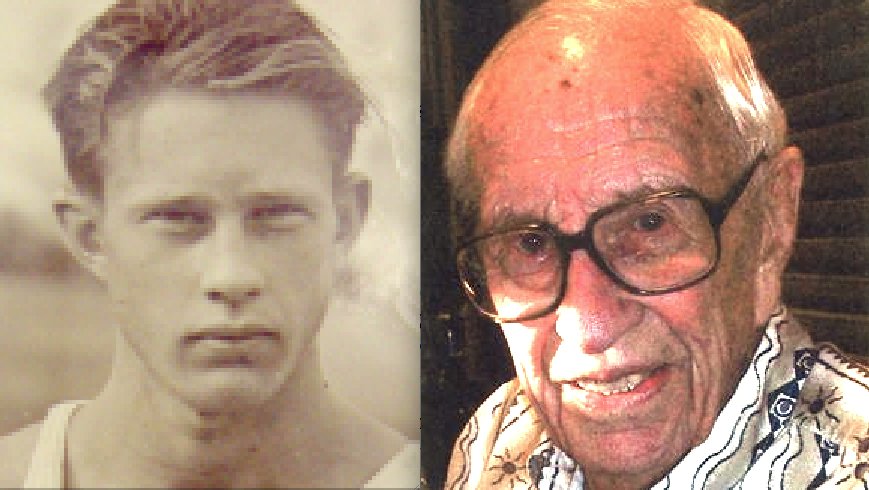
Robert Emmett Fletcher Jr. was an American agricultural inspector who quit his job to manage fruit farms of Japanese families sent to internment camps during WW2.
Upon learning about the looming relocation of Japanese farmers in his area, Fletcher grew concerned. This led to the Tsukamoto family, who owned a grape ranch in Florin near Sacramento, proposing that he take care of their farm while they were away.
They offered him their home and all net profits from the crops (though Fletcher would only take half) after covering farming costs, mortgages, and taxes. Two other families, the Okamotos and Nittas, also proposed similar arrangements. Deciding to leave his inspector job, Fletcher took on the responsibility of managing all three farms.
Single-handedly farming three farms meant 18-hour days and endless work. Fletcher saw his task as caretaking, so instead of living in the Tsukamotos' home, he lived in the bunkhouse meant for migrant workers.
His decision did not go down well with some local white farmers, who thought their Japanese counterparts should forfeit their properties.
Despite threats, Fletcher carried on, committed to his newfound responsibility. When the families returned home in the fall of 1945, their farms and homes were intact—the Tsukamotos' home had even been cleaned by Fletcher's wife Teresa—and half of the profits were waiting for them.
I just love this verse inspired by the Holy Spirit through the apostle Paul:
“Yes, I also ask you, true partner, to help these women who have contended for the gospel at my side . . .”
Women.
Contended for the gospel.
At Paul’s side.
Phil 4:3
Now, that’s a fine memory verse right there.
The Texas Quote of the Day finds historian Robert Caro describing the hard life of women in the Hill Country before electricity came to the land:
"In the Hill Country, canning was required for a family's very survival. Too poor to buy food, most Hill Country families lived through the Winter largely on the vegetables and fruit picked in the Summer and preserved in jars.
Since--because there was no electricity--there were no refrigerators in the Hill Country, vegetables and fruit had to be canned the very day they came ripe. And, from June through September, something was coming ripe almost every day, it seemed; on a single peach tree, the fruit on different branches would come ripe on different days. In a single orchard, the peaches might be reaching ripeness over a span as long as two weeks; "You'd be in the kitchen with the peaches for two weeks," Hill Country wives recall. And after the peaches, the strawberries would begin coming ripe, and then the gooseberries, and then the blueberries. The tomatoes would become ripe before the okra, the okra before the zucchini, the zucchini before the corn. So the canning would go on with only brief intervals--all Summer.
Canning required constant attendance on the stove. Since boiling water was essential, the fire in the stove had to be kept roaring hot, so logs had to be continually put into the firebox. At least twice during a day's canning, moreover--probably three or four times--a woman would have to empty the ash container, which meant wrestling the heavy, unwieldy device out from under the firebox. And when the housewife wasn't bending down to the flames, she was standing over them. In canning fruit, for example, first sugar was dropped into the huge iron canning pot, and watched carefully and stirred constantly, so that it would not become lumpy, until it was completely dissolved. Then the fruit--perhaps peaches, which would have been peeled earlier--was put into the pot, and boiled until it turned into a soft and mushy jam that would be packed into jars (which would have been boiling--to sterilize them--in another pot) and sealed with wax. Boiling the peaches would take more than an hour, and during that time they had to be stirred constantly so that they would not stick to the pot. And when one load of peaches was finished, another load would be put in, and another. Canning was an all-day job. So when a woman was canning, she would have to spend all day in a little room with a tin or sheet-iron roof on which the blazing sun was beating down without mercy, standing in front of the iron stove and the wood fire within it. And every time the heat in that stove died down even a little, she would have to make it hotter again.
"You'd have to can in the Summer when it was hot," says Kitty Clyde Ross Leonard ... "You'd have to cook for hours. Oh, that was a terrible thing. You wore as little as you could. I wore loose clothing so that it wouldn't stick to me. But the perspiration would just pour down my face. I remember the perspiration pouring down my mother's face, and when I grew up and had my own family, it poured down mine. That stove was hot. But you had to stir, especially when you were making jelly. So you had to stand over that stove." Says Bernice Snodgrass of Wimberley: "You got so hot that you couldn't stay in the house. You ran out and sat under the trees. I couldn't stand it to stay in the house. Terrible. Really terrible. But you couldn't stay out of the house long. You had to stir. You had to watch the fire. So you had to go back into the house."
And there was no respite. If a bunch of peaches came ripe a certain day, that was the day they had to be canned--no matter how the housewife might feel that day. Because in that fierce Hill Country heat, fruit and vegetables spoiled very quickly. And once the canning process was begun, it could not stop. "If you peeled six dozen peaches, and then, later that day, you felt sick," you couldn't stop, says Gay Harris. "Because you can't can something if it's rotten. The job has to be done the same day, no matter what." Sick or not, in the Hill Country, when it was time to can, a woman canned, standing hour after hour, trapped between a blazing sun and a blazing wood fire. "We had no choice, you see," Mrs. Harris says."
----- Robert Caro, "The Years of Lyndon Johnson: The Path to Power," 1982
After WWII, America, while still far from perfect, was trying to be more progressive.
This is Sinatra in a short film from 1945. It’s a message we should remember as a religion is attemtpting to impose their view on all.
During World War II, Texas was home to 79 prisoner of war camps, including one near Hereford that housed more than 5,000 Italian POWs who had been captured in North Africa. Sadly, five Italian POWs lost their lives and were interred on the premises before the war's end. In response, a group of POWs collaborated to build this small chapel to honor the graves of the deceased. This is one of my own photos, taken in 2009. The chapel stands in a cornfield as one of the few surviving vestiges of the camp, thanks to the restoration efforts undertaken by the Castro County Historical Commission in the mid-1980s. A significant moment occurred on April 30th, 1988, when a contingent of former Italian prisoners who had been held at the camp returned for a ceremony to mark the site's restoration.
This camp, situated in Hereford, was the second largest of its kind in the United States and was constructed by the US Army Corps of Engineers at a total cost of two million dollars. The POWs, while confined, played a vital role in the local agricultural industry, providing their labor in exchange for accommodation and meals provided at the camp.
Also, if you look at the horizon on the left, you can see a water tower that was built as part of the camp. I believe the tower and the chapel are the only two parts of the camp's infrastructure that are still visible.
I actually drove from Austin all the way to Hereford, about 475 miles, just to see this, and was glad I did. I returned at sundown simply to feel the wind and listen to the old ghosts.
@Whataburger Remember: This is not the original owners/creators of Whataburger. This is BDT Capitol telling you how to pronounce it incorrectly. 🇨🇱@Whataburger
10 Things ALL ADULTS should model for children.
Saying thank you.
Not afraid to ask for help
Admitting you don’t know something
Respecting everyone
Showing gratitude
Appreciating others
Offering help to others
Intentional listening
Saying I’m sorry when wrong
Caring about them
If we want students to respect teachers, then we need politicians, parents, and leaders to respect them first! Model respect for the person and the profession.
We've seen few humans this devoted and humble as Jimmy Carter.
Quietly continuing his mission,which was to do good.
If you must leave us go gently . Leave your heart and bravery so we might learn.
Thank you President Carter.
Jimmy.