And here are my quick "reflex" notes on the topic.
Reflex
Key Points
• OBs are areas where SM previously executed large orders.
• Price is likely to revisit and react at these zones.
• HTF OBs = more liquidity = stronger reaction.
Reflex
More liquidity, bigger the pull, bigger the reaction once taken, larger and more sustainable the move away from OB.
Key Points
• OBs hold liquidity, HTF > LTF.
• Reactions come from liquidity density.
• Algorithms target Fibs & OBs.
Reflex
Liquidity is the fuel. OBs store it.
Key Points
• Hidden OB = behind 1+ FVGs.
• More hidden = more powerful.
• Works for all markets.
Reflex
Hidden OBs are where bots fill orders — not where retail gets baited.
Key Points
• Refined levels increase confidence in an OB.
• Ideal refined OB = past EQ near base of HTF OB + fib confluence.
• Refinement = tighter entries and much higher RR.
Reflex
Mark HTF OB → drill down → refine
Key Points
• Start on HTF → drill down through MTF and LTF.
• Use typical TFs first (1W, 3D, 2D, 12H, 8H, 4H).
• Further confirmation needed = scan “odd” TFs.
Reflex
Find further liquidity concentrations using multiple TFs. Refining is a tool, use when called for.
Key Points
• Optimal: HTF + hidden + fibs + refinable <8H + very high vol coin.
• Semi-optimal: Lacks multiple HTF levels, still refinable <8H.
• Use +1 confluences: fibs, extreme P/D, major market context.
Reflex
Stronger levels = Untouched HTF alignment + M/LTF refinement. BTC/ETH > all.
Key Points
• Bullish OB in HTF premium = play bounce, not ATHs.
• Bullish OB in HTF discount = stronger.
Reflex
Always play the range. Context + location of OB matter
Key Points
• During buy programs → bullish OBs react stronger.
• Untapped 🔑 liquidity left behind → expect revisit.
• Breakout without fuel = trap.
Reflex
If liquidity was left behind, expect return before continuation.
Key Points
• HTF (4H+) body close through OB = invalid.
• HTF EQ taken = less actionable.
• M/LTF EQ taken = not actionable.
• Each touch drains strength/liquidity.
Reflex
Clean levels are best. Once EQ is touched, adjust risk or walk away.
Key Points
• BTC HTF OB ≠ strong if SPX is dumping.
• Align with majors’ key levels for +1 confluence.
Reflex
Confluence across charts = + conviction.
MTM - ORDER BLOCKS
- Introduction -
Order blocks (OBs) and especially hidden order blocks (hOBs) are not some magical fix to every trading challenge, but they form the backbone of @Moneytaur_ system. Mastering them is essential, since it helps align us with whales.
The way OBs are used here is not ICT textbook. MT has his own logic, structure, and use. This writeup reflects my interpretation on that approach and will differ from what ICT/SMC teaches.
“Success in this game is so much more than finding hidden liquidity. However, you’re already ahead of all CX, so put in the hours required to deserve consistent and extreme success.”
- What’s an Order Block? -
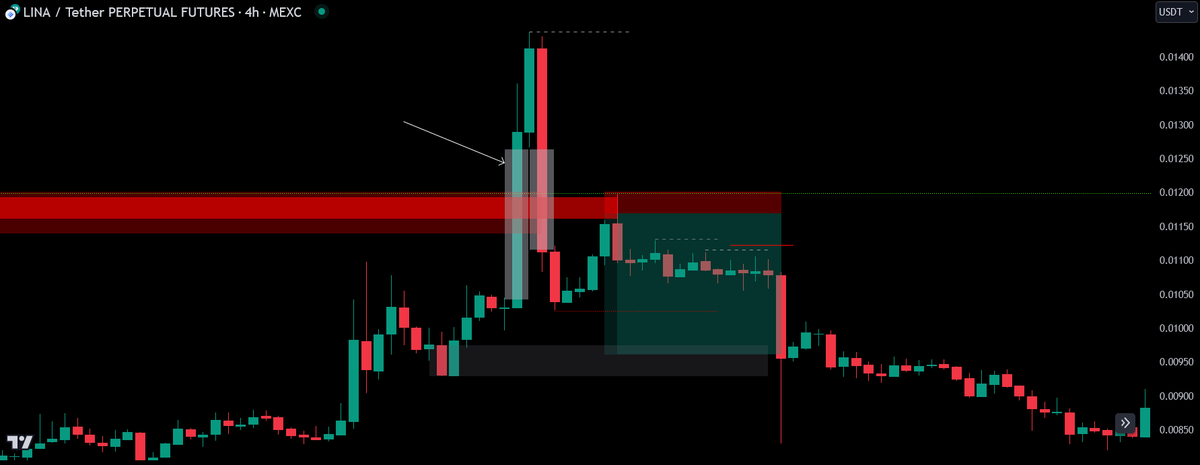
Order blocks are areas where smart money has previously executed large buy or sell orders (liquidity), and will likely do so again. Price Action gravitates toward these levels, with a high probability of producing a reaction when revisited.
The higher the timeframe of the OB, the more liquidity it holds, and the more likely price is to react meaningfully when it returns.
- Why they work.
Markets are drawn to liquidity, a constant ebb and flow of buyers and sellers. OBs represent concentrations of liquidity on their respective TFs. They are the fuel that powers price in the opposite direction. The more fuel, the longer the journey can be sustained.
📝 Especially HTF OBs, can take time to fill orders. Revisiting is normal and a direct spring into the opposite direction is not a given. PA can spend weeks in and around an OB without invalidating it. Look for HTF body closes past the level for invalidation.
“👁️ 1H OB and 2H OB. The higher the TF, the more powerful the levels are, thus the higher probability for reversal, thus me always saying to focus mostly on HTF opportunities. Less ��noise’.”
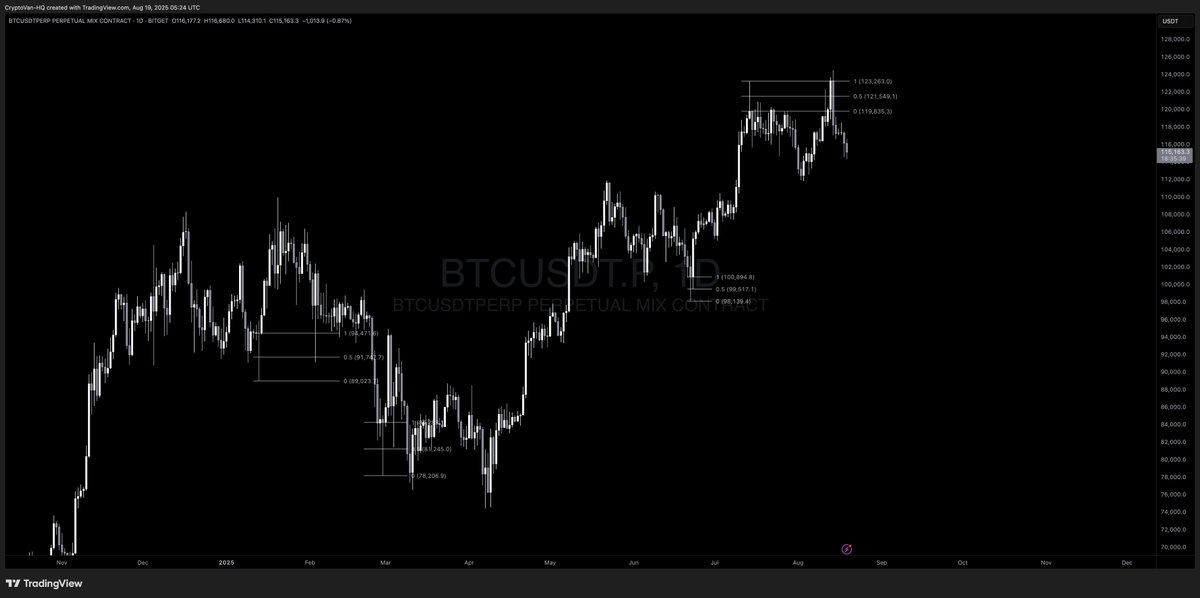
Another reason OBs work well is that many algos use them, especially in combination with Fibonacci levels. Fibs add confluence and makes the level even more reactive. Look for premium/discount fib levels (0.5, 0.618, 0.705, 0.786, 0.886) that align with OBs, ideally refined zones within HTF blocks.
“Yes. Trading bots can be programmed to identify/respect OBs in spot trading (your trading realm), just as they do in futures trading. They’re designed to analyze historical PA and identify 🗝️ support/resistance levels. When these bots identify an OB on the spot market, it may act in different ways, depending on the bot’s strategy/programming.
Example: If the bot follows a trend-following strategy, it may wait for the price to approach an OB before initiating a trade in the direction of the HTF trend.”
https://t.co/GRpe09ToAC
- Hidden Order Blocks -
Order blocks can lose potency when they’re obvious. If a level is visible and widely watched, it can even become a target for manipulation and is less reliable.
A hidden OB is simply an OB that sits behind one or more FVGs. The more FVGs layered in front of it, the more “hidden” it becomes and the more powerful it is.
“For any asset, on any timeframe, price will reverse @ hidden 🗝 levels rather than what everyone can easily 👁”
“2 FVGs into a 3rd FVG + 4H BB = good short”
Related: https://t.co/TsPQEJXG9G
- Refined Order Blocks -
Why Refine?
The more we can refine an order block, the more powerful it becomes. Refinement opens the door to more precise entries, tighter stops and significantly higher R:R setups. Think of it as liquidity within liquidity, helping us pinpoint the area most likely to react.
Refined levels also tell us something about the FVG it’s behind. A weekly hOB with a refined 4h level can only exist if the FVGs move past the weekly level was aggressive. Aggressive moves mean less mitigation, and more liquidity left behind when PA revisits.
- What Are We Looking For? -
Location matters. MT often places his SL outside the full OB zone, usually based on the highest timeframe “outer” OB. Given this, optimal refined zones are at EQ or near the base of the OB, ideally in confluence with fib levels. When these align, we can confidently expect a higher chance of a reaction, with greater RR, because we were able to enter the trade at a more precise level & closer to invalidation.
- Choosing Timeframes -
Many traders overthink which TF to use, or only cycle through the basic ones.
Here is MT’s approach:
He starts with typical HTFs -> Refines through mid and lower TFs -> and only when he wants further confirmation, he will use more exotic TFs.
“Do you ever look at TF that at first glance seems a little bit odd”
“If I’m looking to fully confirm the level, yes. If I don’t need more than what I’ve already found, no. Sometimes I look through 30+ different TFs.”
Even “odd” timeframes like 23H can offer strong reactions, but keep in mind: That 23H block is just a 1H + 23H combination. Often the 1h candle is the one sitting behind a FVG. These levels work and tend to have great RR. But essentially it is a 1h candle body.
🔺Refinement is a tool. Use it when called for. Don’t get lost in over refining.
- The Hierarchy of Order Blocks -
Not all OBs are created equal. MT’s system emphasizes identifying optimal blocks that follow a clear structural and contextual hierarchy.
Optimal levels are:
- Untouched
- Hidden behind FVGs
- On HTFs
- Multiple H/M/LTF levels
- Refinable to under 8H
- Located at premium/discount (Extremes +1)
- Aligned with fibs
- Found on high-volume assets like BTC and ETH
- Classification
Optimal
HTF untouched hidden key level, containing multiple HTF levels and refinable to under 8H.
e.g. 1W → 5D, 4D, 2D → 12H, 8H, 4H
Semi-Optimal
HTF untouched hidden key level, not containing other HTF levels, but refinable to under 8H.
e.g. 2D → 6H, 3H, 2H
Lower Quality
Single TF = use reduced risk
Partial level = use reduced risk
Partial past EQ of origin candle body = not actionable
Confluence (each of these adds weight to the setup)
Multiple hidden
Structure
Fib alignment
Extreme P/D locations
Standard OBs
The more boxes a level ticks, the more powerful it becomes. True optimal levels are rare and mostly found on BTC and ETH due to their depth and consistency of volume.
📝The 0.5 of the block acts as a great spot to enter when refined levels are not present.
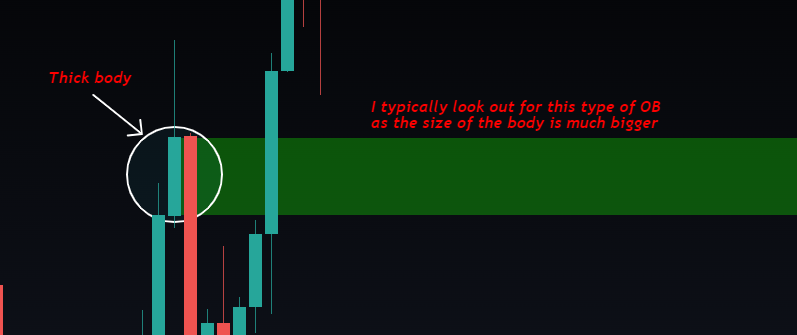
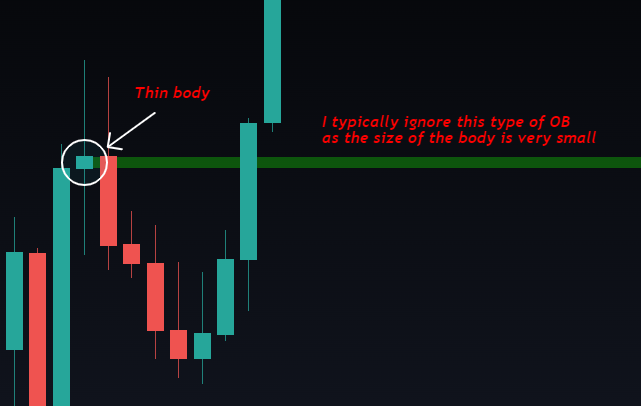
🔺The size of the candle body is very relevant. Small candle bodies hold less liquidity!
“I’ve mentioned ‘hidden liquidity’ or ‘hidden OB’ = HOB. Optimal levels are best found on BTC and ETH. Hidden OBs on HTF, refined into LTFs and located at/near range extremes are far more powerful.”
https://t.co/xmBiGhBJhr
“Explained a few times before. MS matters. The higher the timeframe, the more powerful. The more you can refine, the more powerful. If you find a key level on Weekly, that is also a key level on 5D, 3D, 2D, 8H, it’s a strong level. If you find a key level on 2W, W, 5D, 3D, 2D, 8H, and can refine entry with timeframes below 8H, it’s semi-optimal and potentially optimal if it’s Bitcoin or a high trading volume coin. If you find a key level on a single timeframe, such as daily, it doesn’t mean you should completely ignore because it’s not on any other timeframe and you can’t refine, but you can’t expect it to be anywhere near to as powerful.” https://t.co/pnExbQMb8v
- Order Blocks & Market Context -
Market Structure, Supply & Demand, and Premium & Discount all matter. A bullish OB in HTF premium is far less powerful than one found in HTF discount. These trades can still be taken if they tick enough boxes, but we don’t expect them to trigger new ATHs. Reduced risk and more defensive trade management are advised.
If you find a bullish OB near the top of a HTF range, but on MTF or LTF it’s in discount, the trade may still be valid (in that range). Just remember: the same OB would be far more powerful if it sat in a true HTF discount zone.
Always trade the range and have realistic targets.
“Set Fibs from Range high to Range low. Above 0.5 = Premium. Below 0.5 = Discount. Find Key-levels. Bottom of range low: Find longs. Top of range high: Find shorts. Trade on that range.
Not ‘to the mooon!’ 🤝”
https://t.co/cTAuZWV4Ww
“You don’t look just @ PA near CMP. You look for heavy liquidity levels that weren’t tested yet, set alerts, wait, and enter your plays. The real skill is in the ability to refine/ultra-refine into the best R:R possible. You literally break the markets once you master the right skillset.” https://t.co/YhOpRnh3FC
At times, multiple levels will sit near each other. Often, the one closer to CMP will fail, it may offer a bounce, or be ignored entirely. Price eventually gravitates to the deeper, more powerful block.
“If you’re a thief and discover a pile of gold, but right beside it lies a diamond, and the only way to unlock the diamond is to use the gold as the key, what do you choose?”
https://t.co/lTpsrn4lim
- Reading Order Block “Footprints” -
During buy programs, bullish OBs offer stronger reactions. The same applies to sell programs and bearish OBs. These reactions act as early signs of market makers’ current intent. These levels being front-run can also be an early sign of intent.
In MTM Price Action we learned that “Liquidity is the destination”, based on this we can use key levels to gauge how PA will likely react in certain scenarios.
If PA is approaching supply or demand and has left behind key liquidity on the way, there’s a high probability it will return to those levels before continuing, to collect fuel for the next leg.
Find the level → Set alerts → Be patient → Execute.
Inversely, if PA breaks out of a range without collecting that fuel, the probability that the breakout is false increases. In those cases, possibly look for short setups, PA is more likely to retrace.
If PA is approaching key resistance and no meaningful liquidity has been left behind the probability of a BO without a retrace increases.
“Pump above ATH, leaving a large FVG behind, and you can expect a pullback rather than a BO (break out) into price discovery IF there’s a powerful hidden BB left behind, which is the “fuel” for bullish continuation. The hint that it’s likely going for such BB, is only if it has a HTF close above ATH and you can find a powerful hidden BB at lower levels. If you cannot find such, the probability for BO into price discovery, without looking back (for a while) is higher.”
https://t.co/RuyaiccYGz
- Invalidations -
When we see a HTF (4H+) candle close outside of an OB, we can consider that block invalidated.
Like everything in trading this is fluid. Refine your judgement through experience. A 4h body close outside of a 6m OB is not the same as out of a 12h block. But it should still act as an early warning sign.
The EQ of the OB is especially important, particularly on HTFs. Once the EQ is taken, the block becomes less actionable, especially on MTF and LTF. On HTF blocks, multiple touches are common and can still be valid, but with each touch, the area is drained of more liquidity and loses strength.
Risk accordingly.
- Nothing Exists in Isolation -
Like everything in trading, nothing is static, even a perfect HTF OB can fail. It’s critical to zoom out and consider the broader market context.
Financial markets are interconnected. Smaller fish follow the big ones. BTC may reach a textbook HTF reversal level, but if SPX is falling off a cliff, that single chart setup likely won’t be enough to reverse BTC’s direction.
Inversely, when an altcoin’s chart aligns with a key BTC or majors level, that becomes a +1 confirmation, a strong signal that the level is likely to hold and trigger a reaction.
This is a game of probabilities.
“You can’t find all answers in one chart alone. They need to ‘collide’ almost at the same time for you to have a powerful confirmation that an HTF reversal is imminent.
Example: This chart reaching for 5.80% is a potential powerful bullish reversal level, and if it was to happen when Bitcoin is closing Daily above $65,700 high, it’s more powerful than if it happens without Bitcoin doing so. Track both.” https://t.co/AdJMUmxRlc
🎯 The @Moneytaur_ Way -- As interpreted by AI
(lemme know if you guys wanna see more of these in more specific topics. And what topics you wanna learn more about specifically)
🎯 The @Moneytaur_ Way - As interpreted by AI 🌐
📺Ep.002: Finding Key Levels of Liquidity 💧
(drop your requests below, i'm writing them all down and noting which topics come up the most)
🎯 The @Moneytaur_ Way - As interpreted by AI 🌐
📺 Ep.003: Choosing the Right Level 💭
(quick editor's note: when it mentions "confluence with majors", that includes things like USDT.D, TOTAL1,2,3, ETH/BTC, ETH, BTC.D, etc. not just BTC)
🎯 The @Moneytaur_ Way - As interpreted by AI 🌐
📺 Ep.004: Learning how to learn MT's methods
Learning how to to learn is one of the most high leverage things you can do. So for this special episode i fed the AI some of the best posts i've read from other studiers of Moneytaur as far as breakthroughs they've with studying & practice methods.
I'll tag the students below whose tweets were incorporated into the video's knowledge base (along with MT content too), as well as include their tweets in the thread below.
@anobleproject@studentoffew@TraderDune@CryptoAyanokji@OccultLiquidity@XXICrypto
🎯 The @Moneytaur_ Way - As interpreted by AI 🌐
📺 Ep.006: Trade Execution
(Editor's note: "execution" is the main thing that improves via direct experience rather than watching videos, so this vid will moreso show you what's important and where to shift your focus in regards to execution)
🧵The Cycle’s Endgame: How to Play the Final Move
Crypto is designed to trigger your last dopamine hit.
They don’t want your small bets.
They want your full conviction.
Your life savings.
Every cycle ends the same way:
The ecom guy scales 10k → 50k → 200k
The normie scales 1k → 2k → 6K.
Everyone convinced. Everyone rinsed.
Why? Because you don’t know the rules.
You’re walking into a casino, trying to play blackjack without learning the game.
And crypto lights up the same brain circuits as gambling.
That’s why you stay in the game.
Not once forever.
They don’t want a one-time milk.
They want a cow for life.
Here are the rules to survive the endgame:
Keep your profits: https://t.co/i9kMPzj0jW
Move them to a Trust Wallet. If you don’t, you will give them back.
The 50/50 Rule: https://t.co/5346oRVC1R
Never expose more than 50% to one side. No FOMO. No overexposure.
FOMO doesn’t exist: https://t.co/XQLbKamvru
If you miss a random pump, it was never your trade. If you missed a textbook Wyckoff setup, that’s on you. Lack of skill, not FOMO.
USDT.D: Higher timeframe accumulation. Watch M2/M1 demand. Break structure on the 3rd leg = cycle top confirmed.
TOTAL: Extreme premium. Still respecting main fibs. Wait for mid-timeframe range interaction.
BTC: Extreme premium. End of cycle, BTC can distribute while alts pump. They’ll trigger final alt dopamine to drain exit liquidity. Hash ribbons = only case for 140k–170k. Either way, trade confirmation or don’t trade.
ETH: Deviating the HTF range high. Extreme premium. Look for 15D+ range Wyckoff = cycle top.
Guys, these are the rules.
Not a pep talk. Not motivation.
Do this or lose it all.
And if you haven’t studied 1,000+ hours, don’t even try. You will get milked.
Action is the only answer.
The Gulag (proof of critical thinking):
Currently, 270 in the Gulag, 31 in the Circle.
This is where you prove yourself.
This is where I livestream every Sunday to map out all high-volume POI zones for the week.
If you want in, here are the rules:
Step 1: Signup on BloFin (required): https://t.co/t3QYZu8xNt
Step 2: click 👉 https://t.co/pwbMOlqZUL
I tried it without barriers once. 2,000 people. Thousands of useless messages. Chaos.
Now it’s clean. Now it’s real.
Enter the Gulag. Prove you can think.
It's called "The American dream" because you have to be asleep to believe it.
The game is rigged, but you don't have to be another slave of the system forever.
Reflect. Make changes. Build that skillset to be ahead of the herd 🤝
Reflect.
Think if what you're doing now actually has any chances to bring you where you dream to be.
If not, change your path.
Remember that successful people aren't better than you. They trusted themselves and the process of achieving success.
Time to make things happen 🥂
⚠️ VOLUME ⚠️
The higher the volume(24H), the better the probability of you succeeding with your chosen setup. Trading bots run the markets, and ~80% of all trading volume is generated by bots that institutions own. It's our job to understand how they are programmed to ride the wave alongside them.
If you use MEXC, you can use this link to find the top trading volume coins 👉 https://t.co/5pb3ZFGx7U
Or, if you want to find a specific coin and you don't use MEXC, go on CoinMarketCap> Search up your coin > click on perpetual (in between spot and futures). This will then tell you the current volume of your chosen coin for each centralised exchange.
CMC 👉 https://t.co/iuWsss6mzE
I tend to trade coins >30M volume, but if you find a clean setup that hits your requirements or is (semi)optimal and has very low volume (1M - 10M), then don't be afraid to take the trade.
That is the same fear that will ruin you in the long run.
If the volume is low, then you can decide whether you want to risk less. Volume constantly changes and tends to increase as it approaches HTF key levels.
The size of the candle body is very important too, as it will tell you if the setup has significant volume. You want to look out for the candles that show a bigger candle body with small wicks. However, wicks can be printed in a very short amount of time, hence why it can be seen as manipulation, so concentrate on the candle bodies.
I know some people still trade tiny candle bodies, so you can decide whether you like trading them or not.
The thicker the body, the more volume it holds.
The higher the TF, the more likely PA will reverse at that level, as there is higher trading volume. A 1W candle represents more volume than a 1D candle and a 1D candle represents more volume than a 4H candle, leading to fewer false signals.
A LTF candle body does not hold the same volume as a HTF candle body.
Institutional trading volume will be shown on the HTF candle bodies. That is where MMs focus, as the liquidity remains in those bodies. The same liquidity that will convert their assets into cash. You need to play alongside the 🐳's if you want to be profitable.
Also, watch the top 100 coins with high trading volume (typically dino coins). If most of them haven't hit their HTF key optimal levels, then the bottom for alts probably isn't in yet. When most have taken their HTF liquidity, the accumulation/distribution phase is probably nearly done. Don't get stuck on the alts with lower trading volume, as those alts will not be the reason for a HTF reversal.
MoneyTaur - "The reversal is likely to happen when at least 75% of the highest trading volume coins reach their HTF 🔑 levels"
Also, if many high trading volume altcoins are breaking out at the same time, it may not be a good idea to short or long levels, as you will be fighting against a strong trend.
Don't be afraid to trade on the weekends. Yes, there is lower volume, but this allows the moves to happen much faster. If you know where to enter and to place your SL, with your targets already set, then there is nothing to worry about and you'll be profitable. There is also a higher probability of scam wicks causing many to be stopped or liquidated, but with a proper strategy, you should be able to avoid those situations.
Volume Spread Analysis (VSA)
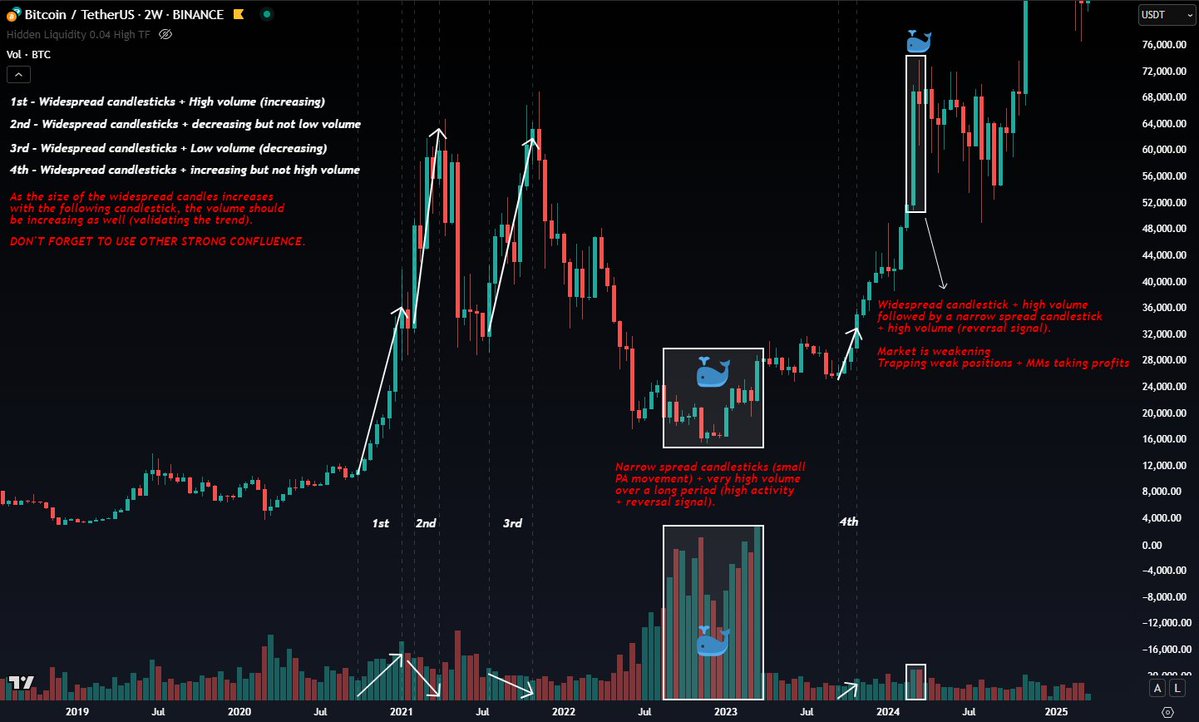
VSA is when you study PA with its corresponding volume, as volume helps to validate PA or to identify divergences by using the spread of a candle body and the size of the volume. For example, big movements require high volume and small movements require low volume. On your chosen TF, check the average volume size for a widespread or narrow spread candlestick in historic PA and compare with the candlesticks that you see today.
Traders can track down the smart money movements by using VSA. Price can be manipulated, but volume can't.
When there are big movements with low volume and small movements with high volume, this shows us a divergence and we should pay attention to what is going on in the current market. This tends to happen at reversals.
Big institutions will cover up such divergences by releasing bearish news in big downtrends and bullish news in big uptrends.
It takes effort for the market to rise and to fall and the volume should represent a high/average volume bar to validate such movements.
When using VSA, identify where you are in the trend. Are you in the middle of a trend where you can experience minor pullbacks in the longer-term trend? Or has the market been trending for some time and you're at a possible turning point, which can lead to a major reversal?
Spread is the difference between the opening and closing of the price (candle body). Candles can have a narrow spread (small candle body) or a wide spread (large candle body).
Volume is the frequency of transactions of the price change during a specified period (selected TF). Bearish volume will be marked in red, showing bearish activity and bullish volume will be marked in green, showing bullish activity and the volume action can be low or high.
This gives four possible scenarios:
▫️ Wide Spread + High Volume
▫️ Wide Spread + Low Volume (divergence)
▫️ Narrow Spread + Low Volume
▫️ Narrow Spread + High Volume (divergence)
These scenarios can help us interpret whether to approve or disapprove a setup. However, it should never be used alone and you should always seek to combine such tactics with other strong confluences.
If we have widespread candlesticks and high volume (increasing volume), then we can assume a continuation in the direction of the current trend.
If we have widespread candlesticks and low volume (decreasing volume), then we can assume a reversal is due, going against the direction of the current trend.
If we have a narrow spread candlestick and low volume, this is expected as there aren't big price movements (the market is ranging), then we can assume PA will continue or reverse. With other confluences (key level, fibs and MS), you can better judge whether the price will reverse or continue higher.
If we have a narrow spread candlestick and high volume (increased volume), then we can assume a reversal is due, going against the direction of the current trend. This signal tells us that the market is weakening and this signal tends to develop at the top of a bullish trend or the bottom of a bearish trend (More demand than supply or vice versa).
High volume is only expected in widespread candles, so when it happens in a narrow spread candle, we can assume something is going on in the market (high activity 🐳). One side of the market is aggressively attacking the other (attackers are successfully absorbing).
At supply and demand on the HTF, you will most likely see widespread candlesticks with high volume shortly after the reversal, as we will start to see continuation of bearish/bullish candlesticks going in the same direction.
Short-term trade setup (uptrend scenario)📈
If we are approaching a key level for a short/sell and we have widespread candlesticks going towards the key level with increasing (high) volume, that would be a -1 confluence to invalidate your short setup, but still take profits. Sign of strength.
If we are approaching a key level for a short/sell and we have widespread candlesticks going towards the key level with decreasing (low) volume, that would be a +1 confluence to validate your short setup and take profits (reversal). Sign of weakness.
If we are approaching a key level for a short/sell and we have narrow spread candlesticks going towards the key level with decreasing (low) volume, that wouldn't be a +1 or -1 confluence as the PA could continue or reverse. Use other strong confluences (Key levels, MS, Fibs) to judge whether the price will continue or reverse. If you have strong confluence, then it could be enough to reverse the PA.
If we are approaching a key level for a short/sell and we have a narrow spread candlestick going towards the key level with increasing (high) volume, that would be a +1 confluence to validate your short setup and take profits heavily (major reversal incoming).
Examples are down below in the comment section 👇
(Nothing changes for the idea of a buy/long setup)
In a downtrend, a narrow spread candle with high volume is a major buy signal.
In an uptrend, a narrow spread candle with high volume is a major sell signal.
I try to make these topics as friendly as possible and it does take some time out of my day, so if you want me to provide more educational posts, please like and repost so they can reach more people 🙏
If you have any questions, put them in the comments below 👇
Swing Failure Patterns (SFPs): What They Are and How to Use Them 📝
SFPs are one of the most effective tools for spotting liquidity traps — but they’re often misunderstood or misused.
Let’s break them down properly with real examples:
👇
🔹 What is an SFP?
An SFP (Swing Failure Pattern) occurs when price wicks above a high (or below a low), takes liquidity, then fails to hold outside the SH/SL and closes back in.
This signals exhaustion and often triggers a reversal.
🔹 Why they work
SFPs work because they’re built around one core market mechanic:
👉 Stop-losses are liquidity
Once those are taken, large players can fill size and reverse price — usually catching late breakout traders offside.
🔹 How to enter
The typical SFP entry comes after the sweep, when price closes back inside the prior range.
This gives:
✅ Clear invalidation (above wick)
✅ Great R:R if structure aligns
🔹 But context matters
SFPs at random highs/lows often mean nothing.
To find reliable SFPs, focus on:
👁️ 1. HTF highs/lows (macro levels)
👁️ 2. Key levels (BB's / OB's)
🔹 Example: BTC 2D BB Retest (KLS)
Price sweeps a major swing low + retest 2D BB.
The candle closes back above the low = SFP entry.
🔹 ETH Example – Macro Extremes.
ETH showed two textbook examples of SFP's.
- A low that preceded a 170% impulse rally
- The ATH of 2024, which led to a 30% decline
🔹 2 more SFP's examples for context:
ETH:
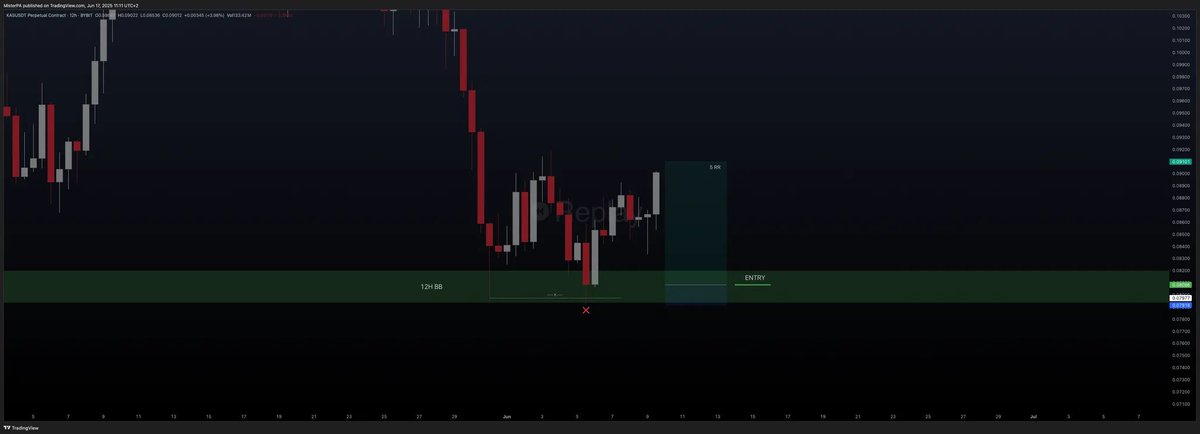
KAS:
🔹 KLS: The best kind of SFP
A Key Liquidity Sweep (KLS) is the most reliable form of an SFP.
It happens when price returns to sweep a validated swing — one formed after a major liquidity grab (like the 2D BB on BTC)
That’s where true reversals often begin.
🙌 Shoutout to @traderdune for introducing the term KLS — I had seen this pattern play out often, but didn’t know there was a specific name for it.
KLS = The SFP you should pay the most attention to.
KLS - Key liquidity sweep
🧠 Conclusion.
✅ SFPs are powerful
✅ Not all are created equal
✅ Focus on context
✅ KLS = your highest quality SFP trigger
🚨EDUCATIONAL POST:
🔨 Wick Fill Trading Strategy:
Before we dig deeper into the subject, jot down these key points to get a solid handle on the concept.
💪Wicks vs. Candle Bodies:
👉Candle Body: The thick part of a candlestick, showing the range between the open and close prices, reflects where the majority of trading activity settled during that period.
👉Wicks (Shadows): The thin lines extending above and below the body, representing the high and low prices where price briefly spiked or dipped before being rejected. These wicks aren’t bodies but indicate areas where liquidity—often stop-losses, pending orders, or untested OBs — was targeted.
✍️Wicks aren’t LTF candle bodies with liquidity — they’re the result of price testing liquidity beyond the body. The strategy works because these wicks highlight where significant orders were hit, and the market often revisits those spots. The body shows the settled range, while the wick exposes the liquidity hunt.
Now that we’ve nailed down the basics, let’s dive into the concept.
The wick fill trading strategy is a technical analysis approach that focuses on candlestick chart patterns, specifically the wicks (or shadows) of candles, to identify potential trading opportunities. Wicks represent price rejection points, where the price moved significantly but reversed, leaving a "tail" above or below the candle body. The strategy involves waiting for the price to retrace and "fill" the wick — moving back into the price range of the wick — before entering a trade. I use this method particularly in crypto, but i've started using it in Tradefi lately as well as other markets due to its ability to capture high-probability setups with defined risk parameters as long as you understand the context in which it can be used.
💪How It Works:
👉Identifying Long Wicks: The strategy targets candles with long wicks (upper or lower shadows) that are significantly longer than the candle body. These wicks indicate areas where the price was rejected, often due to strong buying or selling pressure. For example, a long upper wick suggests buyers pushed the price up, but sellers overwhelmed them, driving the price back down. Conversely, a long lower wick indicates sellers pushed the price down, but buyers stepped in to push it back up.
👉Wick Fill Concept: The strategy assumes that wicks often act as price magnets, drawing the price back to fill the wick’s range (typically at least 50% of the wick & sometimes 100% of the wick) due to market participants retesting those levels. This retracement can signal a continuation of the trend or a potential reversal, depending on the market context. For instance, in an uptrend, a long lower wick at a support level might indicate buyers defending that level, and a wick fill could confirm a continuation.
Check out the examples below of both bullish and bearish wicks on two different asset classes—$BTC and $USDCAD.
You can clearly see how price often reacts at the 0.5 or 0.618 Fib levels (sometimes it hits at 0.382, but I typically wait for 0.5). This usually occurs at S/R levels, followed by a liquidity move before the continuation play kicks in.
💪Why It Works:
👉Price Rejection and Market Sentiment: Wicks represent areas of price rejection, where buyers or sellers failed to sustain a move. These levels often act as psychological barriers, attracting pa as the market retests them to resolve imbalances or trap late entrants. For example, a long upper wick at resistance shows sellers stepping in, and a wick fill may confirm continued bearish pressure.
You can clearly see an example of ongoing bearish pressure on this USDT.D chart (first one to the left) after price filled 50% of the wick at the KL, with price continuing its downward trajectory targeting our 8D OB at 4%.
👉Liquidity and Order Flow: Wicks often form due to stop-loss orders or liquidity grabs, where large players push prices to trigger stops before reversing. The wick fill strategy capitalizes on these moves as the price returns to "fill" the imbalance, providing clear entry points in confluence with S/R, S&D, Fibs etc. The strategy works across various timeframes (m1 to daily). It’s particularly effective in trending markets or near KLs, where wicks signal trend continuation or reversal.
👉Psychological and Structural Confirmation: Wicks at KLs (e.g., S/R, Fib levels) often align with MS (very important to note), reinforcing their significance. The retracement to fill a wick can trap counter-trend traders, providing momentum for the next move, which traders can exploit.
💪Key Considerations:
👉False Signals: Not all wicks get filled, especially in choppy or ranging markets. I avoid trading wicks during high-impact news events, as volatility can lead to false signals. I primarily use this strategy in trending markets, and it works a treat when applied in the right context, which leads me to my next point.
👉Context Matters: The strategy’s success depends on market context. A wick fill in a strong trend is more likely to signal continuation, while one at a KL after an extended move may indicate reversal. Be sure to keep your HTF analysis in mind to avoid getting tripped up by LTF noise.
Conclusion:
The wick fill trading strategy works because it leverages price rejection points and market psychology to identify high-probability entries with low risk in confluence with other factors i mentioned. By focusing on wicks as areas of unresolved liquidity or sentiment shifts, we traders can anticipate retracements and capitalize on momentum.
I hope you enjoyed the post and would appreciate it if you’d share it. If you’ve got any questions, feel free to drop them in the comments below.
🧵 The Altseason Delusion
1/
“Wen altseason?”
The favorite question of the clueless.
There is no altseason button.
There are only setups.
2/
The truth:
The only way “altseason” works is if you’re already in position.
You enter before the crowd.
When it comes, your Wyckoff target just gets hit faster.
3/
If you wait for altseason to start → you’re late.
You’ll be exit liquidity.
4/
Especially this cycle:
Altseasons are engineered across sectors.
Liquidity is rotated.
Your coin won’t pump just because “alts go up.”
5/
What really happens:
•Sector narrative builds
•Liquidity floods in
•Distribution forms
•Exit liquidity gets harvested
•Smart money moves on
6/
That’s why “altseason” is a lie.
The only truth is structure.
Wyckoff accumulation → re-accumulation → LPS → markup.
That’s the signal.
7/
Bonus tip:
Forget altseason.
Study liquidity engineering across sectors.
That’s where the real alpha hides.
8/
Truth:
Altseason isn’t a strategy.
It’s a trap.
Wyckoff is the answer.
Thread of Threads 🎁
Below is a showcase of my best work i've produced on X; I hope you learn something from it. Im just getting started - never leaving, never quitting, always improving.
Obsidian 🔮
Why use Obsidian -> https://t.co/MTOnVXbPLF
Obsidian Basics -> https://t.co/fI8A7WNjkI
Obsidian Advanced Plugins -> https://t.co/GKmahpub5h
Obsidian Web Clipper -> https://t.co/U6pgvyJtrU
How to Decode MT -> https://t.co/gr2teqV4Wi
Obsidian Mystery Note -> https://t.co/HLHCeh0UsZ
Obsidian Inspiration ->
https://t.co/6VLETfJBWr
https://t.co/Jum4rUK0pH
Improve Your Edge 🔪
Timeframe Deep Dive -> https://t.co/Q8VhpzWtJB
BVOL24H Data Analysis -> https://t.co/hGEHtAdecA
Ranking Levels by Optimality -> https://t.co/fXy0aIJ3sk
Trading View Object Tree -> https://t.co/cnM963hkTd
Concepts 📚
Understanding Algorithms -> https://t.co/7qMqmXGomo
Why High Leverage is Better -> https://t.co/q5hgKvWN1u
Fake Breakouts -> https://t.co/spLMuNZNpb
Partially Taken Rule -> https://t.co/gp8QrfZ5F8
Decoding 💽
Elon Decoding -> https://t.co/BzLkEXb08C
Limitless Hidden Truths -> https://t.co/WBFga90G5H
Aries and World Events -> https://t.co/X8ukJHxf51
Pair News with PA 🧩
AVAX -> https://t.co/cek3rd6J2E
SUI & CETUS Hack -> https://t.co/1tuTLQ64O8
Any requests for new content? LMK 👇🏻