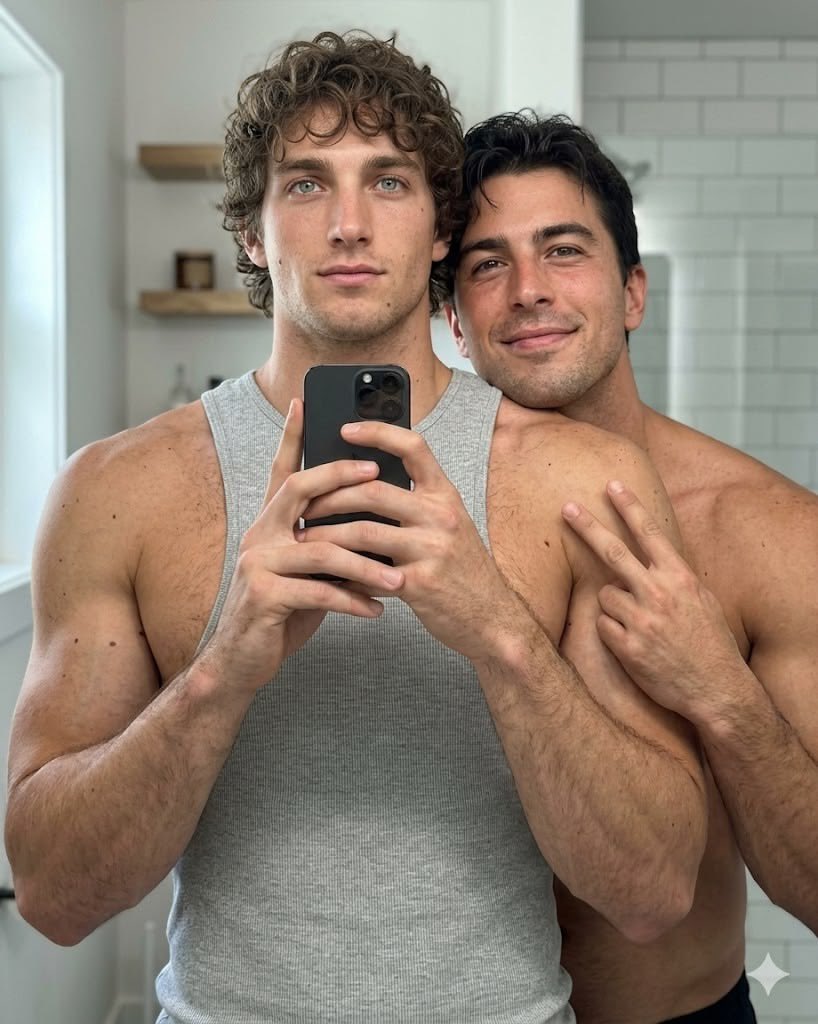
Some people turn over looking for space. Others treat it as a challenge to close the gap again before the distance settles. The quiet negotiation never really stops, it just changes volume after the lights go out.
Ser Ilyn Payne is the scariest character in the series precisely because he has no inner life left to analyze
Every villain in these books gets a psychology ambition, trauma, ideology, something to dissect. Ilyn Payne, the King’s Justice, has his tongue cut out by Aerys for a joke that offended him, and from that point on he simply stops existing as a person with motives. He shows up, he executes, he leaves. No lines, almost no thoughts given to the reader. He’s not scary because of what he wants. He’s scary because wanting anything stopped being relevant to him a long time ago, and the Seven Kingdoms just kept handing him a sword anyway.
My husband comes home from work every evening, parks the car in the parking lot in front of the apartment building, and doesn't get out for twenty minutes.
I saw this from the balcony three weeks ago.
Every time he comes upstairs, he says the same thing: "There was traffic."
This week I decided to watch: ++
Sebastian Croft put out a breakup EP and the tabloids say it is about Joe Locke.
The Great Forever. Eight songs. First single Pretty People already out. QueerBuzzer and The Sun ran the claim this month. On Heartstopper Croft played Ben. Locke played Charlie. Off screen, sources say they were together nearly three years, never public, ended over the phone.
Croft has talked about the phone call. Doing a play in Chichester. A relationship he thought would last. Buying a guitar the same day because writing was the only next step.
Today Digital Spy has Locke reacting to Croft on Celebrity Traitors. He is watching. Rooting for him. Thinks he is a good Faithful. Notes that Bash would rather be a Traitor.
That is the public version of the private ending.
Heartstopper fans spent years reading the actors. The EP does not confirm the reading. It also does not deny the feeling. Pretty People is about scrolling photos of someone who moved on to a glossier crowd. The video is directed by Connor Jessup.
Gay first loves still get written like they were only the show. Sometimes they were also the years after the cameras stopped.
Locke can cheer from the outside. Croft is the one with the songs. The Traitors round table is just the latest room where people are guessing what he is hiding.
The sweet clip skips the receipt. Someone still had to decide which friend gets the real story and which one only gets the version that will not start a debate.
He wanted to be held. The relationship heard foreplay.
When every cuddle has to become sex to count, the soft one starts rationing touch, and quiet gets mistaken for distance.
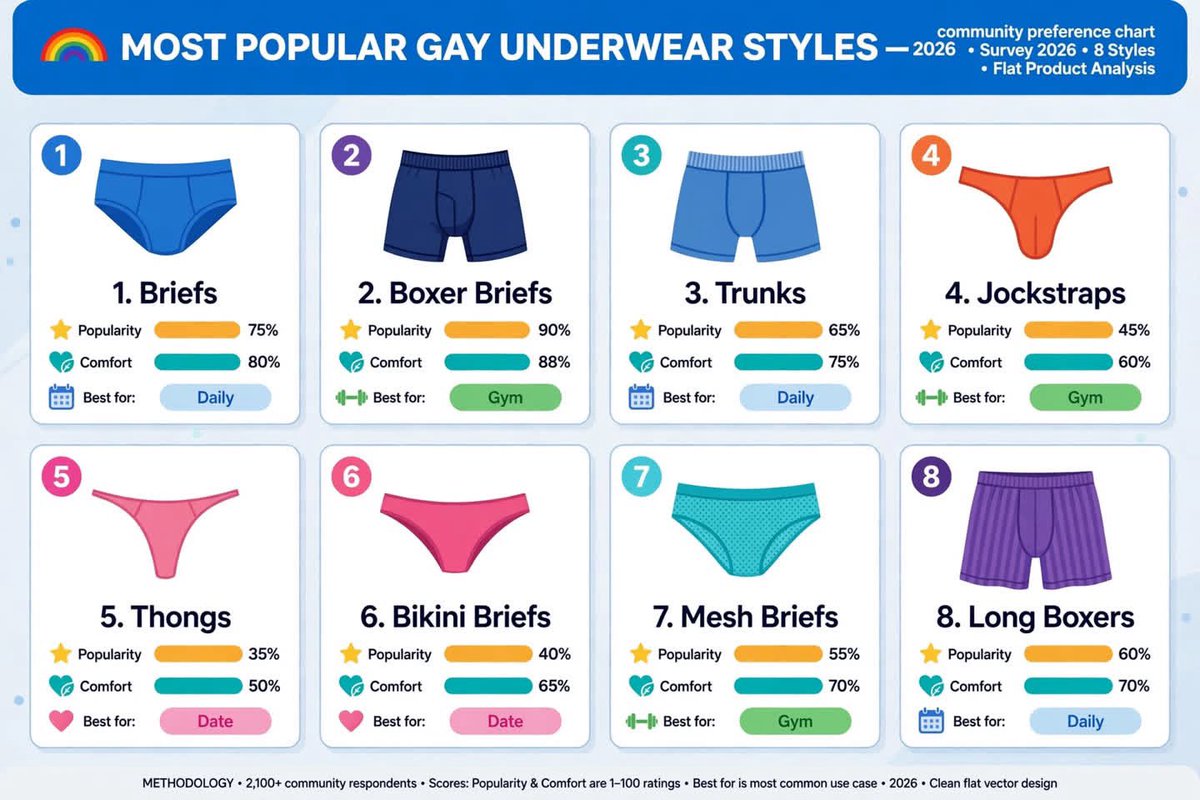
Underwear rankings are never really about comfort.
They are about which version of a gay man is allowed to be ordinary.
Daily wear is the compromise that lets you grocery shop without announcing yourself. Gym wear is the one that still believes the body is a project. Date wear is the one you only put on when you want to be looked at on purpose.
A lot of men own all three and pretend they only have a preference.
The chart treats that as style. It is closer to code-switching.
You learn early which cut reads as “just a guy” and which one reads as available. Then you spend years deciding how often you can afford to be available.
The pair that actually gets worn the most is rarely the one that would win a poll.
In some countries underwear is a size chart. In others it is a customs form.
The real cost is never the shipping. It is deciding whether the package can say what it is on the outside.
Men who can order branded briefs across borders are buying more than fabric. They are buying a version of themselves that does not exist on the local rack.
That version still has to survive the gate, the landlord, and whoever opens the box first.
A lot of gay life in places like this is lived in the gap between what you want to wear and what you can safely receive.
The guide treats that as a delivery estimate. It is closer to a risk assessment.
Tip Toe lands today.
Alan Cumming plays Leo, a gay man who owns the Spit & Polish in Manchester’s Gay Village. David Morrissey plays the neighbor next door. Fifteen years of ordinary living. Then the ordinary starts to crack.
Starz has it from today.
This is not a coming-out story. It is the story after the coming-out, when the bar is already yours and the man on the other side of the wall has started listening to different voices.
Gay television loves the first kiss and the parade. It is less interested in the decade where you already have the keys and still have to decide what to do about the person who shares your fence.
Cumming knows how to play a room. Here the room is smaller. A neighborhood bar. A neighbor who used to be fine.
Some people will watch it for the host. Stay for the part that does not resolve in a musical number.
A gay bar can be a home. It can also be the place the street outside starts to feel different.
That tension is the show. Not a speech. Two front doors.
Gay affection gets treated like a reveal. For a lot of men it is the opposite: a private habit they only let the camera catch after they have already practiced being careful.
The sweet clip skips the receipt. Someone still had to decide which friend gets the real story and which one only gets the version that will not start a debate.
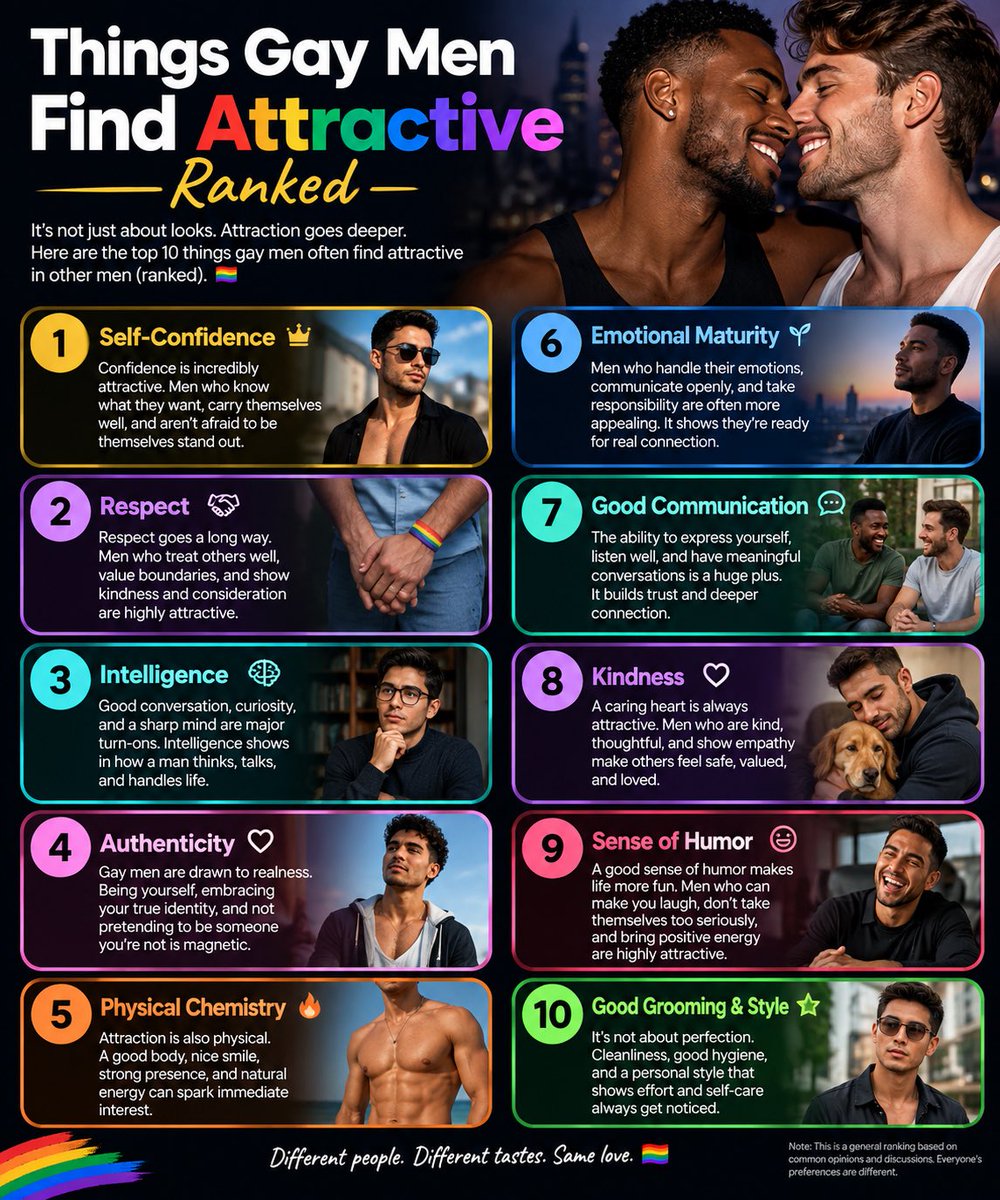
These lists always put the soul first and the body fifth.
That’s the version we share.
The version we swipe with still filters by photo, height, race, and whether the lighting hides the years.
Confidence is magnetic until the gym photos don’t match the face. Respect ranks high until someone is less convenient than they were attractive. Authenticity sounds good until it includes an accent, a belly, or a status people still whisper about.
We keep ranking the man we want to be seen wanting. Then we sleep with the one who passed the first three photos.
He wanted to be held. The relationship heard foreplay.
When every cuddle has to become sex to count, the soft one starts rationing touch, and quiet gets mistaken for distance.