On average, in the US right now, you can expect roughly 1,800–1,900 police-reported accidents (crashes) and about 12 traffic fatalities for every billion miles driven.
FSD drives 1 BILLION miles per MONTH. Why don’t you post say just 100 of these FSD caused crashes every month and the 12 fatalities…. You should have no problem finding content if what you say is true.
Your problem. FSD is safer than humans, so you can’t find the 12 fatalities every month…
Grok took a look and thinks you are reaching for a reason to blame FSD. I’m at 98% FSD. Not because I enjoy risking my life.
I’ve driven FSD since 2019. The last year on hardware 4 it’s absolutely the safest driver I’ve ever seen. Not sure your angle. Maybe you just want X traffic.
SuperGrok’s take.
What the video actually shows
It’s only the rear view, so we’re looking backward. You see the highway behind her, barriers, lights, and at one point another car appears on the side of the frame.
It doesn’t look like an obvious near-miss in the frames — the other car isn’t right on her bumper or anything dramatic.
She probably took over because she saw the other vehicle’s lane ending ahead and didn’t like how FSD was (or wasn’t) adjusting speed or position to handle the merge smoothly.
Here is an example…. It involves none other than Cristiano Ronaldo.
The Ronaldo Case (the one everyone’s calling the “Ronaldo Precedent”)
Before/during the lead-up to this 2026 World Cup, Ronaldo picked up a straight red card for violent conduct (an elbow) in a Portugal World Cup qualifier against the Republic of Ireland. He was hit with the standard three-match ban.
• He served just one of those matches (against Armenia).
• FIFA’s disciplinary committee then used its discretion to suspend the remaining two matches and turn them into a one-year probationary period instead.
• This let Ronaldo play in Portugal’s opening World Cup games without missing time.
They cited his historically clean disciplinary record as a big reason. Sound familiar?
How this applies to Balogun
FIFA did almost the exact same thing for Balogun today:
• He got the automatic one-match ban for the red card.
• Instead of making him serve it against Belgium, they suspended the ban for a one-year probationary period.
• If he stays out of trouble, he’s good. If he picks up another serious offense during that probation, the original suspension (plus more) could come back.
This is the same tool in FIFA’s Disciplinary Code they used for Ronaldo. It’s rare, but it’s not brand new.
More political spin. The US sends PAC-3 missiles to 17 countries worldwide with the most staying with the USA to protect our own bases and US citizens as it SHOULD.
The US sends PAC-3 missiles (the ones for Patriot air defense systems) mainly to its own forces and a handful of close allies and partners worldwide.
These are the advanced hit-to-kill interceptors that are especially good against ballistic missiles like Russia’s Iskanders. The US makes them domestically (Lockheed Martin), and they’re in high demand globally, which is exactly why Ukraine is running short right now.
Where they actually go
1. US military itself (biggest user by far)
• The US operates the largest number of Patriot systems — dozens of batteries across multiple battalions.
• Deployed both at home and overseas for protecting US troops and bases.
• Key overseas spots: Middle East (Saudi Arabia, UAE, Qatar, Kuwait, Bahrain, Iraq/Erbil, Jordan area), Europe (Germany, Poland rotations), and Asia/Pacific (Japan, South Korea, Guam support).
2. Major foreign buyers & operators (about 17–18 countries total besides the US) Here’s where the US has sold or transferred Patriot systems and PAC-3 missiles over the years:
Middle East (biggest export market recently):
• Saudi Arabia — One of the largest customers. Just approved in Jan 2026 for 730 PAC-3 MSE missiles in a ~$9 billion deal.
• UAE, Kuwait, Qatar, Bahrain, Egypt, and Israel (Israel integrates them with its own systems).
Europe/NATO:
• Germany, Netherlands, Poland, Romania, Greece, Spain, Sweden.
• Newer: Denmark approved a big deal; Switzerland has orders (some deliveries were delayed/diverted in the past to help Ukraine).
Asia:
• Japan — Major operator (they even produce some domestically and recently sent a batch of their PAC-3 missiles back to the US to help replenish American stocks amid Ukraine needs).
• South Korea
• Taiwan (multiple upgrade and missile packages)
Ukraine:
• Received Patriot batteries + interceptors starting late 2022/2023. This is one of the reasons global stocks tightened up.
Why the shortages everywhere (including for Ukraine)
• Production is ramping up, but it takes time (Lockheed is trying to more than triple capacity).
• High demand from multiple conflicts + ally modernization programs.
• US has sent a lot to Ukraine, and there are competing needs (e.g., Middle East tensions leading to more sales and usage there).
• Some allies (like Japan) have even helped backfill US stocks.
Bottom line (casual version):
The US keeps most PAC-3s for its own global deployments (especially the Middle East and Asia) and sells them to wealthy, strategically important partners — Gulf states being the biggest recent spenders, plus key NATO allies and Indo-Pacific partners. Ukraine gets some, but it’s competing with everyone else in a tight market.
That’s why one big Russian ballistic barrage can expose the gaps so quickly. The missiles exist, but they’re spread thin across a lot of places.
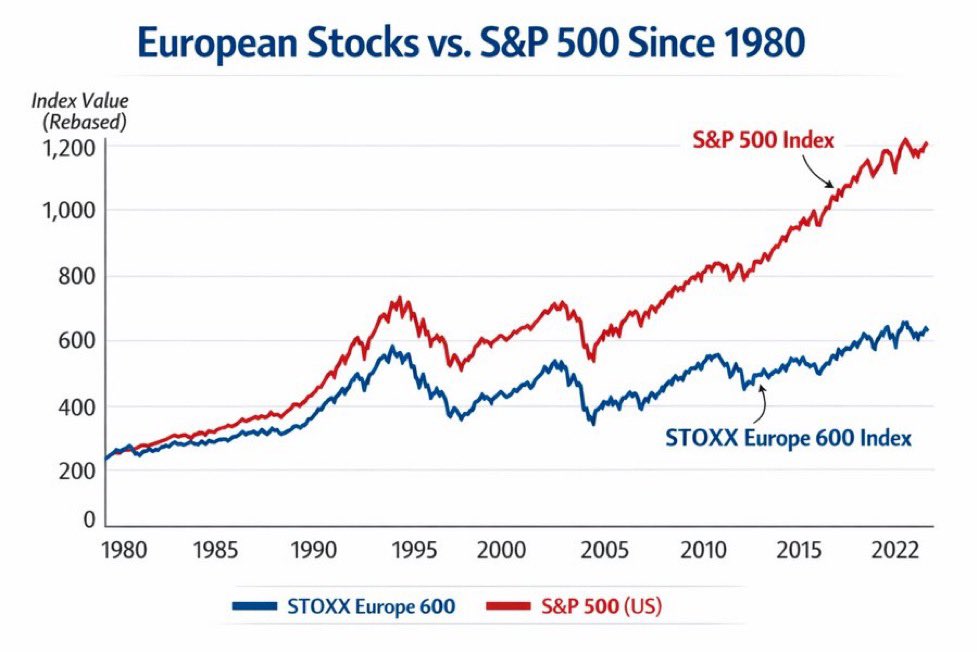
@nymbusjp I think since 1980 Europe has gone with 4 things that have stifled their productivity.
1 - Significant regulation creep
2 - Significant Climate change policies
3 - Significant immigration with expensive social nets
4 - High government taxes to pay for the above
@cary_deakin@nymbusjp Too much “if then else” style decision making and a “stop dead in your tracks and wait for a call center employee to ok your next move”. In 7 years of using Tesla’s FSD it’s never once not
made a decision on its own.
Waymo’s have a “stop dead and wait for instructions” mode. Too much if them else decision making. I’ve driven Tesla FSD since 2019 and never once has it stopped and not made a decision on its own. That’s their Achilles heel.
That and cost, which if your service is basically the same… cost wins. Except with fashion and women’s hand bags, but I doubt that’s a factor.
More Waymo’s means bigger call centers spreading the load and Waymo can also add more call center employees for wach Waymo.
However, they are battling cost, so their bigger issue is too much procedural if then else style decision making and lack of confidence.
Adding more Waymos increases the odds more than one will get confused by another already stopped.
I’ve driven Tesla self driving since 2019. Never once has it literally stopped dead with no idea what to do. The Tesla always makes it’s own decisions and “tries”
to solve its way out. There is no “stop dead and phone home mode”.
Yeah that makes Waymo’s “safer” but stopping dead is a nightmare for everyone else.
Today, I’d agree that most people don’t understand it or think they need it, but for those that have spent time with it… you realize it is the future. The auto makers all know it. Unfortunately, many are so far behind they may go out of business before they catch up.
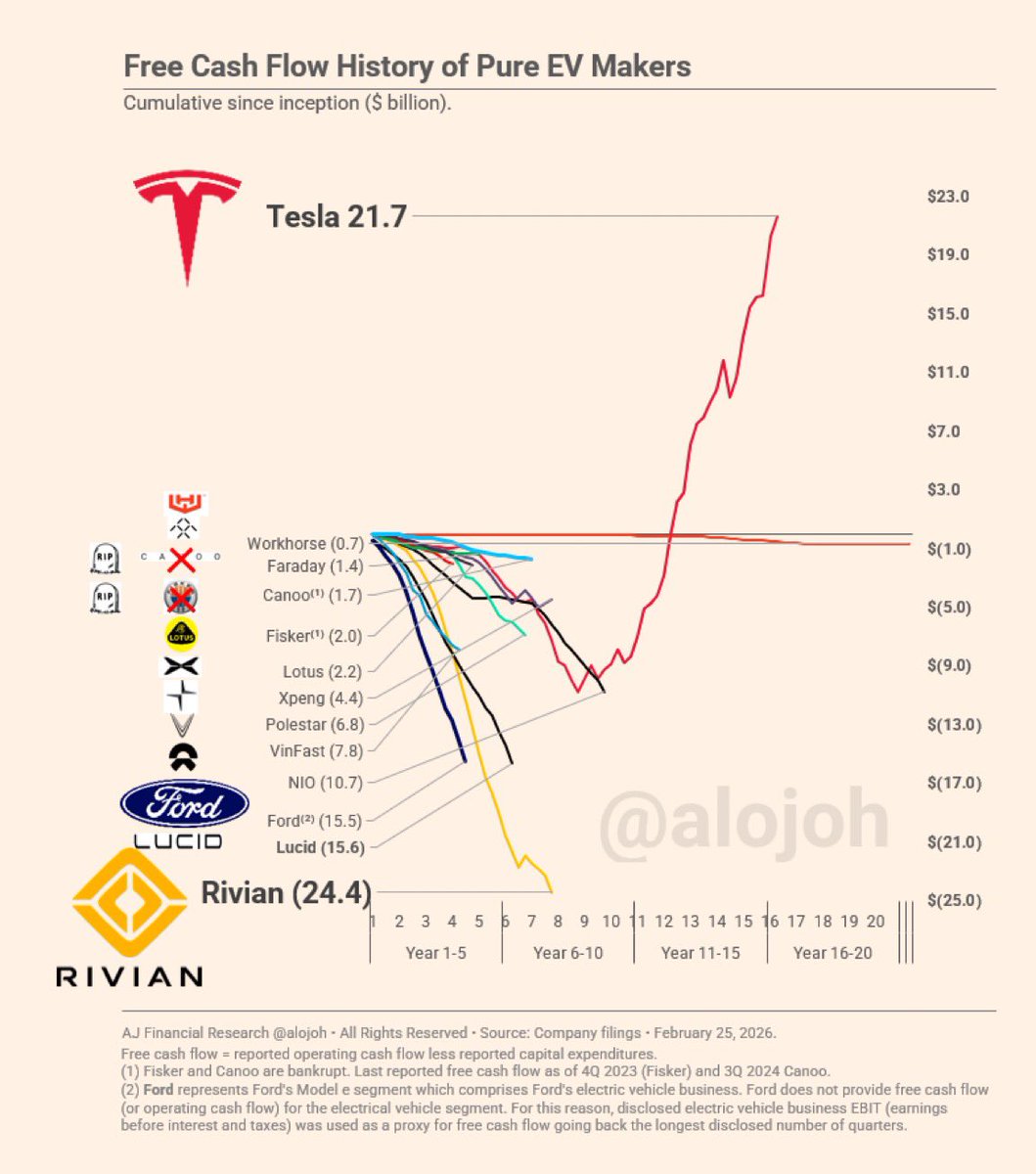
Rivian is on the right track, but their current version is Tesla FSD 10-11 from 6 years ago and very few realize how hard it is to close that gap. Meanwhile Tesla isn’t standing still. They are striving for full unsupervised. Unsupervised changes everything.
@Geiselhart45269@FoxNews Nice try. The US per capita income is 68 times higher and life expectancy is 5 years longer. At least you save in North Korea by not needing a computer or cell phone. You’re blocked from using the internet, so why bother…😜
Demarcus, I totally get why a lot of people aren’t jumping to pay $99 a month for Tesla FSD right now.
There are legit reasons:
1. The extra $99 just isn’t in the budget for everyone.
2. They tried earlier versions and lost trust.
3. They’ve never tried it and aren’t convinced yet.
4. They don’t drive enough miles to make it worth it.
5. They still don’t think it’s reliable enough today.
6. They’d pay for real unsupervised autonomy, but not the supervised version we have now.
All of that is completely fair.
At the same time, FSD keeps getting meaningfully better with every release. As the tech improves, a bunch of those objections start to fade on their own.
That’s how adoption climbs from the early 15% crowd to 30%, then 50%, and beyond.
But let’s zoom out. The supervised FSD we have today is just the opening act.
The real transformation happens when the car can drive itself with zero human supervision.
Once that’s real, the value proposition flips completely.
Here’s what that future could actually feel like:
1. Insurance savings — If the data proves autonomous cars are significantly safer, rates could drop hard. We’re talking $100–$300+ back in your pocket every month, especially if you’re in a higher-risk group.
2. Commute productivity — You could knock out work or calls on the way home, leave the office earlier, and still walk in the door with more energy for your family.
3. More sleep — Or flip it: sleep in a little longer because the car handles the morning drive while you rest.
4. Parking money back — Get dropped off right where you need to be, then let the car park itself somewhere cheaper instead of paying downtown rates.
5. Airport runs that don’t suck — Car drops you at the terminal, heads home or to cheap parking, then shows up exactly when your flight lands. No more circling or waiting on shuttles.
6. Weather-proof drops — Pouring rain or snow? The car pulls right up to the door, parks itself, and comes back when you’re ready. You stay dry.
7. Long drives without the exhaustion — Turn road trips into actual rest time instead of draining, full-day slogs.
8. Entertainment on the move — Watch a game, take calls, read, or just relax while the car does the driving.
9. Family logistics on autopilot — For busy households, the car becomes a safe, reliable shuttle. Less time playing chauffeur, more time actually living.
And that’s just scratching the surface.
Supervised FSD is useful, sure. But unsupervised autonomy is going to feel like something most people won’t want to live without.
Price will still matter, and not every household will value it the same. But once it works at scale, the question stops being “Is this worth $99 a month?” and becomes “How much time, money, convenience, and freedom am I getting back?”
That’s why every major automaker is racing to solve it.
It’s not a question of if this becomes valuable.
It’s a question of when.
I think it was Tesla Semi accident > Tesla crushes Q2 deliveries.
Hopefully, Tesla say’s “No driver attention mode in Tesla Semis…”. They haven’t yet, so I’m wondering, maybe the Semi has it, but it didn’t wake the driver or he had sunglasses on etc.
There could be some reasonable expectations, but Tesla hasn’t provided any yet.
@DocTesla83@ICannot_Enough Tesla Doc, yeah we’ll see. If we have just enough skeptical shareholders it will help get us a better exchange. I just hope the deal goes thru. Elon’s life will be better and hopefully, so will mine. I’m a long term shareholder. I’m not in hurry. To Mars and Beyond! 😜
You are correct about the timeline. The question is will Rivian catch up? And while they are playing catchup (Tesla sold 34 times as many vehicles) will Tesla stand still and wait…. The image shows the growth from the beginning of both Tesla and Rivian. It’s time to sell cars at a profit. We’ll see.