Much has changed here since Elon took over. Based on my own before-and-after expts, climate denial responses are up 15-30x. Changes in followers are even more dramatic: Stef's analysis shows that climate accounts have seen little change while denial accounts have boomed.
Here are the big takeaways from the @IPCC_CH Synthesis Report released today.
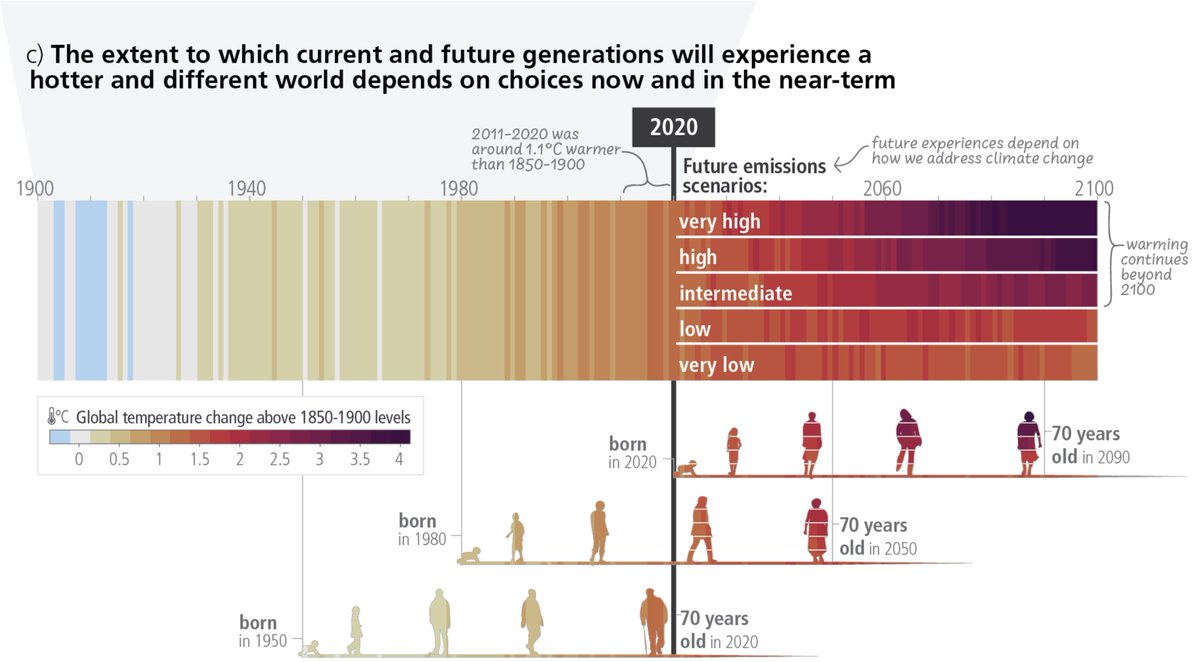
First, climate change has already caused widespread and substantial losses to almost every aspect of human life on this planet, and the impacts on future generations depend on the choices we make NOW.
@EsalaAntti It's not just the direct emissions of energy production, it's the life cycle emissions of energy systems including the impacts of land-use change.
Our first article from 1.5-degree lifestyles project. Check out how low GHG-intesity you need with your income level and how to achieve it 😄
Too much consumption or too high emissions intensities? Explaining the high #CarbonFootprints in Nordics https://t.co/4p58PTo9hG
Interesting new article on #RoadInfrastructure emissions. Embodied CO2 in North America 5.4 t, in Europe 2.2 t, and in Asia 0.8-1.9 t per capita. https://t.co/2vwUGB6uej
My first ✨PhD Position✨ at @eptntnu is now open, an interesting topic on material-carbon nexus, consumer material- and carbon footprints in the built environment.
Apply here before 19th October 👇
https://t.co/iQHWzVByQq
How can we protect biodiversity and stabilize the climate? Transform nutrition to protect animals and plants? Help us devise new ways to reduce biodiversity footprints in an new, exciting project. Join our team as a PhD student. @FrancescaVero20
https://t.co/2x24wFg6bH
Please participate our survey on #ClimateLiteracy - available in English, Finnish, Swedish, Norwegian, Danish, Icelandic and Polish!
Share your perceptions of climate change and sustainable lifestyles. You can win an electric bike!🚲
https://t.co/XmFVaqOUXE @uni_iceland
@mczepkiewicz @AarneGranlund @JukkaHeinonen9@LarssonJorgen66 I think the Eora model includes LULUCF-sector, so studies using that to assess CBCFs would apply. The impact can be positive or negative though. Globally LULUCF-sector is an increasing sink: https://t.co/jAFlAv4XDu
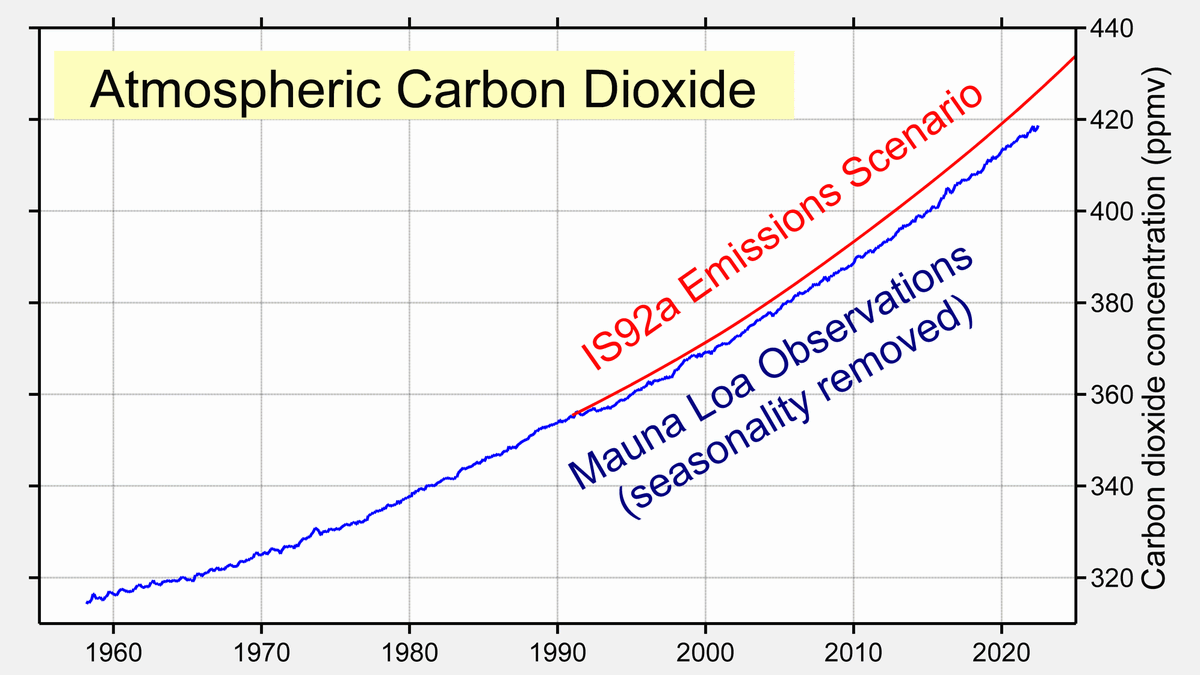
Thirty years ago modelers created a "business-as-usual" scenario, known as IS92a, to help understand the potential future of carbon dioxide in the atmosphere.
Relative to that prediction, all of our collective efforts have only slightly slowed the accumulation of carbon dioxide.