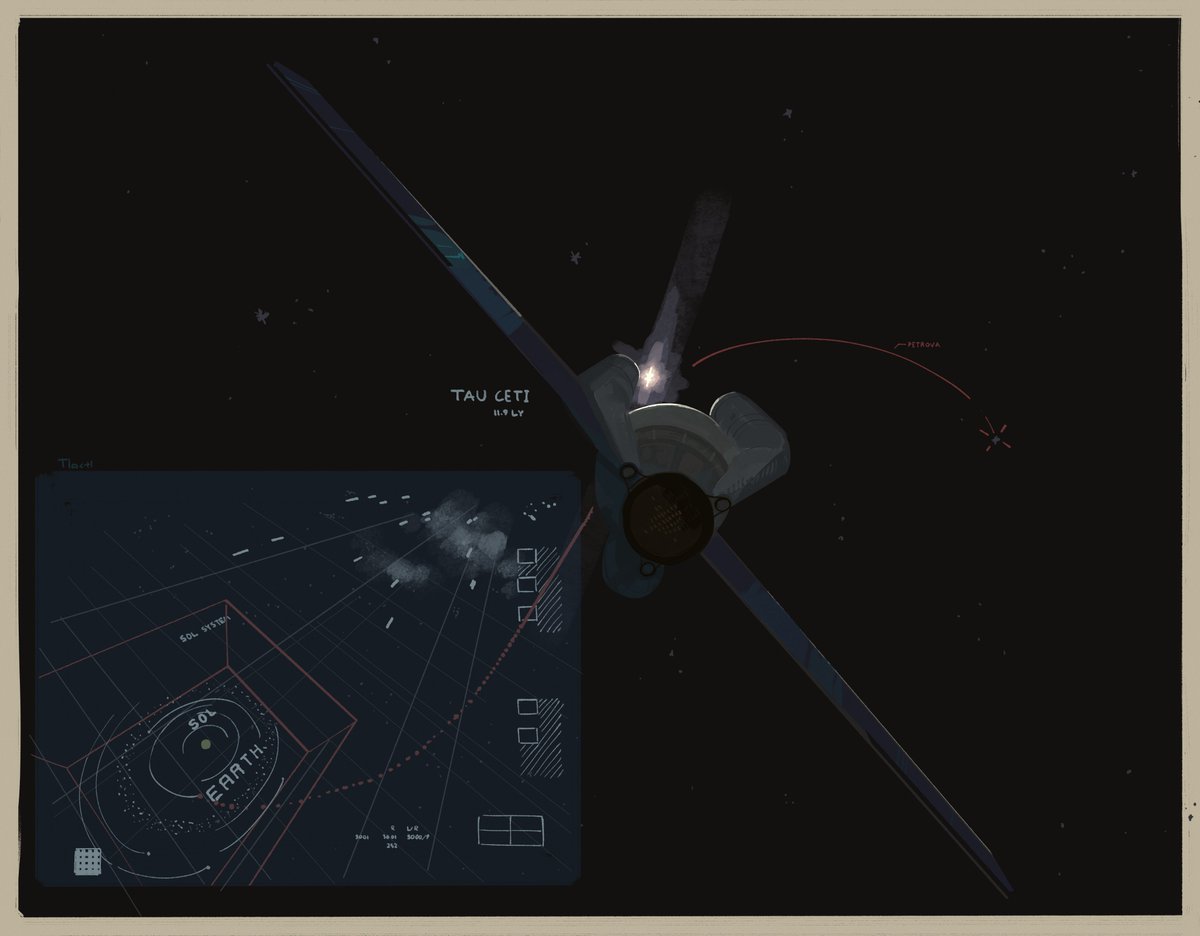
ClearSpace has developed a spacecraft designed to clean Earth’s orbit by capturing defunct satellites using robotic arms.
The company works with the European Space Agency and UK Space Agency to safely deorbit satellites.
The mission aims to reduce debris and improve safety.
Many matrix problems in statistics and data science rely on decomposing complex structures into simpler components. The Cholesky decomposition does exactly that by expressing a symmetric positive definite matrix as the product of a lower triangular matrix and its transpose. It is a key tool in numerical linear algebra, optimization, and Bayesian statistics, especially when handling covariance matrices.
✔️ Efficient for solving linear systems, computing matrix inverses, and evaluating multivariate normal densities
✔️ Numerically stable and faster than general-purpose decompositions like LU or QR for suitable matrices
✔️ Widely used in Gaussian process regression, Kalman filters, least-squares estimation, and Monte Carlo sampling
✔️ Enables efficient computation of log-determinants and likelihoods in high-dimensional models
❌ Applicable only to symmetric positive definite matrices, requiring checks or regularization in some cases
❌ Can become computationally demanding for very large or dense matrices
❌ Sensitive to round-off errors if the matrix is close to singular or poorly scaled
❌ For large-scale problems, sparse, pivoted, or hierarchical Cholesky variants are often preferred
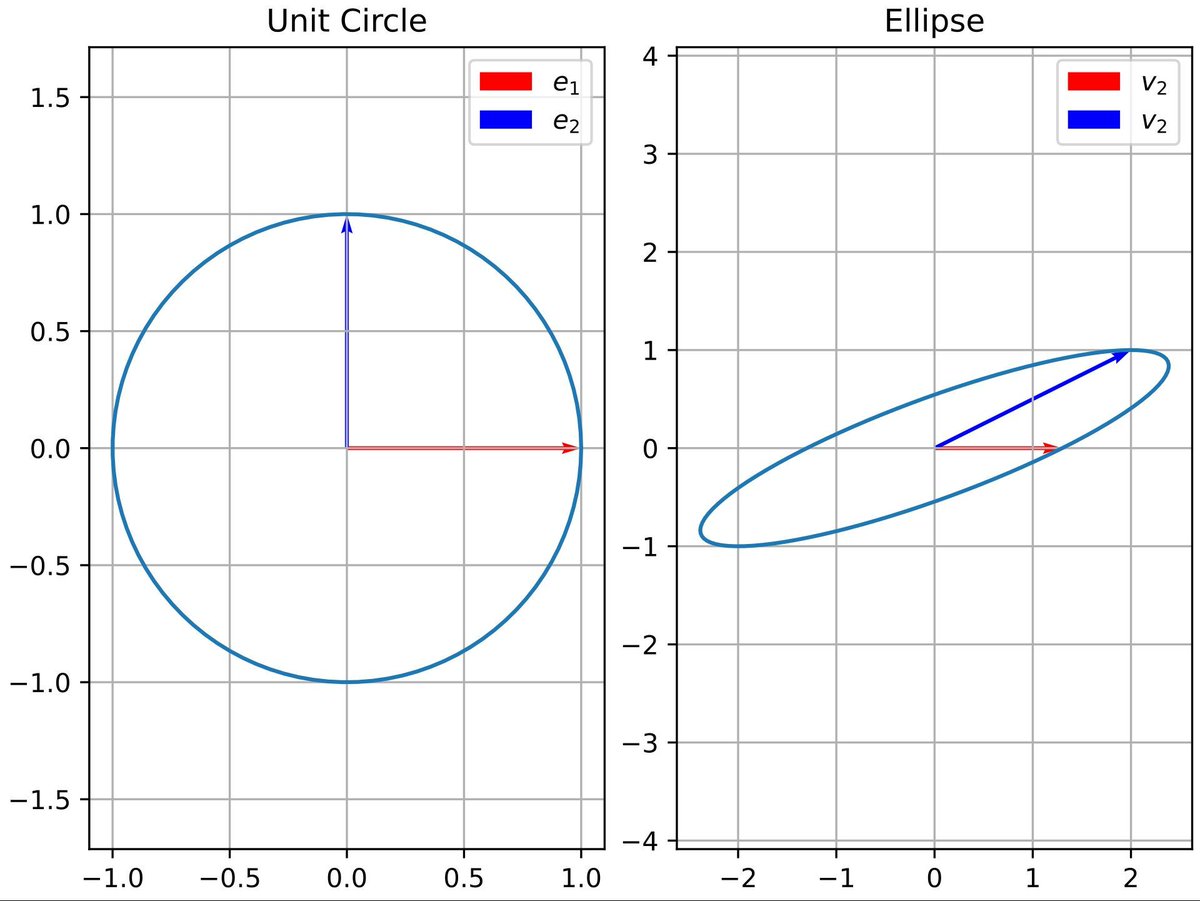
The visualization below shows how the Cholesky transformation maps the unit circle to an ellipse, demonstrating how the decomposition stretches and rotates coordinate axes while preserving geometric relationships. Source Wikipedia: https://t.co/yfOqAdM4RW
🔹 In R, functions such as chol() and chol2inv() are available in base R, while the Matrix and RcppArmadillo packages extend these capabilities to sparse and large-scale problems.
🔹 In Python, numpy.linalg.cholesky() and scipy.linalg.cho_factor() provide efficient implementations, and frameworks like PyTorch and JAX include GPU-accelerated and differentiable versions for modern machine learning workflows.
Get more insights on statistics, data science, R, and Python by subscribing to my email newsletter. Learn more by visiting this link: https://t.co/ktUcWo9XpO
#Rpackage #StatisticalAnalysis #R4DS #RStats #datascienceeducation
A NASA technical paper on Gas-Core Nuclear Rockets shows their Isp scaling to 6500s if they can retain the uranium plasma at 2000 bar:
https://t.co/m3FNnIsZWV
At the 12 GW scale, they'd reach 58 kW/kg. 7.5% of reactor output becomes waste heat at 1400K to be removed by radiators.
Why did it take 1.5 billion years for eukaryotic cells to evolve multicellularity?
The answer likely lies in the adaptations required to survive Neoproterozoic Snowball Earth, specifically metabolic energy consumption scaling in groups vs single cells:
https://t.co/AWdcAw2Q0T
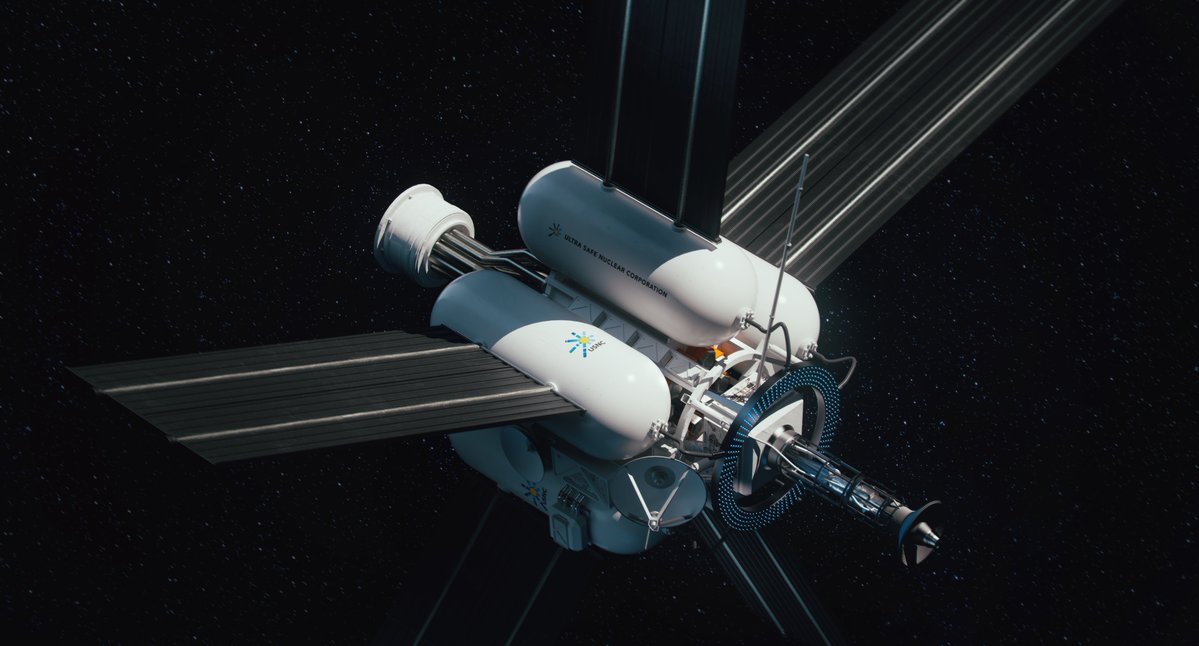
Fission reactor and radioisotope-powered probes from USNC, equipped with high deltaV propulsion to intercept asteroids or explore the Outer Solar System.
#space#art by Rene Aigner
https://t.co/5rW72nDqRv
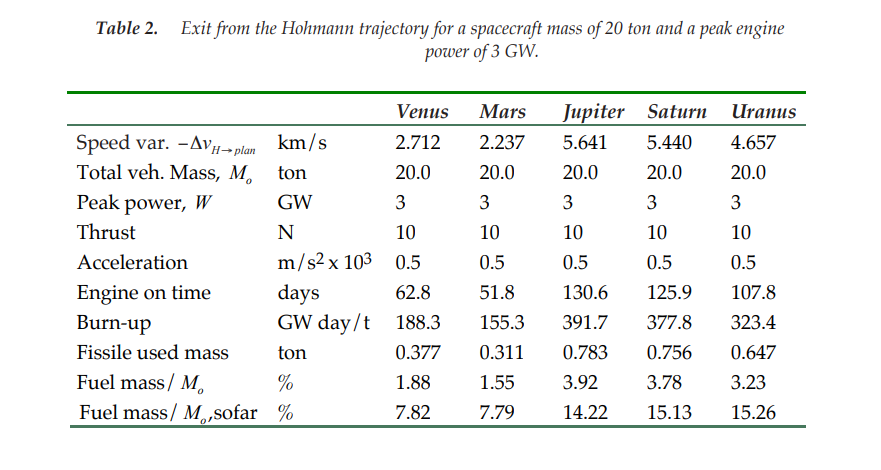
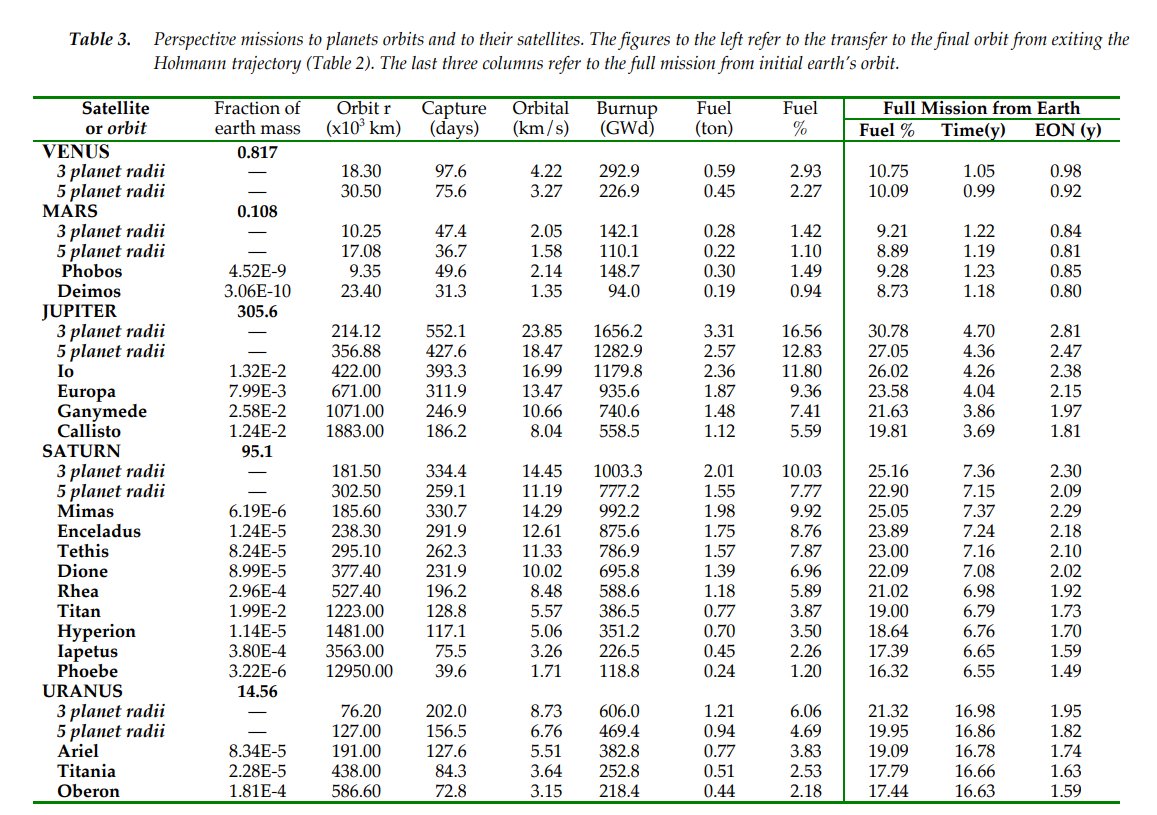
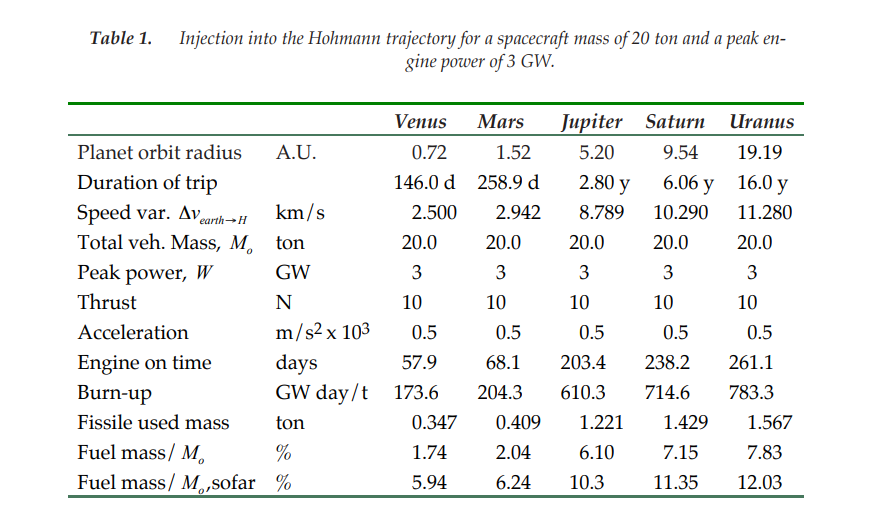
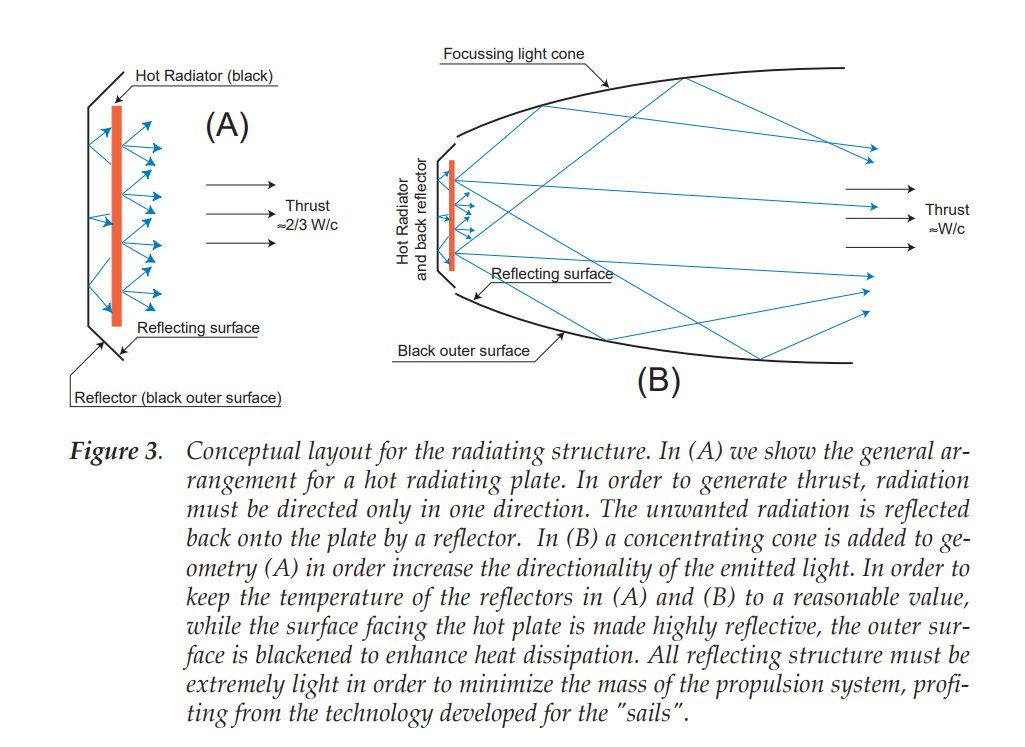
A breakdown of nuclear photon rockets:
https://t.co/PMA0FbO0lX
Even with a 3 GW reactor crammed into a 20 ton spaceship, you'd get 0.05 milligee accelerations; Hohmann trajectories that requires tons of Uranium fuel, and capture burns lasting whole years.