What an honor it was to be recognized by @StacyColeman05 , and what a privilege it is to be a part of an amazing learning community here at Longfellow! #TeamIPS
#SomeLittleGiant
Jon supported my experience in moot court when I was a senior at Lawrence North in 2014. He checked-in with me through my 4 years at Wabash, and continually makes time to connect 7 years later. I’m just one of many touched by Jon!
What a great surprise! The Class of 1971 has dedicated a bench outside of the Allen Center to Jon Pactor ’71.
Jon, aka “The Bow Tie Guy” at Wabash, has been involved in and founded countless events involving students and alumni. He truly is Some Little Giant!
Roland Morin ’91, Associate Dean for Professional Development and CIBE Director, passed away early Friday morning.
“Roland was a true professional. He focused all of his efforts on the professional and personal development of our students.”
https://t.co/pKlcLVi0gd
@Trey_Harnden Oh wow! This is new context on one of my favorite artists Anderson Paak’s songs, “6 Summers.” 6 summers came out as a protest song against Trump and societal happenings in 2018.
https://t.co/nErHkMrZHq
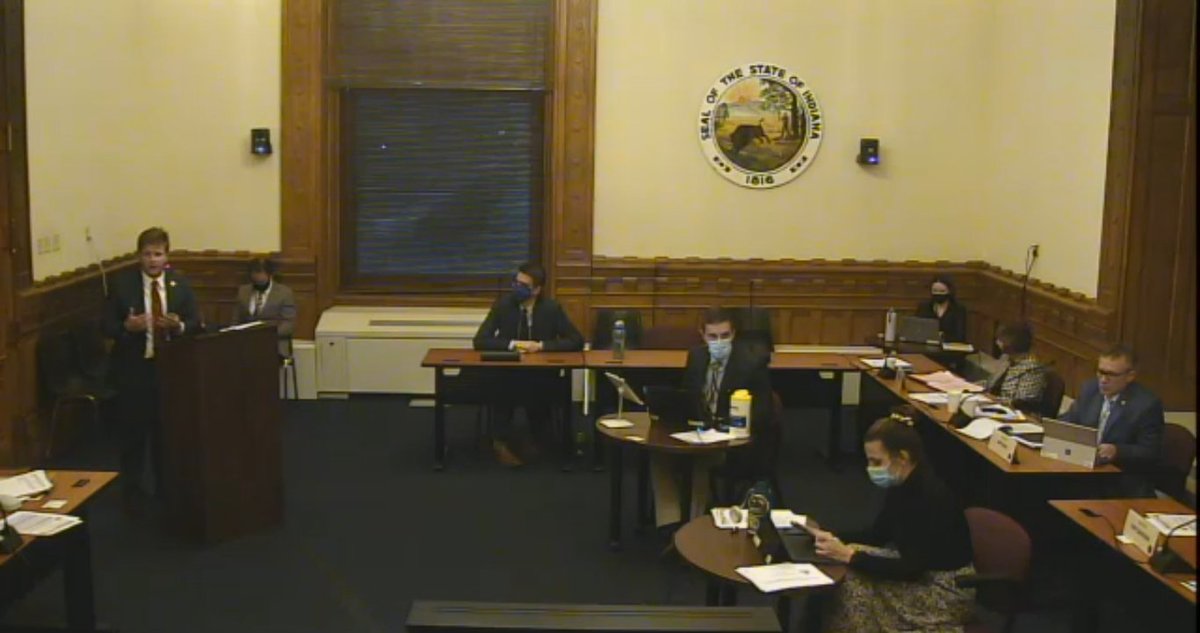
Policy Fellow @JWKellerman delivered his testimony this evening before the Indiana Senate School Funding Subcommittee advocating for additional funding for ELL students and sharing his concerns around the complexity funding cap.
🔴 #PresidentsDay Fun Fact 🔴
While we don't have any U.S. presidents, we do have an alumnus who was President of the Senate: U.S. Vice President Thomas Riley Marshall, Wabash Class of 1873.
Marshall served two terms w/ President Woodrow Wilson, from 1913-1921.
@Trey_Harnden Poverty today is different than 300 years ago. Workers today have no choice but to enter an oversaturated labor marker where employers do not give out compensation in proportion to what the worker contributed.
Absolute poverty is rare; inequitable wealth distribution is not.
@Trey_Harnden My argument would be absolute poverty was appropriate in agrarian days (pre-industrial revolution) where people had a meaningful chance to be their own employer (literally reap what you sow).
Today’s economy is almost entirely dependent on interconnected wage labor.
@Trey_Harnden Too often, people advocating for equitable compensation are met with a weaponized form of absolute poverty (not only do you have food and a roof, you have smart phones, TVs, nice clothes, etc.) when in reality the framework should be relative poverty.
@Trey_Harnden Relative poverty: Used to criticize inequitable distribution of surplus wealth in relation to labor contributed.
Our economic activity is inextricably intertwined together. Therefore, criticisms of surplus wealth in relation to common fruits of our collective labor are proper.