⏳ A Day to Go!
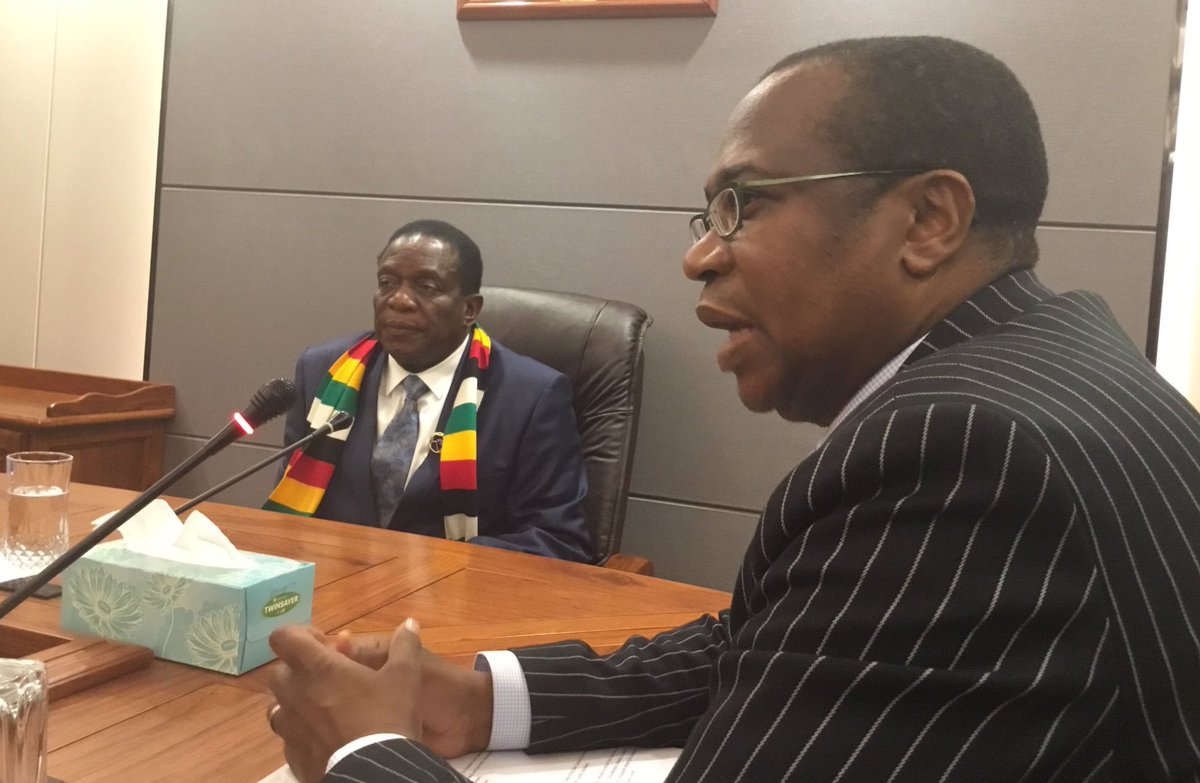
Mark your calendars! The Hon Minister Prof. Mthuli Ncube, will present the 2026 Mid-Term Budget Review and the 2027 Budget Strategy Paper on Thursday, July 30, 2026.
Stay tuned for key updates on the economic outlook, policy direction, and strategic priorities for the coming year.
#Budget2026 #EconomicGrowth #Zimbabwe #MidTermBudget
@econetzimbabwe I brought a Smartbiz device and received wrong account number. I have since reported the issues requesting either the funds be brought back to ecocash and recharge my correct number. Since Saturday my case is yet to be resolved. You are now giving us change service providers.
@CBZHoldings
Do you guys have technician that check on the system or atleast advise client of system challenges or your scheduled maintenance. Please sort out the Zimra Payment issues.@StanbicBankZW thank you for scheduled update advise.
@MercedesAMGF1 Toto needs to think about resigning. 3yrs of abject failure. U guys are still no closer to understanding ure car. Also Toto is NOT a man of his word. He promised Lewis would be treated equally this season but there's too many things going wrong on Lewis's side of the garage only
@MercedesAMGF1@LewisHamilton We, as fans, demand changes for the better so we can continue to support and watch the team with pride. Heads must roll if necessary to ensure that the team is able to compete at the level that is expected of a powerhouse like @MercedesAMGF1.
Please take our concerns seriously
@MercedesAMGF1@LewisHamilton I am writing to express my extreme disappointment in not only the performance of the car during races, but also in the inability to even complete the race. It is unacceptable for a team with such a prestigious history and reputation to consistently underperform in this way.
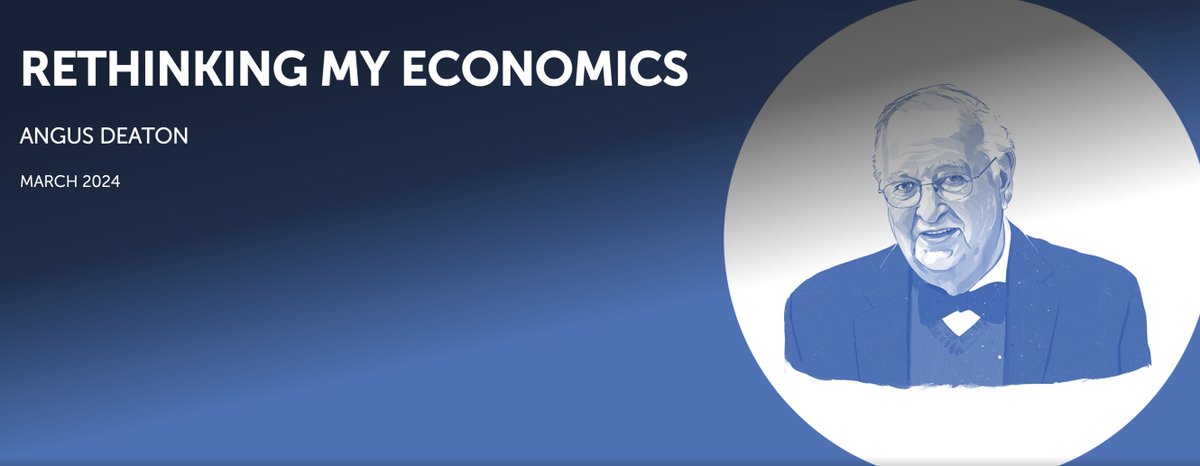
This is a must-read. A powerful critique of mainstream economics coming from Angus Deaton, a recent Nobel Prize winner in economics who has spent most of his career within the mainstream.
He highlights five major deficiencies of mainstream economics, and they are spot on: the neglect of power structures in economic analyses, the marginalisation of philosophical issues, the obsession with efficiency, the narrow interpretation of empirical methods and the blind fixation on inferential statistics, and the lack of humility vis-a-vis other social sciences.
https://t.co/DchPdJRpBI
The stock market system has fundamental problems, it is extraordinarily unhealthy.
Run by people who are hopelessly conflicted. Conflicted because the deal makers are the deal advisors.
They advise you to buy the instrument they are selling.
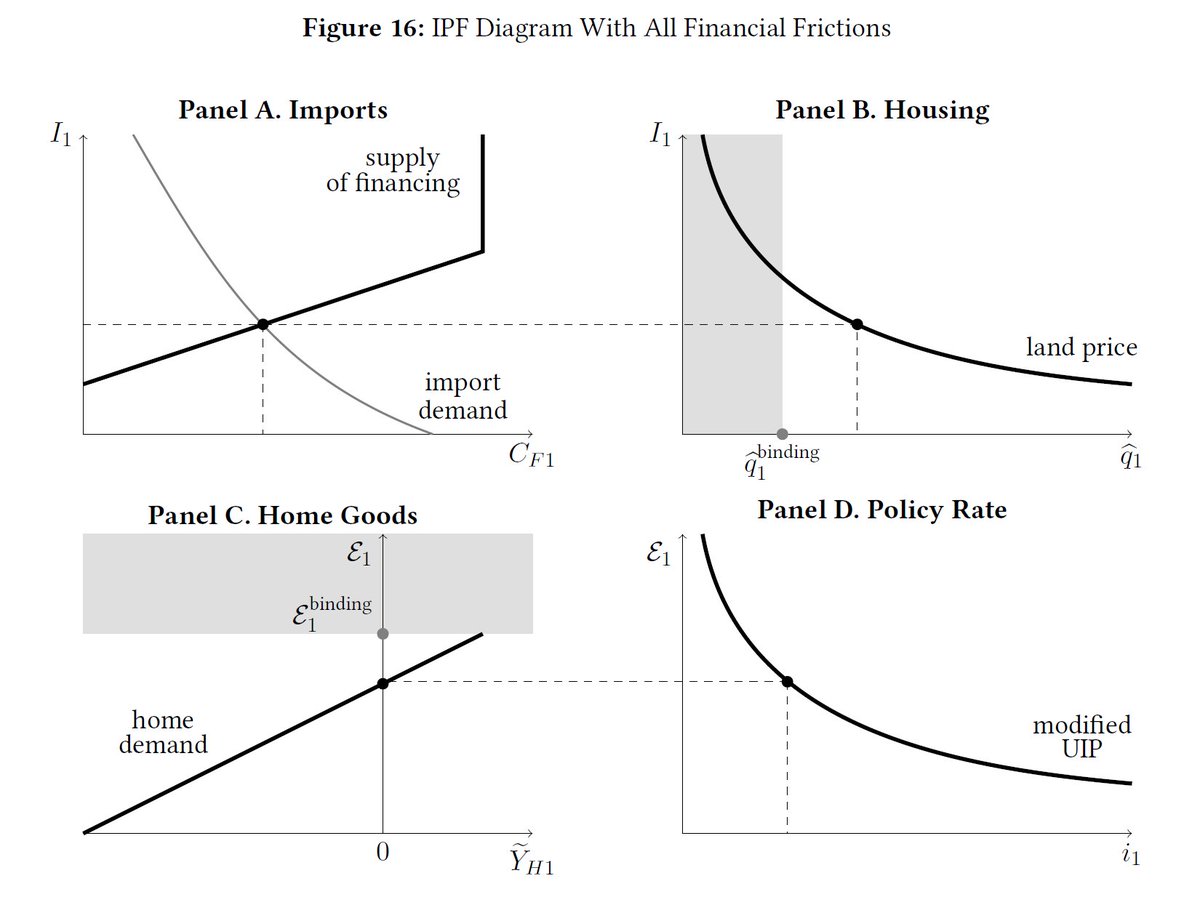
The Mundell-Fleming IS-LM approach has guided generations of economists over the past 60 years. I am excited to put out a new paper with Suman Basu that provides an updated approach, capturing the new problems countries experience. You can read it here: https://t.co/yeOYiDTK5k
This pair is looking to introduce a gold-backed currency and a currency board. The later is an idea courtesy of @baba_nyenyedzi who has insisted on it. I have been at the opposite end of that conversation. He is a great economists and I am not; and so he understands it better.
And so we need to appreciate his great input towards that even in the backdrop of currency boards failures in Hong Kong and Argentina.
After several failed stabilization attempts, Bulgaria introduced a currency board in 1997. Controversial and difficult to implement because of Bulgaria's serious structural problems, the currency board became a crucial factor in the success of the country's stabilization program.
Combining a traditional, rule-based exchange arrangement with legal and structural measures that addressed pressing banking sector and fiscal issues, it was well designed for the task at hand—credible but flexible enough to allow Bulgaria to tackle a systemic banking crisis.
The rise and fall of Argentina’s currency board shows the extent to which the advantages of hard pegs have been overstated. The currency board did provide nominal stability and boosted financial intermediation, at the cost of endogenous financial dollarization, but did not foster monetary or fiscal discipline.
The failure to adequately address the currency-growth-debt trap into which Argentina fell at the end of the 1990s precipitated a run on the currency and the banks, followed by the abandonment of the currency board and a sovereign debt default.
The market through which a currency functions is via the banking system, which provides the platform of custodianship of the currency, the foreign exchange function, the recording of the transactions, and hence the valuation of any currency is done via banking system. You buy something from a supermarket, it ends up in their bank account from your bank account.
But overall, on the proposed new "structured currency" in our case, can all these measures, in addition to all what we have had in the past, resolve anything?
The thoughts of many I spoken to are that it's more about a dysfunctional market system. We are putting all these measures and forgetting why we are here and what needs fixing.
That whole process, the financial value chain is THE MARKET. However, that is what's dysfunctional....or non existent. Regardless of the culprit, over time, our banks have ceased to be banks acting as custodians of people's money, recorders of transactions, lenders, investment finance and even the mode by which foreign transaction funding can happen etc. The funding role was usurped by the central bank - RBZ. So effectively, we have no financial market system.
For example, the impact of foreign exchange supply fluctuations could have easily been absorbed by individual banks accessing or creating their own lines of credit on behalf of their own clients. However, because banks are no longer banks we are used to (their business models have been reduced to collecting fees for customer accounts), there is that gap.
While going back to our local currency is necessary, the argument (focus of the energy) is meaningless without a platform for a currency.....right now we do not have the platform, the structure or the system in place for anything. I believe if the new RBZ governor just focused in banking reforms, things will sort themselves out and quickly.
We actually moved extremely to the other way in Zimbabwe. During Gono's time, RBZ started by-passing retail banks when they started giving funds directly to companies and individuals through the quasi-fiscal operations. That made our retail banks irrelevant save for checking accounts. Ndivo vanga vava kuita credit applications.
Normally, treasury announces incentives and allows banks to administer the funds in the context of their banking business models. That allows for institutional flow of money in the economy. By by-passing the retail banks, the country loses a lot. For example, banks have a multiplier effect of up to 40 times (x) the deposits....so the effectiveness or impact of any monetary policies is zero in the current scenario.
Lest we forget that currency is just a mode of exchange. If markets are functional, no one cares if it is US or Z$. The gap is, our transactional system is no longer institutional....it's now missing the plumbing it is supposed to run on. So whatever, you put through it, haishande.
A drop in economic activity in traditional industries has been predominantly due to disturbed choking banking sector. We are also here now where most retail banks have lost their traditional business model of foreign currency trading. We stopped having forex dealers 30-20 years ago, or extended loans to farmers 20 years ago. It's a business they are actually no longer familiar with.
Our financial sector in the transition from colonial Rhodesia, right up to the phase of land invasions was 20/80 on Pareto basis. Meaning, 80 percent of our credit in retail banking was generated from 20 loans to large scale farmers.
That's why that banking or financial sector has to be rebuild or reformed. We are not reinventing anything. It's what vana India, Ghana, Nigeria went through. We have to deliberately rebuild the banking sector as part of (and ahead of) any serious currency reforms.
For example, we don't have merchant or investment banks but we have dreams of gigantic development projects. Investment Banks are finance wholesalers that finance big projects. In Rhodesia, we used to have the Rhodesia Acceptance Limited (RAL) Merchant Bank (Zimbabwe) was part of Anglo-America until its re-organisation/rationalisation, now in the Nedbank/Old Mutual Group.
In Mugabe era, every agriculture season wainzwa shortages of inputs - seeds, fertilizer, fuel and ultimately money to pay farmers. Last 3-4 seasons no problem....why? Varungu came and helped us sort out the inputs supply chain that was dysfunctional. Yes inputs are expensive but they are now available. How is it fuel shortages are no longer as bad?
Government and people were fixated on input prices and availability instead of rebuilding/capacitating the supply chain. It's the same now with currency. All it takes is people knowing they can get USD from their banks when they want....people will not be in a hurry to demand US$ and will not mind Zim dollar.
The banking or financial sector need reforming and a new structure and culture reloaded.
@rcmlimited@MthuliNcube@GGuvamatanga@gift_mugano@newswireZW@zimlive Please note in Zimbabwe there is no alcohol tax but rather excise tax that is dependent on the alcohol content. In Zimbabwe, excise tax is applied to alcohol beverages. The excise tax rates for alcohol vary depending on the type of alcohol and its alcoholic strength.