A wide spread may signal an opportunity—but it cannot reveal whether the relationship has structurally changed. Strong pairs strategies combine entry thresholds with cost estimates, position limits and clear exit rules. https://t.co/B79FrHjsql #MeanReversion#RiskManagement
Time-series momentum asks whether one asset is trending. Cross-sectional momentum asks which assets lead their peers. Different questions, different portfolio designs. Learn how both work: https://t.co/B79FrHjsql #QuantFinance
The biggest risk in mean reversion? The “mean” may have moved. Regime changes, structural breaks, and crowded exits can turn a temporary-looking deviation into a lasting one. Risk limits matter. https://t.co/B79FrHjsql #RiskManagement
A historical price relationship can look reliable—until market structure, company fundamentals or liquidity changes. Statistical arbitrage is built on probability, so model validation and risk limits matter. https://t.co/B79FrHjsql #RiskManagement
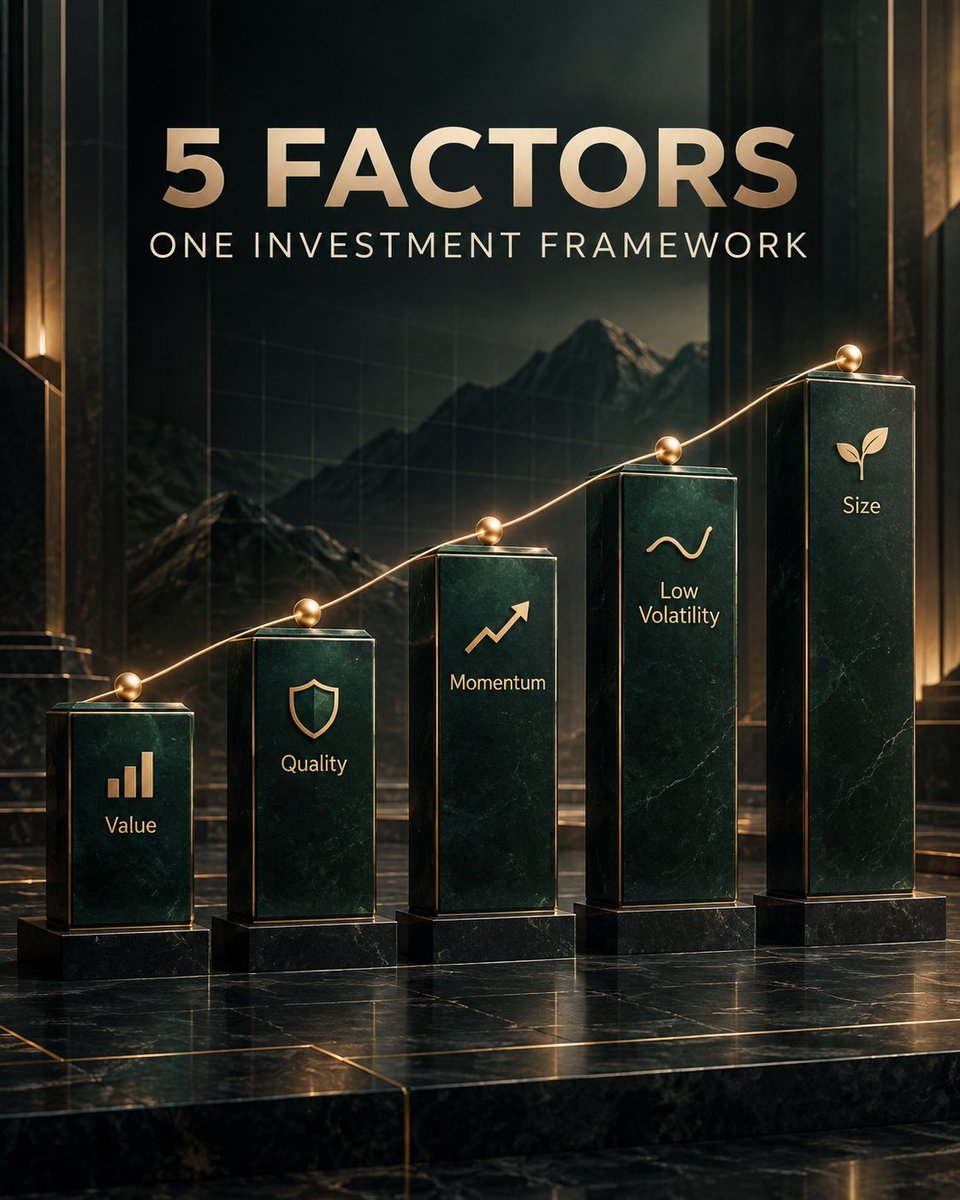
No investment factor leads in every market cycle. Value, quality, momentum, low volatility and size can each experience periods of strength and weakness. Explore how investors combine them: https://t.co/B79FrHjsql #Investing#SmartBeta
Trend following, momentum, mean reversion, and statistical arbitrage use different signals. Their shared foundation is the same: evidence, repeatable rules, controlled risk, and realistic execution.
https://t.co/B79FrHjsql
#SystematicTrading#FinTech
Systematic trading turns market ideas into repeatable rules for signals, position sizing, risk control and execution. It cannot remove uncertainty—but it can make decisions more disciplined.
https://t.co/B79FrHjsql
#SystematicTrading#QuantTrading
A financial model is only as reliable as its data and assumptions. Backtesting, stress testing, independent validation, and human oversight turn mathematical output into responsible decisions. Learn more: https://t.co/B79FrHjsql #RiskManagement#Finance
A model can perform brilliantly on historical data and still fail in live markets. Data quality, overfitting, changing conditions, and execution costs all matter.
Quantitative models need validation and oversight.
https://t.co/B79FrHjsql
#ModelRisk#FinTech
A signal is only as reliable as its data, assumptions and testing. Before acting, check the method, track record, strategy fit and risk controls. Signals should inform judgment—not replace it.
https://t.co/B79FrHjsql
#TradingTech#RiskManagement
Financial services are becoming more proactive.
AI agents may anticipate cash-flow needs, identify risks and prepare approved actions before small issues become larger problems—while keeping people in control.
https://t.co/B79FrHjsql
#AgenticAI#FutureOfFinance
A hidden instruction inside an email, webpage or document can manipulate an AI agent. Treat external content as untrusted, separate data from instructions and validate every action before execution.
https://t.co/B79FrHjsql
#PromptInjection#Cybersecurity
Controlled autonomy gives AI agents enough authority to handle routine, reversible actions while escalating consequential decisions for human approval. Clear permissions and audit trails keep speed aligned with accountability.
https://t.co/B79FrHjsql
#ResponsibleAI#AIGovernance
A shift in management language or an unusual data point may matter before it becomes a headline.
AI agents can monitor these changes continuously, while researchers verify the sources and evaluate the context.
https://t.co/B79FrHjsql
#MarketResearch#AI
A tool-using AI agent can query a database, call an API, update software, and verify the result. The key is controlled access: limited permissions, validated inputs, audit logs, and human approval for high-risk actions.
https://t.co/B79FrHjsql
#EnterpriseAI
RAG gives an AI agent access to shared knowledge. Memory gives it continuity—user preferences, past outcomes, and task history that evolve through interaction. The strongest agent architectures use both.
https://t.co/B79FrHjsql
#AIMemory#AIAgents
AI agents are only as reliable as the context they receive. Current data, clear goals, and controlled tool access help transform model reasoning into useful business action.
Explore how the workflow works: https://t.co/B79FrHjsql
#AIWorkflow#ArtificialIntelligence
In finance, specialized agents can reconcile accounts, flag anomalies, validate market data, assess risk, and prepare approved actions in parallel. The practical value is coordination—not one model doing everything. https://t.co/B79FrHjsql #FinTech#AIAgents
Without memory, an AI agent can answer. With the right memory, it can maintain context, learn from prior outcomes, and make better decisions across multi-step work.
Discover smarter agent workflows: https://t.co/B79FrHjsql
#AgenticAI#KAELAI
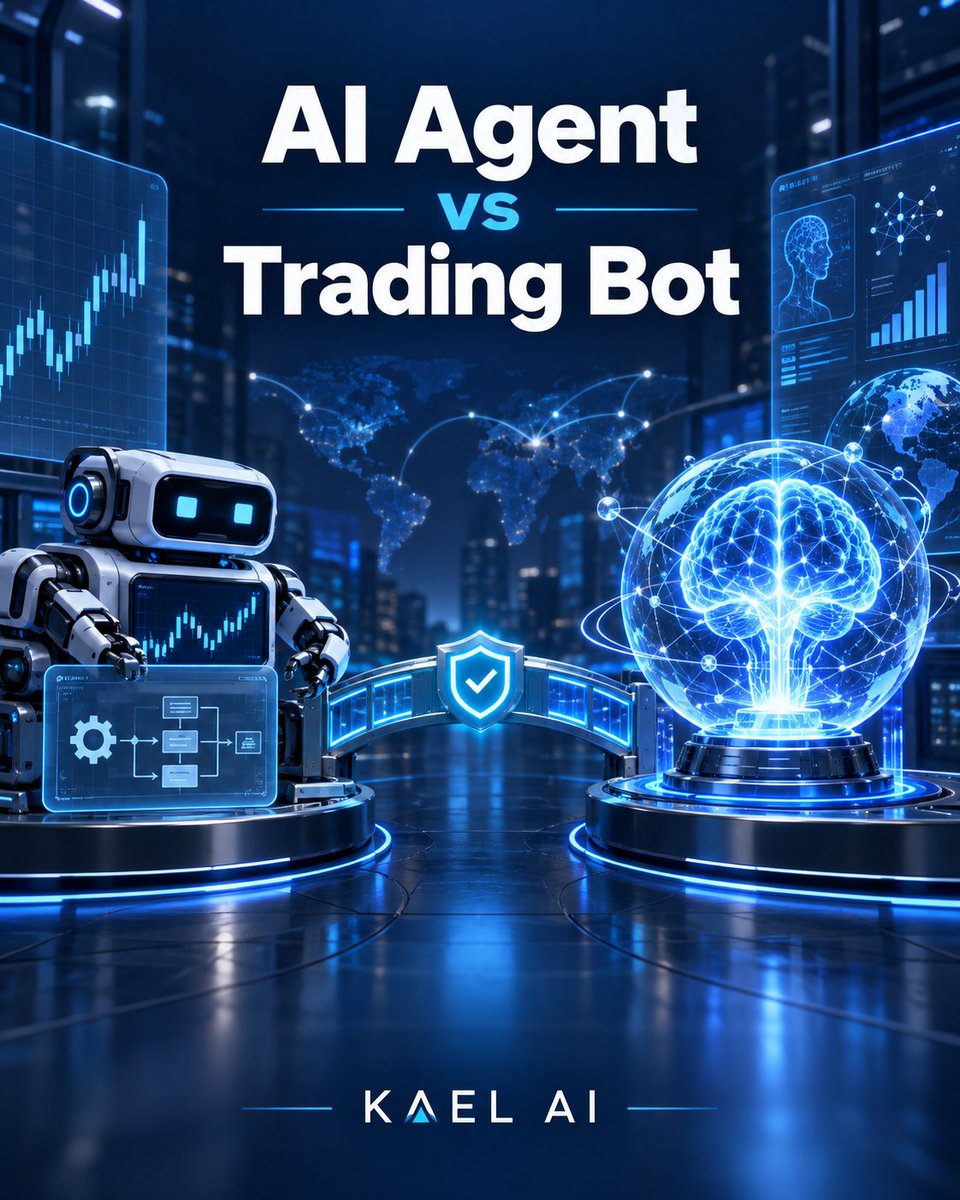
More automation does not automatically mean better decisions.
Whether you use a trading bot or an AI agent, define the task, control permissions, set risk limits, and keep actions reviewable.
https://t.co/B79FrHjsql
#AITrading#RiskManagement