🚨🚨 El Dr. David Sinclair acaba de revelar uno de los estudios más grandes sobre la nattokinasa...
Un estudio chino exhaustivo de 1.067 personas encontró que la nattokinasa revirtió la enfermedad cardiovascular al eliminar hasta el 95% de la placa arterial en un año...
Este suplemento es una enzima de la soja fermentada y cuesta casi nada...
Sinclair lo ha estado tomando diariamente durante un par de años...
Mide su arteria carótida con ultrasonido y dice que no hay acumulación de placa en absoluto.
Peter Diamandis también lo toma.
Él cree que necesitas al menos 6.000 unidades fibrinolíticas por día para obtener los beneficios...
• Las estatinas cuestan cientos por mes y vienen con efectos secundarios.
• Las intervenciones quirúrgicas pueden costar miles de dólares
La nattokinasa cuesta una fracción de ambas...
La advertencia de Sinclair: "Haz esto con el conocimiento de tu médico"...
AGING IS MORE REVERSIBLE THAN WE THINK
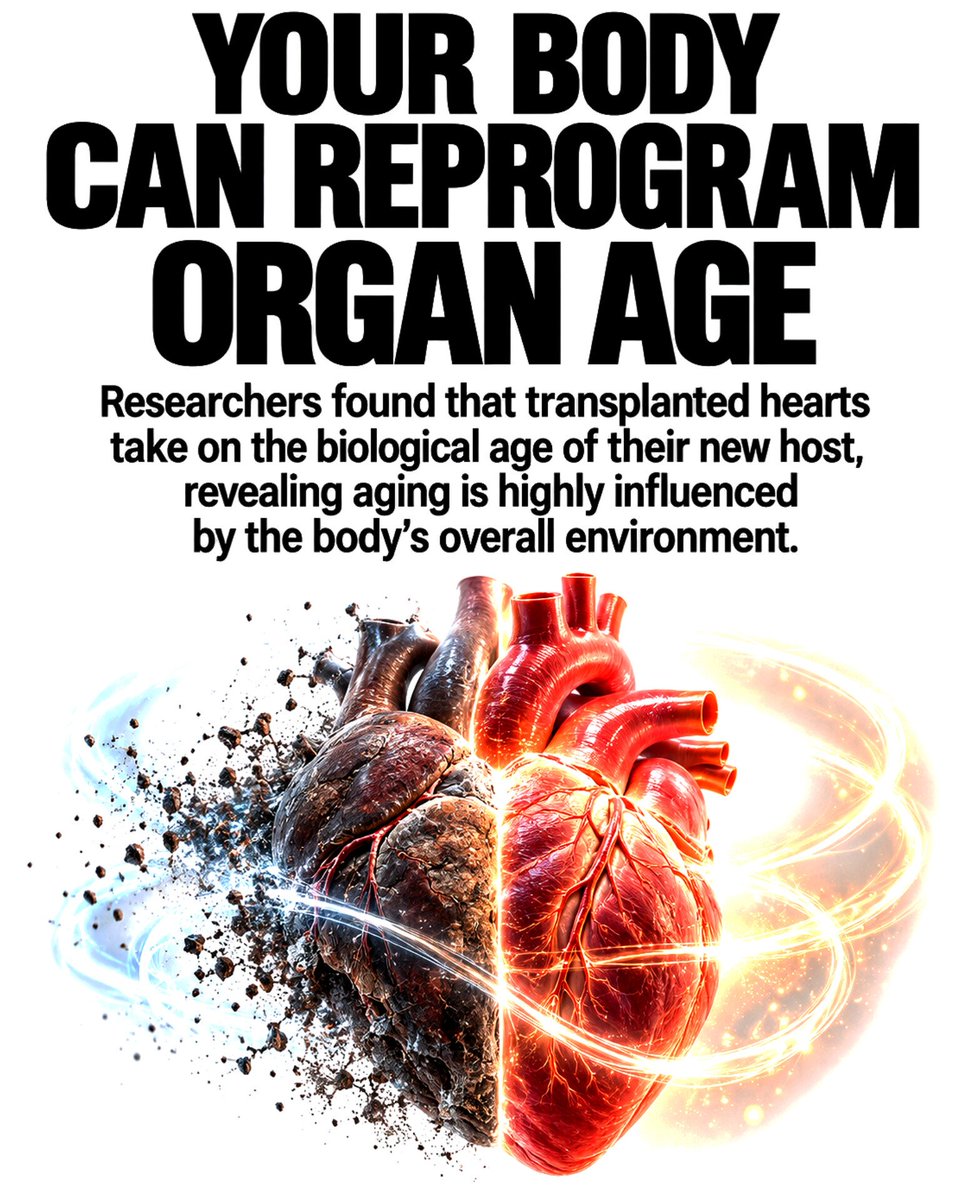
A new study just gave us a fascinating clue. It hints that biological age may be more of a dynamic state than a fixed number.👀
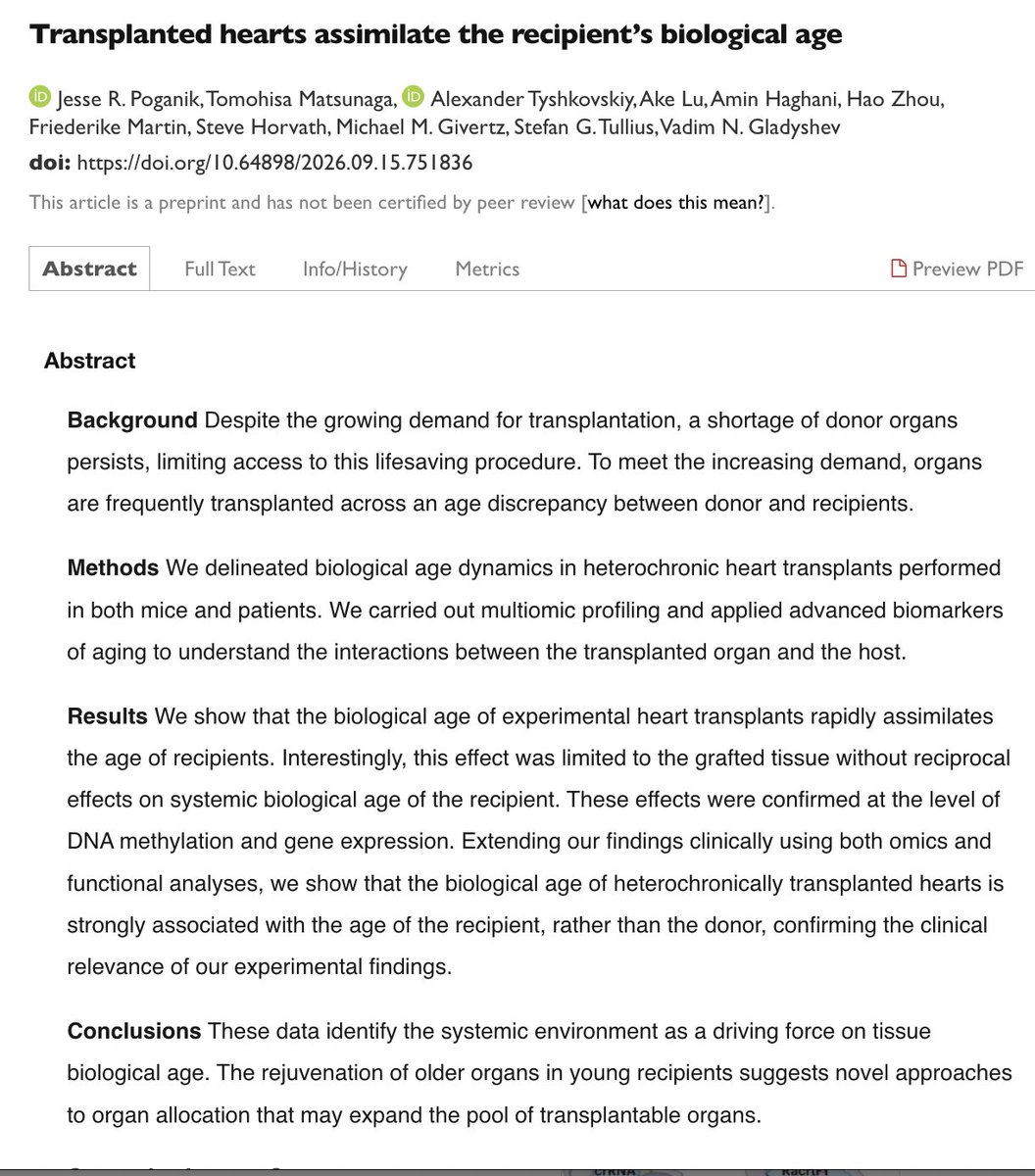
Actually, researchers transplanted old hearts into young mice.
The old hearts didn't simply remain molecularly old.
Over time, their DNA methylation and gene-expression patterns shifted toward those of younger hearts.
And the reverse happened too.👀
But young hearts placed into older animals started showing older molecular signatures.
That means the environment surrounding an organ can actually influence its biological age.
And honestly, this is the part that gets me excited about longevity.
Aging isn't just a one-way accumulation of damage. it is a biological state that can be changed.
“A tissue's biological age isn't completely fixed.”
If we can discover the signals that push tissues toward aging, we may eventually learn how to block them, restore youthful states, and preserve function for much longer.
And future of anti-aging won't be about replacing old organs. It will be about changing the biological environment that makes them old.
read more:
https://t.co/iL3ig9kAIr
Your cardio fitness predicts how long you'll live better than your cholesterol, blood pressure, or your genes (and low fitness is deadlier than smoking).
Here's what it means and how to raise it:
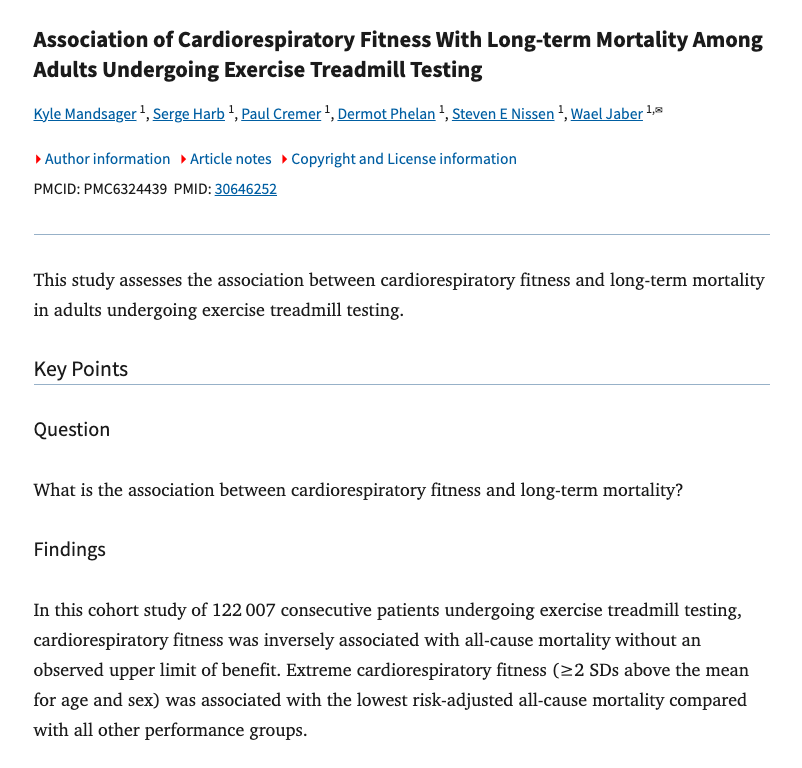
In a study of 122,000 people (Mandsager, JAMA 2018), the fittest had an 80% lower risk of death than the least fit.
Low fitness carried a higher risk of dying than smoking, diabetes, or heart disease. It's the single strongest longevity marker there is.
The number is your VO2 max, the top amount of oxygen your body can use during hard effort.
The higher it is, the stronger your heart, lungs, and muscles are working together, which is why it tracks so closely with how long you live.
Test it roughly by how winded you get.
If a brisk hill or a flight of stairs leaves you gasping, your VO2 max is low. If you can hold a conversation through moderate effort, you're in a good range. A watch estimate gets you a real number.
Build it with two things.
Easy zone 2 cardio a few times a week grows your aerobic base, and one weekly session of short hard intervals raises the ceiling.
Nothing lifts your VO2 max faster than 4 minutes hard, 3 minutes easy, repeated 4 times.
VO2 max is trainable at any age, and every step up drops your risk of dying by 13 to 15%.
Train your heart like your life depends on it, because the data says it does.
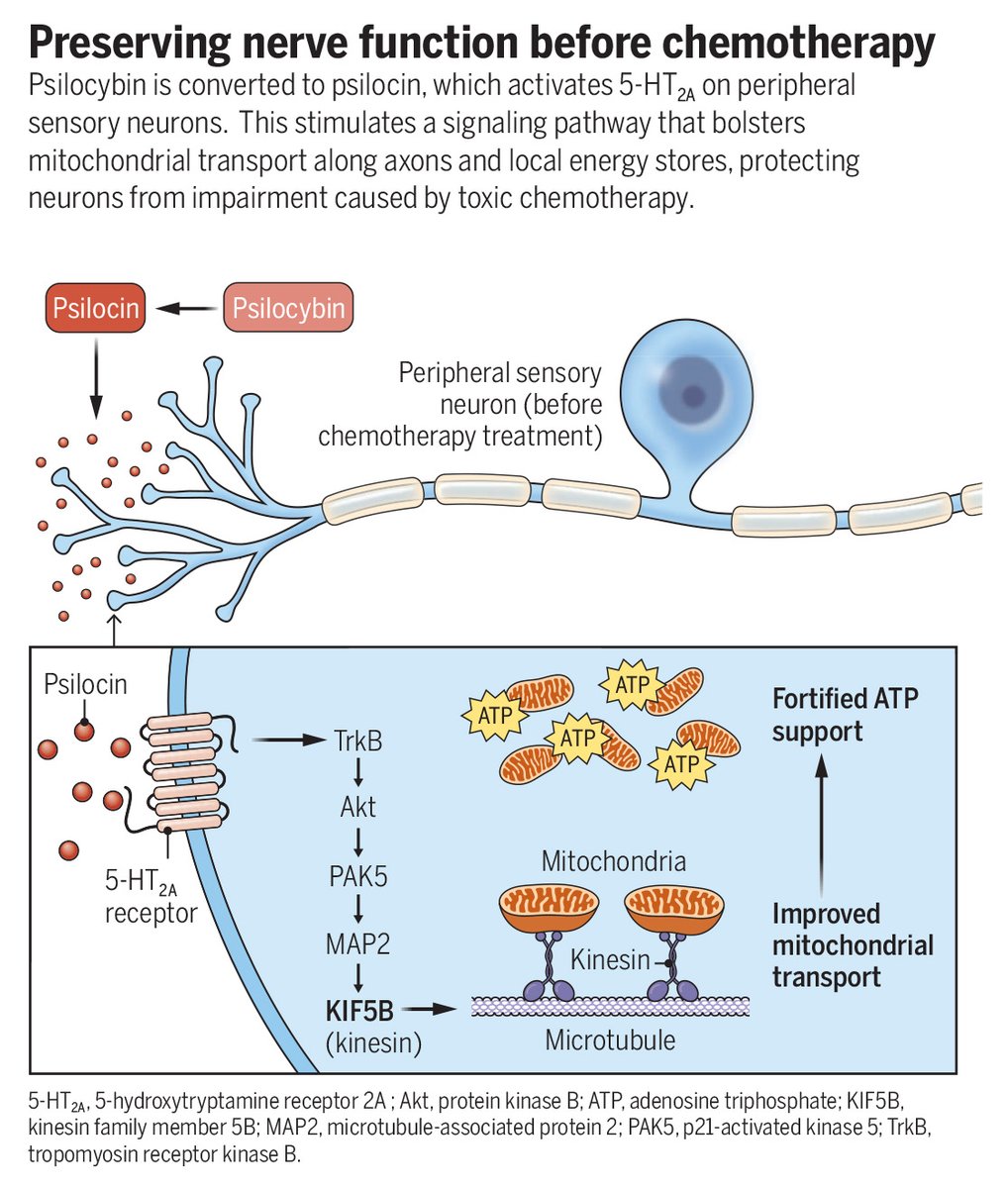
A psychedelic compound best known for its effects on the brain may help prevent one of chemotherapy's most debilitating side effects—chemotherapy-induced peripheral neuropathy, researchers report in Science.
In mouse models, as few as two doses of psilocybin given before treatment durably prevented CIPN through multiple cycles of chemotherapy, while preserving both nerve function and the therapies’ tumor-killing effects.
📄: https://t.co/rGxIJQdVVU
#SciencePerspective: https://t.co/UX1kCc3tWe
Our bodies create ~330 billion new cells every day through cell division. #HHMIInvestigator Andy Moore at our Janelia Research Campus captured that process in stunning detail — a feat that earned him 4th in the '26 @NikonSmallWorld in Motion Competition: https://t.co/UeI2GSTrG6
There's been steady progress using organs in a dish—organoids— for medical research. But now there's the immunoid to enhance our understanding of the complex immune system in people, and at the individual level. @CellStemCell .
https://t.co/OockgXIcqA
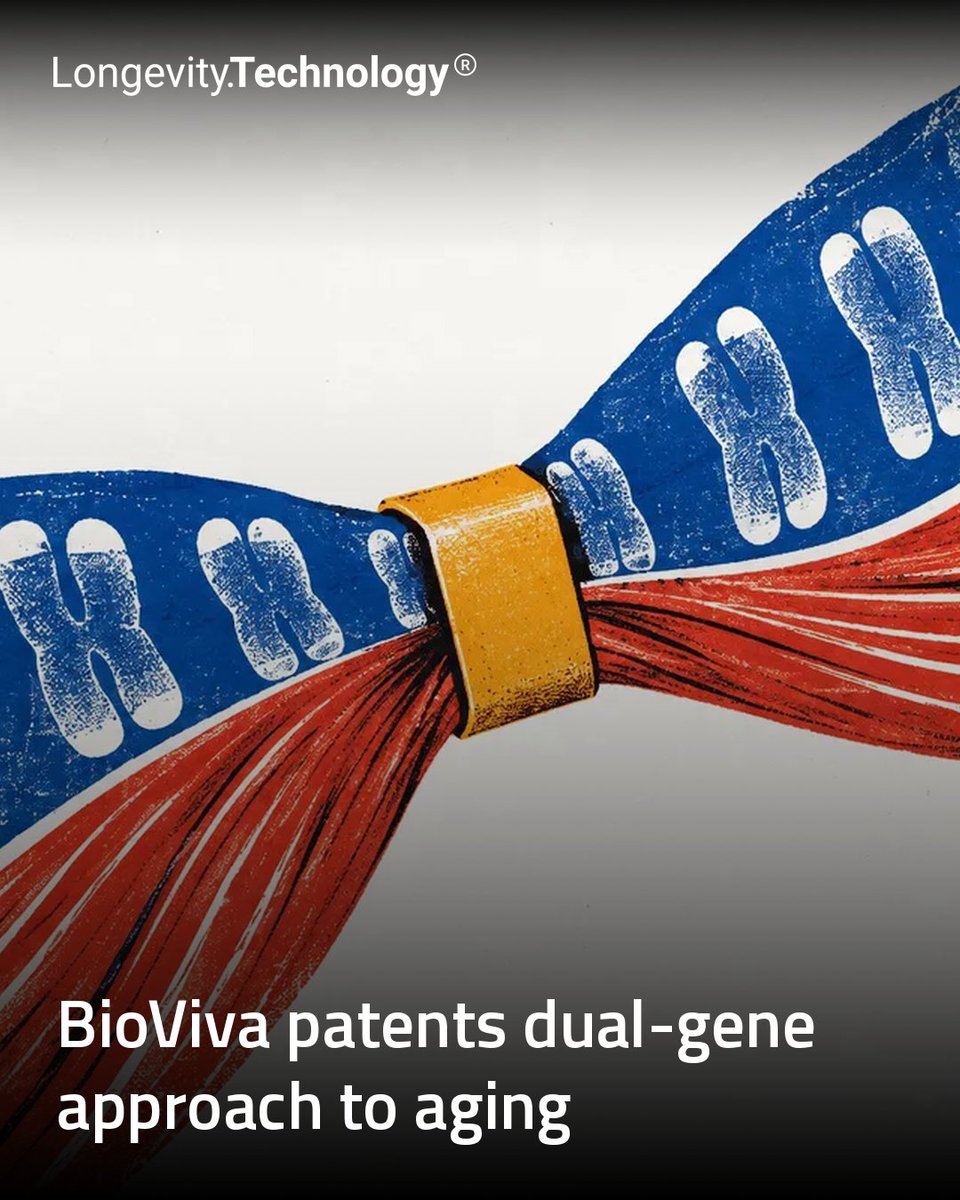
New patent covers combining hTERT and Follistatin-344 to target telomere length, muscle mass and blood-glucose levels in age-related disease.
https://t.co/CtJNYF3mHE
#longevity#geroscience#hTERT#Follistatin344#telomeres
Wow, this is a pretty striking result for my Strong Epigenetic Theory of Aging: transplant an old heart into a young animal and the heart is rejuvenated. But transplant a young heart into an old animal, and it quickly ages to match the recipient.
This shows that biological age is not simply something an organ accumulates locally as irreversible “wear and tear.” Instead, to a large degree, it is a state imposed by the organism-wide environment.
The authors saw bidirectional remodeling of both DNA methylation and gene expression, with old hearts in young hosts moving toward youthful programs and young hearts in old hosts moving toward aged ones.
That is exactly what you’d expect to see if aging is a regulated, system-level state where the epigenome is acting as the writable control layer that tissues continuously adjust to the organism’s age.
For #genomics#datasets, I often use these 4 portals:
🧬TCGA - https://t.co/uRpLdN1VDy
🧬DepMap - https://t.co/lNBVdtA3IQ
🧬1000 Genomes - https://t.co/je6nE8J12d
🧬recount3 - https://t.co/N3SsjBnmHn
Are there better resources you use for genomics datasets? What am I missing?
Omega-3s may help slow biological aging, with added benefits when combined with vitamin D and strength training
In a 3-year randomized trial of healthy, mostly active older adults, omega-3 alone slowed several DNA-based aging clocks
Vitamin D and strength training alone did not, but adding them strengthened the effect on one clock, with the full combination slowing that measure by ~3.8 months
That may sound small, but even modest slowing could matter if sustained
In separate analyses, the same combination was also linked to ~40% lower odds of pre-frailty and 61% lower invasive cancer risk
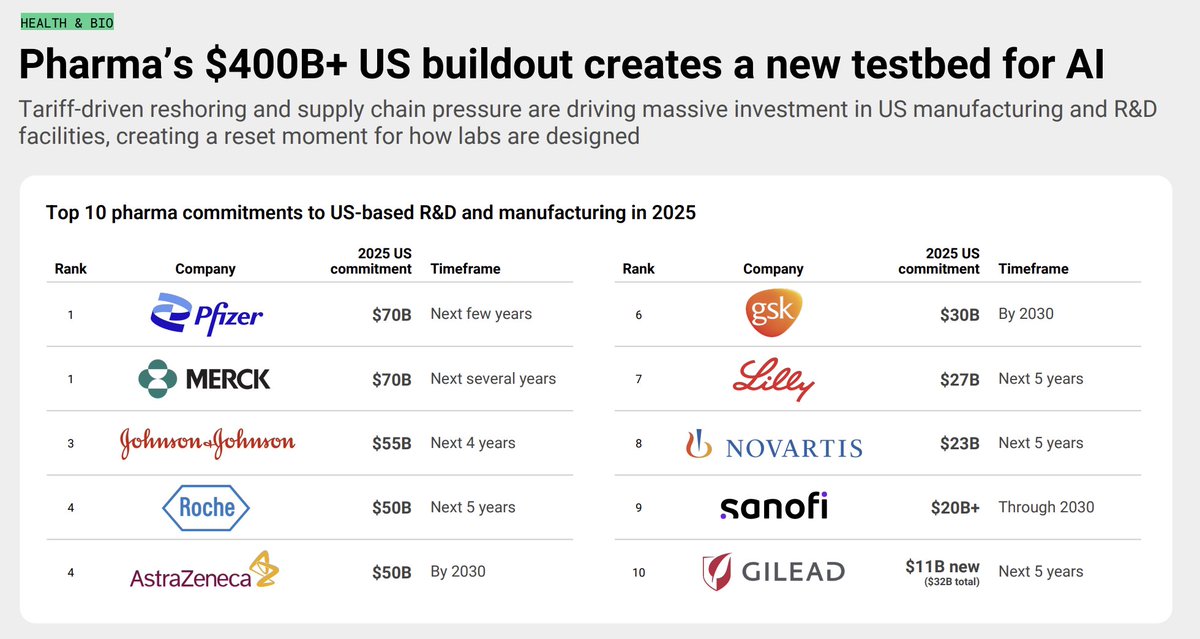
Pharma R&D is shifting toward AI-guided, increasingly automated discovery.
Tariffs and supply chain pressure are driving $400B+ in US manufacturing and R&D investment, creating a reset moment for lab design and a major testbed for AI.
The first patient has been dosed in a Phase 2 trial of BGE-102, an oral pill built on human aging research, aimed at preserving vision.
https://t.co/NjhYm7Re2w
#longevity#geroscience#BGE102#aging#vision