INVASION ALERT: Bill Gates’ Bioengineered Ticks Are Here — But Nature Has the Ultimate Counter Strike!
While the elites unleash their lab-created tick apocalypse, spreading Lyme disease and Alpha-gal syndrome, Nature is fighting back HARD. These “bioengineered” ticks are invading yards, pets, and families at record rates — but they FREAK OUT and RUN from certain essential oils.
Ticks HATE these oils. No DEET toxins needed. Arm yourself, your kids, your pets, and your property with Mother Nature’s shield.
Oils that ticks HATE (and why):
• **Tea Tree Oil** — Ticks literally panic and flee on contact. It disrupts their senses and they refuse to cross it.
• **Neem Oil** — A total tick repellent powerhouse; they avoid it like poison and it wrecks their feeding.
• **Oregano Oil** — High in carvacrol that kills tick-borne bacteria on contact while making them turn tail fast.
• **Black Seed Oil** — The little bloodsuckers bolt away; proven in real-world tests to create an invisible barrier.
• **Cedarwood Oil** — Toxic to ticks and larvae; they retreat or drop off instantly.
• **Clove Bud Oil** — One of the strongest — repels up to 83% of ticks at low concentrations in lab studies.
• **Thyme Oil (red or creeping)** — Ticks hate the scent; 68–82% repellency, even better when mixed with others.
• **Lemon Eucalyptus Oil** — Repels blacklegged and dog ticks for hours on clothes or skin.
**How to use:** Mix a few drops (diluted safely in carrier oil or water + witch hazel) and spray on socks, pants, yard perimeter, pets’ bedding, and skin. Reapply often. Diffuse or wipe baseboards indoors.
Testified before the parliamentary agriculture committee in Ottawa yesterday.
If you think committees aren’t tightly controlled by the Liberals, think again. Out of 60 minutes, Conservatives had barely 12 minutes of questioning, despite holding 41% of the seats in the House. That’s the current reality—quite unfortunate.
Can someone ask Mark Carney this:
As an economist, you know that you can't use CPP and QPP assets for the Federal debt, so why do you use them in your calculations to lie to Canadians that our debt position is better than it is?
🚨 RFK Jr. Just Connected the Dots on Gluten Explosion🚨
RFK Jr. dropped this truth bomb:
“2006 marks the date when suddenly these gluten allergies began exploding… celiac disease & wheat problems… You can draw a red line: 2006, the year they began spraying GLYPHOSATE on wheat as a DESICCANT.”
Glyphosate (Roundup) on our wheat right when the allergies and autoimmune issues skyrocketed. Big Ag and Big Pharma have been poisoning us for profit.
Spoke this weekend to both Americans and Canadians in British Columbia. We all want to get along and do business. Not a single person in the room saw the other country as a threat or a weakness.
Not one.
On both sides of the border, people are simply looking beyond the political noise. Politicians come and go, all of them. What remains are resilient farmers, food manufacturers, and restaurant operators—people constantly looking for opportunity. Everyone in that room understood that.
We owe our quality of life and our way of living to each other. We just can't forget that.
Pierre Poilievre WARNS Mark Carney.
A Majority comes with great responsibility. You can no longer blame anybody except for yourself.
So far you’ve accomplished absolutely nothing.
EVERYTHING IS ON YOU NOW
Even MSM cant save you
I am disgusted, and I am not going to dress it up with polite Ottawa language.
Marilyn Gladu crossed from the Conservatives to Mark Carney’s Liberals on April 8, 2026, saying constituents want “serious leadership” and “a real plan to build a stronger and more independent Canadian economy.” Her move gives the Liberals 171 seats, one short of the 172 needed for a majority.
That is exactly why people do not buy the noble script.
This is how Ottawa usually works. The speech is about conscience.
The reality is about power.
Suddenly the language gets soft, patriotic, and lofty right when the political math gets useful. We are asked to believe an MP was hit by a lightning bolt of principle at the exact moment her switch strengthens the governing party and brings it within one seat of majority control. Convenient does not begin to cover it.
Gladu says this is about leadership and collaboration. Fine. Then let voters decide whether they agree. That is the part these people always skip. They act as if a personal change of heart magically rewrites the contract with the public. It does not. People did not vote only for Marilyn Gladu the individual. They voted for a Conservative MP, a Conservative platform, and a Conservative opposition role. Crossing the floor without first seeking a new mandate may be legal, but it feels like a bait-and-switch because that is exactly what it is.
And spare me the line about “doing the best thing” for the riding. Every floor crosser says some version of that. It is the oldest detergent in the political cupboard. It is meant to wash ambition into service. What it really signals is this: I think my judgment now matters more than the basis on which you elected me.
That is where the anger comes from.
Voters are already drowning in managed language, staged sincerity, and plastic promises. Trust in politics is weak because people keep seeing the same pattern. Politicians campaign one way, govern another, then call the switch “leadership.” They wrap self-interest in national purpose and hope the flag covers the fingerprints.
What makes this worse is the timing. Carney publicly welcomed Gladu into Liberal caucus the same day, and the result is not symbolic. It materially strengthens the government’s position in the House. This is not some minor personal journey. It changes parliamentary leverage. It changes committee numbers, confidence calculations, and the balance of power.
So yes, I’m pissed.
I am pissed because voters are treated like props in a story written after the fact. I am pissed because party labels suddenly matter a great deal during elections and apparently not at all when power is on offer. I am pissed because people who were sent to oppose Liberal policy can simply walk across the aisle and help entrench it, then expect applause for being “constructive.”
And there is another detail that makes this smell even worse. Local reporting says that in January, Gladu had advocated for byelections when MPs switch parties. If that report is accurate, then this is not just opportunism. It is opportunism with a side order of hypocrisy.
That is the real issue here. Not whether floor crossing is technically allowed. Not whether Ottawa insiders can invent a respectable sentence for it. The real issue is whether voters still mean anything once the election is over.
My view is simple. If you want to switch parties, resign and run again. Go back to the people. Make your case honestly. Ask for a fresh mandate under the new banner. Anything less might be lawful, but it is not clean. It tells voters their consent is temporary, conditional, and easily bypassed once the machinery of power starts humming.
That is why this disgusts me.
Because democracy is not only about counting seats. It is about keeping faith with the people who gave you one.
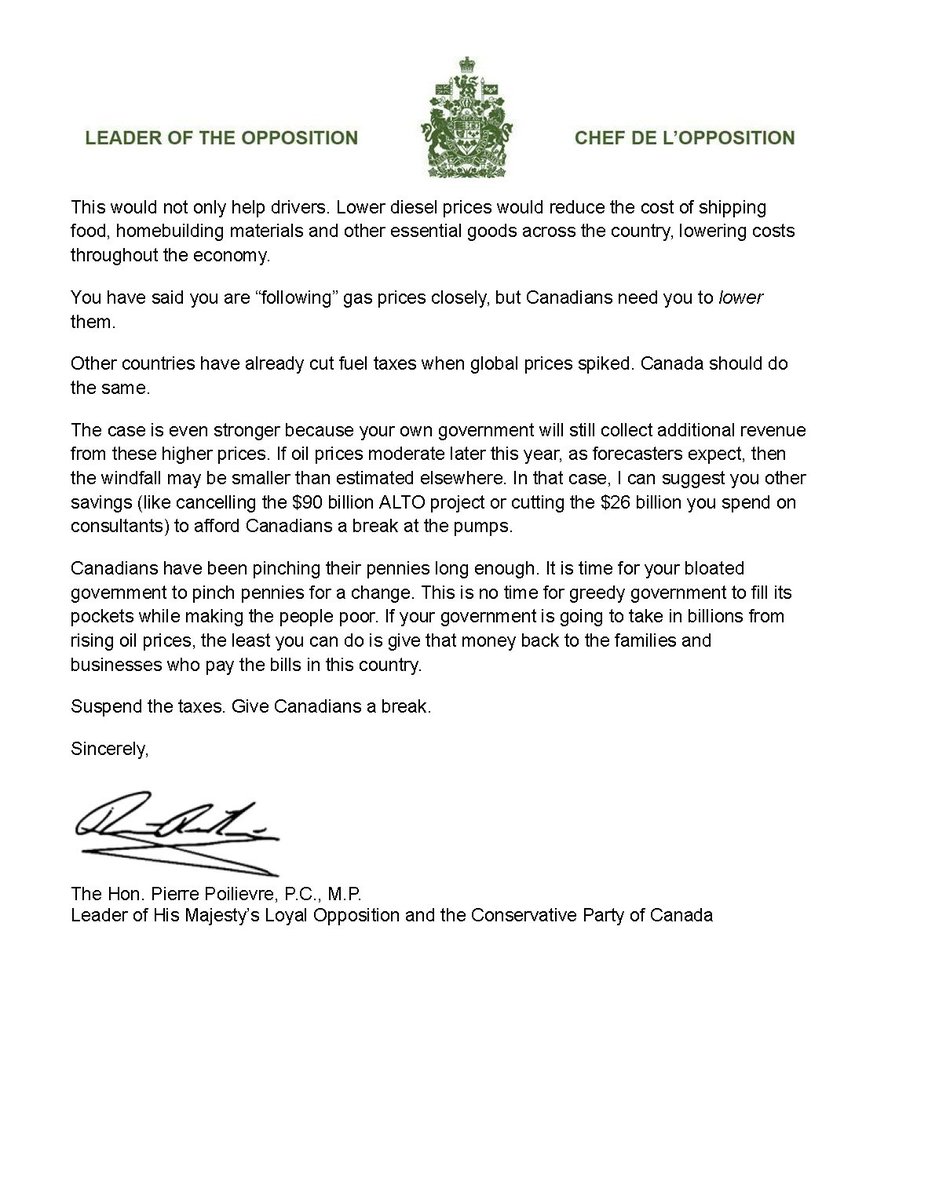
Mr. Prime Minister—you are getting up to $9 billion in windfall revenues from high oil prices. That money does not belong to you.
Give it back.
Stop taxing gas. Save families $1200 at the pumps this year.
How is it possible for every member of a political party be so arrogant & condescending? This is a horrible woman who is literally gaslighting the guy & smirking while doing it.
"My guess is that most Canadians think the carbon tax is gone—but it isn’t. And many still don’t fully understand how it works. That uncertainty creates space for pro–carbon tax advocates to promote a policy that has never been properly evaluated for its impact on food affordability in Canada."
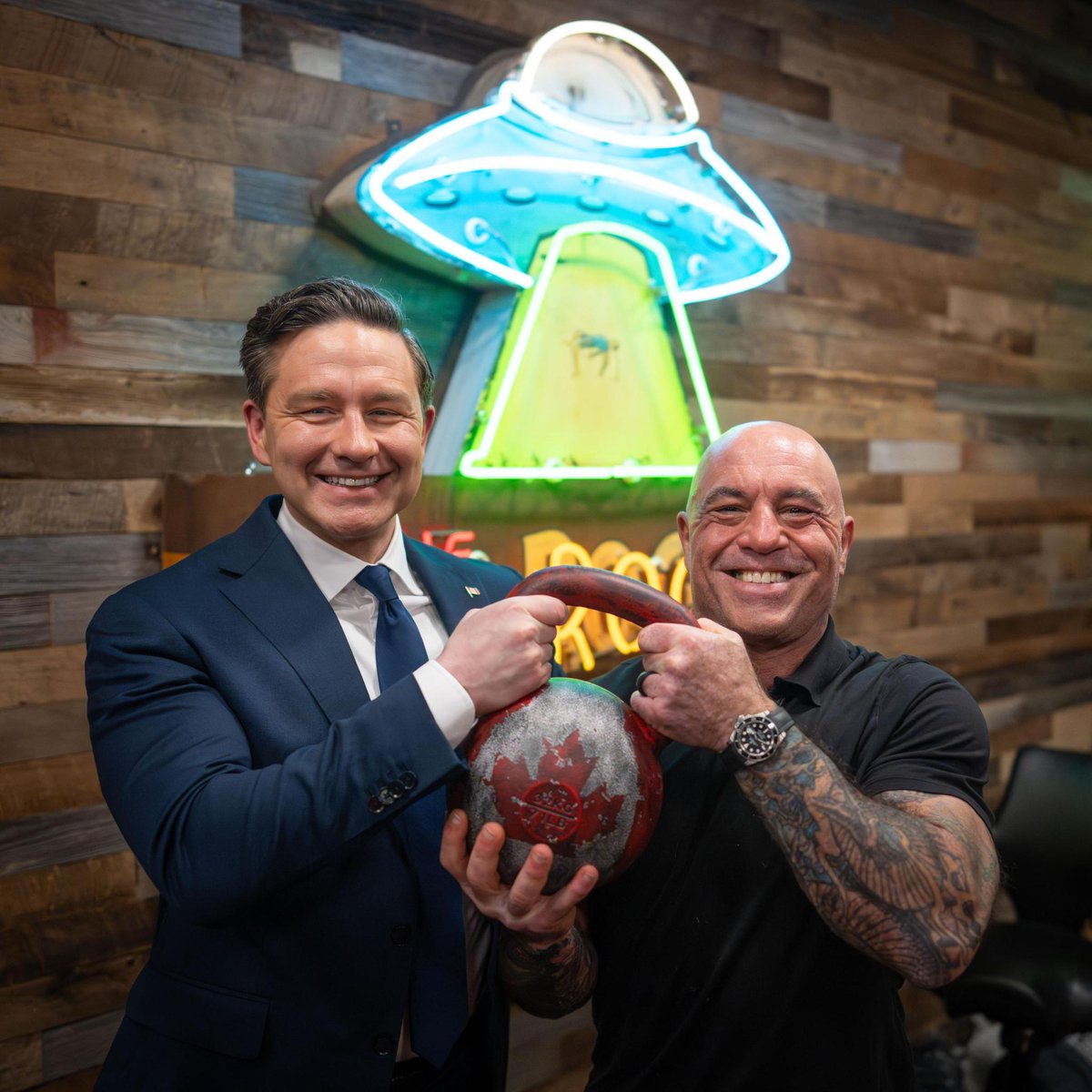
Fought for Canadian workers and Canadian interests on the world’s biggest podcast.
Thank you @joerogan for an amazing conversation.
Let’s get tariff-free trade.
Sign up to watch it first: https://t.co/Tf0URq6UlC
To my X followers,
I’ve worked with the media for nearly 25 years. For most of that time, the relationship was professional and balanced. But in recent years, something has shifted.
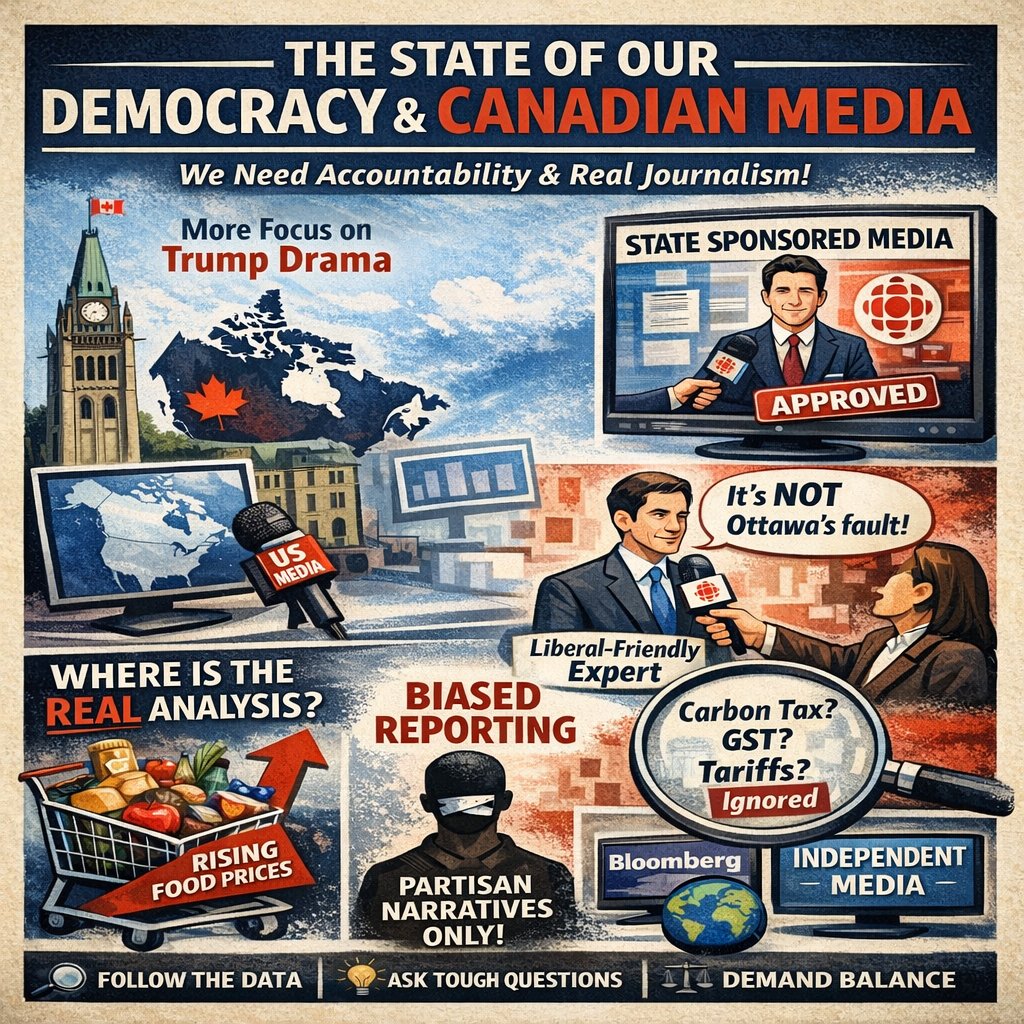
I am increasingly concerned about the state of our democracy — particularly how media, in general, are informing Canadians about food policy, food inflation, and economic policy.
I now find myself learning more about Canada’s economy and policy changes from American outlets than from Canadian ones. Much of our national coverage feels reactive, shallow, or overly fixated on partisan narratives rather than substantive policy analysis.
What troubles me most is the lack of scrutiny applied evenly across governments and institutions.
For example, when the Bank of Canada suggested that Ottawa’s counter-tariffs contributed to food inflation, only one major outlet — Bloomberg — gave it meaningful coverage. The grocery benefit program received very little examination regarding how it would be financed. It took days before anyone pressed for clarity.
During the latest spike in food inflation, several outlets turned to the same small circle of commentators who dismissed any potential role of federal policy — carbon pricing, GST holidays, counter-tariffs — despite mounting evidence that policy decisions can and do affect food prices.
Instead of investigating structural drivers of inflation, much of the coverage focuses on fact-checking opposition rhetoric, even though the opposition has not governed since 2015. Scrutiny should be applied equally — not selectively.
Quebec media, while imperfect, appear to have maintained a broader range of debate. In much of the rest of Canada, I see increasing concentration of voices — often from the same region, Ontario, often reflecting similar policy perspectives — and less diversity of thought grounded in empirical research.
This isn’t about partisan politics. It’s about accountability, transparency, and healthy democratic discourse.
Media are under financial pressure — that’s real. But public trust depends on independence and depth. Subsidy structures, incentives, and newsroom economics all matter.
Canada deserves stronger policy journalism — especially on food affordability, supply chains, and economic resilience.
We need more data-driven analysis, more intellectual diversity, and more courage to ask uncomfortable questions — regardless of which party is in power.
Until that happens, Canadians would be wise to diversify their news sources and think critically about what they’re being told — and what they’re not.