One of Greco-Roman philosophical tenets for building a moral character was learning to let go of events you can't control by how you respond to them as Horace wrote: mihi res, non me rebus, subiungere conor "I try to bend circumstances to myself, and not myself to circumstances"
Throughout this month of April, I will be posting my annual Japanese cultural content like Zen, haiku & woodblock prints. Thank you all for reading along.
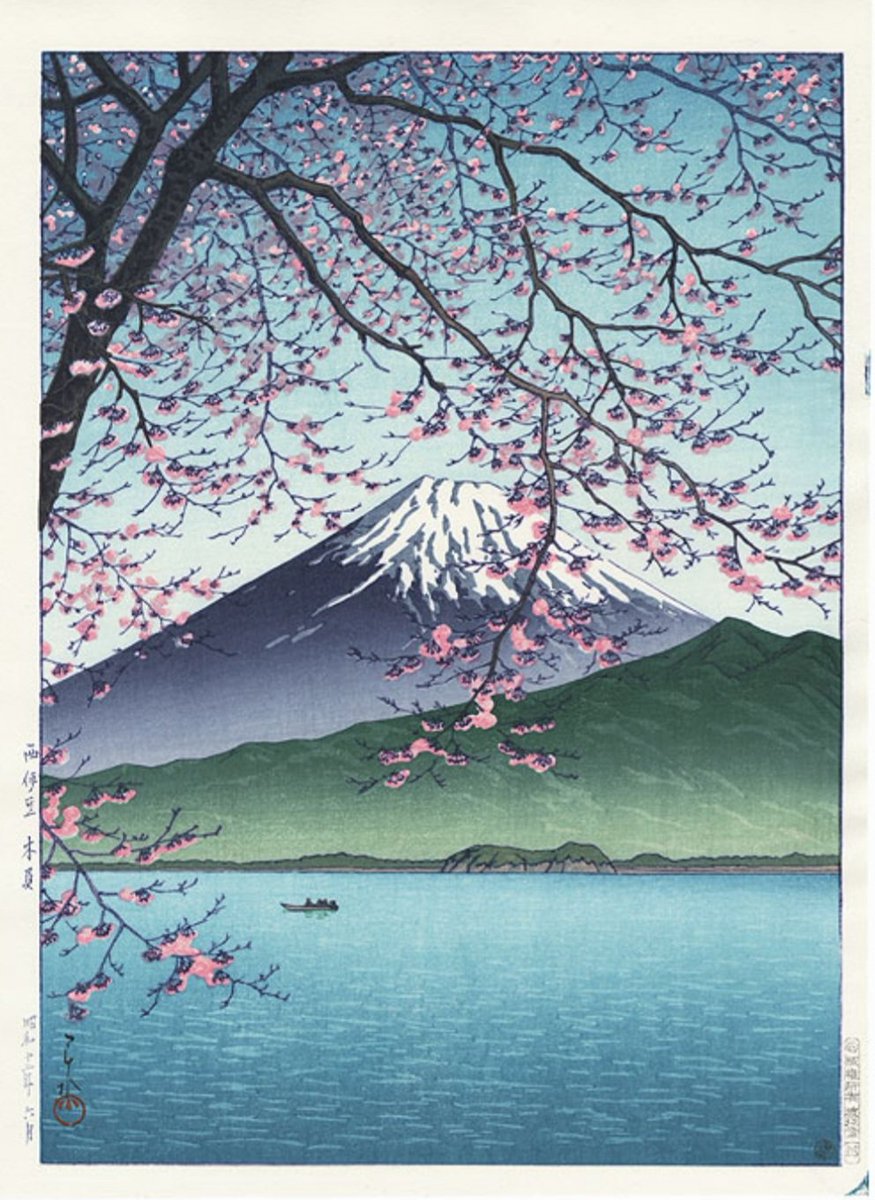
*Kawase Hasui- Kisho, Nishiizu, woodblock print, 1937. Mt. Fuji from Kisho in Nishiizu is foregrounded by cherry blossoms.
"Death was the first mystery, and it placed man on the track of other mysteries. It raised his thoughts from the visible to the invisible, from the transitory to the eternal, from the human to the divine."
- Fustel de Coulanges (Ancient City, I, § 2, p. 25)
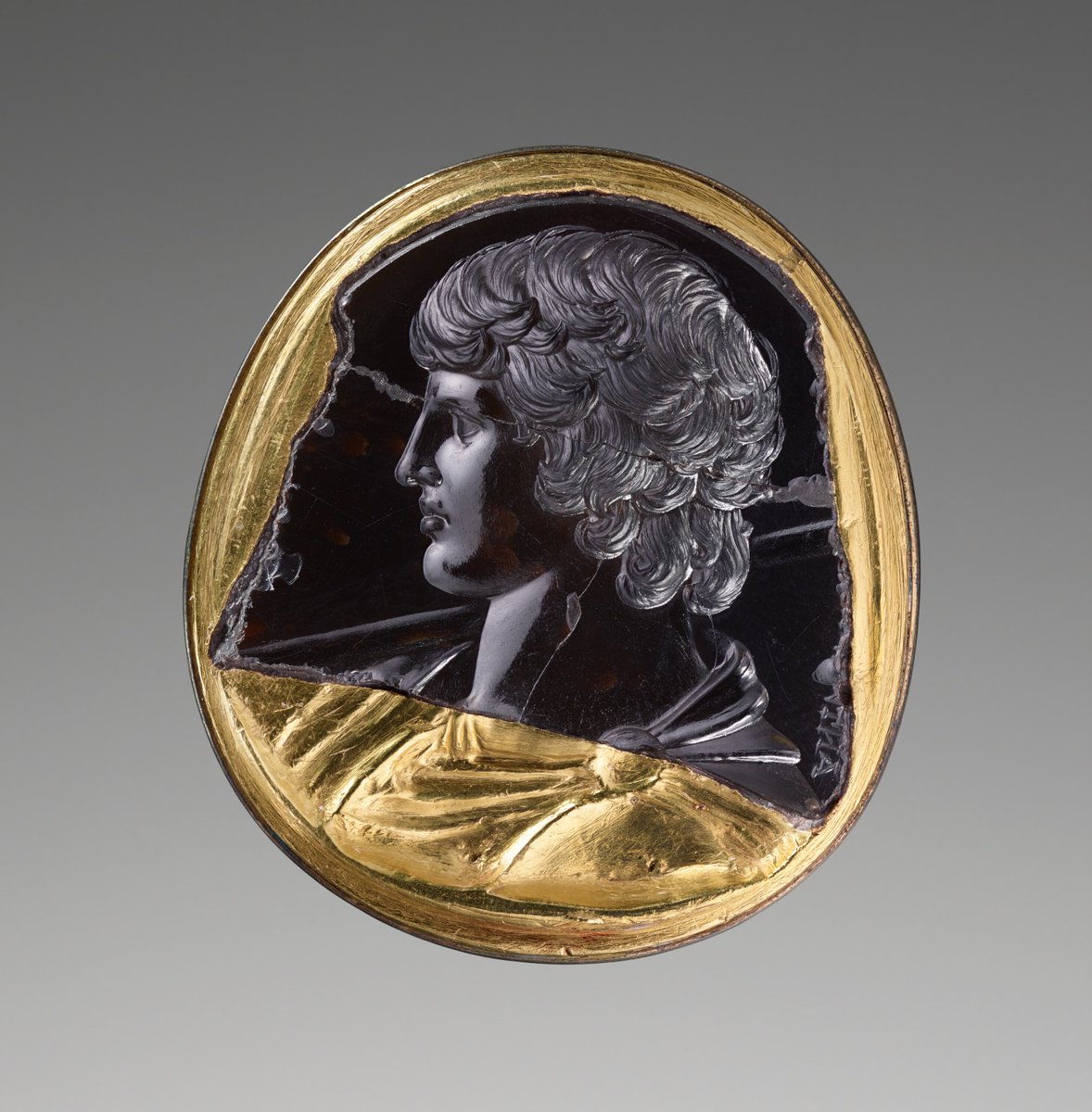
An intaglio gemstone of antiquity’s most famous boy toy Antinous. Getty Museum.
Ὃν οἱ θεοὶ φιλοῦσιν ἀποθνήσκει νέος.
-
He whom the gods love dies young.
Menander
Hölderlin calls Achilles his favourite hero — strong yet gentle, the most perfect and fleeting blossom of the heroic world. He is “born for so brief a time,” Homer says, precisely because he is so beautiful.
@CaudilloXIV Anyone who recommends anything but the Lattimore translation isn’t serious about reading Homer, but if you just want to have fun, read Fagles’.
in plutarch’s table talk (V.7), “love, that greatest and most violent passion of the soul, takes its beginning from the eye.” ancient theories made vision an exchange rather than passive reception. to look at the beloved is already to be altered by them.
Heraclitus believed in the tension of opposites, of incessant strife across space & time (picture this agon between two wrestlers) yet simultaneously held together by a hidden connection led by a unifying force (Logos/Absolute) as "All things are One" in an antithetical cosmos.