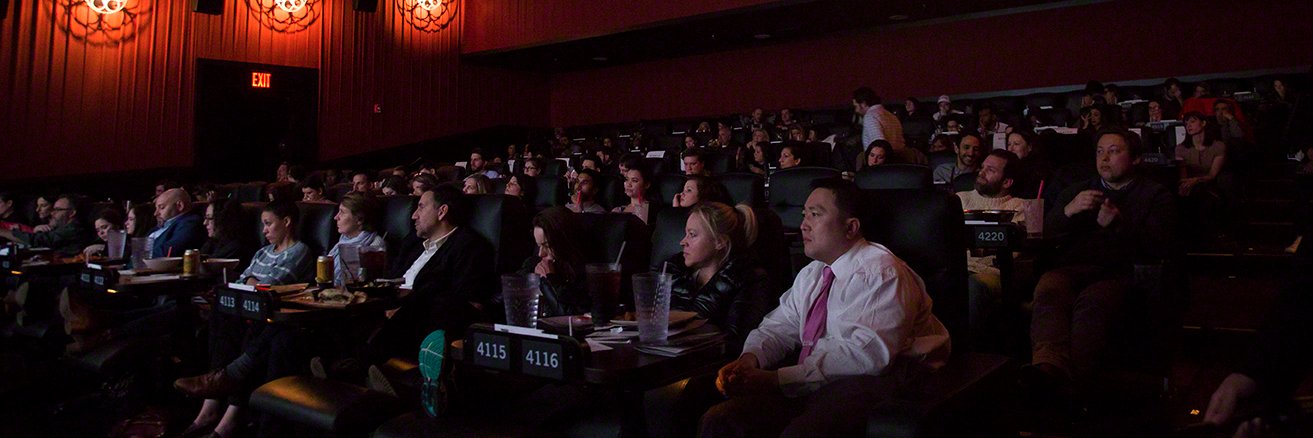
As the box office surges, the city's movie houses — from the Alex to the Cinerama Dome — are rising from the ashes.
Read the full story: https://t.co/RKIlLJTKNM
Jean-Claude Van Damme on the set of Predator (1987), in the original Predator suit design before being fired from the film.
More brilliant film details: https://t.co/oAPvViTpbh
This time last year, Netflix co-CEO Ted Sarandos said that releasing movies in theaters was "an outmoded idea for most people" and that consumers wanted "to watch movies at home."
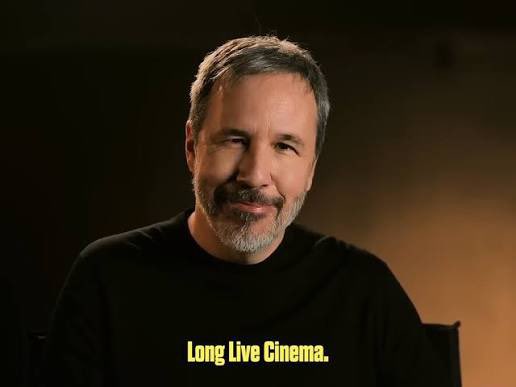
Today, movie theaters have scored their biggest weekend of all time at the global box office.
“The Odyssey” weathered a social media storm, reminding Hollywood that the loudest opinions rarely represent the broader audience, writes @HKSurrey (via @opinion) https://t.co/MXJ00FN1n5
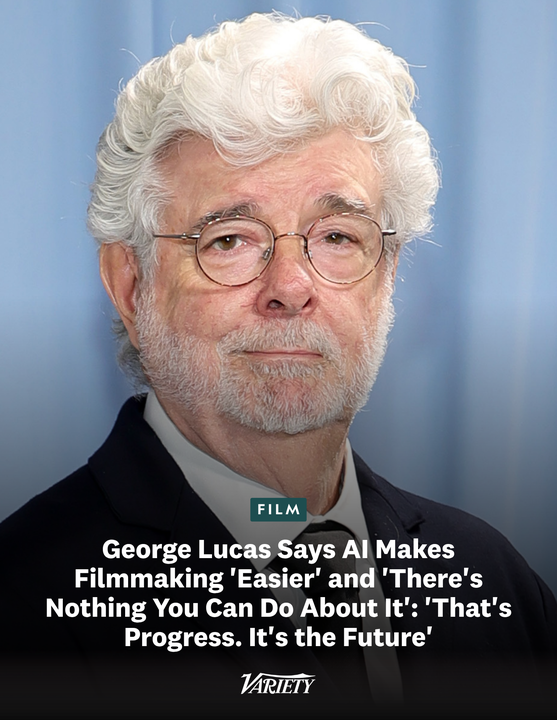
George Lucas says AI makes it "much easier for us to make movies" and "there’s nothing you can do about it. That’s progress, it’s the future.”
“Artificial intelligence means it’s much easier for us to make movies. It’s very much like sitting here saying, ‘Well, I believe the horse and the buggy is really where it’s at. These cars, they break down, they need gas, there’s all kinds of problems with them and pretty soon they’ll be making them into tanks, and then they’ll be killing people. It’s terrible.’ There’s nothing you can do about it. That’s progress, it’s the future.” (via A Rabbit's Foot)
https://t.co/EbI5fBMRYt
Screenwriter David Koepp on writing Steven Spielberg’s #DisclosureDay script after reading 40-pages of notes that Spielberg wrote on his phone’s Notes App.
“He [Spielberg] said ‘this is kind of a summation of everything I’ve wanted to say about aliens,’” said Koepp
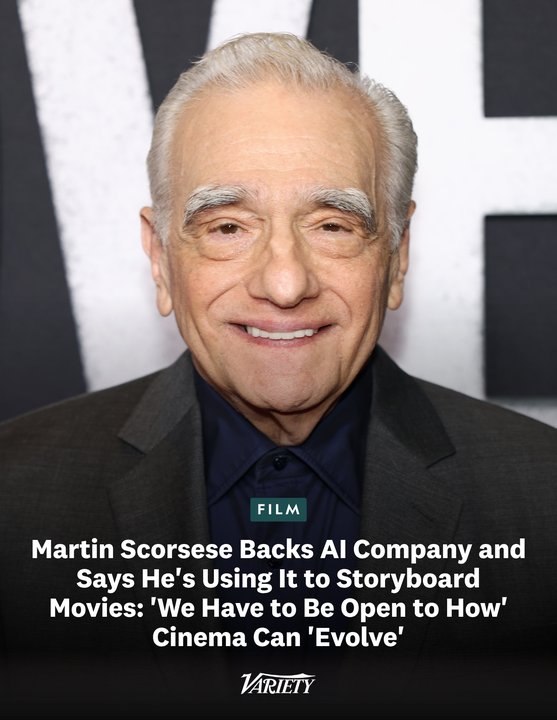
Martin Scorsese is backing an AI company to “push the bounds of creativity to create deeper and richer experiences for audiences.” He is using the technology for storyboarding purposes.
"I’m interested in the intersection of technology and storytelling, and seeing how that can push the bounds of creativity to create deeper and richer experiences for audiences. Cinema is a young medium, only around 125 years old, so we have to be open to how it can evolve. I utilized 3D with ‘Hugo’ and de-aging technology for ‘The Irishman.’ Now, with this tool, I can share what I’m visualizing more clearly and efficiently to my creative team — the production designer, art designer, and cinematographer — for them to build on to enrich cinematic intelligence."
https://t.co/53G0q5wFur
The two most popular movies in the world were directed by YouTube creators under the age of 30. Here’s what that means for Hollywood. https://t.co/TCdqq9bmrG
The Last Temptation of Christ (1988) is one of Scorsese’s most underrated gems because it shows Jesus through his most human side. For Judas’ kiss, Scorsese wanted Harvey Keitel to play it not only as betrayal, but as affection and pain: the act of a man who believes he is carrying out the hardest mission.
One of Martin Scorsese’s most underrated films, After Hours (1985) is a strange, offbeat descent into the surreal side of New York City. It follows a quiet office worker whose ordinary night slowly unravels into a chain of bizarre encounters, bad decisions, and nonstop chaos.
Blending dark comedy, paranoia, and razor-sharp pacing, the film turns the city into a nightmare that feels funny, anxious, and endlessly alive. Unpredictable, energetic, and unlike anything else in Scorsese’s filmography, it remains a true hidden gem.
-
Kristen Stewart wants to direct another movie by the end of the year "and put it on f---ing YouTube."
"Whatever money we make from that will be what I spend on my next one and there will be a trickle-down effect. I just don’t want to talk to these bros anymore ... I love Hollywood, I love big movies, [but] I don’t think I’d be very good at making them. I want to make weird s---. And I’m fully OK doing that in a kind of insulated, bizarre way. But I don’t want to do the thing where I wait five years for someone to give me $1 million to make something. I’m going to make it f---ing tomorrow." https://t.co/WHK5J1jGVF
Darren Aronofsky tells #Cannes AI Summit that the technology liberate directors, citing Orson Welles as an example.
"I think storytellers more than ever will have an easier time to tell stories,” he said









![Variety's tweet photo. Kristen Stewart wants to direct another movie by the end of the year "and put it on f---ing YouTube."
"Whatever money we make from that will be what I spend on my next one and there will be a trickle-down effect. I just don’t want to talk to these bros anymore ... I love Hollywood, I love big movies, [but] I don’t think I’d be very good at making them. I want to make weird s---. And I’m fully OK doing that in a kind of insulated, bizarre way. But I don’t want to do the thing where I wait five years for someone to give me $1 million to make something. I’m going to make it f---ing tomorrow." https://t.co/WHK5J1jGVF](https://pbs.twimg.com/media/HIdGyW6WsAAYc_X.jpg)


