Clarence “Kelly’’ Johnson died at age 80. Dec 21 1990. He was the designer of the SR 71 and many other airplanes..
I took pictures of the brochure ( very small print) that belong to my father Colonel Richard “Butch’’ Sheffield, who went to the funeral with Ben Rich
No one has rose up to Kelly’s genius.
He said his SR-71 would NEVER be surpassed.He was right.
Kelly Johnson was a genius, there’s no doubt about this, and he suffered for it. According to his book, Kelly had an ulcer by the time he was 40.
The CIA would not let him leave the United States because he was a national treasure.
Unrelated to work but tragic he buried two of his three wives.
The 14 Practices and Rules.” And skunk works-style tactics have since become the standard by which small, unconventional autonomous groups are still considered, in some quarters, to be the optimal way to achieve rapid, innovative, and extraordinary results on advanced or secret projects.
What was Kelly’s 14 rules of the Skunk Works?
Kelly Johnson’s 14 Basic Management Rules of the Skunk Works are:The Skunk Works manager must be delegated practically complete control of his program in all aspects. He should report to a division president or higher.Strong but small military offices must be provided both by the military and industry.The number of people having any connection with the project must be restricted in an almost vicious manner. Use a small number of good people (10% to 25% compared to the so-called normal systems).A very simple drawing and drawing release system with great flexibility for making changes must be provided.There must be a minimum number of reports required, but important work must be recorded
His most significant, legendary aircraft designs are organized below by era and purpose:
Spy Planes & Reconnaissance SR-71 Blackbird: His crowning achievement. A titanium, strategic reconnaissance aircraft capable of flying over Mach 3 at altitudes above 85,000 feet. It remains the world's fastest air-breathing manned aircraft.U-2 "Dragon Lady": The world’s first dedicated high-altitude spy plane, designed for the CIA in 1955 to fly at 70,000 feet, well out of reach of Soviet radar and missiles.A-12 & YF-12: The immediate predecessors and structural prototypes to the SR-71 Blackbird program.D-21 Drone: A highly advanced, Mach 3+ reconnaissance drone intended to be launched from the back of an M-21 (a variant of the A-12).
Military Fighters & Bombers
P-38 Lightning: A heavily armed, twin-engine, twin-boom fighter that became one of the most successful and iconic American aircraft of World War II.P-80 Shooting Star: America's first operational jet fighter, designed and prototyped by Johnson's team in a record-breaking 143 days.F-104 Starfighter: Known as the "Missile with a Man in It," it was the first production jet fighter capable of exceeding Mach 2.Hudson Bomber: A fast, light commercial conversion built for the British Royal Air Force just prior to World War II.
Commercial Transports & AirlinersLockheed Constellation ("Connie"): A revolutionary, pressurized commercial airliner with a distinctive triple-tail design that redefined luxury transcontinental air travel.Model 10 Electra: A twin-engine, all-metal transport. Johnson famously corrected its twin-tail stability issues as an intern, which landed him his full-time job JetStar: A high-speed corporate business jet that served as Johnson's personal aircraft for 25 years.XC-35: An experimental aircraft that became the first successfully operating plane featuring a fully pressurized cabin.Col. Richard “Butch” Sheffield, was at his funeral, he retired from the Air Force and went into private sector jobs, he worked directly for Ben Rich who took over from Kelly Johnson as the Vice President of the Skunk Works Kelly is gone, but never forgotten. Thank you Kelly… thank you for all the airplanes that you designed that helped protect the United States 🇺🇸🇺🇸 Linda Sheffield
This is Stormy Boudreaux, an SR-71 Pilot, explaining some of the features of the SR-71B trainer. He does such a good job explaining the SR-71
I am asking for prayers for Stormy as he faces prostate cancer surgery this Tuesday.🙏
Stormy was one of only 12 pilots who flew operational sorties
in both the U-2 and the SR71.
Stormy served 24 years in the US Air Force, as Command Pilot, Standards and Evaluation Pilot, and Functional Test Pilot.
He flew the F-4, T-38, and T-33, before he flew the U-2 and the SR-71.
Stormy was a track star in high school at St. Aloysius High School and later at Tulane University, where he earned a Bachelor of Science in biology and education. Later, he earned his Master of Science in aeronautics from Embry-Riddle University. But he always knew he wanted to fly.
His father gave him his nickname Stormy when he was only three weeks old. His father Lionel Paul Boudreaux Jr.had been in the Navy during WWII and was stationed aboard the Medusa in Pearl Harbor on Dec. 7, 1941, the day the Japanese bombed Pearl Harbor. At the time, there were many Navy tall tales and songs about AB Stormalong (a folk hero of nautical-themed tall tales), or Stormy for short.
Stormy has been an advisor to this Facebook page, which is greatly appreciated.
Stormy needs some help from the SR-71 community. He has been diagnosed with prostate cancer.
He will be having a six-hour-long surgery this Tuesday in Texas.
Would you please put your hands together in prayer🙏 for this brave American veteran for complete healing of the cancer as he faces this surgery. Please extend your prayer for his wife, Darlene for peace for herself and his children.
I believe that prayer changes things.
God bless.
Linda Sheffield
An F-16 pilot called for a priority landing because his aircraft was running “a bit peaked.” Air traffic control told him that he was number two, behind a B-52 that had one engine shut down.
“Ah,” the F-16 pilot remarked, “The dreaded seven-engine approach.”
I hate to break it to you guys but there's nothing cool hiding in the labs.
Everything that is even remotely advertisable has been advertised by these companies to try to increase stock value.
The culture that built the SR71, the B2, battleships, Space Shuttle etc simply doesn't exist anymore.
It's a lot easier to tell ourselves "we didn't ACTUALLY go to the moon" than it is to admit that we effectively live in the ruins of a more advanced civilization that briefly appeared in the 20th century, but was bashed into the grave by bureaucracy, social spending, and contract mismanagement.
Look at NASA:
- Webb a decade behind schedule
- Grace Roman a decade behind schedule
- X59 half a decade late
- DreamChaser dead on arrival
- X33 dead in the cradle
- X38 dead in the cradle
- Starship/Falcon 9 developed independently of NASA objectives
- ISS on life support with no proper follow-on.
Yes, Isaacman is fighting to change this, but this is clearly the track record of an agency that did not continue the pace of the 20th century.
I have the honor and privilege of getting to experience a LOT of America's engineered solutions for space, and I continuously find myself more impressed with the 40 year old hardware being replaced than what we're replacing it with.
Simply put: we don't have *it* anymore.
We need to get it back. We need more Boom Supersonics, a new Skunkworks, an army of Elons. We need the government to be run by Isaacmans with a civic leadership all in agreement that their job is to BUILD the Republic, not to "manage" it.
So, how do we get there? How do we bring this back?
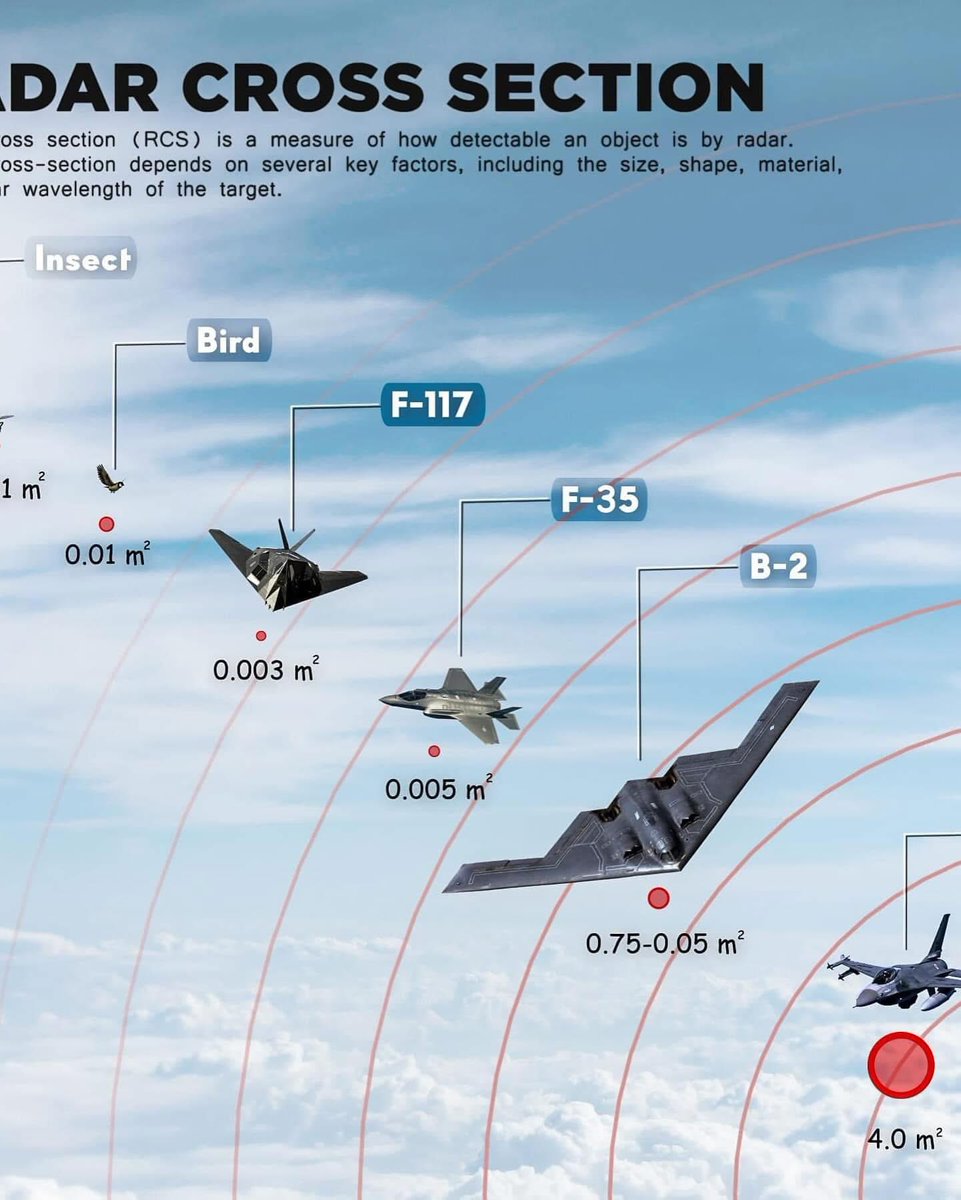
The SR-71 was about 100 times stealthier than the Navy F-14 Tomcat fighter built 10 years later.
The Blackbird, which was actually the world’s first operational stealth aircraft, was 140,000 pounds and 108 feet long, about the size of a tactical bomber called the B-58 Hustler, but with the incredibly small radar cross-section of a single-engine Piper Cub.
In other words, that is what the radar operator would think he was tracking. The stealthy characteristics of this amazing airplane that flew faster than Mach 3 and higher than 80,000 feet. Its wings, tail, and fuselage were reloaded with special composite materials that absorbed radar. Energy 65% of the low radar cross-section comes from the shaping of an airplane and 35% from the radar-absorbing coatings.
This is a direct quote from Ben Rich from his book “The Skunk Works” I recommend this book..
Also mentioned what added to the stealth was the iron ferrites that were in the black paint that covered the A-12/SR 71
My father Butch Sheffield was asked to write a small part of this book, and he did.
He told me that the CIA changed everything in this book ever so slightly so they could deny it as the truth, so if you look at some of these facts and say that’s a little bit wrong now you know why.
Linda Sheffield
What was the radar cross-section for an SR 71?
The SR-71 had a radar cross-section (RCS) around 110 sq ft (10 m2).
What does this mean? 
When our friends and foes saw an SR 71 on radar how big did it look?
The purpose of a small radar cross-section was to deceive our enemies into knowing what they were looking at. The Skunk Works also added black paint with tiny iron balls to further confused the radar.
 written by Linda Sheffield
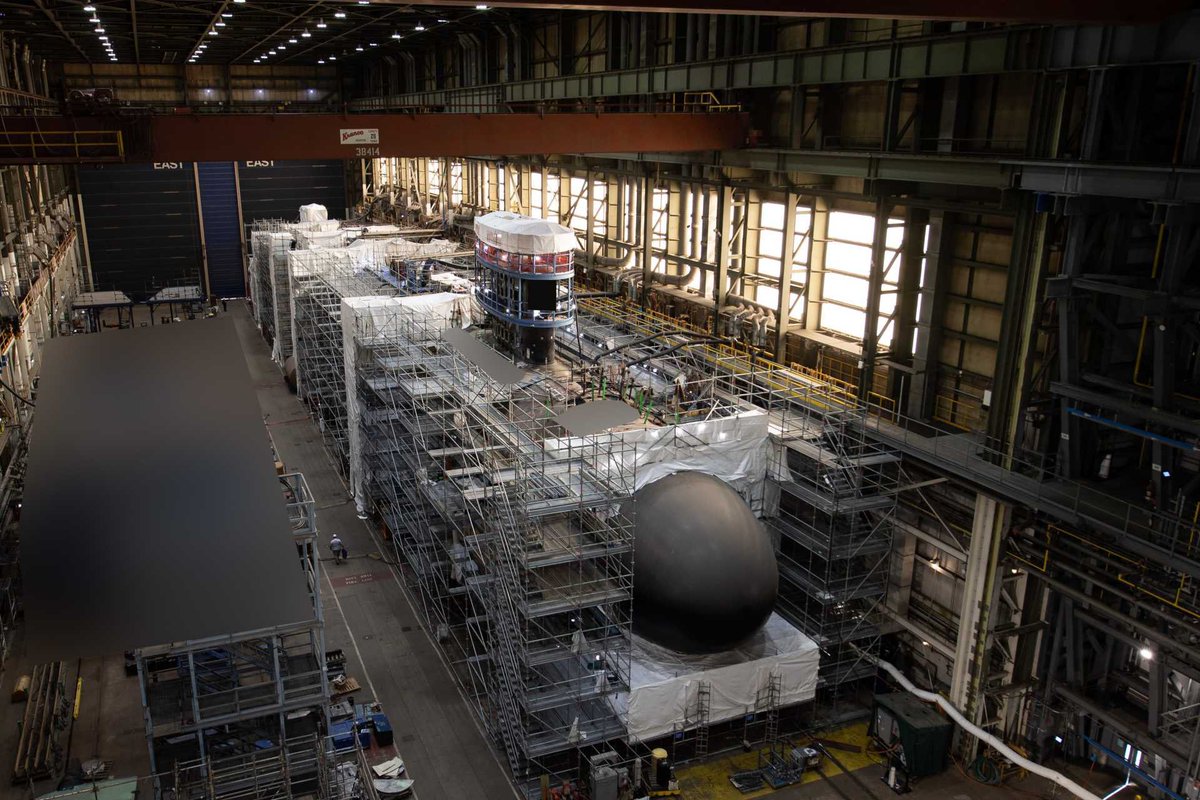
Doing a deep dive into the Virginia class, and the more I read about stuffing a 30 megawatt nuclear reactor into a metal tube packed with 140 people that’s underwater for 90 days at a time, the more annoyed I get at the nuclear power naysayers here on land.