In many parts of the world, SLA is not offered in linguistics programs. Thus, I've decided to launch YouTube SLA Lecture Series (I'll do my best to upload many videos). Please share if you have any interested students :)
https://t.co/HPFvSY4VS7
Actually, your data did show something worth academic thoughts. r = .44 means that only 15–20% of the variance in your raters' judgments relied on phonological information (as defined in our acoustic model of comprehensibility). Unlike our study, your raters did attend to language beyond phonology most likely due to the nature of the task (argumentative) plus with familiarity with JP accents/professionalism towards the assigned task (beyond intuition), aka listener factor. Do recommend you write/publish a response paper with your students.
I've just got excited and have tested the correlation with my own comprehensibility data based on Japanese learners of English, but the correlation was not that high (r = .44)... The estimated scores seem to be more lenient than mine. I guess the trained speech data might be from a narrow range of speaking tasks and may be quite different from my argumentative speech samples. Please be careful about the generalisability of automated scores as always.
Also, please don't forget about your listeners (vs. mine) as their familiarity/attitude do affect their ratings. We picked only *7* measures which should well characterize Japanese-accented English. r = .75 simply means that these acoustic variables (unsurprisingly) explained about 50-60% of the variances in our listeners' judgements (they did use it). Predictive power isn't why reviewers liked this paper; they liked the process of how we explained comprehensibility can be replicated based on what we clearly know. Instead of throwing at AI, my question for you is which other variables you would add to A-CAT (what is my team still missing?) and what you would ask for your listeners (how much do they matter?). You can discuss with your students and write a response paper and publish it?
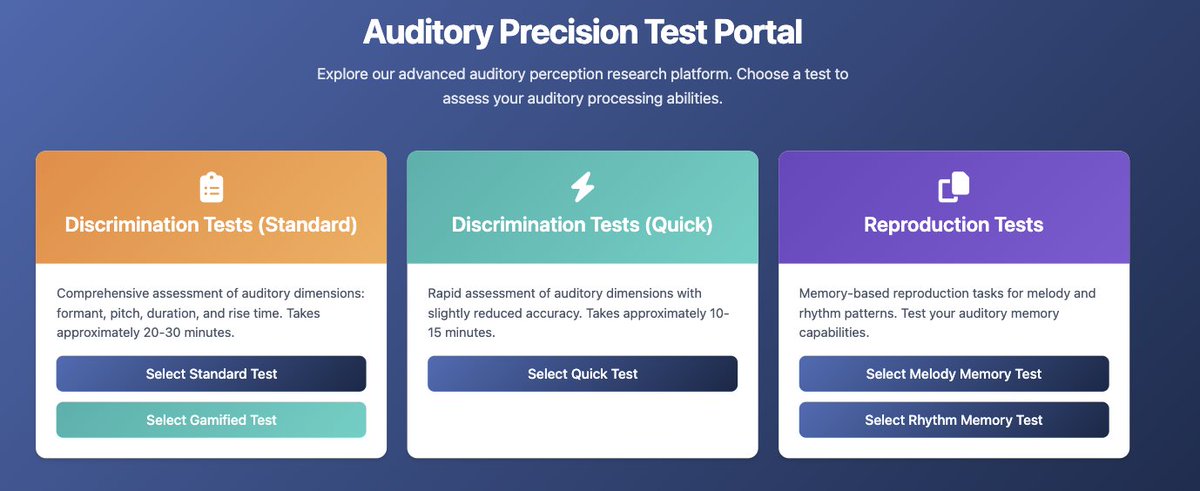
🎧 NEW RESOURCE ALERT! 🚀
Online Auditory Processing Test Battery, developed by our new member Xuanda Chen, is now available on SLA Speech Tools!
✅ No complicated setup – access the tests anytime, anywhere, from your device!
✅ Standard & quick versions available!
Our team is now releasing full auditory test batteries ONLINE, including a gamified version, @L2SpeechTools https://t.co/OqVUb0Bj6R The validation paper is published in SLR today.
Chen et al. (in press) Reliability and validity of an online auditory aptitude testing platform
https://t.co/5Ql2wjGd7c Big thanks to the funder @LeverhulmeTrust
J-SLARF 2027 Tsukuba: March 6 & 7
Poster: https://t.co/VRNUCEHMbD
Registration: https://t.co/gvyjrFO24d
Call for Student Poster Presentations
https://t.co/Wa1Sqp9B8f
Deadline: Dec. 23
Space is limited to approximately 30 presenters.
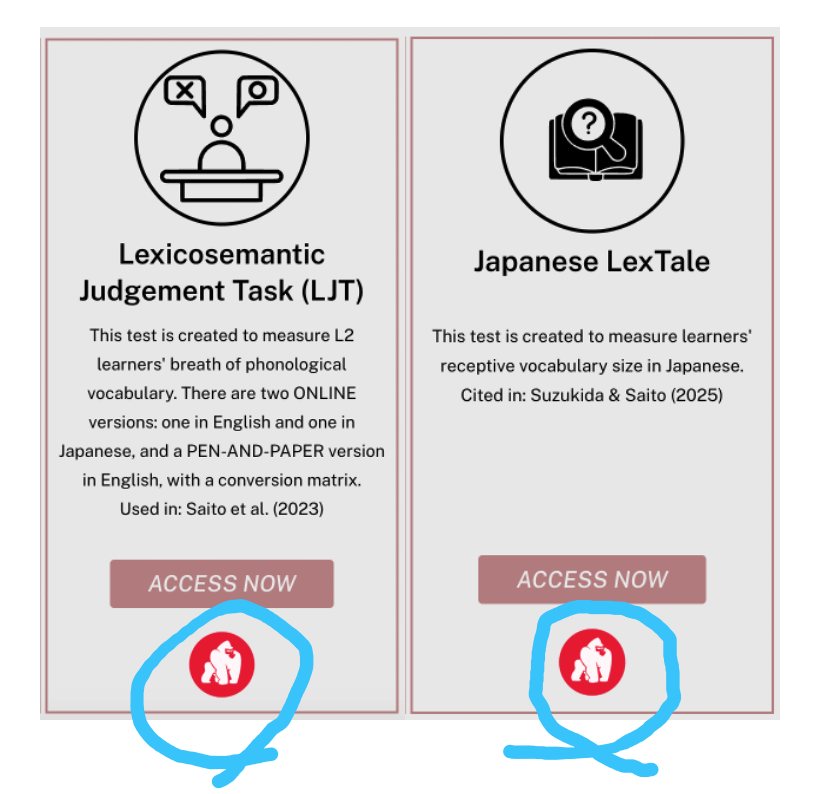
💡 Did you know you can build online experiments using tasks from SLA Speech Tools? 🦍
We're teaming up with https://t.co/CvOLmhAHts to turn shared research tasks into their own online experiments!
🔎 Find a task
🦍 Click the Gorilla logo
🚀 Clone it into your own experiment!
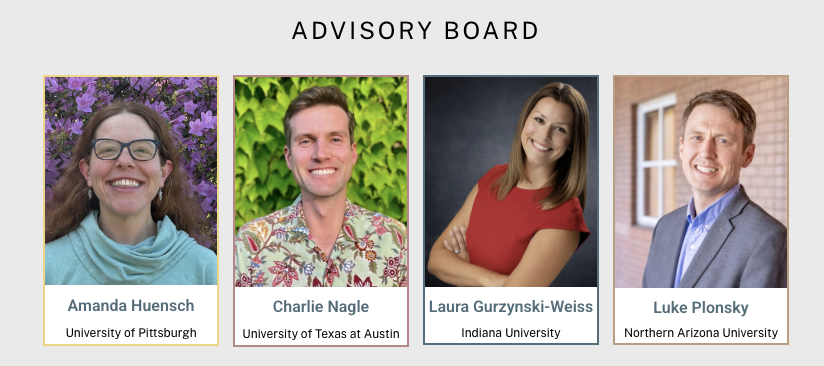
So happy to announce that SLA Speech Tools has an amazing line-up of experts on our advisory board! Although we're still a small project, we will continue to grow with their advice/feedback, and hope to do something meaningful for the community!
🎉 Exciting news from SLA Speech Tools!
We're delighted to welcome our new Advisory Board members Dr Huensch, Dr Nagle, Professor Gurzynski-Weiss, and Professor Plonsky!
Their expertise will help us continue to grow and better serve the L2 speech research and teaching community.
We finally disentangled why/how so-called *talented* learners can pick up L2 pronunciation so quickly. The work was just published in Journal of Experimental Psychology: General https://t.co/DZRWMNDFoE thanks to @jeongtohoku for leading the fMRI team :)