New publication 🚨 Our RCT + isotope tracing detailing a significant nutrient-nutrient interaction during pregnancy between choline and docosahexaenoic acid (DHA; omega 3) is now online @AJCNutrition. A thread ⬇️
https://t.co/NmSGXwjjHu #RDchat#Metabolism#Obgyn#obstetrics
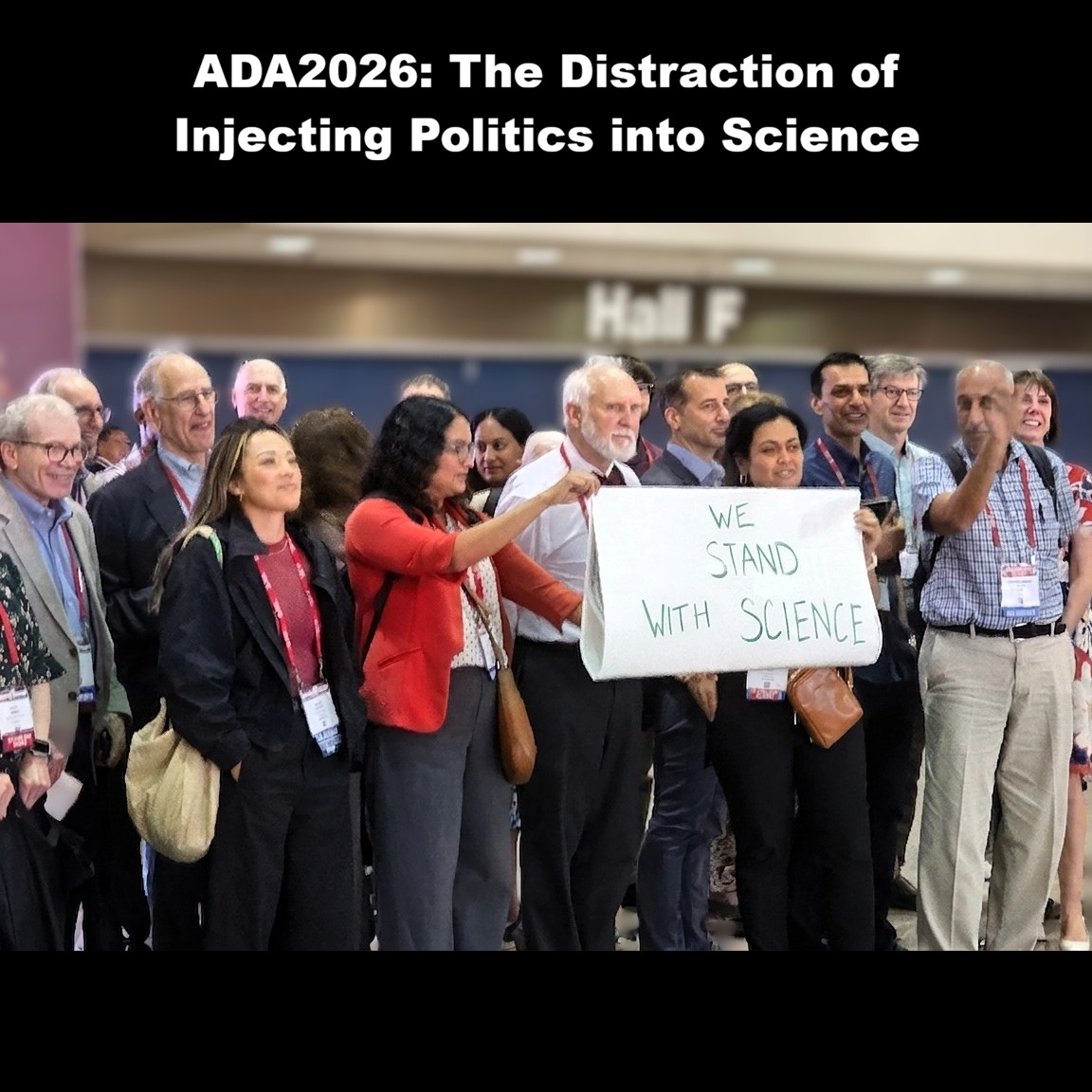
An Open Letter to the American Diabetes Association: Petition initiated by David Nathan, distinguished diabetes physician at Mass General and Harvard Medical School.
#ADASciSessions
https://t.co/ZnxkQcAwvt via @Change
If the goal was to stir controversy, leadership executed yesterday's opening of #ADASciSessions brilliantly. But we rather doubt this is what ADA had in mind. Sending police after distinguished scientists is not good.
HT: @medpagetoday@KristinaMFiore
https://t.co/pYYMDaZKqz
I wrote this article last year with @JackScannell13 and it continues to be highly relevant, as the AI CEO claims about impending biomedical abundance are getting more frequent. Yes, AI will help. But we have other hurdles ahead (trials).
https://t.co/yZwzDVyoO0
Means says that Bayer only bought Monsanto cause it makes a drug for NHL and glyphosate causes NHL - a classic 'everything looks like a conspiracy when you don't know anything '
Bayers NHL drug, copanlisib, was approved in 2017 for relapsed follicular lymphoma, a type of NHL. Occupational exposure to Glyphosate is associated with no increased risk of total NHL but a small increased risk of diffuse large B-cell lymphoma but not follicular lymphoma. Subtypes don't match up to fuel this conspiracy. It's also 2026 and we're sharing this but copanlisib was withdrawn in 2023...
It's a shame we're not actually doing anything to support science and public health while it's being destroyed, but elevating dangerous unlicensed physicians to get some MAHA votes is somehow a priority.
.@CoryBooker sharing podcasts with Casey Means covering Bayer/glyphosate conspiracies that make zero sense is peak 2026 Democrats.
We have zero policies to impact science and public health being put forth, but we will pander for MAHA votes.
If you're confused by 2026 bizarre intersections of politics, the state of wellness/biohacking & the manosphere, you clearly weren't following low carb twitter of 2015 😂
This is a headline generated from a cross-sectional study published in a Radiology journal using a shortened Food Frequency Questionnaire and a totally made up metric of UPF intake. Countless issues with zero potential for causal inference. What are we even doing @cnnhealth ?
Academics, plz stop giving quotes to media about your studies that will just be clickbait, and plz restrain your comms offices from running press releases on this stuff.
When legacy media and academia opine that nobody trusts science anymore, they should look in the mirror.
Happy to contribute a couple of Op-Eds recently to comment on nutrition happenings:
1. Writing with Christopher Duggan and Marie-France Hivert in @statnews, we comment on the need for ensuring that physician nutrition education remain grounded in evidence-based practices and that medical schools incorporate the consensus competencies laid out in JAMA in 2024. The piece, importantly, ends on noting that training physicians in the basics of nutrition is just the start of improving nutrition care across healthcare and that nutrition-competent physicians need to empower other healthcare professionals (e.g., RDs, SLPs, etc) and advocate for effective public policy at the local, state and national levels.
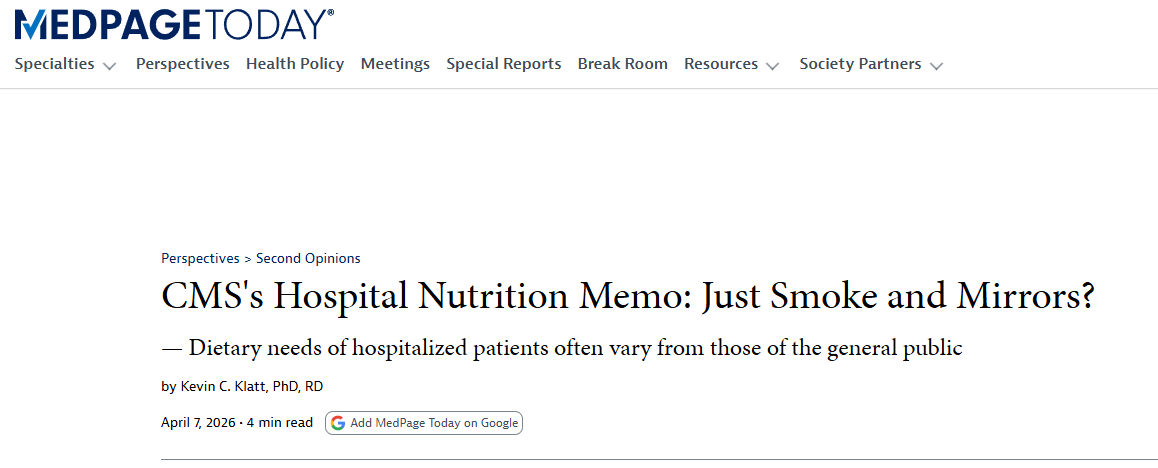
2. In @medpagetoday, I comment on the recent CMS memo encouraging hospitals to align menus with the DGAs. Not only is there limited enforcement potential here given the conditions of participation laid out in CFR 482.28 and the practices of 3rd party auditors, there's a total misalignment between the priorities of the DGAs and the priorities of inpatient nutrition care. Advocates can want to improve the variety of 'generally healthy' options on inpatient menus and the offerings in the hospital retail food environment - but they won't find solutions in this memo. I discuss this in a more longform substack post as well.
These celebrated 'commitments' to nutrition from the admin come as the new President's budget for FY27 yet again propose big cuts for effective public health nutrition programs, such as @NatWICAssoc, building on previous cuts to nutrition programs in the BBB and by USDA/DOGE. The field of nutrition and advocates must stay hypervigilant and put pressure where pressure is deserved, demanding real policy grounded in good evidence & rejecting hollow performance.
Happy to contribute a couple of Op-Eds recently to comment on nutrition happenings:
1. Writing with Christopher Duggan and Marie-France Hivert in @statnews, we comment on the need for ensuring that physician nutrition education remain grounded in evidence-based practices and that medical schools incorporate the consensus competencies laid out in JAMA in 2024. The piece, importantly, ends on noting that training physicians in the basics of nutrition is just the start of improving nutrition care across healthcare and that nutrition-competent physicians need to empower other healthcare professionals (e.g., RDs, SLPs, etc) and advocate for effective public policy at the local, state and national levels.
2. In @medpagetoday, I comment on the recent CMS memo encouraging hospitals to align menus with the DGAs. Not only is there limited enforcement potential here given the conditions of participation laid out in CFR 482.28 and the practices of 3rd party auditors, there's a total misalignment between the priorities of the DGAs and the priorities of inpatient nutrition care. Advocates can want to improve the variety of 'generally healthy' options on inpatient menus and the offerings in the hospital retail food environment - but they won't find solutions in this memo. I discuss this in a more longform substack post as well.
These celebrated 'commitments' to nutrition from the admin come as the new President's budget for FY27 yet again propose big cuts for effective public health nutrition programs, such as @NatWICAssoc, building on previous cuts to nutrition programs in the BBB and by USDA/DOGE. The field of nutrition and advocates must stay hypervigilant and put pressure where pressure is deserved, demanding real policy grounded in good evidence & rejecting hollow performance.
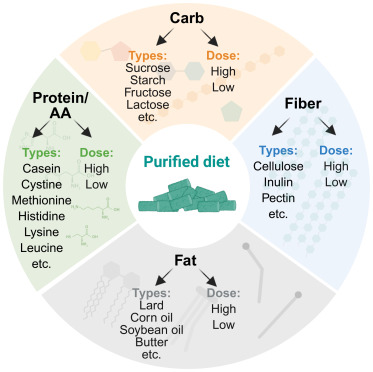
Diet design in rodent models is extremely complex. Detailed all of the considerations with @KevinH_PhD@JohnSpeakman4 back in 2023:
https://t.co/a2i6BzAK3d