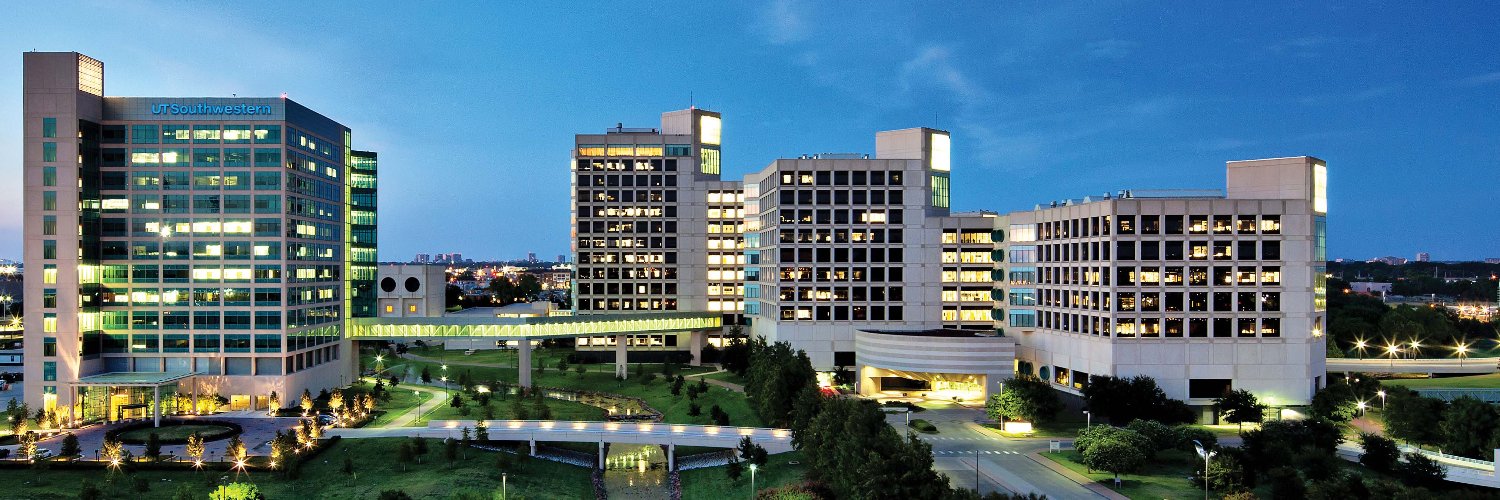
The Kidney Cancer Program, part of the Simmons Comprehensive Cancer Center at UT Southwestern Medical Center, is a national leader in research and treatment.
The FDA has approved belzutifan for the treatment of advanced renal cell carcinoma- a first-in-class drug discovered and developed by UTSW researchers over three decades.
https://t.co/DrPAWr3olY
@UTSWNews@utswcancer@UTSWInternalMed
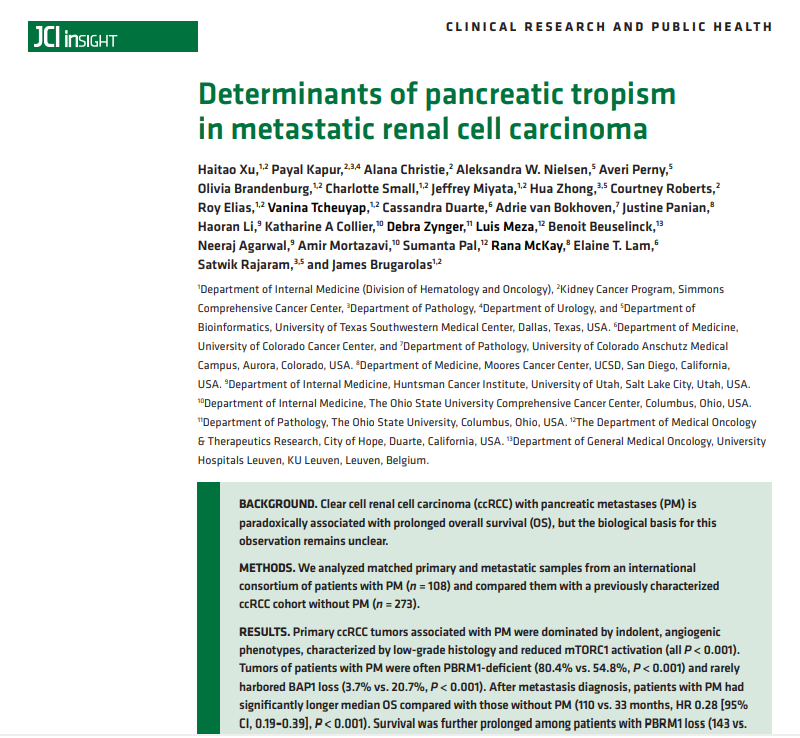
In metastatic renal cell carcinoma, pancreatic spread is associated with improved survival.
https://t.co/jzVXi6A7Xv
Here, James Brugarolas @JBrugarolas & team @KCPUTSW@UTSWMedCenter determine that pancreatic #metastases arise predominantly from indolent clones within primary #RCC and exhibit distinct molecular and histological features, clinical behavior, and treatment responsiveness.
The figure shows pancreatic metastasis sample with high angiogenesis, indicated by deep learning vascular mask (red).
💥Great news for #KidneyCancer research! FY26 includes $15M for KCRP, restoring funding after last year’s cuts.
Progress made possible by patients, caregivers, researchers, clinicians, and advocates nationwide. Special thanks to @kidneycan
https://t.co/YkFkRPyAeb
#KidneyCancer
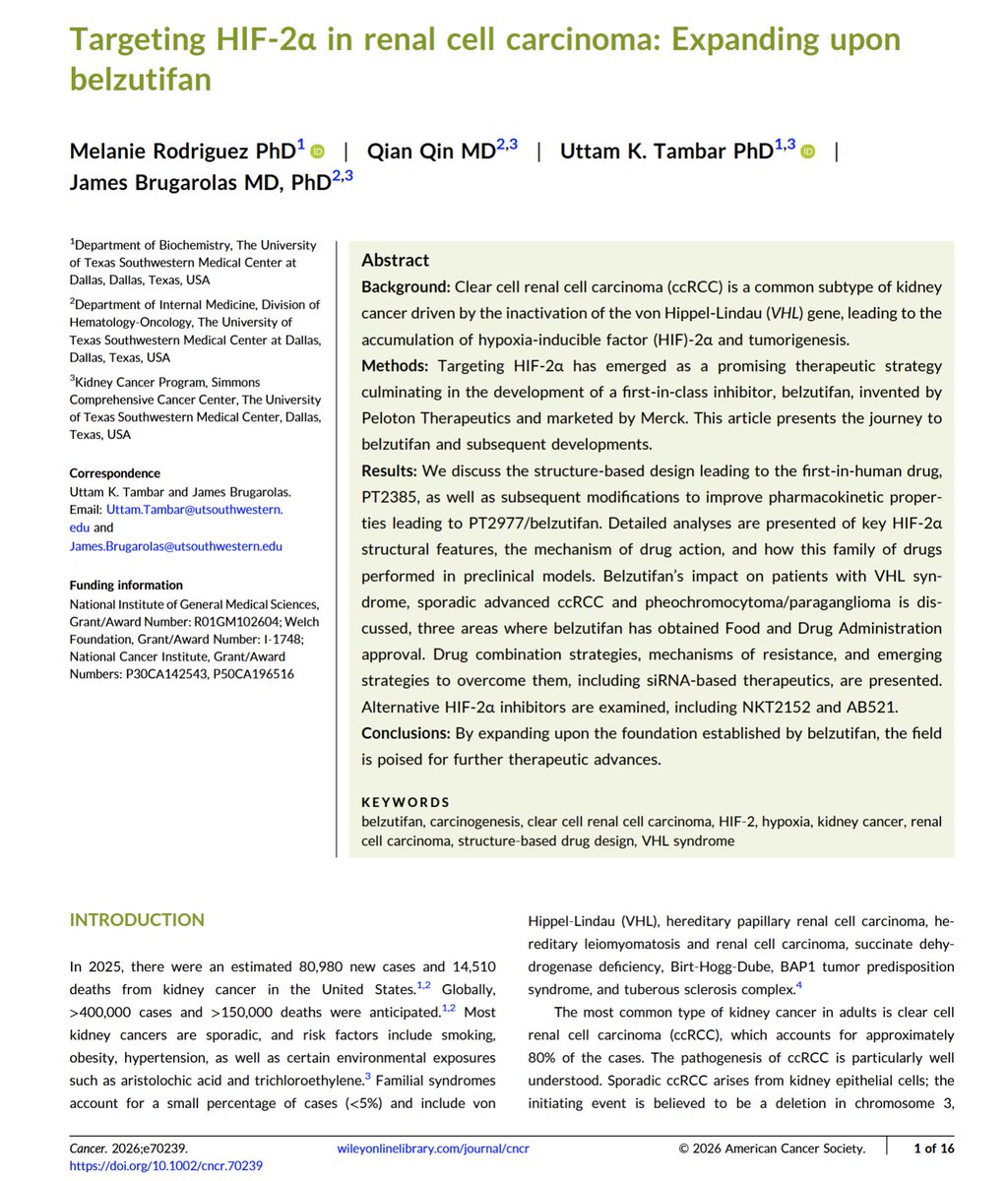
Proud to see this review published in @JournalCancer. This article traces the scientific journey to #belzutifan and represents the first publication from UT Southwestern authored by investigators involved in its development. #KidneyCancer#CancerResearch
📣Early registration for the @AACR Innovations in Kidney Cancer Research Conference ends today (Jan 30)! Connect with colleagues, share ideas, and dive into the latest advances in kidney cancer research.
👉 Program & registration:
https://t.co/L8D4FwjNWW
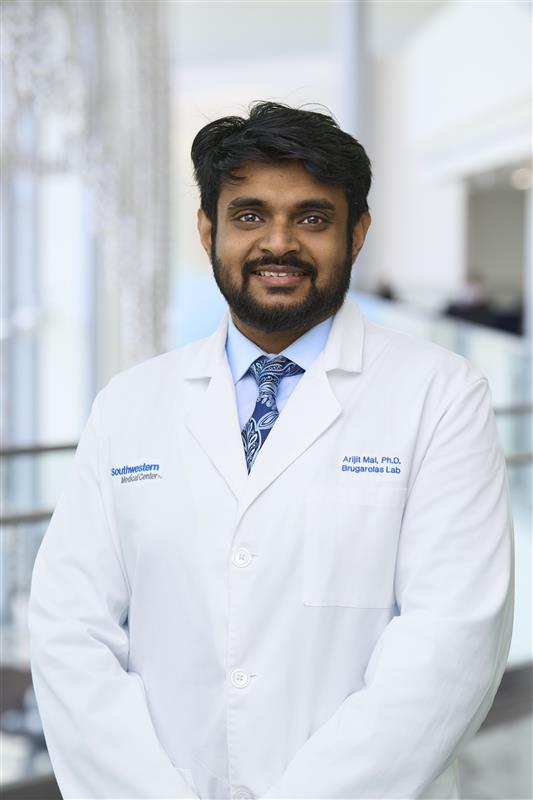
🎉Congrats to Dr. Arijit Mal, a Brugarolas Lab Postdoctoral Researcher, for earning 2nd place in the Translational–Clinical category at the recent @utswcancer Research Retreat, selected from 90+ qualified poster submissions! Well done, Dr. Mal!
🙌 Thank you to @JBrugarolas@KCPUTSW for being the catalyst for this first-ever pre-clinical models workshop! Through collaboration and innovative spirits we continue working to bring better therapies and diagnostics to the #kidneycancer community!
#UnstoppableTogether#RCCAMW
New Cancer Discovery (@CD_AACR) paper from the Brugarolas Lab! Drs. Arijit Mal & Bingqing Xie, with Dr. @JBrugarolas, reveal a strategy to overcome calcium imbalance in kidney cancer.
🔗https://t.co/0vm1CjSZkX
🔗https://t.co/xKGdj3hD4d
UTSW has now taken a new step with AI, developing a system that extracts crucial info from medical records with 99% accuracy. Significantly speeding up data collection and marking a major way forward for more research.
#kidneycancer#UTSW
https://t.co/6YsGayh1LJ
Scientists at UTSW have discovered that tumors have sugar-coated pathways to grab vitamin E from lipoproteins, allowing for an antioxidant shield that helps cancer survive. Blocking this could help make tumors more vulnerable to treatment. #KidneyCancer#utsw
Scientists at UTSW have discovered that tumors have sugar-coated pathways to grab vitamin E from lipoproteins, allowing for an antioxidant shield that helps cancer survive. Blocking this could help make tumors more vulnerable to treatment. #KidneyCancer#utsw
In partnership with the Kidney Cancer Association, KCP will host a 3-day Kidney Cancer Animal workshop in September. From Thursday, September 11, to Saturday, September 13, 2025 featuring 30 faculty members that will present on Mouse Model topics. https://t.co/vF1ZsPxbox
UTSW is ranked #1 globally among health care institutions in biological sciences, according to the latest Nature Index (Mar 2024–Feb 2025). The ranking reflects the strength of our research community and contributions to journals tracked by Nature Index. https://t.co/Q61n2Qw4f5
How do cancer cells escape death? Dr. Garcia-Bermudez (@JaviGBermudez) and his team found they hijack fat molecules to shield themselves. Featured in @dallasnews + @Nature, this discovery could open new doors for cancer therapy.
#utsw#kidneycancer
A study co-led by @bsabari found that a gene fusion drives rare kidney cancer (tRCC) by forming protein clusters that disrupt gene activity. This may also occur in other cancers, revealing a potential new target for future therapies. #KidneyCancer#utsw
https://t.co/KrjLyDqpGt