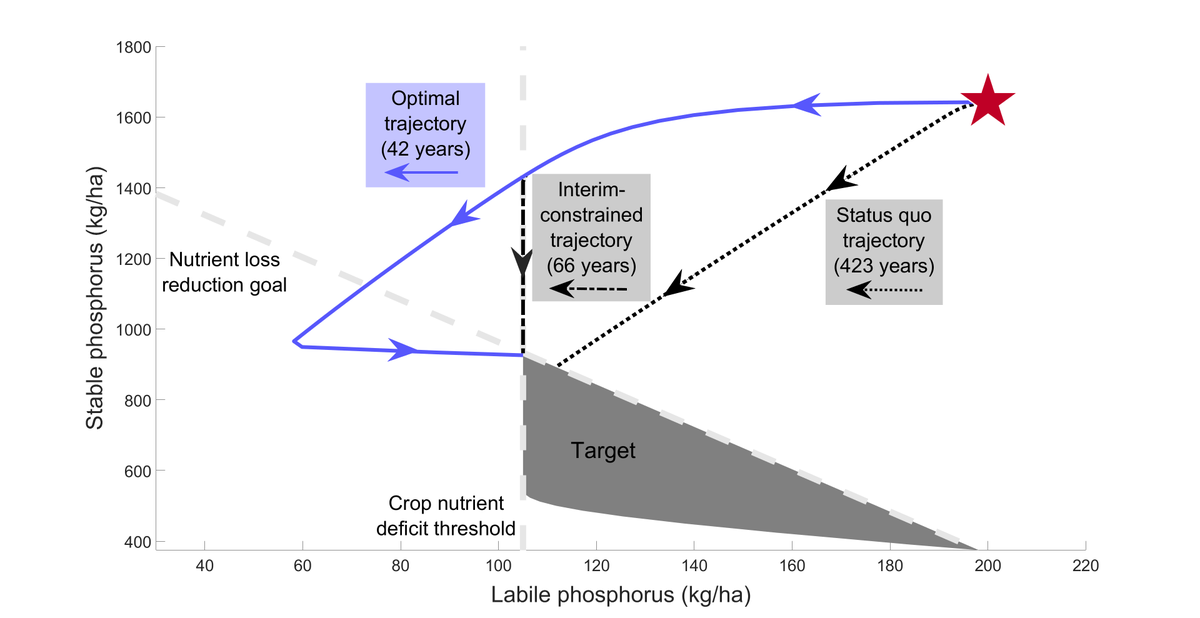
New paper! Of my dissertation contributions, I'm most proud of this one – applying reachability and optimal control methods, we find that it will take 42 years to reach management targets for soil phosphorus levels in the U.S. corn belt.🧵(1/7)
Paper: https://t.co/DSp4Xnsti0
Our reachability methodology describes outcomes from any initial condition for the optimal fertilizer strategy - complementing traditional scenario-based simulations that require predefined IC's and actions but can handle complex models. (7/7)
New paper! Of my dissertation contributions, I'm most proud of this one – applying reachability and optimal control methods, we find that it will take 42 years to reach management targets for soil phosphorus levels in the U.S. corn belt.🧵(1/7)
Paper: https://t.co/DSp4Xnsti0
Adding a second objective to minimize temporary crop nutrient deficit, we show that small short-term deficits can significantly hasten progress toward the joint, long-term target. (6/7)
We know you love it, Fat Bear Week 2024 will be October 2-8! We work with @explore.org and @katmaiconservancy to broadcast to you the bodacious beautiful bears every year. Fat Bear Week and Fat Bear Junior are the only Katmai Fat Bear events hosted by the Park and our partners
We did a video feature with the Sustainable Phosphorus Alliance! Our work shows that in-stream P legacies could delay water quality improvement for several years.
📽️https://t.co/fqqMgqiy4v
📰https://t.co/iHiqGazKIN
@SustainP
𝗜𝗻𝘁𝗲𝗿𝗲𝘀𝘁𝗲𝗱 𝗶𝗻 𝗣𝗿𝗲𝘀𝗲𝗻𝘁𝗶𝗻𝗴 𝗼𝗿 𝗟𝗲𝗮𝗿𝗻𝗶𝗻𝗴 𝗔𝗯𝗼𝘂𝘁 𝘁𝗵𝗲 𝗟𝗮𝘁𝗲𝘀𝘁 𝗙𝗼𝗿𝗲𝗰𝗮𝘀𝘁 𝗜𝗻𝗳𝗼𝗿𝗺𝗲𝗱 𝗥𝗲𝘀𝗲𝗿𝘃𝗼𝗶𝗿 𝗢𝗽𝗲𝗿𝗮𝘁𝗶𝗼𝗻𝘀?
Submit your abstract for H151 - Water and Society: FIRO at the @theAGU Fall Meeting 2024 by 31 July 2024!
📚 The material for the course 'Computational Control' at 🇨🇭 ETH Zürich is now available online at https://t.co/lqyFzfjHPv! 🚀 A fresh take on what control topics students should learn after their first intro Control Systems course. Includes slides, videos, a chatbot, and notes.
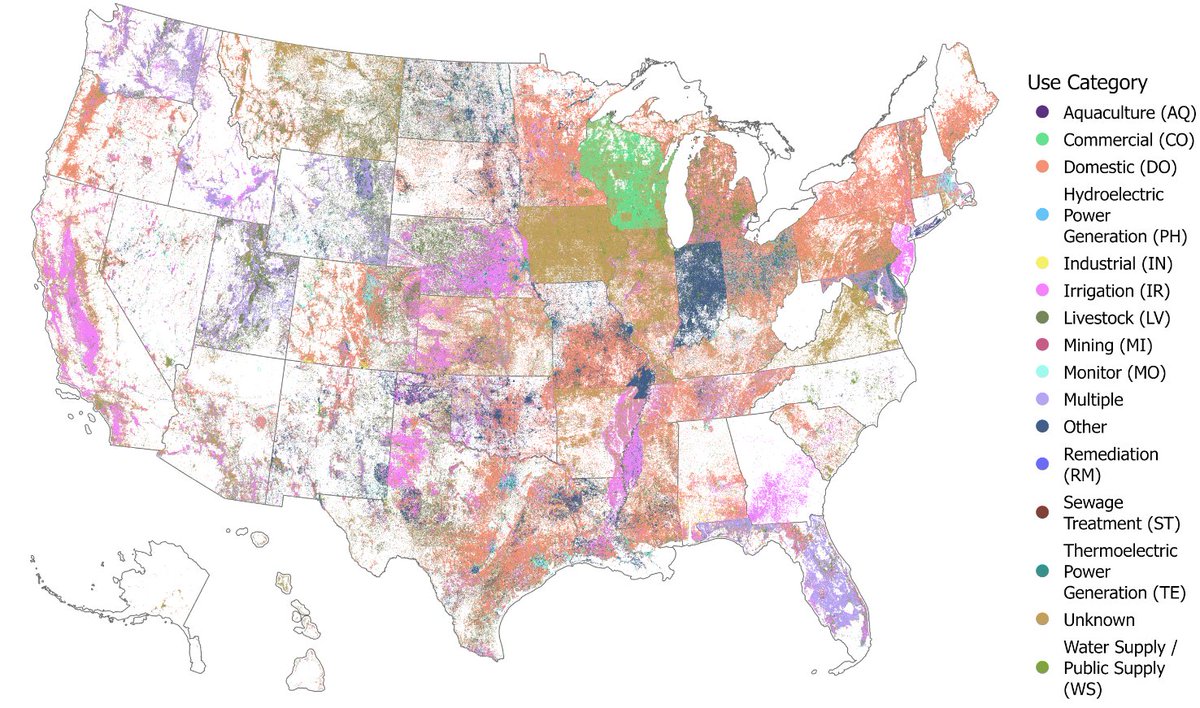
We introduce the United States Groundwater Well Database (USGWD), which contains 14.2+ million use and monitoring wells across the US. 1/9
Paper: https://t.co/H8bMJbBkgL
Data: https://t.co/wdNX2yyhiY
With the help of Amazon Web Service, CEE Department Head Ana P. Barros has prototyped a prediction model to help the National Park Service plan for hazardous flash flooding in the Appalachian Mountains.
Learn more: https://t.co/2tnQX5gW3a
@EdConwaySky@GWFWater Great thread. This phenomenon has also been observed sometimes with more efficient irrigation methods (less water lost) leading to increased water consumption for irrigation.
A study by CEE professor Ximing Cai, CEE alumnus Kevin Wallington and University of Wisconsin Madison professor Margaret Kalcic details how phosphorus buried in waterway sediments could delay phosphorus reduction efforts at the Gulf of Mexico.
Read more:https://t.co/FbYuwwzaya
In this preprint, we look into how the safe-development paradox has been studied. We found limited investigation into the unintended consequences of non-structural measures. Plus, droughts are often overlooked compared to flood hazards
👉https://t.co/vpjh83S37o